
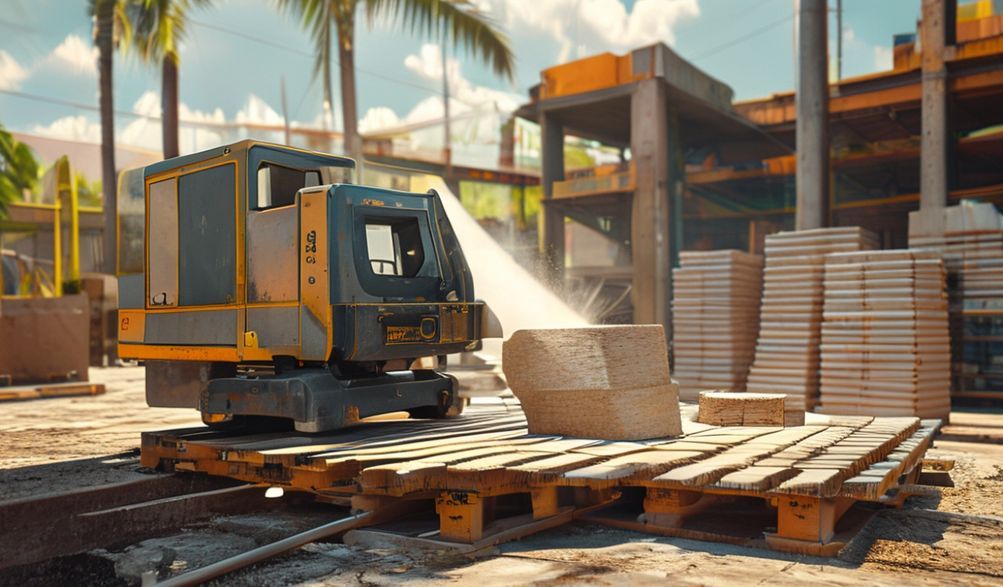
Your Ultimate Guide to Finding the Best Hollow Block Machine for Sale in the Philippines
Кіріспе
The Philippine construction industry is on a relentless upward trajectory. From government infrastructure projects and booming residential developments to commercial hubs rising across the archipelago, the demand for reliable, high-quality building materials has never been greater. At the very foundation of this growth—quite literally—is the humble hollow block, a cornerstone of modern Filipino construction.
However, for entrepreneurs, contractors, and business owners looking to capitalize on this demand by producing their own blocks, a significant challenge emerges. Navigating the crowded market for hollow block machines for sale in the Philippines can be daunting. How do you choose between countless suppliers, models, and price points? How can you be sure your investment is reliable, efficient, and truly profitable?
This guide is designed to be your definitive resource. Built not from theory, but from years of on-the-ground experience in the Philippine construction supply industry, we cut through the noise. Our goal is to equip you with the technical knowledge, market insights, and practical checklist you need to make an informed, confident, and profitable investment in your business’s future.
Үйік блок машиналарын түсіну: Түрлері мен қолданылуы
Before diving into the market, it’s crucial to understand the tool at the heart of your venture. This knowledge is your first defense against making an unsuitable purchase.
What is a Hollow Block Machine?
A hollow block machine is a specialized piece of equipment designed to manufacture concrete hollow blocks (CHB), paving stones, and other masonry units. It automates and standardizes the process of compressing a concrete mix into a mold under high pressure and vibration, producing consistent, durable blocks.
The core production process involves three key stages:
1. Араластыру: Combining cement, sand, gravel (or crushed stone), and water in the correct proportions.
2. Қалыптау: The wet mix is fed into a mold cavity on the machine. A hydraulic press or mechanical lever compresses it, while powerful vibration motors eliminate air pockets and ensure dense compaction.
3. Емдеу: The freshly ejected “green” block is then stored in a controlled environment to gain strength through hydration, typically for 14-28 days before use.
Қолмен басқарылатын және жартылай автоматты және толық автоматты машиналар
The level of automation is the primary differentiator, directly impacting price, output, and labor needs.
-
Қолдан жасалған қуыс блок машиналары:
- Үшін Қолайлы: Startups, very small-scale projects, remote locations with unstable power, or as a secondary, low-volume machine.
- Операция: All processes—feeding mix, compressing via lever, ejecting blocks—are done by hand.
- Шығару: Low, typically 300-1,000 blocks per 8-hour day, heavily dependent on operator stamina.
- Инвестиция: Lowest entry cost (often PHP 20,000 – 80,000).
- Еңбек High. Requires physical effort and multiple operators for sustained production.
-
Semi-Automatic Hollow Block Machines:
- Үшін Қолайлы: Small to medium enterprises (SMEs). This is the most popular choice in the Philippine market for its balance of efficiency and cost.
- Операция: Key processes like vibration and compression are powered (electric or diesel). Operators manually feed the mixer and move pallets of fresh blocks.
- Шығару: Significantly higher, ranging from 2,000 to 6,000+ blocks per 8-hour shift.
- Инвестиция: Moderate (typically PHP 150,000 – 800,000).
- Еңбек Moderate. Requires 2-4 persons for efficient operation.
-
Fully Automatic Hollow Block Machines:
- Үшін Қолайлы: Large-scale commercial plants supplying major projects or distributors.
- Операция: Entire process from batching raw materials to stacking finished blocks is automated via programmable logic controllers (PLC).
- Шығару: Very high, from 10,000 to over 30,000 blocks per day.
- Инвестиция: High, starting from PHP 1.5 million and going significantly upward.
- Еңбек Minimal. Primarily for supervision, maintenance, and quality control.
Key Machine Types in the Philippine Market
Beyond automation, design dictates functionality:
- Статикалық блоктық машиналар: The most common type. The machine remains in one place, and blocks are ejected onto pallets or the ground to be moved for curing.
- Mobile Block Machines (Egg-Laying Type): These machines move forward on a track or wheels, laying blocks directly on a prepared concrete floor. This eliminates the need for pallets and is efficient for large, open curing yards.
- Concrete Mixers: While not block machines themselves, a pan mixerнемесеdrum mixer is an essential complementary investment. A consistent, homogenous mix is critical for block quality. Never underestimate its importance.
Сатып алмас бұрын ескеру керек маңызды факторлар
Armed with basic knowledge, you can now focus on your specific needs. Rushing this assessment is a common and costly mistake.
Assessing Your Production Needs & Budget
Start by asking yourself these key questions:
* What is my target daily/weekly output? Match this to your confirmed or projected orders.
* What is the scale of my projects or target market? Are you supplying a single local project or aiming for a regional supply business?
* What is my available capital? Be realistic. Include a buffer for installation, raw material inventory, and operating costs for the first few months.
* What is my expected Return on Investment (ROI) timeline? This will guide your budget and machine choice.
Key Technical Specifications to Scrutinize
Don’t just buy a “semi-automatic machine.” Understand its DNA.
- Өндірістік қуат: Never rely on “theoretical maximum” numbers. Ask for realistic, sustained output per hour/shift under normal working conditions.
- Block Sizes and Molds: Ensure the machine can produce the standard sizes in demand in your area (4″, 5″, 6″ hollow blocks). Check if the supplier offers molds for solid blocks, pavers, or interlocking stones for future business diversification. Ask about mold changeover time and complexity.
- Қуат көзі: Electric motors are cleaner and cheaper to run but require stable grid power. Diesel engines offer independence and raw power, suited for areas with frequent outages. Hybrid options exist.
- Machine Build Quality: This determines longevity.
- Steel Frame & Mold: Look for thick, high-grade steel that resists warping.
- Vibration Motor: This is the heart of compaction. Check power (in kW or HP), brand, and bearing quality. Dual-vibration systems are often more effective.
- Гидравликалық жүйе: For semi- and fully-auto machines. Inquire about pump quality, valve reliability, and seal durability. Ask about hydraulic oil cooling systems for sustained operation.
Supplier Evaluation in the Philippines
The machine is only as good as the company behind it. A cheap machine with no support can become a very expensive paperweight.
- Local Presence & After-Sales Support: A supplier with a local warehouse, service team, and spare parts inventory is invaluable. Can they dispatch a technician if you have a breakdown?
- Reputation & Track Record: How long have they been in business? Ask for a client portfolio and, if possible, seek out references from past buyers. Check online reviews and business bureau records.
- Warranty, Parts, and Training: A comprehensive warranty (at least 1 year on core components) is a must. Confirm the availability and cost of common spare parts. Hands-on operational and basic maintenance training for your crew should be non-negotiable.
Navigating the Philippine Market: Costs and Investment Insights
Let’s talk numbers. These are estimated ranges based on prevailing market conditions and can vary.
Price Ranges for Hollow Block Machines in the Philippines
- Қол машиналары: PHP 20,000 – PHP 80,000
- Жартылай автоматты машиналар: PHP 150,000 – PHP 800,000
- (Entry-level models: PHP 150k-300k; Mid-range workhorses: PHP 300k-600k; High-capacity models: PHP 600k-800k+)
- Толық автоматты өндіріс желілері: PHP 1,500,000 and above.
Important: Price varies dramatically based on brand (local assembly vs. imported), specifications, build quality, and the supplier’s markup and service package.
Understanding the Total Cost of Ownership
Машинаның бағасы тек басталуы ғана. Есепке алыңыз:
* Installation & Setup: Foundation preparation, electrical/diesel hookup.
* Шикізаттар: Initial stockpile of cement, sand, and gravel.
* Көмекші жабдықтар: Concrete mixer, wheelbarrows, pallets, curing space.
* Еңбек Wages for your operators.
* Utilities: Electricity or diesel fuel for daily operation.
* Maintenance: Regular lubrication, part replacements, and potential major overhauls.
Calculating Your Potential Return on Investment (ROI)
A simplified framework:
1. Calculate your cost per block: (Cost of Cement + Sand + Gravel + Labor + Utilities + Machine Depreciation) / Number of Blocks Produced.
2. Know your selling price: Research the prevailing market price for hollow blocks in your area.
3. Determine gross profit per block: Selling Price – Cost Per Block.
4. Project daily/monthly profit: Gross Profit per Block x Daily Output.
Key Profitability Factors: Operational efficiency (minimizing waste and downtime), sourcing affordable raw materials, and consistent local market demand.
Top Tips for a Smart and Safe Purchase
The Importance of a Machine Demo
Never buy a machine sight-unseen. Insist on a live demonstration.
* See it running under load.
* Preferably, use a sample of your own local sand and aggregates to see how it performs.
* Observe the noise level, vibration, and ease of operation.
* Check the quality and consistency of the blocks produced right there.
Questions to Ask Your Supplier
Have a checklist ready:
* What is the detailed warranty coverage and duration?
* What is the delivery timeline and cost?
* Do you provide on-site installation and calibration?
* How many days of hands-on training do you provide?
* Can I have a catalog and price list for essential spare parts?
* What is the expected lead time for spare parts?
* Can you provide contact details of 2-3 previous customers for reference?
Avoiding Common Pitfalls and Scams
Stay vigilant for these red flags:
* Too-good-to-be-true prices: Often indicate substandard materials, used parts refurbished as new, or a complete scam.
* Supplier with no physical address or showroom: Prefer to deal with established entities.
* Lack of proper documentation: No official receipt, detailed warranty card, or machine manual.
* High-pressure sales tactics: Legitimate suppliers will educate, not rush you.
* Always get a formal, itemized quotation and a clear sales contract before paying any deposit.
Maintenance and Operational Best Practices
Protect your investment with proper care from day one.
Daily and Periodic Maintenance Checklist
- Күнделікті Clean the machine thoroughly after each shift, especially the mold cavity. Check and tighten any loose bolts or nuts. Lubricate all moving parts as per the manual.
- Weekly/Monthly: Inspect the vibration motor mounts and bearings. Check hydraulic hoses for leaks. Inspect mold liners for wear or damage.
- Annually: Consider a full professional servicing by the supplier’s technician.
Optimizing Your Raw Material Mix
Consistency is key. A common starting mix ratio by volume is 1 part cement : 6 parts sand/gravel aggregate. However, the ideal mix depends on your aggregate quality and desired block strength. Always conduct test batches. The water content should be enough to make the mix hold together without being sloppy—excess water weakens the final block.
Жиі кездесетін мәселелерді шешу
- Cracked Blocks: Often caused by too much water in the mix, insufficient vibration/compaction, or improper curing (drying too fast).
- Жаман беттік өңдеу немесе кедір-бұдыр жиектер: Can indicate worn mold liners, insufficient lubrication of the mold, or a suboptimal mix that’s too dry or sticky.
- Slow Production or Machine Struggling: Check for worn vibration motors, low hydraulic pressure, or an overly stiff concrete mix.
Жиі қойылатын сұрақтар (ЖҚС)
Q1: What is the average price of a hollow block machine in the Philippines?
A: As outlined above, prices vary widely. Manual machines start around PHP 20,000, semi-automatic machines (the most common) range from PHP 150,000 to PHP 800,000, and fully automatic lines begin at PHP 1.5 million. The final price depends on capacity, automation, and brand.
Q2: Can I operate a hollow block machine with no prior experience?
A: Yes, especially manual and semi-automatic models. The critical factor is the quality of hands-on training provided by your supplier. A reputable supplier will ensure your crew can operate and perform basic maintenance safely before they leave your site.
Q3: Where are the best areas or suppliers to buy from in the Philippines?
A: Major industrial hubs like Metro Manila, Cavite, Laguna, Cebu, and Davao have concentrations of suppliers. However, the “best” supplier is not defined by location alone. Prioritize suppliers with a strong reputation for after-sales service, local spare parts availability, and proven client support, even if they are slightly farther away.
Q4: How many blocks can a standard semi-automatic machine produce per day?
A: A standard semi-automatic machine can realistically produce between 2,000 to 6,000+ high-quality blocks in an 8-hour shift. The actual output depends on the model’s capacity, crew efficiency, block size, and workflow organization.
Q5: What are the essential spare parts I should keep in stock?
A: To minimize downtime, consider keeping these common wear parts: spare sets of mold liners, vibration motor bearings, springs for the table, hydraulic seals and hoses, and a set of common bolts and nuts used on the frame.
Қорытынды
Дұрыс таңдау жасауhollow block machine for sale in the Philippines is a strategic decision that goes beyond a simple equipment purchase. It’s an investment in your business’s capacity, reputation, and growth. By understanding the types of machines, critically assessing your own production needs and budget, meticulously evaluating suppliers, and planning for long-term operation and maintenance, you position yourself for success.
This journey empowers you not only to build a profitable enterprise but also to contribute tangibly to the infrastructure and development of the Philippines. Use this guide as your benchmark. Arm yourself with knowledge. Visit multiple suppliers, ask the detailed questions we’ve outlined, and insist on live machine demos. Take the time to find a machine—and a supplier—that will be a true partner in building your future.
Disclaimer: Prices, specifications, and market conditions are subject to change. This guide is for informational purposes to aid your decision-making. Always verify all technical details, pricing, and warranty terms directly with your chosen certified supplier before finalizing any purchase agreement.
<