
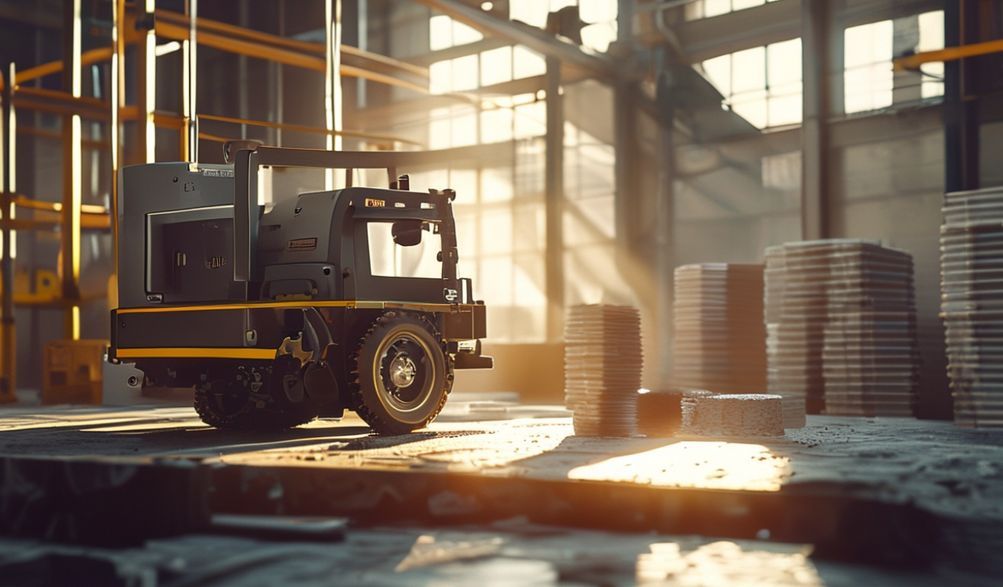
Your Ultimate Guide to Finding the Right Block Brick Machine for Sale
Кіріспе
Picture this: You’re a contractor, and a major project is delayed because your brick supplier failed to deliver—again. Or perhaps you’re an entrepreneur, watching your construction business’s profits get squeezed by the rising cost and inconsistent quality of purchased bricks. Maybe you’re tired of the physical limitations and slow pace of manual brick production. If this sounds familiar, you’re not alone. The solution for builders, contractors, and business owners seeking control, consistency, and scalability often lies in one pivotal investment: a block brick machine for sale.
But navigating the market for brick making equipment is fraught with complexity. From technical jargon to wildly varying price tags and promises, how do you make a choice that won’t become a costly regret? This guide is designed to be your definitive resource. We’ll cut through the marketing noise and provide a comprehensive, expert-backed roadmap for your purchase decision.
Our analysis synthesizes deep industry knowledge, critical technical specifications, and current market trends to give you an authoritative, balanced perspective. We won’t just list features; we’ll delve into the practical realities of Return on Investment (ROI), ongoing maintenance, and how to vet suppliers effectively. Whether you’re searching for a бетон блоктарын жасау машинасы for a large plant or a small brick machine for a startup, this buying guide is built on principles of trust and transparency, aiming to empower you with the clarity needed to invest with confidence.
Understanding Block Brick Machines: Types and Applications
Before comparing models and prices, it’s crucial to understand the landscape. Block brick machines are not one-size-fits-all; they are categorized by their level of automation, output capacity, and specialization. Choosing the wrong type for your needs is the first and most expensive mistake you can make.
Толық автоматты блок жасау машиналары
These are the powerhouses of the industry, designed for uninterrupted, large-scale production with minimal human intervention.
- Сипаттама: Fully automatic systems integrate mixing, conveying, molding, curing, and stacking into a seamless, computer-controlled production line. They often feature Programmable Logic Controller (PLC) systems for precision and consistency.
- Үздік: Large-scale block manufacturing plants, government infrastructure projects, and businesses supplying regional construction markets.
- Негізгі ескертулер: High capital investment, significant space and power requirements, and a need for more skilled technical oversight.
- Keywords: high-output brick plant, automated concrete block machine, stationary block production line.
Жартылай автоматты блок жасау машиналары
This category offers the sweet spot for many growing businesses, balancing valuable automation with manageable cost and complexity.
- Сипаттама: These machines automate the critical molding and compaction processes (using vibration and hydraulic pressure) but require manual intervention for tasks like feeding raw material, removing blocks from the pallet, and transporting them to the curing area.
- Үздік: Medium-scale businesses, block yards supplying local builders, and entrepreneurs looking to scale up from manual operations.
- Негізгі ескертулер: Offers excellent productivity gains over manual machines while keeping operational costs and technical barriers lower than fully automatic systems.
- Keywords: semi-auto brick machine, cost-effective block maker, medium capacity block machine.
Manual or Mobile Brick Machines
At the entry-level of mechanization, these machines prioritize affordability and flexibility over raw output.
- Сипаттама: Often simple mechanical or hydraulic presses that require manual labor for all steps: mixing, filling, compacting, and block removal. Mobile versions can be towed directly to a construction site.
- Үздік: Small-scale projects, individual builders, startups testing the market, on-site production for a specific build, or regions with very low labor costs.
- Негізгі ескертулер: Production output is limited by labor, and consistency depends heavily on operator skill. However, the low barrier to entry is a major advantage.
- Keywords: manual block press, mobile brick making machine, small brick machine, egg laying block machine.
Specialized Machines: Hollow Blocks, Pavers, Interlockers
Beyond standard solid blocks, modern machines offer incredible versatility through interchangeable molds.
- Сипаттама: The core machine is often the same, but the mold defines the product. Specialized molds can produce hollow blocks (for lighter weight and insulation), paving stones, interlocking bricks (for mortar-less construction), curb stones, and more.
- Үздік: Businesses wanting to diversify their product line to meet various construction and landscaping needs, thereby tapping into multiple revenue streams.
- Негізгі ескертулер: Check the mold changeover process—some systems allow quick changes, while others are more time-consuming. Always inquire about mold availability and cost.
- Keywords: hollow block machine, paving block machine, interlocking brick machine, versatile block making plant.
Сатып алмас бұрын ескеру керек негізгі факторлар
With the types clear, you must now drill down into specifics. This is where your due diligence separates a wise investment from a paperweight. Focus on these core areas.
Production Capacity and Output Requirements
Don’t buy a machine based on a seller’s “blocks per hour” claim alone. Work backwards from your own needs.
- Calculate Your Demand: Estimate the average number of blocks you need per day or month. Factor in current projects, future growth, and market demand.
- Match the Machine: A machine’s rated capacity should comfortably exceed your average need to account for maintenance and demand spikes. Remember, a machine running at 80% capacity is healthier than one perpetually maxed out at 100%.
- Think in Shifts: Can you increase output by running two 8-hour shifts instead of one? A robust semi-automatic machine might be a better fit than a cheaper, overstressed fully automatic one.
Machine Specifications and Core Features
These technical details are the heart of performance and durability. Look beyond the sales brochure.
- Діріл жүйесі: This is critical for block density and strength. Look for a powerful, well-mounted vibration motor(s). A dual-vibration system (on the table and mold head) often produces superior results.
- Гидравликалық жүйе: It provides the pressing force. Check the pressure rating (in PSI or Bar) and the quality of pumps and cylinders. A robust system ensures consistent block dimensions and longevity.
- Қалып сапасы: Molds are wear items, but their initial quality matters. Are they made from hardened, high-chrome steel? Poor molds wear quickly, leading to out-of-spec blocks and frequent replacement costs.
- Басқару жүйесі: From simple relays to touch-screen PLCs, the control system dictates ease of operation and precision. For automatic machines, a user-friendly PLC is a worthwhile investment.
Шикізат үйлесімділігі
Your machine is only as good as the raw materials it processes. This is a frequently overlooked factor.
- Араластыру дизайны: What concrete mix can it handle? Standard cement-sand-aggregate? Fly ash? Crushed stone? Ensure the machine’s compaction force and mold design are suited for your locally available materials.
- Интеграцияланған жүйелер: For semi- and fully-automatic setups, the block brick machine for sale is often just one component. You may need a pan mixer, a conveyor system, and a batching plant. Confirm compatibility and costs for a complete production line.
Space, Power, and Operational Requirements
The machine must fit your physical and infrastructural reality.
- Floor Space: Account for the machine, raw material storage, block curing area (which can be substantial), and finished product storage. Include space for material flow.
- Қуат көзі: Check voltage (e.g., 380V/415V 3-phase) and power consumption (kW). An incompatible power supply can lead to massive installation delays and costs.
- Operator Skill: A fully automatic machine may require an electrician or technician for troubleshooting, while a manual machine relies on laborer skill. Factor in training time and costs.
Total Cost of Ownership: Beyond the Sticker Price
The purchase price is just the entry fee. The real cost is spread over years.
- Бастапқы құны: The machine price, shipping, import duties (if applicable), and installation/commissioning.
- Операциялық шығындар: Electricity, labor, raw materials, and routine maintenance supplies.
- Lifetime Costs: Availability and price of brick machine spare parts (like molds, hydraulic seals, vibration motors). A cheap machine with expensive or unavailable parts is a liability.
- Энергия тұтынуы: A more efficient machine may have a higher upfront cost but save significantly on power bills over 5-10 years.
- Expected Lifespan: A well-built machine from a reputable manufacturer should last 10-20 years with proper care. This amortizes the cost effectively.
How to Source Reliable Block Brick Machines for Sale
Now you know не to look for. The next challenge is finding where to buy it from. Your choice of supplier is as important as your choice of machine.
Leading Manufacturers vs. Local Suppliers
Each sourcing path has distinct advantages and trade-offs.
- Leading Manufacturers: (Often international, e.g., in China, Germany, India). They offer advanced technology, rigorous testing, and standardized quality. However, communication, shipping, and after-sales support can be more complex and slower.
- Local Suppliers/Distributors: They provide easier communication, faster parts delivery, and hands-on technical support. The trade-off can be a higher markup on the machine price and potentially a more limited model range.
- The Verdict: The ideal scenario is a local distributor who represents a reputable international manufacturer, giving you the best of both worlds: product quality and local support.
Evaluating New vs. Used Equipment
A used block machine for sale can be a savvy deal or a money pit.
- Pros of Used: Lower initial investment, faster availability, and potentially proven performance.
- Cons & Risks: Unknown maintenance history, worn components, obsolete technology, and likely no or limited warranty. Parts for older models may be unavailable.
- Due Diligence is Key: If considering used, insist on a thorough, in-person inspection (or hire a local mechanic). Review service logs, test-run the machine under load, and check for frame cracks, hydraulic leaks, and excessive wear on molds and vibration mounts.
The Critical Role of After-Sales Service
Treat this as a non-negotiable part of the purchase contract.
- Кепілдік: What is covered (parts, labor)? For how long? What are the terms?
- Қосалқы бөлшектер: Does the supplier stock critical spare parts locally? What is the lead time for ordering others?
- Training: Do they provide comprehensive operator and maintenance training, either on-site or at their facility?
- Техникалық қолдау: Is phone or remote support available? What is the typical response time for a service call?
Red Flags and Vetting Questions to Ask Sellers
Come prepared with specific questions to gauge credibility.
Red Flags:
* Vague or evasive answers to technical questions.
* No physical address or verifiable customer references.
* Pressure to pay with non-secure methods (e.g., wire transfer to a personal account).
* Prices significantly lower than the market average.
Vetting Questions:
1. “Can you provide contact information for 2-3 customers in my region who have purchased this model?”
2. “What is the list of recommended spare parts for the first year, and what is their cost and availability?”
3. “What is included in the standard installation and commissioning package?”
4. “Can you share the technical drawings and foundation plan for this specific model?”
5. “What is your process for handling a mechanical breakdown under warranty?”
Maximizing Your Investment: Operation and Profitability
Your machine has arrived. Now, the focus shifts to optimizing its operation to ensure it becomes a profit center, not a cost center.
Setting Up for Efficient Production
A logical workflow is essential for productivity and safety.
- Linear Flow: Design your layout so raw materials (cement, aggregate, sand) flow in one direction, through mixing and molding, to curing and finally storage. Minimize backtracking or cross-traffic.
- Curing Area: This is often the most space-intensive part. Ensure it’s sheltered from direct sun and rain, with good air circulation. Proper curing (often 7-28 days) is vital for final block strength.
- Safety First: Mark walkways, ensure proper lighting, and keep the production floor clean and free of slurry buildup.
Essential Maintenance for Longevity
Preventative maintenance is cheap; breakdowns are expensive.
- Күнделікті Clean the machine thoroughly, especially molds and the vibration table. Check hydraulic oil levels and for any leaks. Lubricate all moving points as per the manual.
- Weekly/Monthly: Tighten all bolts and nuts (vibration loosens them). Check electrical connections. Inspect molds for wear and damage.
- Annually: Consider a full professional service: replace hydraulic filters and oil if needed, inspect motors and bearings, and recalibrate sensors on automatic machines.
Calculating Your Return on Investment (ROI)
A simplified framework to understand your brick making business profit potential.
- Total Investment: Machine cost + installation + initial raw material stock.
- Monthly Operational Cost: (Raw materials + labor + electricity + maintenance) per month.
- Monthly Revenue: (Number of blocks produced per month) x (Selling price per block).
- Monthly Gross Profit: Monthly Revenue – Monthly Operational Cost.
- Simple Payback Period: Total Investment / Monthly Gross Profit = Number of months to break even.
Мысал: If your total investment is $30,000 and your monthly gross profit is $3,000, your payback period is approximately 10 months. After that, it’s largely profit.
Exploring Market Opportunities and Business Growth
Don’t just make standard blocks. Use your machine’s versatility.
- Өнімді әртараптандыру: Use different molds to produce hollow blocks for construction, paving stones for landscaping, and interlocking bricks for walls. This allows you to serve multiple customer segments.
- Scaling Up: Start with a semi-automatic machine to establish your market. As demand grows, you can add a second machine, upgrade to a fully automatic line, or invest in auxiliary equipment like a forklift or automated pallet stacker.
Frequently Asked Questions (FAQ) About Block Brick Machines
Q1: What is the average price range for a block brick machine for sale?
A: Prices vary dramatically. Small manual machines can start around $3,000-$8,000. Semi-automatic machines typically range from $15,000 to $50,000. Large, fully automatic production lines can cost from $80,000 to over $300,000. The key is to define your needs first (see “Key Factors” above) to understand which price bracket is relevant for you.
Q2: Can one machine produce different types of blocks and bricks?
A: Yes, absolutely. Most machines produce different products by changing the mold. This is a major advantage. When evaluating a machine, ask about the mold changeover process (how long it takes) and the cost of additional molds for hollow blocks, pavers, etc.
Q3: How many workers are needed to operate a semi-automatic machine?
A: A typical semi-automatic setup requires 3-5 people: one to operate the mixer and feed the machine, one to control the machine cycle, and one or two to remove green blocks and transport them to the curing area. A fifth person might handle raw material preparation and general assistance.
Q4: What is the typical lead time from order to delivery and installation?
A: For a new machine from an overseas manufacturer, expect 30-60 days for production, plus 30-45 days for sea shipping, customs clearance, and inland transport. Local suppliers or stock models may deliver in 1-4 weeks. Always factor in installation and commissioning time, which can take a few days to a week.
Q5: Where can I find quality used block brick machines for sale?
A: Reputable sources include established equipment auction houses, dealer networks of major manufacturers (who sometimes take trade-ins), and industry-specific online marketplaces. The critical step is always an independent, professional inspection before purchase to assess the machine’s true condition.
Қорытынды
Дұрыс таңдау жасауblock brick machine for sale is a significant decision that hinges on a careful balance of four pillars: your required production capacity, the total cost of ownership, the machine’s build quality and features, and the unwavering support of your supplier. It’s not about finding the cheapest option or the one with the highest output claim; it’s about finding the optimal solution for your specific business context and growth trajectory.
This guide has provided you with the authoritative framework and practical checklist needed to conduct thorough research. By understanding machine types, scrutinizing specifications, and vetting suppliers with a critical eye, you move from being a potential buyer to an informed partner in the purchasing process.
Use the insights here as your benchmark. Let them guide your conversations with suppliers, shape your questions, and ultimately, lead you to an investment that builds not just high-quality blocks, but a stronger, more profitable, and resilient business for years to come.
Ready to take the next step? Download our free, comprehensive Block Brick Machine Buyer’s Checklist to ensure you cover every critical point during your evaluation and negotiation process.
<