
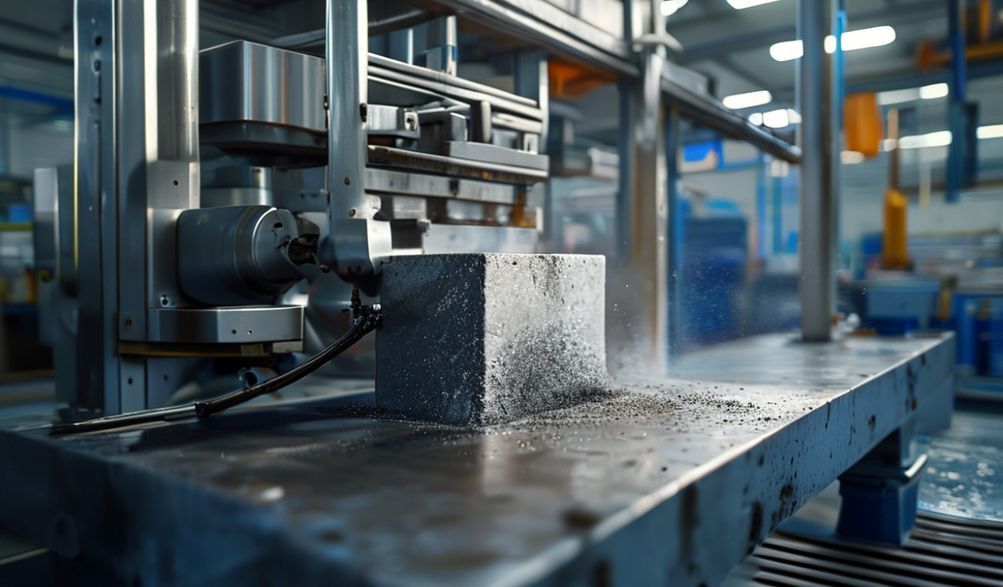
중국 무소성 블록 제조기의 궁극적인 가이드: 푸다 공장 집중 조명
세계적으로 더욱 녹색이며 효율적인 건설을 추구하는 가운데, 말 그대로 우리 세계의 건축 자재를 재구성하는 조용한 혁명이 일어나고 있습니다. 지속 가능하고 비용 효율적인 건축 자재에 대한 수요는 혁신적인 기술을 전면에 부상시켰으며, 이 흐름을 주도하는 것이 바로 무소성 블록 제조기입니다. 경쟁력을 갖추고자 하는 계약자, 개발자 및 기업가들에게 적합한 기계를 조달하는 것은 매우 중요한 결정입니다. 본 포괄적인 가이드는 이 기술의 핵심을 파헤치며, 특히 그 보급을 이끄는 중국 제조업의 강점에 초점을 맞출 것입니다. 우리는중국 무료 블록 제작 기계마침내 존경받는 인물에 대한 상세한 프로필로 마무리됩니다.푸다 블록 제조 공장우리의 목표는 여러분이 이 시장을 주도하고, 진정한 가치 제안을 이해하며, 경제적 및 환경적 목표 모두에 부합하는 투자를 할 수 있는 지식을 갖추도록 하는 것입니다.
무소성 블록 성형 기계란 무엇인가? (핵심 기술 이해하기)
제조업체를 평가하기 전에 기본 기술을 이해하는 것이 필수적입니다. 무소성 블록 제조 기계, 즉 비소성 또는 유압 프레스 블록 기계는 수세기 전의 벽돌 제조 기술과는 크게 다른 방식을 나타냅니다.
이 기계들은 에너지 집약적인 가마에 의존하는 대신, 고밀도 압축 공정을 통해 고강도 건설용 블록을 제작합니다.
노베이크 기술의 과학적 원리
이 과정은 효율성에 있어서 매우 우아합니다. 원료—일반적으로 시멘트, 플라이 애시(석탄 화력 발전소의 부산물), 슬래그, 돌 조각, 모래 등이 정확히 배합된 것—는 기계의 호퍼에 투입됩니다.
- 그런 다음 유압 시스템이 몰드 내의 혼합물에 엄청난 압력(톤 단위로 측정됨)을 가합니다.
- 이 극한의 압축은 시멘트 재료 내에서 수력 결합 반응을 유발하여, 밀집되고 응집된 블록을 형성합니다.
- 새로 압축된 블록은 그 다음 7~28일에 걸쳐 자연적으로 양생하거나 증기 양생실을 이용해 속성 양생을 진행합니다. 이 "양생" 과정을 통해 블록은 수화 반응으로 강도를 얻으며, 화석 연료를 사용한 소성 과정이 전혀 필요하지 않습니다.
기존 소성 벽돌 대비 주요 장점
이 방법의 이점은 상당하며 다각적입니다:
- 에너지 효율 및 지속 가능성:소성 과정을 생략하면 에너지 소비를 최대 70-80%까지 절감할 수 있습니다. 또한 산업 폐기물(플라이애시, 슬래그)을 적극적으로 활용하여 순환 경제에 기여합니다.
- 낮은 탄소 발자국:연료 연소의 상당한 감소는 생산되는 블록당 CO2 배출량이 현저히 낮아지는 것으로 직접적으로 이어집니다.
- 비용 효율성:절감은 낮은 에너지 비용, 더 저렴한 원자재(부산물 활용), 그리고 높은 자동화 가능성으로 인한 노동력 감소에서 비롯됩니다.
- 더 빠른 생산 주기블록은 성형 직후 적재 준비가 되며, 증기 양생을 통해 몇 시간 내에 취급 강도를 달성하여 프로젝트 일정을 단축할 수 있습니다.
- 우수한 재료 특성: The blocks often exhibit higher compressive strength, better sound insulation, and improved fire resistance compared to traditional clay bricks.
Common Applications of Non-Fired Blocks
The versatility of these blocks has led to widespread use in:
* Load-bearing and non-load-bearing walls in residential, commercial, and industrial buildings.
* 포장 블록 for roads, walkways, and parking lots.
* Landscaping and retaining walls.
* Specialty blocks for sound barriers and thermal insulation facades.
Why Source from China? The Global Hub for Block Machinery
China has cemented its position as the world’s workshop for construction machinery, and block making equipment is no exception. There are compelling reasons for this global dominance.
Scale, Expertise, and Supply Chain Advantages
China’s manufacturing ecosystem is unparalleled. The concentration of specialized component suppliers, steel fabricators, and hydraulic system manufacturers creates a synergistic network.
- This results in competitive pricing that is difficult to match elsewhere, without necessarily sacrificing quality.
- Decades of focus on this sector have bred deep technical expertise and continuous incremental innovation in machine design and automation.
- The sheer scale allows manufacturers to maintain extensive inventories and offer a wider range of models and customization options.
Navigating the Market: Quality Spectrum and Due Diligence
It is, however, crucial to acknowledge the spectrum within the market. Not all suppliers are created equal.
* The range spans from premium OEMs (Original Equipment Manufacturers) with robust R&D departments to basic assembly workshops and pure trading companies with no manufacturing capability.
* The key for a buyer is effective due diligence. The adage “you get what you pay for” often holds true; an unusually low price can signal compromises in component quality, durability, or after-sales support.
심층 프로필: 푸다 블록 제조 공장
Amidst the vast landscape of Chinese manufacturers, FUDA Block Making Factory has established itself as a prominent and reliable name. Let’s examine what makes them a noteworthy contender for your investment.
회사의 역사와 제조 철학
FUDA positions itself as a dedicated manufacturer, not a middleman. With a history spanning years in the heavy machinery sector, they have focused on evolving their block making technology.
* Their philosophy typically centers on providing “value-engineered” solutions—balancing performance, durability, and cost.
* A commitment to in-house production of core components like welding frames and assembly ensures better quality control.
* While specific certifications should always be verified directly with the factory, manufacturers of their stature often hold relevant international standards like ISO for quality management and CE for machine safety.
Core Product Line: A Look at FUDA’s Baking-Free Machines
FUDA’s catalog generally caters to small, medium, and large-scale operations, offering flexibility. Their product line often includes:
- 완전 자동 기계: High-output models with automatic material feeding, pressing, pallet return, and block stacking. Ideal for large-scale commercial block yards.
- 반자동 기계: A popular choice for mid-sized businesses, where some steps like feeding or stacking are manual, offering a great balance of productivity and affordability.
- 모바일 블록 머신: Smaller, often manual or semi-automatic machines that can be moved around a site, perfect for producing blocks directly where they are needed.
Typical specifications to expect across their range include pressure from 800 to 2000+ tons, cycle times of 10-20 seconds, and outputs ranging from 3,000 to over 20,000 blocks per 8-hour shift, depending on the model and block size.
The FUDA Advantage: What Differentiates Them?
Based on industry analysis and user feedback, FUDA’s value proposition often hinges on several practical strengths:
- 내구성 중심 Emphasis on using robust materials for key stress points like the mold, press head, and hydraulic system to ensure longevity.
- Comprehensive Solution: They frequently provide not just the machine, but also a suite of standard molds for different block types (hollow, solid, paving, interlocking) as part of the package.
- After-Sales Support Structure: They typically offer a clear warranty (e.g., 1-2 years on core parts), provide detailed operation and maintenance manuals, and maintain accessibility for online technical support.
- Training and Guidance: Reputable suppliers like FUDA often supply production formula guidance and basic operational training videos or documentation.
Critical Factors for Buyers: A Pre-Purchase Checklist
Arming yourself with the right questions is the most important step before any purchase. This checklist will help you evaluate both the machine and the supplier.
Assessing Your Needs: Project Scale, Output, and Block Types
Begin internally. Answer these questions:
* What is my daily or monthly block production requirement?
* What types of blocks will I be producing (solid, hollow, paving, specialty shapes)?
* What are the standard block sizes in my target market?
* What is my available factory space and power supply (voltage, phase)?
검토해야 할 주요 기계 사양
When reviewing a machine’s specs, go beyond the headline output number:
* 압력 (톤수): Higher tonnage generally produces denser, stronger blocks.
* 사이클 타임: The time to complete one press cycle directly impacts maximum output.
* 자동화 수준: Match this to your available labor and desired efficiency.
* 모터 파워 및 유압 시스템: Indicates capability and potential energy consumption.
* 빌드 품질: Request close-up photos/videos of the welding, paintwork, and component brands (e.g., hydraulic pumps, PLC controllers).
Beyond the Machine: Evaluating Supplier Credibility
Your relationship with the supplier is a long-term commitment. Verify the following:
* 공장 감사 Can they provide a recent, unedited video walkthrough of their production workshop?
* Client References: Ask for contactable past clients in a region similar to yours.
* Operational Proof: Request a video of the exact model you’re interested in, running and producing blocks.
* Logistics Clarity: Understand their standard Incoterms (FOB, CIF), and get a detailed breakdown of shipping and estimated customs duties for your country.
* Spare Parts Policy: Ask for a spare parts price list and confirm lead times for critical components.
The Investment & Operational Economics
A transparent look at the numbers ensures no surprises and helps build a solid business case.
Understanding the Total Cost of Ownership
The machine’s price tag is just the beginning. Factor in:
1. Machine Cost: Base price of the equipment.
2. Shipping & Insurance: Freight costs, marine insurance.
3. Customs & Import Duties: Varies significantly by country; consult a local agent.
4. 설치 및 시운전: Potential costs for a technician’s travel or local installation help.
5. 원자재 Cost of cement, aggregates, fly ash in your locality.
6. Labor & Utilities: Costs for operators and electricity.
7. Maintenance: Annual budget for wear parts and preventative maintenance.
Calculating Potential Return on Investment (ROI)
A simplified framework for estimation:
1. Calculate Total Investment: Sum of all initial costs (points 1-4 above).
2. Estimate Operational Cost per Block: (Raw Material + Labor + Utility + Maintenance cost) per block.
3. Determine Your Selling Price per Block: Based on local market rates.
4. Calculate Gross Profit per Block: Selling Price – Operational Cost.
5. Project Annual Gross Profit: (Gross Profit per Block) x (Annual Production Volume).
6. Estimate ROI Period: Total Investment / Annual Gross Profit.
This provides a clear picture of the machine’s payback period and long-term profitability.
FAQ: Your Questions on China Baking-Free Machines & FUDA Factory Answered
Q1: What is the main difference between a baking-free block machine and a traditional brick machine?
A: The core difference is the curing process. Baking-free machines use high-pressure compaction and natural/steam curing, while traditional machines require fossil-fuel-fired kilns, making the former far more energy-efficient and eco-friendly.
Q2: Is the quality of blocks from a non-fired machine comparable to fired bricks?
A: Yes, for many applications. High-pressure baking-free blocks achieve excellent compressive strength, durability, and dimensional consistency. They often outperform fired clay bricks in strength and offer better thermal and acoustic insulation.
Q3: Why should I consider FUDA factory specifically?
A: FUDA has built a reputation for robust engineering, reliable after-sales support, and offering a balance of automation and affordability. Their focus on core manufacturing (not just trading) and providing comprehensive solutions (machine + molds + guidance) adds significant value for buyers.
Q4: What kind of after-sales support can I expect when importing from China?
A: Reputable factories like FUDA typically offer online technical support, detailed operation manuals, video guides, and a warranty (1-2 years is common). They should also provide accessible spare parts lists and support for finding local technicians if needed. Always confirm these details in your contract.
Q5: What are the logistical steps involved in importing a machine from FUDA?
A: The general process includes: 1) Finalizing specifications and contract (Incoterms like FOB or CIF), 2) Payment (often a deposit + balance before shipment), 3) Production and pre-shipment inspection, 4) Shipping and customs clearance in your country (you may need an agent), 5) Delivery and installation.
결론
The shift towards 베이킹 프리 블록 제작 기계 technology is more than a trend; it’s a logical step forward for sustainable and economically sound construction. China, as the manufacturing epicenter, offers access to this technology at compelling value points. As we have explored, success in this venture hinges on informed decision-making. Manufacturers with a proven track record like the 푸다 블록 제조 공장 distinguish themselves through tangible commitments to engineering quality, customer support, and providing a complete production solution. By meticulously defining your requirements, conducting rigorous supplier due diligence, and planning for the full lifecycle of your investment, you can secure a piece of machinery that will reliably build the foundation of your projects—and your profits—for years to come.
Authoritative Note & Disclaimer:
This guide is compiled based on extensive industry research, analysis of manufacturing trends, and publicly available data on block making technology and leading manufacturers. It is intended for informational purposes to aid in the preliminary research phase. We strongly recommend that potential buyers conduct their own due diligence, request factory audits, verify all certifications directly with suppliers, and consult with trade and logistics experts before finalizing any purchase. Specifications, support terms, and company details should always be confirmed with the manufacturer.