
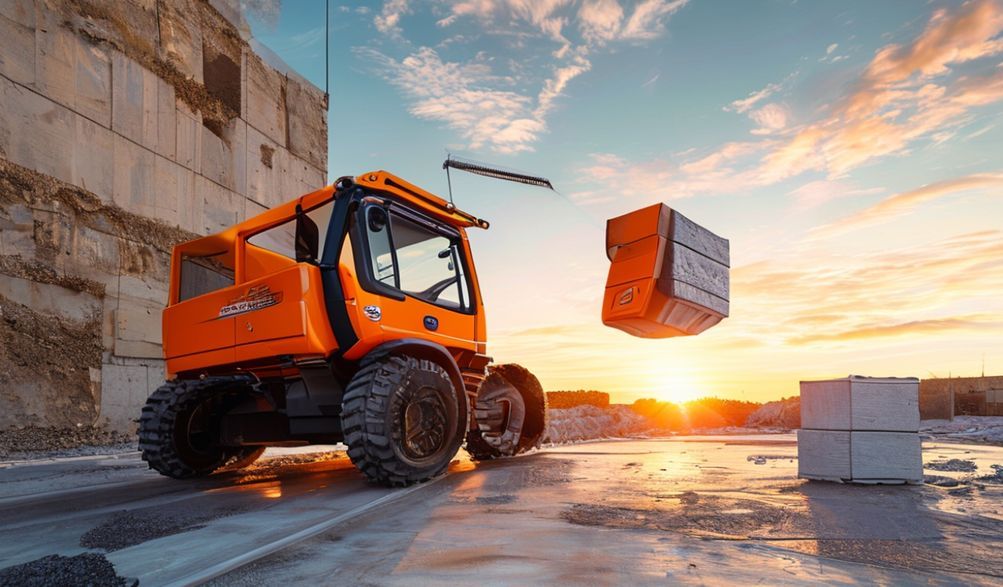
블록 로딩 머신의 궁극적인 가이드: 종류, 용도 및 선택 방법
소개
Picture a bustling construction site at 7 AM. The air is filled with the promise of progress, but a fundamental challenge looms: a delivery truck has just arrived with 20 pallets of concrete blocks. The clock is ticking, the crew is waiting, and the only plan is a team of laborers ready to manually unload, carry, and stack each heavy block. The scene is one of inherent inefficiency, escalating physical strain, and undeniable safety risk. This scenario, repeated daily in masonry yards, block manufacturing plants, and logistics hubs worldwide, represents a critical bottleneck in productivity and a primary source of work-related injury.
The modern solution to this age-old problem is the block loading machine. Far more than a simple forklift, this specialized equipment is engineered to transform the handling of heavy, uniform materials from a costly chore into a streamlined, safe, and precise operation. By automating the most labor-intensive and hazardous aspects of material movement, these machines protect your workforce, protect your materials, and protect your bottom line.
This ultimate guide serves as your comprehensive, expert-backed resource. Drawing from engineering principles, industry operational standards, and cost-benefit analyses, we will dissect everything you need to know. From understanding core mechanics and various machine types to making a confident purchasing decision and ensuring safe operation, this guide will equip you with the knowledge to leverage a block loading machine for maximum return on investment. Let’s dive in.
What is a Block Loading Machine? Core Function and Design
At its heart, a block loading machine is a purpose-built champion for handling dense, uniform loads. It is the specialized tool where generic equipment falls short.
기계의 목적 정의하기
A block loading machine is a specialized material handling vehicle designed explicitly for the lifting, transporting, and precise stacking of blocks, bricks, pavers, and similar unitized heavy loads. Its entire design philosophy centers on stability, visibility, and secure load engagement for these specific shapes and weights.
- 주요 차별화 요소: While a standard forklift can move a pallet of blocks, a dedicated block handler is optimized for the task. Think of it as the difference between a general-purpose utility knife and a surgeon’s scalpel. The block machine offers features like:
- Specialized attachments that secure the load from the sides or top.
- Enhanced stability to counteract the high center of gravity of a stacked load.
- Superior operator visibility for precise placement.
주요 구성 요소와 작동 방식
Understanding the core components demystifies the machine’s operation:
- Chassis & Power Source: The robust foundation. Power options include:
- 전기 Ideal for indoor use (manufacturing plants, warehouses). Zero emissions, quieter operation.
- Diesel/LPG: Provides greater power and runtime for demanding outdoor applications like construction sites.
- Operator Cabin & Controls: The command center. Designed for 360-degree visibility with intuitive hydraulic controls.
- 유압 시스템: The muscle. This system provides the powerful, smooth lifting force needed to handle multi-ton loads.
- The Attachment: The defining feature. This is the interface with the load.
- Block Forks: Extra-long, tapered forks that slide into the voids of block pallets.
- Side-Shift Clamps: Padded arms that hydraulically clamp the sides of a strapped pallet or block cube.
- 진공 헤드 Use powerful pumps to create suction on smooth-faced blocks (e.g., concrete, AAC, glass blocks).
The Operational Workflow is a seamless cycle: Position the machine → Engage the attachment to secure the load → Lift smoothly to the required height → Transport with stability → Precisely place or stack the load.
Types of Block Loading Machines and Their Applications
Not all block loading machines are created equal. The right type depends entirely on your application, volume, and workflow.
Block Forklifts / Moffett-style Mounted Trucks
These are the versatile road warriors of block handling. Mounted directly onto a delivery truck’s bed, they can be driven off to unload themselves at the job site.
- 그들은 어떻게 작동하나요: The driver arrives, unloads the mounted forklift, and uses it to place pallets exactly where needed.
- 최적 대상: Masonry supply companies, block delivery drivers, and job sites without a dedicated, on-site forklift. They offer unparalleled flexibility for “last-yard” delivery.
Industrial Block Handling Forklifts
These are the heavy-duty workhorses for high-volume operations. They are standalone, industrial-grade forklifts permanently equipped with block forks or clamping attachments.
- 그들은 어떻게 작동하나요: Operating within a yard or plant, they move loads from production lines to storage, from storage to loading docks, and around large construction sites.
- 최적 대상: Large block and brick manufacturing plants, major masonry contractors, and large-scale construction projects requiring constant, heavy material movement.
Vacuum Block Lifters and Manipulators
For tasks requiring a gentle touch and pinpoint accuracy, vacuum systems are indispensable. They handle blocks from the top, leaving the sides completely accessible.
- 그들은 어떻게 작동하나요: A series of vacuum pads (powered by an electric or hydraulic pump) attach to the smooth surface of a block. The operator can then lift, rotate, and place individual blocks or small batches with extreme precision.
- 최적 대상: Handling delicate or finished blocks (e.g., split-face, polished), installing panelized block systems, and any application where clamp-based handling could cause damage.
Robotic Block Palletizers/Depalletizers
At the pinnacle of automation, these systems remove human labor from the repetitive tasks of building and breaking down pallet loads.
- 그들은 어떻게 작동하나요: Integrated into a production or warehouse conveyor line, robotic arms with specialized grippers or vacuum heads automatically stack blocks onto pallets in a pre-programmed, optimal pattern, or unload them in reverse.
- 최적 대상: High-volume block producers seeking maximum throughput, consistency, and labor savings on their packaging lines.
Critical Factors for Choosing the Right Block Loading Machine
Selecting the ideal machine is a strategic decision. Ask these critical questions to guide your choice.
Assessing Your Load Requirements
The load dictates the machine.
* Weight Capacity: Never exceed the machine’s rated capacity. Calculate the weight of a fully loaded pallet or block cube.
* Block Dimensions & Pallet Size: Determine the required fork length or clamp opening width. A standard block pallet is 48″ x 40″, but sizes vary.
* Load Stability: Are blocks banded/strapped? Loose block handling requires attachments (like clamps) that can secure the entire cube.
Evaluating the Work Environment
Where will the machine operate?
* Terrain: Smooth concrete floors allow for standard tires. Rough, uneven terrain at a construction site requires a rugged, high-clearance machine with pneumatic tires.
* Indoor vs. Outdoor: Indoor use mandates electric power for air quality. Outdoor use allows for diesel/LPG.
* Space Constraints: Narrow aisles in a warehouse require a machine with a tight turning radius.
* Lift Height: How high do you need to stack? Required mast height is a crucial specification.
Power Source and Operational Efficiency
The power plant affects cost, performance, and usability.
* Electric Machines:
* 장점: Zero emissions, quiet, lower “fuel” cost per hour, less heat generation.
* 단점: Limited runtime before recharging, lower peak power, higher upfront cost for batteries/chargers.
* Internal Combustion (Diesel/LPG):
* 장점: Greater power and torque, unlimited runtime with refueling, better for rough terrain.
* 단점: Emissions and noise prohibit indoor use, higher ongoing fuel and maintenance costs.
Attachment Compatibility and Versatility
The attachment is your tool. Choose wisely.
* Specialization vs. Flexibility: A dedicated block clamp is the most secure for loose blocks. However, a quick-attach system that allows you to switch between block forks, a standard pallet fork, and a boom might offer better value for a diverse operation.
* Attachment Features: Look for side-shift capability (allows fine positioning without moving the entire machine) and tilt functionality for handling loads on uneven ground.
Safety First: Operating and Maintaining Your Machine
A block loading machine is a powerful asset that demands respect. Safety and maintenance are non-negotiable.
Essential Operator Safety Protocols
Proper training is the cornerstone of safety. Key protocols include:
- Pre-Operation Inspection: A daily walk-around check of tires, fluids, hydraulics, brakes, lights, and the attachment mechanism.
- Understanding Stability: The “stability triangle” is fundamental. Operators must know how load weight, load center distance, and machine dynamics interact. A load that is too heavy or too high will tip the machine.
- Safe Travel Practices: Keep loads low while traveling, use a spotter when vision is obstructed, sound the horn at intersections, and always drive at a safe speed for the conditions.
- Secure Load Handling: Ensure the attachment is fully engaged before lifting. Never move a load that is not secure.
- 인증: Operators must be formally trained and certified according to local regulations (e.g., OSHA 1910.178 in the United States).
Routine Maintenance Checklist for Longevity
Preventive maintenance prevents costly downtime and failures.
- Daily/Pre-Shift:
- Check engine oil, coolant, and hydraulic fluid levels.
- Inspect tires for wear, damage, and proper pressure.
- Look for hydraulic leaks, frayed wires, or damaged hoses.
- Test all controls, lights, and alarms.
- Scheduled/Per Manufacturer Guidelines:
- Change fluids and filters at recommended intervals.
- Lubricate all pivot points and attachment mechanisms.
- Check and tighten chassis and mast bolts.
- For electric models: maintain battery water levels, clean terminals, and ensure proper charging cycles.
Adherence to the manufacturer’s service schedule is the single best way to ensure machine longevity and safety.
The Tangible Benefits: ROI of a Block Loading Machine
Investing in a block loading machine is an investment in your business’s core efficiency. The return is measurable and multifaceted.
Dramatically Increased Productivity and Speed
One machine replaces multiple laborers and works faster.
* Quantifiable Gain: A single operator can unload a truck in minutes instead of hours. What used to take a 4-person crew half a day can be accomplished by one machine and operator in under an hour.
Enhanced Workplace Safety and Reduced Injury Risk
This is perhaps the most critical benefit.
* Eliminates Hazards: The machine removes workers from the direct dangers of heavy lifting, pinch points, and dropped loads.
* Reduces Injuries: It drastically lowers the risk of costly, career-ending musculoskeletal disorders like back injuries, hernias, and shoulder strains.
Improved Material and Cost Efficiency
Precise handling saves money on wasted materials.
* Less Damage: Mechanical handling with proper attachments is consistent and gentle, reducing chipping, cracking, and breakage compared to manual throws and drops.
* Optimized Storage: The ability to stack blocks higher and more stably maximizes your storage footprint, whether in a yard or warehouse.
Labor Optimization and Ergonomic Benefits
You can do more with your skilled workforce.
* Redeploy Talent: Instead of using skilled masons or plant workers for grueling manual labor, they can focus on their value-added trades—laying block or operating production machinery.
* Attract & Retain Staff: Providing a safe, modern work environment is key to attracting and retaining talent in a competitive labor market.
자주 묻는 질문 (FAQ)
Q: What is the typical lifting capacity of a block loading machine?
A: Capacities vary dramatically. Smaller truck-mounted units may start around 5,000 lbs, while heavy-duty industrial forklifts can handle 10,000 to 15,000 lbs or more. Always choose a machine rated for your specific block weight and pallet configuration.
Q: Can a standard forklift be converted into a block loading machine?
A: Often, yes. Using aftermarket or OEM-approved block fork or clamp attachments can adapt a standard forklift for block handling. However, a dedicated block machine is engineered from the ground up for superior stability, visibility, and integrated attachment control, making it the safer and more efficient choice for frequent use.
Q: What safety certifications should an operator have?
A: Operators must be trained and certified to the regulatory standard in their region (e.g., OSHA compliance in the US). This training must be specific to the machine type (e.g., “rough terrain forklift with block clamp attachment”) and include both classroom instruction and a hands-on practical evaluation.
Q: How much does a block loading machine cost?
A: Cost is highly variable. A used or basic new truck-mounted unit may start in the $30,000 – $50,000 range. A new, high-capacity industrial block handler can range from $60,000 to over $100,000. Robotic systems are a significant capital investment. Focus on 총 소유 비용—including maintenance, fuel, and the productivity gains that offset the purchase price.
Q: What are the signs that my business needs one?
A: Clear indicators include: frequent manual handling of blocks/bricks, job progress being slowed by material movement, high rates of product damage from handling, rising labor costs or worker compensation claims related to lifting, and difficulty finding or retaining labor for manual handling tasks.
결론
A block loading machine is far more than a piece of equipment; it is a strategic upgrade to your operational DNA. It directly addresses the core challenges of cost, safety, and efficiency in material handling. Whether you are a masonry supplier, a block manufacturer, or a large-scale contractor, the right machine can pay for itself through saved labor, reduced injury, and faster project cycles.
As an expert final recommendation, we advise a methodical approach. Revisit the selection factors outlined in this guide. Then, take the next step: consult with reputable equipment dealers who specialize in material handling. Request a demonstration using your actual materials in a setting that mimics your work environment. Finally, and most critically, budget for and insist upon comprehensive, certified operator training.
Call-to-Action: Audit your current block handling process today. Identify the bottlenecks and risks. Use this guide as your framework, and take the decisive step toward contacting a trusted industry supplier. The efficiency, safety, and competitive advantage you gain will be the ultimate measure of your investment.
<