
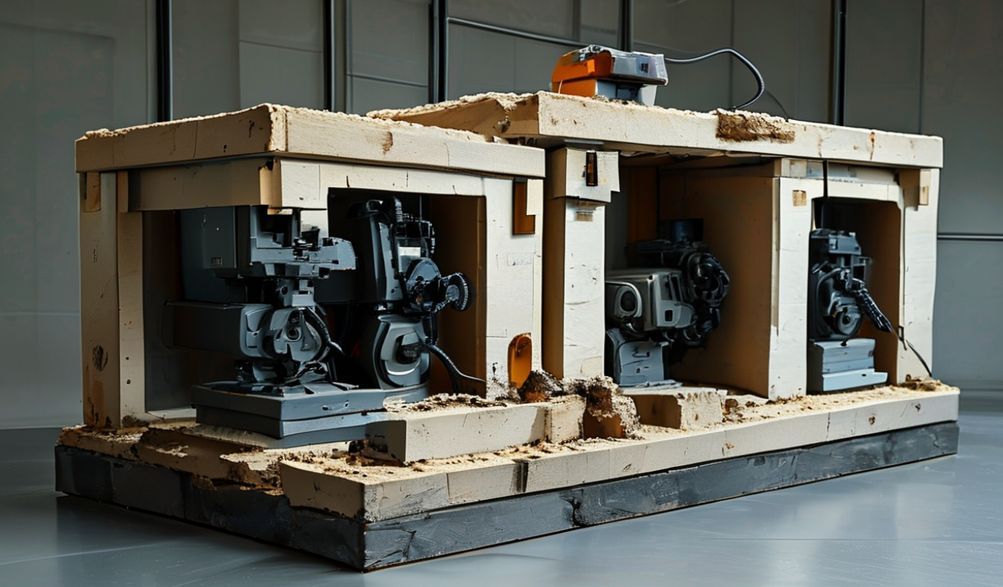
홀로우 블록 기계의 최종 가이드: 종류, 가격 및 선택 방법
소개
높이 솟은 마천루부터 겸손한 가정집에 이르기까지, 현대 건축은 기본적인 건축 자재인 콘크리트 홀 블록에 의존합니다. 강도, 단열성, 비용 효율성으로 소중히 여겨지는 이 보편적인 재료는 전 세계 인프라의 중추입니다. 그러나 내구성 있는 벽 뒤에는 이를 가능하게 하는 핵심 장비가 있습니다. 바로홀로우 블록 머신건설업자, 계약자 및 기업가에게 적합한 장비를 선택하는 것은 단순한 구매가 아닙니다. 이는 생산성, 프로젝트 일정 및 수익성에 영향을 미치는 중대한 비즈니스 결정입니다.
이 포괄적인 가이드는 최종적이고 편향되지 않은 정보원이 되도록 설계되었습니다. 깊은 산업 전문성과 기술적 지식을 바탕으로 마케팅의 잡음을 걷어내고, 정보에 기반한 선택을 내리는데 필요한 명확성을 제공합니다. 규모를 확장하려는 경험 많은 계약자이든, 이 분야에 진입하려는 야심 찬 제조업체이든, 다양한 환경을 헤쳐나가는 방법을 배우게 될 것입니다.홀로우 블록 기계우리는 단순한 수동 프레스에서 완전 자동화 생산 라인에 이르기까지 다양한 유형을 분석하고, 초기 가격 이상의 실제 소유 비용을 평가하며, 특정 요구 사항에 맞는 완벽한 장비를 선택하기 위한 명확한 프레임워크를 제공할 것입니다. 마지막으로, 투자가 향후 수년간 양질의 블록과 탄탄한 수익을 보장하도록 운영상의 필수 요소들을 다룰 것입니다.
모든 것의 중심에 있는 기계를 이해하는 것부터 시작해 봅시다.
홀로우 블록 머신이란 무엇이며 어떻게 작동하나요?
At its core, a hollow block machine is a specialized type of concrete block making equipment designed to manufacture hollow concrete blocks with precision, consistency, and efficiency. It automates and mechanizes the process of compacting a semi-dry concrete mix into a specific shape, creating a block that is both strong and lightweight due to its hollow-core design.
Core Function and End Product
The machine’s sole purpose is to produce hollow concrete blocks. These blocks are rectangular units with one or more hollow cavities, typically comprising 50-75% of their total volume. Standard sizes vary by region but common examples include 400mm x 200mm x 100mm or 400mm x 200mm x 150mm.
- Key Advantages of Hollow Blocks:
- 경량화:현장에서 운반 및 취급이 더 쉽고 저렴합니다.
- Improved Insulation: The air pockets provide better thermal and acoustic insulation compared to solid blocks.
- 자재 효율성 Use less concrete, reducing the cost per unit.
- Structural Utility: The cavities can be used for running electrical conduits or plumbing, and can be filled with reinforced concrete for added strength in columns and beams.
기본 작동 원리
The transformation from raw powder and aggregate to a solid block follows a systematic process. While automation levels vary, the fundamental steps remain the same:
- 믹싱 Cement, sand, aggregates (like crushed stone), and a precise amount of water are mixed to create a semi-dry concrete mix. The consistency is crucial—it must be damp enough to bind but dry enough to hold its shape immediately after molding.
- 급식이 혼합물은 기계의 호퍼에 공급됩니다.
- 압축 및 성형 The mix is dropped into a mold (or die) cavity. A combination of high-frequency vibration and mechanical or hydraulic pressure compacts the material, removing air pockets and ensuring density. This is the most critical phase for achieving block strength.
- 배출 (탈착): The compacted block is pushed upward out of the mold onto a flat pallet or the factory floor.
- 치유: The freshly molded blocks are then moved to a curing area. They are kept moist (often by sprinkling water) for several days to allow the cement to fully hydrate and gain strength before being used in construction.
기계의 주요 구성 요소
주요 구성 요소를 이해하면 작동 원리가 명확해집니다.
- 호퍼: The container that holds and feeds the raw concrete mix.
- 곰팡이 (또는 다이) The interchangeable steel component that defines the block’s shape, size, and pattern (e.g., 2-block, 4-block, or paver mold).
- 진동 시스템 Usually an electric motor with eccentric weights that generates high-frequency vibrations to compact the concrete.
- 압축 시스템: This can be hydraulic (using fluid pressure) or mechanical (using a lever or flywheel) to apply downward force on the mix in the mold.
- 제어판 Houses the electrical controls for the motors, vibration, and hydraulic systems (varies by automation level).
Types of Hollow Block Machines: A Detailed Comparison
The market offers a spectrum of 홀로우 블록 기계, categorized primarily by their level of automation and mobility. Your choice here will define your production capacity, labor requirements, and capital investment.
수동식 공동 블록 기계
These are the simplest and most fundamental type, relying almost entirely on human power.
- 설명 및 작동: An operator manually fills the mold with mix, engages a lever or handle to apply compaction pressure (sometimes aided by a flywheel), and then uses the lever to eject the finished block. Vibration, if present, is often mechanically activated.
- 최적 대상: Extremely small-scale projects, DIY enthusiasts, remote locations with no power, or entrepreneurs testing the market with a minimal budget.
- 장점과 단점:
- 장점: Very low initial cost, simple to understand and repair, no electricity required for basic models.
- 단점: Very low output (40-100 blocks per 8-hour day), highly labor-intensive, inconsistent block quality dependent on operator skill, physically demanding.
반자동 중공 블록 기계
This category strikes the most popular balance for small to medium businesses, automating the most strenuous parts of the process.
- 설명 및 작동: The feeding of concrete into the hopper is often manual or assisted by a simple conveyor. However, the compaction (vibration and pressure) and block ejection are powered and automated, activated by a button or pedal. The operator’s main tasks are feeding raw materials and removing finished blocks.
- 최적 대상: Small to medium-scale block manufacturing businesses, contractors producing blocks for their own projects, and municipal works departments.
- 장점과 단점:
- 장점: Moderate cost, significantly higher and more consistent output than manual machines (300-1000+ blocks per shift), better block quality due to consistent vibration/pressure, less physically demanding.
- 단점: Requires a stable power supply, higher maintenance than manual machines, still requires several operators for efficient production.
Fully Automatic Hollow Block Machines
These are industrial-grade production lines designed for maximum output with minimal human intervention.
- 설명 및 작동: These systems are computer-controlled and integrated. They often include automatic batching and mixing plants, conveyor belt feeding, robotic pallet handling, and stackers. The entire process—from raw material to stacked, cured blocks—is automated. Some advanced models feature touch-screen PLC (Programmable Logic Controller) panels.
- 최적 대상: Large-scale commercial block manufacturing plants supplying construction companies and retailers, government housing projects, and high-volume infrastructure development.
- 장점과 단점:
- 장점: Very high output (2000-10,000+ blocks per shift), exceptional consistency and quality, optimized material usage, low labor cost per block.
- 단점: Very high initial investment, requires significant factory space and three-phase power supply, complex maintenance requiring specialized technicians.
모바일 대 고정식 블록 머신
This is another key distinction, especially for contractors.
- 모바일 블록 머신: These are typically smaller, trailer-mounted semi-automatic or manual machines. They can be towed directly to a construction site to produce blocks on-location, eliminating transport costs for the finished product. Ideal for remote projects or where local block supply is unreliable.
- 고정식 블록 기계 These are fixed installations, from a semi-automatic machine in a small shed to a full automatic plant. They are the choice for dedicated manufacturing facilities focused on supplying a market.
Critical Factors to Consider Before Buying
Selecting a 홀로우 블록 머신 requires careful self-assessment and technical evaluation. Rushing this decision can lead to costly mismatches between your needs and your equipment’s capabilities.
생산 요구 사항 평가하기
Start by asking the right questions:
* What is my current and projected demand? Calculate the blocks needed per day/week for your projects or sales forecasts.
* What is my project scale? Are you building a single house, a housing estate, or supplying a region?
* Is this for personal use or a commercial venture?
* What is my growth plan for the next 3-5 years? Consider a machine that can grow with you, perhaps by allowing for future automation upgrades.
기계 사양 및 특징
Drill down into the technical details:
* 금형의 다용도성: Can the machine accept different molds to produce hollow blocks of various sizes, solid blocks, paving stones, or curb stones? This flexibility expands your product line and marketability.
* 사이클 타임: How many seconds does it take to produce one cycle (e.g., 4 blocks)? This directly determines your hourly output.
* 전력 요구 사항 Does it run on single-phase or three-phase electricity? Do you have a diesel engine option for areas with unstable power?
* 자동화 수준: Align this with your labor availability and budget, as discussed in the types section.
* 빌드 품질: Inspect the thickness of steel plates, the quality of welding, and the brand of critical components like hydraulic pumps and vibration motors. This dictates durability.
Budget and Total Cost of Ownership
그hollow block machine price is just the entry ticket. A savvy buyer plans for the full financial picture:
* 초기 구매 가격: The cost of the machine itself.
* Installation & Foundation: Some machines require a special concrete foundation.
* 보조 장비: Cost of a concrete mixer, conveyor, pallets, curing racks, and potentially a forklift.
* 원자재 Ongoing cost of cement, aggregates, and water.
* 노동 Wages for operators and helpers.
* 유지보수 및 예비 부품: Regular servicing and the inevitable replacement of wear parts like mold liners, vibration motors, and hydraulic seals.
* Power/Fuel: The ongoing energy consumption cost.
공급업체 및 애프터서비스 평가
여기가 바로신뢰성 becomes paramount. A reliable supplier is as important as the machine.
* Manufacturer Reputation: How long have they been in business? Can they provide references or visit existing client sites?
* 보증:어떤 내용이 포함되며, 얼마나 오래 적용되나요?
* 예비 부품 가용성: Are parts readily available locally or do they ship from abroad with long lead times?
* 기술 지원 Do they offer installation supervision, operator training, and troubleshooting support via phone or video?
* 서비스 네트워크: Is there a local service technician, or must you wait for an engineer to travel to you?
Operating and Maintaining Your Hollow Block Machine
Proper operation and maintenance are non-negotiable for safety, block quality, and machine longevity.
Step-by-Step Operational Guide
- Safety First: Always wear safety glasses, gloves, and steel-toe boots. Ensure all safety guards are in place.
- Pre-Operation Check: Inspect the machine for loose bolts, check oil levels in the hydraulic tank, and ensure the mold is clean and properly secured.
- 자재 준비 Prepare a consistent, semi-dry concrete mix with the correct ratio (e.g., 1 part cement : 3 parts sand : 2 parts aggregate is a common starting point).
- Running the Machine: Feed the mix into the hopper, initiate the cycle (via lever, button, or automated system), and allow the machine to compact and eject the block.
- Block Handling: Carefully transfer the green (uncured) blocks onto a curing rack using a pallet, avoiding any impact or distortion.
Essential Maintenance Checklist
- Daily: Clean the machine thoroughly after use, especially the mold and hopper, to prevent concrete buildup. Check for oil leaks and unusual noises.
- Weekly: Lubricate all moving parts (pivots, bearings) as per the manual. Inspect and tighten all bolts and nuts, which can loosen due to vibration.
- Monthly: Check the hydraulic fluid for contamination. Inspect the mold for wear or damage. Test the vibration motor mounts.
Troubleshooting Common Issues
- Poor Block Strength: Usually caused by an incorrect water-cement ratio (too much water), insufficient vibration time/pressure, or low-quality cement.
- Surface Cracks: Often due to too little water in the mix, excessive vibration, or improper curing (drying out too quickly).
- Blocks Sticking in Mold: Indicates a worn or damaged mold, lack of mold release agent (often just water or a light oil), or a mix that is too wet.
- Weak Vibration: Check the vibration motor mounts, power supply, and the eccentric weights on the motor shaft.
Hollow Block Machine Price Ranges and ROI
Providing exact prices is impractical due to global market fluctuations, but understanding the order of magnitude is crucial for planning.
Price Breakdown by Machine Type
- 수동식 중공 블록 기계 The most affordable entry point, typically ranging from $1,000 to $4,000, depending on build quality and capacity.
- 반자동 중공 블록 기계: This broad category spans from $5,000 to $30,000+.
- Basic single-phase, 4-block models start around $5,000-$10,000.
- More robust, higher-capacity models with better hydraulics and multi-mold capability can cost $15,000-$30,000.
- Fully Automatic Hollow Block Machines: Represent a significant industrial investment, generally starting from $50,000 and easily exceeding $200,000 for complete production lines with batching plants and robotic handling.
Understanding What Influences the Price
The variance within each category is driven by:
* Brand & Origin: Established brands and machines from certain manufacturing hubs command different prices.
* 생산 능력 A machine that makes 10 blocks per cycle costs more than one that makes 4.
* Level of Automation & Features: PLC controls, automatic pallet feeders, and color dosing systems add cost.
* 빌드 품질 및 구성 요소: Machines with industrial-grade hydraulics and motors are priced higher than those with commercial-grade parts.
Calculating Your Potential Return on Investment (ROI)
A simple ROI analysis can clarify the business potential:
1. Calculate Production Cost Per Block: Add up the cost of raw materials (cement, sand, aggregate), power, labor, and a portion of maintenance for the number of blocks produced in a period.
2. Determine Local Selling Price: Research the market price for a quality hollow block in your area.
3. Find Gross Profit Per Block: Selling Price – Production Cost.
4. Estimate Break-Even Timeline: Divide the Total Initial Investment (machine + setup) by the Gross Profit Per Block x Blocks Produced Per Month. This gives you the number of months to recover your initial outlay.
For example, if your profit is $0.10 per block and you produce 10,000 blocks a month, your monthly gross profit from blocks is $1,000. A $12,000 machine would have a simple break-even point of about 12 months, not accounting for other business costs. This framework highlights the importance of output and market demand.
FAQ Section
Q1: What is the average production capacity of a semi-automatic hollow block machine?
Capacity varies widely. A standard 4-block machine with a 20-30 second cycle time can produce approximately 500-800 blocks in an 8-hour shift with a good crew. Higher-end models with faster cycles can produce 1,200-2,000 blocks per shift.
Q2: Can one machine produce different sizes and types of blocks?
Yes, most quality machines are designed to accept interchangeable molds. You can typically purchase additional molds for different hollow block sizes, solid blocks, interlocking pavers, or garden curbs, allowing you to diversify your product offering.
Q3: What is the typical lifespan of a well-maintained hollow block machine?
With proper operation, regular maintenance, and timely replacement of wear parts, a robust semi-automatic or automatic machine can easily last 10-15 years or more. The core frame and structure often last decades, while components like molds and hydraulic seals are consumables.
Q4: What raw material mix is recommended for optimal blocks?
A common, reliable mix for standard hollow blocks is a 1:3:2 ratio (by volume) of Portland cement, fine sand (or a sand/stone dust blend), and a 3/8″ coarse aggregate (like crushed stone). The water content should be minimal—just enough to make the mix hold together when squeezed in your hand. Always test your local materials.
Q5: Are there any specific safety certifications I should look for in a machine?
Look for machines that comply with international safety standards, often indicated by CE (for Europe) or similar markings. More importantly, ensure the machine has proper safety guards covering all moving parts, pinch points, and the vibration mechanism. The electrical system should be properly enclosed and grounded.
Q6: How much space is required to set up a small-scale hollow block manufacturing plant?
For a semi-automatic operation, you need space for:
* The machine itself (approx. 4m x 3m).
* Raw material storage (sand, aggregate piles or silos).
* A mixing area.
* A curing area (the largest space, where blocks sit for 7-14 days). This can be under a simple shaded, open-sided shed.
* Storage for finished blocks.
A minimum plot size of 500-1000 square meters (approx. 5,000-10,000 sq ft) is a practical starting point for comfortable workflow.
결론
올바른 선택홀로우 블록 머신 is a strategic decision that hinges on a clear understanding of your production needs, a realistic assessment of your budget—including the total cost of ownership—and a commitment to proper operation and maintenance. From the labor-intensive manual press to the humming fully automatic plant, each machine type serves a specific purpose in the construction ecosystem.
As an expert final recommendation, prioritize long-term value over short-term savings. A slightly higher initial investment in a robust machine from a reputable supplier with strong after-sales support will pay dividends in consistent output, lower downtime, and superior block quality. This reliability builds your reputation and your bottom line. Use the knowledge in this guide not just to buy a machine, but to build a foundation for your construction or manufacturing success.
Ready to take the next step with confidence? [Download our comprehensive Hollow Block Machine Buyer’s Checklist] to compare specifications, evaluate suppliers, and ensure you’ve covered every critical detail before making your investment.
<