
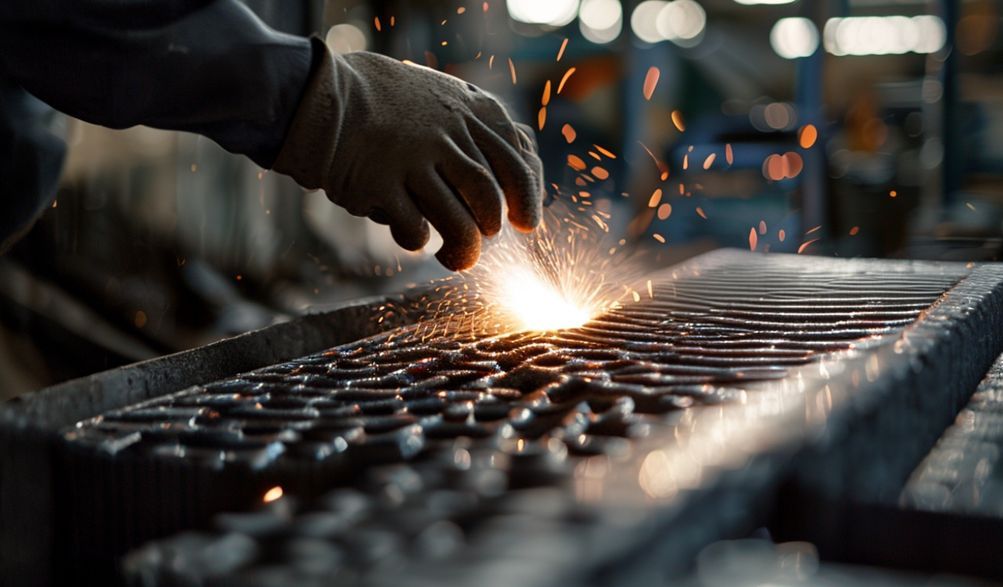
The Ultimate Guide to Cement Block Making Machine Molds: Sourcing from a Professional Factory
소개
In the world of concrete block production, the spotlight often falls on the block making machine—its speed, automation, and brand. Yet, drawing from our factory’s 20+ years of specialized manufacturing and collaboration with block producers worldwide, we know a critical truth: the heart of your operation, and the ultimate determinant of your product quality and profitability, is the cement block making machine mold. This precision tool is where raw concrete mix is transformed into a saleable, structural product. Its quality dictates everything from daily output to long-term operational costs.
This definitive guide is crafted for business owners, plant managers, and procurement officers who understand that capital equipment decisions require deep insight. Whether you’re commissioning a new plant, expanding your product line, or seeking to optimize an existing setup, selecting the right cement block making machine mold factory is a strategic partnership. We will demystify mold technology, illuminate the markers of true quality, and provide a clear framework for choosing a factory partner. By the end, you’ll possess the knowledge essential for maximizing the return on your block making investment, grounded in the tangible processes and expertise of a professional mold manufacturing floor.
Why the Mold Factory is the Heart of Your Block Production
The mold is not a passive accessory; it is the core tool that defines your product. Partnering with a factory that understands this distinction is the first step toward operational excellence.
Precision Engineering for Product Consistency
Every batch of blocks must be identical. Tolerances measured in fractions of a millimeter within the mold cavity directly translate to:
* 치수 정밀도 Ensures consistent block size for efficient, safe laying and predictable coverage.
* 압축 강도 Uniform cavity dimensions and proper venting allow for even compaction, which is critical for achieving specified strength grades (e.g., 15N/mm², 20N/mm²).
* Interlocking Fit: For paving and retaining wall systems, the precision of the interlocking design in the mold is non-negotiable. A slight deviation can compromise the entire structure’s integrity.
Durability & Cost-Per-Block
The true cost of a mold isn’t its purchase price; it’s the “cost-per-block” over its service life. This is dictated by:
* 강철 품질: Premium abrasion-resistant steels (like AR400 or Hardox) resist the punishing wear from aggregate and vibration.
* Heat Treatment: Proper hardening processes increase surface hardness (often to 45-60 HRC on the Rockwell C scale), dramatically extending lifespan before wear affects block quality.
* 장기적 가치 A mold that produces 200,000 high-quality blocks is far more valuable than one that fails at 50,000, despite a potentially higher initial cost.
Beyond the Machine: The Factory’s Expertise
A block machine provides force and motion. The mold provides the form and finish. A top-tier cement block mold factory brings indispensable expertise that complements your machine brand:
* Demolding Science: They engineer draft angles and surface finishes to ensure clean, fast, and reliable block ejection—minimizing downtime and product damage.
* Wear Management: They design for even wear distribution and often provide refurbishment services, effectively doubling the tool’s life.
* 응용 지식 They advise on the best mold design and material for your specific aggregate mix and production goals.
Inside a Professional Cement Block Mold Factory: Processes & Expertise
To appreciate quality, you must understand the journey from raw steel to a finished, precision tool. Here is what happens inside a dedicated mold factory.
Step 1: Design & CAD Engineering
This is the blueprint phase. A professional factory doesn’t just copy drawings; it engineers solutions.
* 맞춤 설정: Adapting standard designs or creating new ones for unique block profiles, textures, or logos.
* Machine Compatibility Analysis: Ensuring the mold design perfectly interfaces with your specific machine’s head, pallet, and vibration system (be it a Besser, Zenith, or local brand).
* Flow & Venting Design: Strategically placing air vents to allow air to escape during compaction, which is crucial for density and surface finish.
Step 2: Material Selection
The foundation of durability. Reputable factories are transparent about their steel sources and grades.
* Common Choices: AR400 (Abrasion Resistant) and Hardox are industry benchmarks for wear plates and liners. Mild steel may be used for robust mold boxes.
* 인증: High-quality factories can provide material certificates (MTCs) verifying the steel’s chemical composition and properties.
* Why It’s Non-Negotiable: Inferior steel will deform, wear rapidly, and lead to inconsistent block quality and frequent, costly replacements.
Step 3: CNC Machining & Fabrication
This is where precision is physically imparted. Computer Numerical Control (CNC) machining is standard for critical components.
* Cavity Accuracy: CNC milling and boring create block cavities with tolerances often within ±0.1mm.
* 표면 마감 A smooth, consistent surface inside the cavity is essential for easy demolding and a clean block face.
* Interchangeability: Precision machining ensures that replacement wear parts will fit perfectly, maintaining the mold’s original performance.
Step 4: Critical Heat Treatment Processes
This transforms the steel’s internal structure to enhance its performance.
* Quenching: Rapidly cooling the steel to increase its hardness.
* 템퍼링: Re-heating to a specific temperature to reduce brittleness and improve toughness, creating a balance that can withstand impact and abrasion.
* Stress Relieving: Removing internal stresses from welding and machining to prevent future distortion during use.
Step 5: Quality Control & Testing
The final gate before shipment. A rigorous factory will have documented QC protocols.
* Dimensional Inspection: Using coordinate measuring machines (CMM) or precision gauges to verify every critical dimension.
* Hardness Testing: Using a Rockwell hardness tester to confirm heat treatment results on wear surfaces.
* Trial Run: Many factories will conduct a production trial, often video-recorded, to demonstrate mold performance and the quality of sample blocks produced.
Key Mold Types and Applications from a Specialist Factory
A professional factory offers a comprehensive range, understanding that different products serve different markets.
Standard Hollow Block Molds
The workhorses of the construction industry, producing the common 4″, 6″, and 8″ hollow blocks used in load-bearing and non-load-bearing walls. The focus here is on high-volume durability and consistent dimensional stability.
Paver, Interlocking, and Landscape Block Molds
These molds prioritize precision and aesthetic detail.
* 포장재 For driveways and walkways, requiring tight tolerances for proper laying patterns.
* 인터로킹 블록: For retaining walls and structural applications, where the locking mechanism must be flawless.
* Landscape Blocks: Often feature split-face, tumbled, or other decorative textures molded directly into the block.
Specialized Molds
This is where engineering expertise shines, creating solutions for niche markets:
* Curbstone Molds: For road edging and channeling.
* Chimney & Flue Block Molds: With specific internal passages.
* Custom Architectural Designs: For unique building facades or landscaping features.
Compatibility Matters
A perfect mold is useless if it doesn’t fit your machine. Always provide your factory partner with:
* Machine make and exact model number.
* Pallet size (length x width x thickness).
* Photographs of the mold mounting area on your machine.
How to Choose a Trustworthy Cement Block Mold Factory: 8 Essential Criteria
Navigating the supplier landscape requires a disciplined approach. Use this checklist to evaluate potential partners.
1. Proven Industry Experience and Client Portfolio
Look for a factory with a long track record, not just a trading company. Ask for case studies or references from clients with similar production needs. A history of supplying to reputable block makers is a strong positive signal.
2. In-House Engineering and Customization Capability
This separates manufacturers from resellers. Can they modify a design? Can they engineer a solution from a sketch or a sample block? In-house engineering teams are a sign of deep technical capability and a partner who can solve problems, not just sell parts.
3. Transparency in Materials and Processes
A trustworthy factory will openly discuss the steel grades they use, their heat treatment methods, and their machining capabilities. Hesitancy or vague answers on these topics is a major red flag.
4. Comprehensive Quality Assurance Protocols
Ask: “What is your QC process?” The answer should be specific and include stages like material inspection, in-process checks, and final testing. A documented quality management system (even if not formally ISO certified) indicates a professional operation.
5. After-Sales Support & Wear Parts Availability
The relationship doesn’t end at delivery. A reliable factory will:
* Supply technical drawings for future reference.
* Stock or readily manufacture wear parts (liners, cores, stripper shoes).
* Offer maintenance advice and troubleshooting support.
6. Sample and Trial Policy
Confidence in product is demonstrated through testing. Will they provide sample blocks from a trial run? Can they arrange a production test at their facility or under agreed terms? This is a hallmark of a quality-focused supplier.
7. Clear Communication and Professional Documentation
From the initial quote to the shipping documents, communication should be clear, timely, and professional. Look for detailed quotations, clear technical specifications, and proper commercial invoices.
8. Fair Pricing vs. Total Value
The cheapest option is often the most expensive in the long run. Evaluate the 총액: superior materials, precision engineering, longer lifespan, and reliable support. A fair price reflects this value and ensures a sustainable partnership.
Maximizing Your Investment: Mold Maintenance & Best Practices
Even the finest mold requires proper care. These practices, honed from decades of field feedback, will protect your investment.
Daily and Weekly Cleaning Routines
- After each shift: Use non-metallic scrapers and brushes to remove all concrete residue. Never let hardened concrete build up.
- Weekly deep clean: Use approved, pH-neutral cleaning agents to remove cementitious film and prevent corrosion. Always dry the mold thoroughly after washing.
Proper Lubrication Schedules
- Purpose: Lubrication prevents concrete from adhering to the mold surfaces, ensuring smooth demolding and a clean block finish.
- Agent: Use a high-quality, plant-based or synthetic block release agent. Avoid diesel or waste oil, which can stain blocks and degrade rubber seals.
- 방법 Apply a fine, even mist using a dedicated spray system. Over-application is wasteful and can weaken the first few blocks in a run.
Regular Inspection for Wear and Damage
Establish a weekly inspection routine. Key signs of wear include:
* Flashing or Fins: Thin ridges of concrete on the block edges, indicating wear between mold plates or liners.
* Dimensional Variance: Measure sample blocks regularly. Gradual size increase signals cavity wear.
* Rough Block Surfaces: Caused by pitting or erosion inside the cavity.
* Difficult Demolding: Increased sticking points to localized wear or damage.
Working with Your Factory for Refurbishment
Don’t discard a worn mold. A professional factory offers re-machining and refurbishment services. They can:
* Replace worn liners and wear plates.
* Re-machine cavities to original specifications.
* Re-apply heat treatment if needed.
This can restore a mold to 90-95% of its original performance at a fraction of the cost of a new one.
Frequently Asked Questions (FAQ) About Block Machine Molds
Q1: What is the typical lifespan of a cement block mold from a quality factory?
A1: Lifespan is measured in production cycles, not time. For a mold from a reputable factory using AR400/Hardox steel and proper heat treatment, you can expect between 100,000 to 200,000+ cycles for core wear parts under normal conditions. The main mold box can last for several refurbishment cycles. Factors like abrasive aggregate (e.g., crushed vs. river sand), maintenance, and production frequency directly impact this range.
Q2: Can a mold factory create custom designs for my unique block product?
A2: Absolutely. A true manufacturing partner specializes in this. The process typically involves: 1) Reviewing your sketch, sample, or CAD file, 2) Engineering the mold for producibility and demolding, 3) Creating a prototype mold for sampling, and 4) Finalizing the production mold after approval.
Q3: How do I know if a mold will fit my existing block making machine?
A3: Provide the factory with your machine’s make, model, and pallet size. A technical factory will have compatibility databases or can engineer an adapter. They should confirm fitment in writing before manufacturing. Sending photos or drawings of your machine’s mold mounting frame is highly recommended.
Q4: What’s the difference between a locally made mold and an imported one?
A4: The difference lies in verifiable metrics, not origin. Evaluate both on: Steel Certification (ask for MTCs), Manufacturing Precision (request tolerance specifications), Heat Treatment Process그리고품질 관리. The best choice offers a transparent, optimal balance of these factors for your budget and quality requirements.
Q5: What are the most common signs of mold wear that affect block quality?
A5:
* Flashing: Thin webs of concrete on block edges.
* Increased Block Dimensions: Blocks become gradually larger.
* Rough or Pitted Block Surfaces.
* Difficulty in Ejection: Blocks stick, requiring more force or causing damage.
* Loss of Detail: Sharp edges on pavers or textured faces become rounded.
결론
Selecting a cement block making machine mold factory is one of the most consequential decisions for your block production business. It is a choice between a simple transactional purchase and forging a strategic technical partnership. As we have outlined, the mold’s precision, durability, and design directly govern your product quality, operational efficiency, and long-term profitability.
This guide, rooted in the hands-on experience of designing, manufacturing, and supporting thousands of molds for global clients, provides the framework you need to make an informed decision. Look beyond price to the pillars of engineering capability, material transparency, and unwavering quality control. Assess your current molds or future needs through this lens.
We invite you to put this knowledge into practice. If you are evaluating a new mold project, considering a custom design, or simply seeking a technical consultation on optimizing your current tooling, our engineering team is ready to assist. Contact us to discuss your specific machine and block requirements, or to request our detailed “Guide to Paver Mold Specifications.” As the industry evolves with trends like molds for insulated concrete forms (ICFs) or advanced non-stick coatings, partnering with an innovative, experienced factory ensures your business remains at the forefront of block manufacturing.
<