
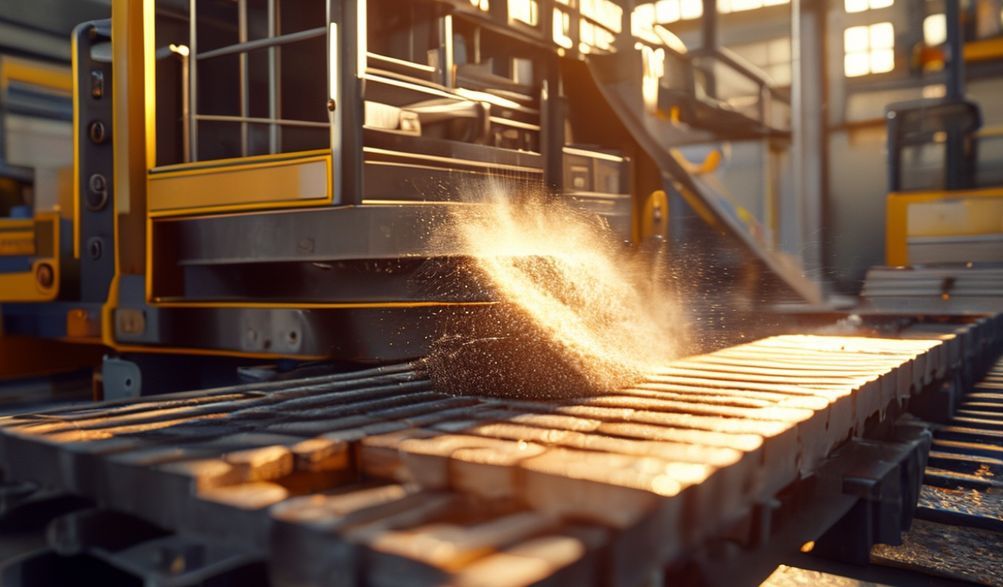
시멘트 고형 블록 제조 기계의 궁극적인 가이드: 종류, 가격 및 선택 방법
소개
세계 건설 산업은 더 빠르고, 더 튼튼하며, 더 경제적으로 짓기 위한 끊임없는 경쟁 속에 있습니다. 이 노력의 중심에는 근본적인 재료인 평범한 시멘트 고형 블록이 자리 잡고 있습니다. 다용도로, 내구성이 뛰어나고, 비용 효율적인 건축 자재로서 그 수요는 꾸준합니다. 그러나 모든 완벽한 블록 뒤에는 그것을 만든 기계가 있습니다. 적합한 시멘트 고형 블록 제조 기계를 선택하는 것은 건설 프로젝트, 신생 기업, 또는 제조 사업 전체의 성패를 좌우할 수 있는 중요한 결정입니다.
이 포괄적인 가이드는 여러분의 확실한 정보원이 될 수 있도록 구성되었습니다. 수년간의 산업 분석, 기술 사양, 시장 동향을 바탕으로 신뢰할 수 있고 실질적인 정보를 모았습니다. 우리의 목표는 복잡성을 명확히 하고 혼란을 없애며, 대기업의 구매 담당자이든, 블록 야드를 시작하는 기업가이든, 현장 솔루션을 찾는 건설 전문가이든 여러분에게 필요한 지식을 제공하는 것입니다. 기계 유형을 안내하고, 투자의 실제 비용을 분석하며, 실용적인 선택 체크리스트를 제공하고, 가장 시급한 질문들에 답변해 드릴 것입니다.
시멘트 고형 블록 제조 기계 이해하기
사양과 가격에 대해 알아보기 전에, 이 기계들이 무엇이며 현대 건설에서 그 생산물이 왜 그렇게 귀중하게 여겨지는지 이해하는 것이 필수적입니다.
시멘트 고형 블록 기계란 무엇인가요?
시멘트 고형 블록 제조 기계는 특정 원료 혼합물을 고밀도, 균일하고 고강도의 고형 블록으로 압축하도록 설계된 특수 산업 장비입니다. 핵심 혼합물에는 일반적으로 다음이 포함됩니다:
* 시멘트 (결합제로서)
* Aggregates (such as sand, stone dust, or fly ash)
* 물
The machine’s primary function is to subject this mixture to two key forces within a mold or chamber:
1. 진동 High-frequency vibrations help to remove air pockets and ensure the mixture is evenly distributed, which is crucial for consistency.
2. 압박 Significant mechanical or hydraulic pressure compacts the material, resulting in a high-density block with excellent compressive strength.
핵심 구성 요소 usually include a sturdy frame, a mixing system (or hopper), mold boxes, a vibration mechanism, a hydraulic or mechanical press, and a control system. The working principle revolves around filling the mold, compacting the material, and then ejecting the finished block for curing.
Key Advantages of Machine-Made Solid Blocks
Why invest in a machine? The benefits of machine-produced blocks over manual methods or alternative products are substantial:
- Superior Strength & Consistency: Machines apply calibrated, repeatable pressure, producing blocks with uniform high density and compressive strength (often exceeding standards for load-bearing walls). This eliminates the weak spots common in hand-made blocks.
- High Dimensional Accuracy: Every block is identical in size and shape. This leads to:
- Faster construction with less mortar usage.
- Smother, plumper walls that require less finishing work.
- Cost-Effectiveness & Efficiency: For any project beyond a very small scale, machine production is far more material- and labor-efficient. It minimizes waste and maximizes output per hour.
- Durability & Low Maintenance: Properly cured, machine-made solid blocks offer exceptional weather resistance, fire rating, and structural longevity, reducing long-term building maintenance costs.
Types of Cement Solid Block Making Machines
The market offers a spectrum of machines, categorized primarily by their level of automation and mobility. Your choice here will be the single biggest determinant of your output, labor needs, and capital investment.
수동 블록 머신
These are the most basic and entry-level machines, relying almost entirely on human labor for operation.
- 작전: An operator manually fills the mold with the concrete mix, engages a lever mechanism to apply pressure, and then releases the block onto the ground or a pallet.
- 전형적인 출력 Varies greatly with operator skill, but generally ranges from 300 to 800 blocks per 8-hour day.
- 최적 대상: Individuals, very small-scale projects (like a personal home build), startups with extremely limited capital, or locations with unreliable or no electricity.
- 장점:
- 매우 낮은 초기 투자 비용.
- 제로 전력 소비.
- 이해하기 쉽고 수리하기도 간단합니다.
- 단점:
- 매우 노동 집약적이고 육체적으로 힘든 작업입니다.
- Low output capacity.
- Inconsistency in block quality if operator fatigue sets in.
반자동 블록 제작 기계
This category strikes a popular balance, automating the critical compaction process while still requiring operator involvement for feeding and block removal.
- 작전: The operator feeds material into the hopper. The machine then automatically handles the vibration, compaction, and ejection cycles, often onto a conveyor belt or pallet. The operator may stack or move the cured blocks.
- 최적 대상: Small to medium-sized block manufacturing businesses, construction companies producing for their own projects, and regions with steady but not massive demand.
- 장점:
- Significantly higher output than manual machines (e.g., 1,000 to 3,000+ blocks per day).
- Much more consistent block quality due to automated pressure cycles.
- Good balance between productivity, cost, and labor requirements.
- 단점:
- Requires a stable power supply (electric or diesel).
- Higher upfront cost than manual machines.
- Requires basic maintenance and more skilled operation.
완전 자동 블록 제작 기계
These are the pinnacle of production efficiency—computerized, integrated plants designed for maximum output with minimal manual intervention.
- 작전: These are complete systems. They often include automatic batching and mixing of raw materials, conveyor-fed hoppers, PLC-controlled compaction, automatic block stacking, and even palletizing robots. The entire process from raw material to palletized blocks is mechanized.
- 최적 대상: Large-scale block manufacturing plants, industrial suppliers to major construction firms, and government housing projects requiring massive, consistent volume.
- 장점:
- Maximum output potential (e.g., 10,000 to 50,000+ blocks per day).
- Unmatched consistency and quality control.
- Dramatic reduction in direct labor costs.
- Can operate nearly 24/7.
- 단점:
- 매우 높은 초기 자본 투자.
- Requires significant space, robust infrastructure (3-phase power), and technical expertise for operation and maintenance.
- Complex repairs can be costly and require specialist technicians.
고정식 vs 이동식 블록 기계
This is another key distinction related to your operational model:
- 고정식 기계 These are set up in a fixed location—a factory or yard. All production is centralized, and blocks are transported to construction sites. This is the standard for most semi- and fully-automatic plants.
- 모바일 머신: Also known as “egglayers” or on-site machines, these are smaller units (often manual or semi-automatic) that can be towed directly to a construction site. Blocks are produced and cured right where they will be used, eliminating transport costs for the final product.
Critical Factors Affecting Machine Price & Investment
The “sticker price” is just the beginning. A savvy investor understands the total cost of ownership. Let’s break down what influences cost.
Core Price Determinants
- 자동화 수준: This is the most significant factor. As outlined above, price escalates sharply from Manual ($1,000 – $5,000)에게Semi-Automatic ($8,000 – $40,000)에게Fully Automatic ($50,000 – $500,000+).
- 생산 능력 Within each automation category, a machine that produces 2,000 blocks per day will cost less than one with a 5,000-block capacity. Higher capacity means larger, more powerful components.
- Brand & Origin: Prices vary between:
- Established International Brands: Premium pricing for proven reliability, advanced technology, and global service networks.
- Quality Domestic Manufacturers: Often offer a strong balance of reliability, serviceability, and cost.
- Budget Imports: Lower upfront cost but can carry risks regarding durability, part availability, and after-sales support.
- Machine Build & Components: The quality of materials matters immensely.
- Steel Frame & Mold: Thickness and grade of steel affect durability and resistance to wear.
- 진동 시스템 The heart of the machine. High-quality, balanced vibrators housed in robust assemblies cost more but ensure better block density and longer life.
- Hydraulic/Pneumatic Parts: Brands like Bosch Rexroth or Parker command a premium over generic parts, offering greater reliability and precision.
The “Total Cost of Ownership” Beyond the Sticker Price
Your true investment includes:
- 설치 및 설정: This may involve foundation work, electrical wiring (especially for 3-phase machines), and assembly by a technician—costs often not included in the base price.
- 전력 소비량: Calculate the ongoing cost of electricity or diesel. A fully automatic plant is a significant power consumer.
- 유지보수 및 예비 부품: Budget for routine maintenance (lubricants, filter changes) and a reserve for spare parts (wear items like mold liners, vibration motors, hydraulic seals). Ask suppliers for a recommended spare parts list and their costs.
- 금형 비용 A single machine can produce different block sizes (4″, 6″, 8″ solid blocks), but you need a separate mold for each. High-quality hardened steel molds are an additional investment per block type.
How to Choose the Right Machine: A Buyer’s Checklist
Use this experiential checklist to guide your decision-making process and avoid costly mistakes.
Assess Your Business Needs First
Answer these questions honestly:
* What is my realistic daily/monthly block requirement? (Base this on confirmed orders or a conservative market analysis, not optimistic dreams).
* What space and infrastructure do I have? Do I have a shed or open yard? What is my power supply (single-phase/three-phase)? Is the floor strong enough to support a heavy stationary machine?
* What is my available workforce’s skill level? Can they handle basic machine operation and maintenance, or will I need to hire/train technicians?
* What is my total capital budget? Remember to include a buffer (at least 15-20%) for ancillary equipment (concrete mixer, conveyor, forklift, curing area) and initial raw material stock.
Key Technical Specifications to Scrutinize
When comparing models, go beyond the brochure. Ask detailed questions about:
- 압력 힘 (톤수) Measured in tons, this directly correlates to block density and final compressive strength. For solid blocks, higher pressure is generally better.
- 진동 시스템 Inquire about the type (e.g., hydraulic vibration, electric motor vibrators), frequency, and amplitude. A well-designed, isolated vibration system is key to compacting the mix effectively.
- 사이클 타임: How many seconds does it take to produce one block or one full pallet of blocks? This number, combined with working hours, will let you verify the claimed daily output.
- 금형 맞춤화 및 교체 Confirm the range of block sizes and designs (e.g., solid, paver, curb) the machine can produce. How long and complex is it to change molds? Quick-change systems improve flexibility.
Supplier Evaluation for Trustworthiness
The machine is only as good as the company behind it. Your due diligence here is non-negotiable.
- Track Record & Proof: Ask for a list of client references, preferably in your region. Look for testimonials or case studies.
- 애프터 서비스: This is critical. What does the warranty cover (parts, labor, duration)? Do they have local service technicians or trained partners? How readily available are spare parts?
- Request a Demonstration: Always ask to see the machine in operation, either at their factory or, ideally, at a client’s site. Seeing is believing.
- 준수 및 표준: Verify if the machine is built to relevant safety and industry standards. Does the supplier provide clear technical documentation and manuals?
자주 묻는 질문 (FAQ)
Q1: What is the price range for a cement solid block making machine?
A: Prices vary dramatically. A basic manual machine can start from 1,000달러에서 5,000달러. A robust semi-automatic machine typically ranges from $8,000 to $40,000. A fully automatic block making plant can start around $50,000 and easily exceed $200,000-$500,000 for large-capacity, high-end systems. The only way to get an accurate price is to define your requirements and get detailed quotes from multiple suppliers.
Q2: What is the ideal cement-to-sand ratio for making strong solid blocks?
A: A common and reliable starting point is a 1:6 or 1:8 ratio of cement to sand/aggregate (e.g., 1 bag of cement to 6 bags of sand). However, the “ideal” ratio depends heavily on the grade/type of cement and the quality, moisture content, and gradation of your local sand or stone dust. We strongly recommend conducting several trial batches to test the compressive strength before full-scale production.
Q3: Can one machine produce different sizes of solid blocks?
A: Yes, absolutely. This is achieved by changing the mold in the machine. Most reputable manufacturers offer a variety of mold sizes (for 4″, 6″, 8″ blocks, etc.) as optional purchases. When evaluating a machine, ask about the mold changeover process—how long it takes and how complex it is.
Q4: How much maintenance do these machines require?
A: Maintenance levels scale with complexity.
* 수동/반자동: Daily cleaning, weekly checking and tightening of bolts, and periodic greasing of moving parts.
* 완전 자동 All of the above, plus regular checks and servicing of hydraulic oil, filters, PLC systems, sensors, and conveyors as per the manufacturer’s strict schedule. Preventive maintenance is far cheaper than major breakdowns.
Q5: Is operating a block making machine difficult?
A: The learning curve varies. Manual and semi-automatic machines can often be learned in a few days. Operating a fully automatic PLC-controlled plant, however, requires proper training to understand the control panel, troubleshooting alarms, and performing basic adjustments. A trustworthy supplier should always provide comprehensive hands-on training for your operators as part of the purchase.
결론
Selecting the ideal cement solid block making machine is a strategic investment, not just a purchase. The “best” machine isn’t necessarily the cheapest or the one with the highest output on paper; it’s the machine that aligns perfectly with your specific production goals, operational capacity, and financial reality.
This decision demands thorough research and technical due diligence. Use the checklist provided, compile your requirements meticulously, and prioritize partnering with a reliable, service-oriented supplier over chasing a marginally “better deal.” A machine is a long-term asset, and the quality of support you receive will impact your profitability for years to come.
Your next step is clear: formalize your needs, shortlist reputable manufacturers, and request detailed consultations and site visits. Armed with the knowledge from this guide, you are now equipped to make an informed, confident decision that will lay a solid foundation for your success.
<