
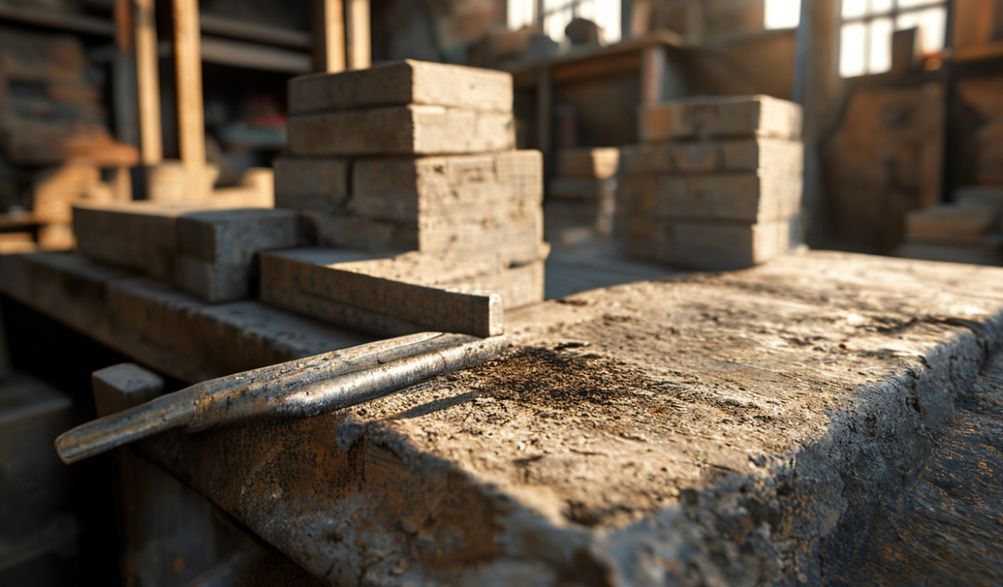
신뢰할 수 있고 저렴한 수동 블록 제작 기계를 찾는 궁극적인 가이드
소규모 건축업자, 야심 찬 스타트업, 열정적인 DIY 애호가에게 자신만의 콘크리트 블록을 생산한다는 꿈은 매우 강력한 동력입니다. 이는 자립, 비용 절감, 그리고 자신의 조건에 맞춰 건축할 수 있는 능력을 의미합니다. 그러나 그 꿈은 종종 아주 현실적인 벽, 즉 예산에 부딪히곤 합니다. "저렴한 수동 블록 제조기"를 찾는 과정은 매혹적인 제안들로 가득하지만, 동시에 끊임없는 두려움도 따릅니다. 저가형 기계는 일주일 만에 고장 날까? 수리와 좌절로 더 많은 비용을 치르는 허탕일까?
이 풍경을 탐색하는 데는 단순한 가격 비교 이상이 필요합니다. 통찰력이 요구됩니다. 이 포괄적인 가이드는 업계 지식과 실무 경험을 바탕으로 구성되었습니다. 우리는 마케팅의 잡음을 걷어내고 '저렴함'의 진정한 의미, 어디서 찾아야 하는지, 어떤 기능이 정말 중요한지 이해하는 데 도움을 드리겠습니다. 우리의 목표는 단순히 저가 기계를 찾는 것이 아니라, 여러분의 특정 프로젝트에 안정적인 성능을 제공하는 스마트하고 비용 효율적인 투자를 하는 것입니다. 그 지식의 기초를 함께 쌓아봅시다.
수동 블록 제작 기계 이해하기: 작동 방식과 장점
흥정을 시작하기 전에 무엇을 구매하는지 이해하는 것이 중요합니다. 수동 블록 제작 기계는 우아한 인간 동력 공학의 결정체입니다.
수동 블록 프레스의 기본 작동 원리
수동 프레스의 핵심은 순수한 물리적 힘을 사용하여 콘크리트 혼합물을 정밀한 모양으로 압축하도록 설계된 간단한 장치입니다. 이는 몇 가지 일반적인 메커니즘 중 하나를 통해 이루어집니다.
- 지레 시스템:가장 흔한 유형입니다. 긴 강철 레버가 기계적 이점을 제공하여 몰드 내 혼합물을 상당한 힘으로 압축할 수 있게 해줍니다. 거대하고 특수화된 호두까기로 생각하시면 됩니다.
- 스크류 프레스:이들은 나사산이 있는 스크류 메커니즘을 사용하여 아래 방향으로 압력을 가합니다. 더 많은 회전이 필요할 수 있지만, 매우 높고 일관된 다짐을 생성할 수 있습니다.
- 유압 잭 시스템:일부 모델은 수동 유압 잭을 포함하고 있습니다. 이러한 모델은 더 적은 신체적 노력으로 우수한 압력을 제공할 수 있지만, 약간 더 복잡한 구조를 갖추고 있습니다.
핵심 요점은? 전기 없음, 엔진 없음, 복잡한 배선 없음. 오직 당신과 기계, 그리고 잘 준비된 콘크리트 믹스뿐입니다.
Key Advantages for the Budget-Conscious User
Why does a manual press make so much sense for someone watching their budget?
- 낮은 초기 투자 비용 This is the primary driver. Manual machines are a fraction of the cost of their automated or electric counterparts, making entry into block production accessible.
- 영업 비용 제로 Once purchased, it costs nothing to run. There are no fuel bills, electricity costs, or engine maintenance. Your energy is the power source.
- Portability & Low Maintenance: These machines are typically lightweight enough to be moved by two people. With fewer moving parts than motorized versions, there’s simply less that can go wrong, and maintenance is straightforward.
- Ideal Application Scope: They are perfect for producing blocks for a single home, a small shop, community projects, or for starting a micro-enterprise in areas with unreliable power. It’s the ultimate tool for testing a business idea with minimal risk.
What Does “Cheap” Really Mean? Setting Realistic Expectations
The word “cheap” is a magnet, but it’s ambiguous. In the world of machinery, it’s vital to separate purchase price에서총 소유 비용.
Price vs. Cost: The Long-Term View
A machine priced at $300 might seem like a steal compared to one at $800. But if the $300 machine’s frame bends in a month and its mold wears out in six, your total cost—including repairs, downtime, and replacement—could quickly surpass the initial price of the more robust model.
Consider also the cost of molds. Your “cheap manual block making machine” might only come with one standard mold. If you need to produce interlocking blocks or a different size, additional mold sets can be a significant extra expense. Always factor this into your total project budget.
Common Trade-offs with Budget Machines
To hit a very low price point, manufacturers often make compromises. Being aware of them helps you inspect smarter:
- Material Thickness (Steel Gauge): The frame and lever might be made from thinner steel. Under repeated stress, this can lead to bending or warping, compromising the machine’s precision and safety.
- Bearing & Pivot Point Quality: These are high-wear points. Cheap machines may use simple steel-on-steel pivots or low-grade bushings, leading to increased friction, a harder operation, and rapid wear.
- 용접 및 마무리: Look closely. Rough, uneven welds are potential failure points. A lack of proper rust-prevention paint or coating means the machine will deteriorate quickly, especially in humid climates.
- Limited Support: Don’t expect a comprehensive warranty or detailed, clear instruction manuals. You may be on your own for troubleshooting.
Key Features to Inspect in an Affordable Manual Block Machine
This is where your informed scrutiny pays off. Focus on these critical areas to assess true value and durability.
Critical Components for Durability
- 프레임 구성 Avoid lightweight angle iron. Seek out machines built with box-section steel or heavy-duty channel steel. These shapes are inherently stronger and more resistant to twisting under load.
- 레버리지 시스템: A longer lever reduces the effort required per block. Some designs use a compound linkage or a “scissor” mechanism to maximize force. If possible, try the action before you buy—it should be stiff but smooth.
- Mold Material & Design: This is your product’s blueprint. Hardened steel molds will last exponentially longer than mild steel. Check how the mold assembles and disassembles; a design that’s easy to clean will save you hours of frustration.
- 진동 메커니즘: Some manual machines include a simple tamper bar or a lever-activated vibrator. This helps settle the concrete mix and reduce voids. Test its effectiveness—it should be sturdy and securely mounted.
Specifications That Impact Your Output
- Block Size & Output per Cycle: Does it make 1, 2, 4, or 6 blocks per press? A 4-block machine will dramatically increase your daily output over a single-block press.
- Cycle Time & Operator Effort: Be realistic. Producing 500 blocks is physically demanding work. A well-designed machine minimizes fatigue through efficient mechanics.
- Weight & Portability: If you need to move it around a site, check its weight and look for dedicated lifting points or a wheel kit option. A “portable” 300kg machine isn’t very portable in practice.
Where to Find a Cheap Manual Block Making Machine: Sourcing Strategies
Your sourcing channel significantly impacts price, risk, and after-sales support.
Direct from Manufacturers (Best for Bulk/Quality)
- 장점: You get the closest possible price, potential for customizing mold types, and usually more direct technical support and warranty handling.
- 단점: They may have high Minimum Order Quantities (MOQs). Finding them requires research: use precise search terms like “manual block press manufacturer” and vet their company history and certifications.
Local Industrial Equipment Suppliers & Distributors
- 장점: The biggest advantage is the ability to see and test the machine physically. You also establish a relationship for local support and spare parts.
- 단점: The price will include their markup for warehousing, demonstration, and profit margin.
Online Marketplaces (Alibaba, Made-in-China, TradeIndia)
- 장점: Unbeatable for selection and competitive pricing. You can compare dozens of suppliers in minutes.
- Cons & Crucial Cautions: This arena requires extreme due diligence.
- Verify: Only contact suppliers with verified badges (e.g., Gold Supplier), several years of activity, and positive transaction history.
- Communicate: Ask detailed technical questions. Vague answers are a red flag.
- Secure Payment: Never use direct wire transfers for the full amount. Use the platform’s escrow service (like Trade Assurance) which holds your payment until you confirm satisfactory delivery.
- Quality Risk: You cannot inspect the machine beforehand. Be prepared for potential variability in finish and quality.
The Second-Hand Market
- Tips: Inspect for cracks in welds (especially at joints), excessive wear on pivot holes, severe rust (surface rust is okay), and whether the mold still produces blocks with sharp, clean edges. Ask why they are selling it.
Maximizing Value: Smart Tips Before You Buy
A few strategic steps can save you from a poor investment.
Define Your “Need-to-Have” vs. “Nice-to-Have”
List your requirements: How many blocks do you need per day? What block type (solid, hollow, paving) is essential? This clarity will prevent you from overpaying for unnecessary features or underbuying a machine that can’t meet your core needs.
The Power of Sample Blocks & Videos
Always, always ask the supplier for two things:
1. A video of the actual machine in operation, showing the full cycle.
2. Physical samples of blocks produced by that machine model.
This is the best way to verify performance claims before money changes hands.
Decoding Supplier Communication & Quotes
A professional supplier will answer specific questions clearly. Ask:
* “What is the grade and thickness of the steel used in the frame?”
* “What is the exact warranty period and what does it cover?”
* “What is the full CIF/FOB price, including shipping to my nearest port?”
* “Can you provide a list and price for spare parts (pins, bushings, bolts)?”
Their responsiveness and transparency are strong indicators of reliability.
Operating Your Machine for Optimal Results & Longevity
Your machine’s performance depends as much on your operation as its build quality.
The Right Concrete Mix Design
A manual machine needs a cooperative mix. The goal is a stiff but workable consistency.
* 집계체 Use a well-graded mix of fine and coarse sand/stone dust. Avoid large stones.
* Cement Ratio: A standard 1:6 or 1:7 cement-to-aggregate ratio is common for blocks.
* 물: This is critical. The mix should be just moist enough to hold its shape when squeezed in your hand (zero slump). Too much water weakens the block and makes it stick in the mold.
Step-by-Step Operating Procedure
- 준비 Clean and lightly oil the mold interiors. Position the machine on a solid, level base.
- 필링 Fill the mold cavities evenly with your mixed concrete.
- 압축: Operate the lever firmly and steadily to its full extent. Apply consistent pressure.
- Release & Ejection: Carefully release the pressure, lift the mold, and eject the fresh blocks onto a pallet.
- 치유: Keep the blocks moist and under shade for at least 7 days for proper strength development. Do not expose to direct sun immediately.
Essential Maintenance Routine
- Daily: Thoroughly clean all concrete residue from the mold and machine frame with water and a brush. Lubricate all pivot points with light oil.
- Weekly: Check and tighten all nuts and bolts. Inspect for any hairline cracks, especially near welds.
- 저장 Keep the machine under cover. Apply a light coat of oil to unpainted metal surfaces to prevent rust during long storage periods.
FAQ Section
Q1: What is the typical price range for a cheap manual block making machine?
A: Expect a wide range from around $200 to $1,500+. Basic single-block presses start at the lower end, while robust, multi-block systems with hardened steel molds and strong frames occupy the higher end. Prices far below $200 should be scrutinized heavily for quality.
Q2: Can I really start a business with a manual machine?
A: Absolutely. It’s one of the best low-risk ways to enter the block production business. It allows you to serve local, small-batch clients, understand production logistics, and build capital with minimal overhead before considering expensive, automated equipment.
Q3: What are the most common problems with inexpensive manual machines?
A: The main issues are: 1) Frame deformation from weak steel, 2) Rapid wear of pivot pins and bushings, leading to a sloppy operation, and 3) Mold deterioration—losing sharp edges or becoming difficult to separate. Proactive maintenance can delay these issues.
Q4: How many blocks can one person make in a day?
A: Productivity varies. A motivated operator using a 4-block machine can realistically produce 300 to 500 blocks in an 8-hour day, accounting for time spent mixing concrete, operating the press, and handling the cured blocks. Starting slower is normal.
Q5: Are spare parts easily available for budget machines?
A: This must be confirmed before purchase. Reputable suppliers should offer key wear parts. For generic models, common parts like pins and bolts can often be sourced locally or fabricated by a machinist. Complex mold components may be harder to replace.
결론
Finding a truly valuable “cheap manual block making machine” is a journey of informed decision-making, not just a quick transaction for the lowest sticker price. It’s about balancing upfront cost with long-term durability, understanding the unavoidable trade-offs, and knowing exactly what to look for in construction and design.
Success lies at the intersection of a well-chosen machine and the operator’s knowledge. By applying the insights from this guide—from vetting suppliers to mastering the concrete mix and maintenance routine—you transform a simple tool into a powerful engine for creation. This machine represents more than savings; it’s empowerment, self-reliance, and the tangible first step in building something lasting.
Use this guide as your checklist. Ask the detailed questions. Inspect with a critical eye. And when you find the right press, you’ll be ready to start producing, building, and growing on your own solid foundation.
<