
The Ultimate Guide to China’s Automatic Block Making Machines in 2026
소개
The world is building. From ambitious infrastructure megaprojects to the urgent need for affordable housing, the global construction industry is in a sustained period of unprecedented growth. At the very foundation of this boom lies a simple, yet critical, component: the concrete block. The efficiency, quality, and cost of producing these blocks directly determine the viability of construction projects worldwide. For decades, many manufacturers relied on labor-intensive, semi-automatic methods, grappling with inconsistent output, soaring operational costs, and the physical limitations of manual labor.
게임 체인저가 등장했습니다:China automatic block making machine. More than just a piece of equipment, it represents a paradigm shift in construction material production. By combining state-of-the-art automation, robust engineering, and exceptional value, these machines are empowering businesses—from startups to industrial giants—to scale production, ensure quality, and boost profitability.
This comprehensive guide is designed to be your definitive resource. Built on in-depth analysis of manufacturer specifications, industry trends, and practical insights for global buyers, our goal is to provide the expertise and trustworthy information you need. We will navigate the key decision factors, from understanding the core technology to successfully navigating the international purchase process, ensuring your investment in a China automatic block making machine정보에 기반하여 전략적이며 성공적입니다.
Why Choose a China Automatic Block Making Machine?
The decision to source heavy machinery from overseas is significant. When it comes to block making equipment, China has emerged not just as an alternative, but as the preferred global hub. The reasons are a powerful combination of economics, innovation, and flexibility.
Unbeatable Cost-Effectiveness & Value
The most immediate advantage is financial. Chinese manufacturers have mastered the balance between advanced engineering and cost-efficient production.
- 낮은 초기 투자 비용 Compared to Western or Japanese counterparts with similar specifications, Chinese machines often come at a fraction of the initial purchase price. This dramatically lowers the barrier to entry for new businesses.
- Superior Long-Term ROI: This cost advantage isn’t about cutting corners. It’s about value engineering and scale. The savings translate directly into a faster return on investment (ROI), as your production line becomes profitable sooner.
- Transparent Cost Structure: The total cost—encompassing the machine price, international shipping, insurance, and installation—often remains highly competitive. Savvy buyers find that the total landed cost of a high-quality Chinese automatic plant can be less than the domestic price of a semi-automatic line elsewhere.
Advanced Technology & Innovation
Gone are the days of viewing Chinese manufacturing as purely imitative. The sector is now a hotbed of innovation, particularly in industrial automation.
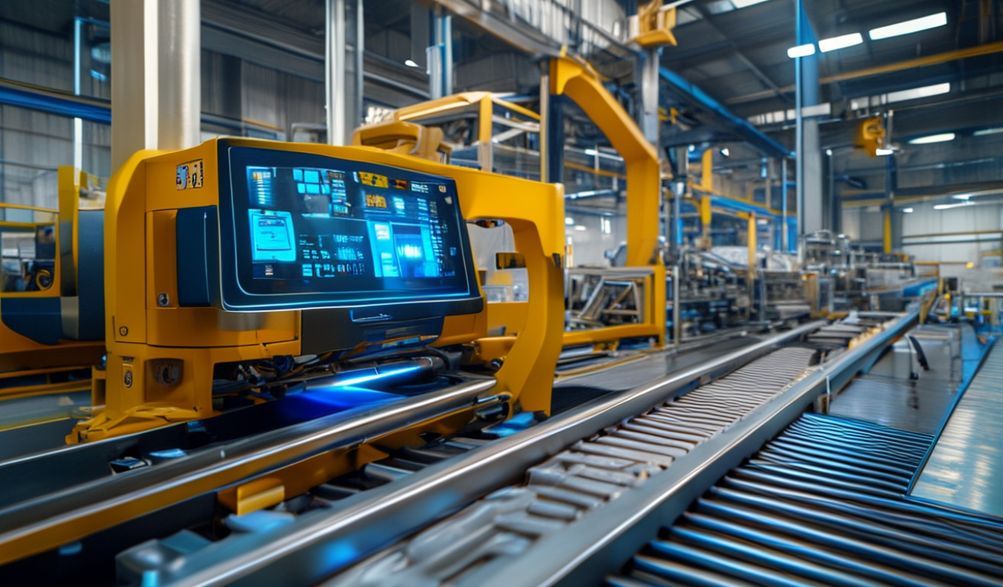
- 스마트 제어 시스템: Modern machines are governed by sophisticated PLC (Programmable Logic Controller) systems with intuitive touch-screen HMIs (Human-Machine Interfaces). This allows for precise control over every parameter, from vibration frequency to hydraulic pressure.
- IoT Integration: Leading manufacturers are incorporating IoT (Internet of Things) capabilities, enabling remote monitoring, predictive maintenance alerts, and production data analytics—all from a smartphone or computer.
- 에너지 효율적 설계: A strong focus on R&D has led to designs that optimize energy consumption, using high-efficiency motors and hydraulic systems that reduce operational costs over the machine’s lifespan.
Scalability for Diverse Business Needs
Whether you’re a entrepreneur starting a small block yard or a corporation supplying a national housing project, there’s a machine designed for your scale.
- Full Range of Models: The product spectrum is vast. It includes mobile block making machines for on-site production, semi-automatic “egg-laying” types for medium output, and massive, fully automatic stationary plants with integrated curing and stacking systems.
- Growth-Oriented Design: This scalability means your business can start with a model that matches your initial capital and demand, with a clear upgrade path. You invest in a system that grows with you, protecting your long-term capital.
Key Features of Top-Tier Automatic Block Machines from China
Understanding the core features that separate adequate machines from exceptional ones is crucial. Here’s what to look for in a top-tier automatic block making machine.
Core Components & Robust Construction
The longevity and reliability of the machine hinge on the quality of its fundamental parts.
- 내구성 강화 구조 프레임 Look for frames fabricated from high-grade, reinforced steel. This ensures stability during the high-pressure vibration and compaction process, preventing misalignment and wear.
- Premium Hydraulic System: The heart of the automation. Reputable brands use well-known, reliable hydraulic components (like Bosch Rexroth or Yuken) that deliver consistent pressure, smooth movement, and minimal leakage.
- Durable Mold Materials: Molds should be made from hardened, high-chromium alloy steel. This ensures they can withstand millions of cycles, producing blocks with sharp edges and consistent dimensions, while resisting abrasion from the concrete mix.
Automation & Control Systems
This is where “automatic” truly comes to life, transforming raw material into finished product with minimal human intervention.
- PLC & Touch-Screen HMI: The PLC is the machine’s brain, executing a pre-programmed cycle with perfect repeatability. The user-friendly HMI allows operators to input block type, quantity, and cycle parameters with ease, store recipes, and diagnose faults.
- End-to-End Process Automation: A fully integrated system can automate:
- 배칭 및 혼합 Proportional feeding of raw materials into a mixer.
- 성형 및 압축 Automatic feeding of concrete into molds, followed by high-frequency vibration and hydraulic pressure.
- 건조 및 적재: Moving green blocks onto pallets, transferring them to a curing chamber (in plant setups), and finally stacking them for storage or transport.
생산의 다재다능함
Market demands change. A versatile machine protects your investment by allowing you to pivot production quickly.
- 광범위한 제품 라인업 A single machine can typically be configured to produce numerous products:
- Hollow Blocks (various sizes and void percentages)
- 솔리드 블록
- Paving Stones & Interlocking Bricks
- Curbstones & Grass Pavers
- Special-shaped blocks for landscaping
- Quick Mold Change System: Advanced models feature mechanical or hydraulic mold change systems, allowing you to switch production from one block type to another in minutes, not hours, maximizing uptime and responsiveness.
How to Select the Right Machine for Your Project
Choosing the correct model is the most critical step. A machine that’s too small stifles growth; one that’s too large strains finances. Follow this strategic approach.
생산 요구사항 평가하기
Begin with a clear analysis of your own needs.
- 출력 용량: Calculate your required output in blocks per hour, per 8-hour shift, or per day. Be realistic about current demand and factor in projected growth for the next 3-5 years. Machine models are defined by their cycle time and blocks-per-cycle output (e.g., 6 blocks per 15-second cycle).
- Raw Material Audit: Analyze the properties of your locally available materials—sand, gravel, cement, and potential additives like fly ash. Share this information with manufacturers, as mix design can affect machine settings and mold design.
Understanding Different Machine Types
The market offers distinct types, each suited to specific operational models.
Stationary Fully Automatic Plants
These are the powerhouses of block production. Designed for fixed, factory-based operations, they feature a central machine connected by conveyor systems to automatic mixers, block stackers, and often integrated curing racks or chambers. They offer the highest output (10,000+ blocks per day) with minimal labor but require a significant foundation and higher investment.
모바일 블록 제작 기계
Also known as “block makers on wheels,” these are self-contained units that produce blocks directly on the ground or on a concrete slab. Their key advantage is the elimination of block transportation costs, making them ideal for large on-site construction projects. They are less automated but highly flexible and cost-effective for specific use cases.
Egg-Laying Type Machines
A popular semi-automatic option. The machine produces a block and then moves forward (“lays an egg”), depositing it on the ground to cure. It requires more manual labor for pallet handling and curing but represents a solid middle ground in terms of price and output for small to medium-sized businesses.
Essential Due Diligence Checklist
Before finalizing any supplier, complete this checklist:
- Manufacturer Credentials: Verify business licenses, and crucially, international certifications like ISO 9001(품질 관리) 그리고씨이 (meeting EU health, safety, and environmental standards). These are strong indicators of a systematic approach to quality.
- Technical Documentation: Request and scrutinize the detailed technical specification sheet, electrical and hydraulic diagrams, and foundation drawings.
- After-Sales Support Structure: Clarify exactly what is included:
- Warranty period and coverage (typically 12-24 months for core parts).
- Availability of a comprehensive spare parts list and pricing.
- Type of support: online manuals, video calls, remote diagnostics, or the possibility of technician dispatch.
Navigating the Purchase Process: From Inquiry to Installation
The journey from initial contact to a running machine involves careful navigation.
Finding & Vetting Reliable Chinese Manufacturers
- B2B Platforms vs. Direct Contact: Platforms like Alibaba and Made-in-China are excellent for discovering suppliers and comparing many options quickly. However, for serious inquiries, identify the manufacturer’s official website and contact them directly for more precise communication and potentially better terms.
- Communication Red & Green Flags:
- Red Flags: Vague answers, reluctance to provide technical details, pressure for immediate payment, prices that seem too good to be true.
- Green Flags: Detailed, patient responses to technical questions, willingness to provide client references, professional documentation, and clear communication about capabilities and limitations.
The Importance of Factory Audits & Video Calls
In an ideal world, you would visit the factory. When that’s not feasible, a virtual audit is non-negotiable.
- Request a Live Video Tour: Ask for a real-time video call (not a pre-recorded promo) to walk through the production workshop, see the welding and assembly process, and view raw material and quality control areas.
- Ask for Operation Videos: Specifically request a video of the exact model you are interested in, running under load, producing blocks. Observe the smoothness of the cycle and the quality of the finished product.
Logistics, Shipping, and After-Sales Support
- Understanding Incoterms: Clarify the shipping terms. FOB (본선 인도 조건) means you own the goods and are responsible for costs/risks once they’re loaded on the ship at the Chinese port. 비용, 보험, 운임 포함(CIF) means the supplier arranges and pays for shipping to your nearest port. FOB often offers more control and potential cost savings.
- Preparing for Installation: Once the machine arrives, the real work begins. Ensure you have:
- A prepared, level foundation as per the manufacturer’s drawings.
- Local electricians and mechanics ready for assembly.
- Clear arrangements for the supplier to provide remote guidance via video call during installation and commissioning. Some offer on-site technician services for an additional fee.
자주 묻는 질문 (FAQ)
Q1: What is the average price range for a China automatic block making machine?
A: Prices vary dramatically based on automation level, output capacity, and brand reputation. A small mobile or semi-automatic machine can start around $15,000 – $30,000. A mid-range stationary automatic line may cost $50,000 – $100,000. Large, fully integrated plants with curing systems can range from $150,000 to over $500,000. Always request a detailed quotation based on your specific technical requirements.
Q2: How do I ensure the machine quality without visiting the factory?
A: Employ a multi-step verification process: 1) Hire a reputable third-party inspection company (like SGS, BV, or TÜV) to conduct a pre-shipment inspection. 2) Ask the manufacturer for contact information of 2-3 previous clients in your region or a similar market and speak to them directly. 3) Analyze all provided documentation, including material certificates for steel and components, and factory test reports.
Q3: What kind of after-sales service can I expect?
A: Standard service packages from reputable suppliers include detailed installation manuals (often with videos), electrical and hydraulic diagrams, and remote support via WhatsApp, Skype, or TeamViewer for troubleshooting. A warranty of 12-24 months on major components is common. Ensure you receive a spare parts catalog with part numbers to facilitate future orders.
Q4: Can these machines use local raw materials in my country?
A: Absolutely. Reputable manufacturers design their machines to be adaptable. They will typically provide a standard mix design formula. It is essential to send samples of your local sand, aggregate, and cement to the manufacturer for analysis. They can then advise on the optimal mix proportions and any necessary adjustments to the machine settings for your specific materials.
Q5: What is the typical lead time from order to delivery?
A: After order confirmation and down payment, standard production time is usually 30 to 60 days, depending on the machine’s complexity and the factory’s current order queue. Sea freight shipping can then take an additional 20 to 45 days to most global ports, depending on the destination. Always factor in time for domestic transport from the port to your site and customs clearance.
결론
The evidence is compelling: China automatic block making machines offer a powerful synergy of advanced technology, remarkable versatility, and outstanding value. They are engineered to meet the rigorous demands of the modern construction industry, providing a reliable pathway to increased productivity and profitability.
This guide has armed you with the knowledge to move forward with confidence. Remember, the key to a successful investment lies in thorough research, meticulous due diligence, and building a partnership with a credible, transparent manufacturer. By clearly defining your project specifications and leveraging the insights provided here, you are perfectly positioned to make an informed decision that will build the foundation of your business’s success for years to come.
Ready to take the next step? Begin by finalizing your production requirements and preparing a detailed inquiry. Reach out to your shortlisted manufacturers with specific questions, and start the conversation that will lead to your new automated production line.
<