
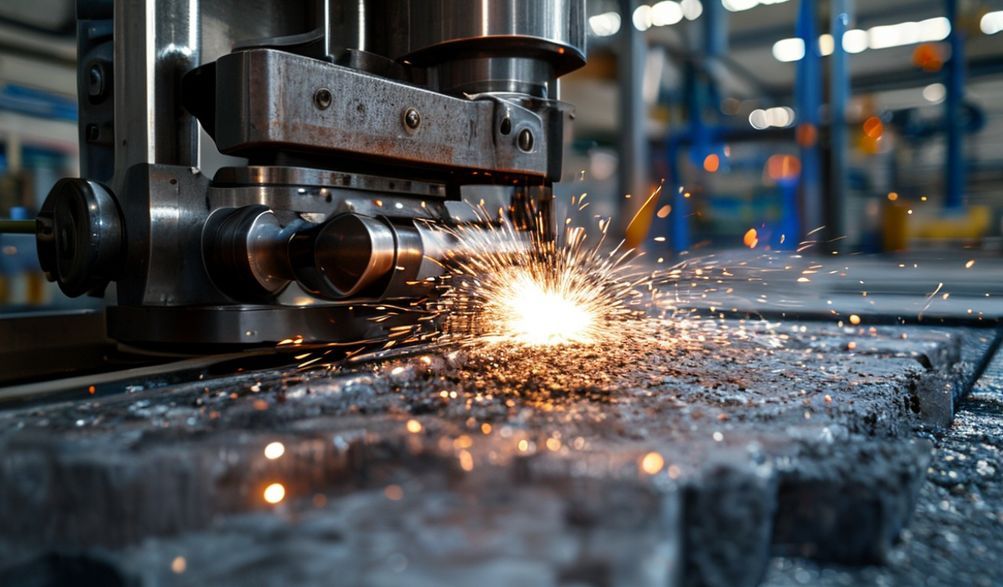
유압 타일 프레스 기계 및 포장 블록 제조 기계 최종 가이드
소개
역동적인 건설 및 조경 분야에서 고품질 내구성 포장 블록과 타일에 대한 수요는 단순히 증가하는 것을 넘어 진화하고 있습니다. 매끄러운 진입로, 견고한 산업 바닥, 아름다운 파티오 뒤에는 정밀한 엔지니어링과 제조 역량의 이야기가 있습니다. 이러한 생산의 핵심에는 유압 타일 프레스와 포장 블록 제조기라는 두 가지 강력한 기계가 있습니다.
이 장비의 사양, 성능 및 비용을 파악하는 것은 어려운 일일 수 있습니다. 바로 이때 전문적인 조언이 귀중한 역할을 합니다. 본 포괄적인 가이드는 제조, 운영 및 이러한 핵심 장비 유지보수에 대한 15년 이상의 현장 산업 경험을 바탕으로 작성되었습니다.
우리는 그들의 작동 방식을 명확히 설명하고, 적용 분야를 비교하며, 권위 있고 신뢰할 수 있는 조언을 제공할 것입니다. 소규모 창업을 준비하는 기업가이든, 확장을 목표로 하는 대규모 산업 생산자이든, 우리의 목표는 여러분이 건전한 투자 결정을 내리고 최고 수준의 결과물을 생산할 수 있도록 지식을 제공하는 것입니다. 지식의 기반을 함께 쌓아봅시다.
수압 타일 프레스 기계 이해하기
수압 타일 프레스 기계는 콘크리트 제품 제조에서 정밀성과 압력의 정점을 보여줍니다. 기존의 진동 방식과 달리, 이 기계는 막대하고 제어된 힘을 사용하여 매우 밀도가 높고 균일한 제품을 생산합니다.
핵심 원칙과 작동 방식
유압 프레스의 마법은 물리학의 기본 원칙에 있습니다:파스칼의 법칙밀폐된 유체에 가해진 압력은 모든 방향으로 감소 없이 전달된다고 명시되어 있습니다. 실제로는 펌프를 통해 가해진 작은 힘이 유압 오일 내에 엄청난 압력을 생성하며, 이는 이후 대형 실린더로 전달되어 거대하고 제어 가능한 힘을 발생시킵니다.
프레싱 사이클은 기계적인 단계들의 교향곡과 같습니다.
- 급식정확히 계량된 준건조 콘크리트 혼합물이 강철 팔레트 위의 몰드 캐비티에 공급됩니다.
- 압축유압 램은 막대한 양의 보정된 압력(종종 50톤에서 300톤 이상)으로 하강하여 혼합물을 금형의 구석구석까지 압축합니다.
- 이젝션램이 후퇴하고, 새로 형성된 타일 또는 블록이 몰드에서 배출되어 경화 준비가 됩니다.
그금형과 다이 are the artists of this process. They define the final product’s shape, size, texture, and pattern, from simple squares to intricate interlocking designs and textured surfaces.
주요 구성 요소와 그 기능
기계의 구조를 이해하는 것이 그 품질을 평가하는 핵심입니다.
- 유압 파워 팩 This is the heart and engine. It consists of the oil reservoir, electric motor, hydraulic pump, valves, and filters. Its quality determines the system’s reliability, pressure consistency, and energy efficiency.
- Press Frame and Cylinder: The frame, usually robust welded steel, must withstand immense pressure without deflection. The cylinder is the muscle, converting hydraulic pressure into the linear force that compacts the material.
- 제어 시스템 This is the brain.
- 매뉴얼: Basic lever controls; labor-intensive and slower.
- 반자동 Programmable Logic Controller (PLC) automates the press cycle; operator feeds material and retrieves product. Offers the best balance of cost and output for many businesses.
- 완전 자동 Integrates auto-feeding, pallet circulation, and product stacking. Maximizes output and minimizes labor but requires a higher investment.
- 금형 조립 High-quality, hardened steel molds are critical. They must be precisely machined, easy to change for product flexibility, and designed for longevity to resist wear.
Primary Applications and Output
The versatility of a hydraulic tile press is a major advantage. With a simple mold change, it can produce a wide array of products:
- Types of Tiles: Interlocking pavers, roofing tiles, ceiling tiles, wall cladding tiles, and decorative landscape tiles.
- 호환 원자재: These machines excel with semi-dry mixes, including standard concrete (cement, sand, aggregate), fly ash-based mixes, and colored mixes using oxide pigments. The low moisture content leads to faster curing and higher initial strength.
Exploring Paver Block Making Machines
While “paver block making machine” is a broad term, it often specifically refers to equipment that uses vibration and compaction to form blocks. They are the workhorses of the industry, known for their efficiency and adaptability.
Operational Mechanisms: Vibration and Compression
The core mechanism here is different from a pure hydraulic press.
- Vibration-Based Compaction: A motor generates high-frequency vibrations that cause the concrete particles in the mold to settle and compact, removing air pockets.
- Combination Systems (The Best of Both Worlds): Many modern, high-quality paver block machines are “vibro-hydraulic.” They use vibration to settle the mix initially, followed by a hydraulic press head applying top pressure. This dual-action creates products with superior density, strength, and surface finish compared to vibration-only machines.
Machine Types: From Stationary to Mobile
The design of the machine dictates its application.
- 고정식 공장 기계 These are fixed installations, often with conveyor systems for feeding raw materials and moving pallets. They are designed for high-volume, continuous production in a dedicated factory setting.
- 모바일 블록 제작 기계: Also known as “mobile block makers,” these units can be towed to a large construction site. They produce blocks on-site, dramatically reducing transportation costs for large projects like housing developments or roadworks.
- Egg-Laying vs. Static Machines:
- Egg-Laying: The machine moves forward on a concrete slab, producing and depositing blocks directly onto the curing surface. Ideal for large, open sites.
- Static: The machine remains in place, producing blocks onto pallets that are then moved to a curing area. More common in plant settings.
Products and Material Compatibility
These machines are incredibly versatile in their output.
- 블록의 종류: Interlocking pavers of all shapes and sizes, curb stones, garden edging tiles, hollow blocks for construction, and solid blocks.
- Material Mixes: They work with a wide range of concrete aggregates. The key is the mix design—the ratio of sand, cement, and aggregate (typically 1:2:4 or similar variations)—which must be optimized for workability, strength, and the machine’s compaction method.
Critical Comparison: Hydraulic Press vs. Traditional Block Machines
Choosing the right technology is crucial. Here’s a detailed, expert comparison.
Output Quality and Product Density
This is where hydraulic presses truly shine.
- 유압 프레스: The application of constant, high pressure from a single direction creates a product with extremely low porosity and high density. This results in:
- Higher compressive strength (often 20-50% stronger than vibratory products).
- Much lower water absorption, leading to better freeze-thaw resistance and longevity.
- Excellent dimensional accuracy and a smooth, consistent surface finish on all sides.
- Traditional Vibratory Machines: While vibration compacts the mix, it can sometimes lead to a density gradient, with the bottom of the block being denser than the top. This can result in slightly higher water absorption and more variable strength.
Production Speed and Automation Potential
- 사이클 타임: A semi-automatic hydraulic press might have a cycle time of 15-30 seconds per block. A fully automatic vibro-hydraulic plant with multiple stations can produce a block every few seconds. Vibration-based machines often have a faster single-cycle time.
- Automation Impact: Both machine types can be automated. However, the higher initial product quality of hydraulic presses means less rejection and rework. Automation drastically reduces direct labor costs and increases output consistency for both types.
Operational Costs and ROI Analysis
- 초기 투자 Fully automatic hydraulic or vibro-hydraulic plants command a higher upfront cost than basic vibratory machines.
- 에너지 소비 Hydraulic systems with efficient power packs can be very energy-smart, drawing peak power only during the press cycle. Vibratory motors run continuously during compaction, which can lead to higher overall energy use.
- Labor & Skill: Semi-automatic machines require skilled operators to manage mix quality and the production process. Fully automatic systems require more skilled maintenance technicians but fewer production-line workers.
- ROI: The ROI is faster for hydraulic machines when producing premium, high-strength products that command a higher market price. For standard pavers in competitive markets, a well-optimized vibratory machine might offer a quicker initial return.
How to Choose the Right Machine for Your Needs
Selecting equipment is not about buying the “best” machine, but the right machine for your specific context.
생산 요구사항 평가하기
Start by answering these key questions:
- What is your target daily or monthly output in square meters or pieces?
- What product mix will you sell? (Only pavers? Pavers, tiles, and curbs?)
- What is your available budget, including installation, power connection, and initial raw material stock?
- What is your project scale? A small business startup has different needs than a large-scale industrial plant expansion.
Evaluating Machine Specifications
Look beyond the brochure. Scrutinize these specs:
- 압력 용량 (톤수): This directly correlates to the potential strength of your product. For producing high-strength interlocking pavers (M40+), a minimum of 80-100 tons is advisable.
- Mold Size and Changeover Time: How quickly can you switch from producing 60mm pavers to 80mm ones? A quick-change mold system minimizes downtime and maximizes flexibility.
- 전력 요구 사항 Ensure your facility’s electrical supply (e.g., 3-phase, voltage, amperage) can support the machine’s motor and control system.
Manufacturer Credentials and Support
Your relationship with the manufacturer is a long-term partnership. Prioritize this.
- Choose an established manufacturer with a verifiable track record and customer references.
- Essential Support Checklist:
- 현장 설치 및 시운전.
- Comprehensive operator and maintenance training.
- A readily available inventory of wear parts (molds, seals, rings).
- A clear and responsive warranty and after-sales service policy.
Best Practices for Operation and Maintenance
A machine is only as good as its care. These practices are non-negotiable for longevity and quality.
Daily and Periodic Maintenance Checklists
- Hydraulic System (Daily/Weekly):
- Check hydraulic oil level and temperature.
- Inspect for leaks at hoses, fittings, and the cylinder.
- Monitor filter indicators; change filters as recommended.
- Mechanical Parts (Daily):
- Lubricate all guide rails, bearings, and moving joints as per the manual.
- Check for loose bolts or nuts on the frame and assembly.
- Mold Care (After every shift):
- Clean the mold thoroughly with a brush and air to prevent concrete buildup.
- Inspect for wear, damage, or nicks that will transfer to the product.
Optimizing Raw Material Mix for Hydraulic Pressing
The mix is half the battle. An improper mix will damage your machine and produce poor blocks.
- Ideal Characteristics: A semi-dry mix (low water-cement ratio).
- Aggregate Size: Use well-graded, sharp sand and aggregates (typically 0-6mm). Avoid overly large or rounded aggregates.
- 수분 함량 This is critical. The mix should hold its shape when squeezed in your hand but crumble when poked. Too wet causes sticking; too dry leads to weak blocks and excessive wear.
Troubleshooting Common Issues
- Low Product Strength: Likely caused by incorrect mix design (too much sand, not enough cement), insufficient moisture, or inadequate pressing pressure/timing.
- Sticking in Molds: Usually due to a mix that is too wet, insufficient mold release agent, or a worn/damaged mold that lacks proper draft angles.
- Uneven Thickness: Can be caused by an uneven feed of material into the mold, a warped or worn pallet, or a malfunctioning leveling system.
- Hydraulic System Faults (Slow operation, loss of pressure): Check oil level and viscosity, inspect for leaks, and check pump and valve functionality. Often related to contaminated oil or clogged filters.
FAQ: Expert Answers to Common Questions
Q1: What is the typical production capacity of a standard hydraulic paver block machine?
- Answer: Capacities vary dramatically. A single-sided semi-automatic machine might produce 8시간 교대 근무당 800~1,500 블록, depending on block size and operator speed. A fully automatic, multi-station hydraulic press plant can easily produce 8,000 to 15,000+ blocks per shift.
Q2: Can one machine produce both tiles and paver blocks?
- Answer: Absolutely, and this is a key advantage. Most hydraulic press machines are fundamentally versatile. The product is defined by the 곰팡이. By investing in interchangeable mold sets, the same machine can produce roof tiles, wall cladding, interlocking pavers, and landscape tiles, making it an incredibly flexible and cost-effective asset.
Q3: How important is after-sales service when purchasing this machinery?
- Answer: It is critically important—often as important as the machine itself. This is industrial equipment. A supplier with a strong service network will provide installation, training, and, most crucially, quick access to spare parts and technical support. This minimizes costly downtime, which can quickly erode profits.
Q4: What are the key safety features to look for?
- Answer: Never compromise on safety. Essential features include:
- Emergency stop buttons at multiple points.
- Physical safety guards covering all moving parts (rams, rollers).
- Hydraulic pressure relief valves to prevent over-pressurization.
- Electrical overload and phase-failure protection.
- Two-hand operation controls on semi-automatic machines to keep hands clear of the press.
Q5: How do I calculate the potential return on investment (ROI)?
- Answer: A basic ROI calculation focuses on payback period. Use this simplified formula:
(Monthly Revenue from Block Sales - Monthly Operating Costs) / Total Machine Investment Cost = Payback Period in Months.
Operating costs include materials, labor, power, and maintenance. Reputable manufacturers often have business models or consultants who can help you create a realistic projection based on your local market prices and costs.
결론
Investing in a hydraulic tile press or paver block making machine is more than a purchase; it’s a strategic decision to build a profitable and sustainable future in the construction materials sector. The path to success hinges on aligning your choice with clear goals for product quality, production scale, and operational capability.
By prioritizing deep expertise—both in your selection process and in your daily operations—and by partnering with authoritative, trustworthy manufacturers who offer robust support, you lay an unshakable foundation. This guide, distilled from extensive industry experience, is designed to be your reliable resource on that journey.
We encourage you to use this knowledge as a starting point. Conduct thorough research, visit manufacturing plants, request live demonstrations, and speak to existing customers. Make an informed, confident decision that will drive your productivity, quality, and profitability for years to come.
<