
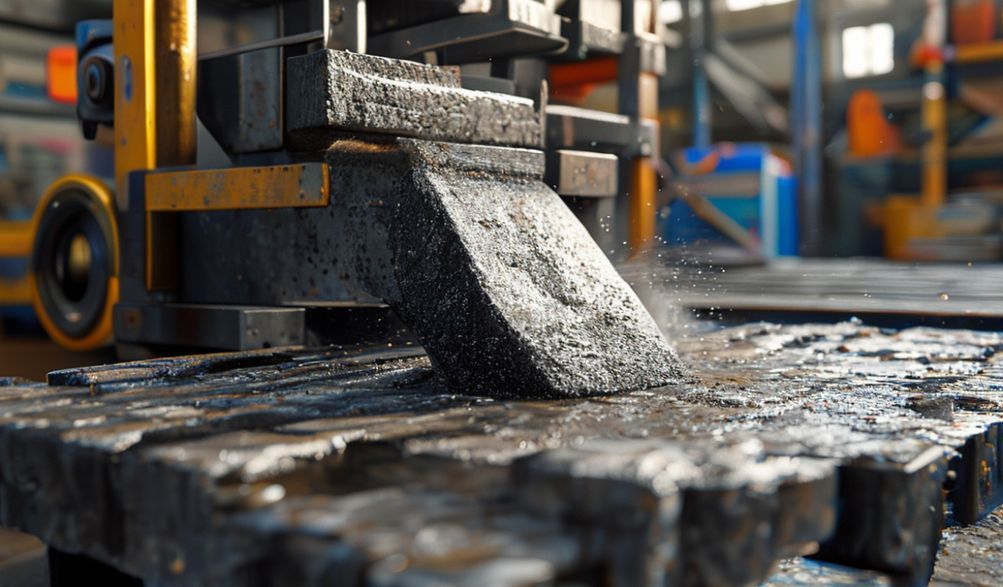
시멘트 블록 제조 기계 선택의 궁극적인 가이드
소개
세계 건설 산업은 단순하면서도 시대를 초월한 필요에 따라 움직입니다: 바로 경제적이고 내구성 있으며 믿을 수 있는 건축 자재입니다. 소박한 주택부터 높이 솟은 상업 공간까지, 무수한 구조물의 중심에는 검소한 시멘트 블록이 자리 잡고 있습니다. 그 다재다능함과 강도는 비교할 수 없습니다. 그러나 건설업자, 계약자, 기업인들에게 이 블록을 조달하는 것은 중요한 기로에 서게 합니다. 수동 생산은 품질 불일치와 느린 생산 속도로 인해 노동 집약적인 고통이지만, 미리 제작된 블록을 구매하는 경우 높은 자재 및 운송 비용으로 이익 마진을 잠식할 수 있습니다.
이 격차를 해소하며 통제력, 효율성, 확장성을 제공하는 해결책이 있습니다: 전용 투자입니다.시멘트 블록 제조 기계이것은 단순히 장비 하나를 구매하는 것이 아니라, 프로젝트나 비즈니스를 위한 전략적 자산을 획득하는 것입니다. 이 포괄적인 가이드는 업계 지식, 기술 사양에 대한 심층 분석, 그리고 실용적인 운영 통찰력을 바탕으로 작성되었습니다. 우리의 목표는 여러분을 호기심 많은 연구자에서 정보를 갖춘 구매자로 변화시켜, 프로젝트 규모, 예산, 장기적 야망에 정확히 부합하는 완벽한 기계를 선택할 수 있도록 돕는 것입니다.
이 가이드를 마칠 때쯤에는 다음을 이해하게 될 것입니다:
* 다양한시멘트 블록 제조 기계의 종류그리고 그 응용 분야들.
* 그주요 요인 to scrutinize before making a purchase.
* The tangible benefits and applications for various users.
필수적인operational and maintenance tips장수하기 위해.
* How to navigate the market and ask the right questions.
당신의 성공을 위한 기반을 마련해 드리겠습니다.
시멘트 블록 제조 기계 이해하기
시멘트 블록 제조 기계란 무엇인가요?
A cement block making machine is a purpose-built device that automates the process of forming precise, high-density blocks from a mixture of cement, aggregates (like sand or crushed stone), and water. The core principle revolves around 다짐과 진동. By subjecting the raw mix to intense, controlled vibrations within a mold, the machine removes air pockets and compresses the material, resulting in a uniformly solid and strong block.
While designs vary, most machines share these core components:
* 호퍼: The entry point for the raw concrete mix.
* 곰팡이 (또는 다이) The cavity that defines the block’s shape and size (hollow, solid, paving, etc.).
* 진동 시스템 Typically powered by electric motors, this is the heart of the machine, ensuring proper compaction.
* 유압 시스템: In semi- and fully-automatic models, hydraulics provide the powerful pressure needed for ejection and pallet movement.
* 제어판 Houses the controls for the vibration, hydraulic cycles, and, in advanced models, programmable logic for automation.
Types of Machines for Making Cement Blocks
Choosing the right type is your first major decision. The spectrum ranges from simple human-powered units to fully automated production lines.
-
수동 블록 제작 기계:
- 작전: Entirely human-powered. The operator manually fills the mold, engages a lever to apply pressure, and then releases the block onto the ground.
- 이상적인 대상: Ultra-small-scale projects, DIY enthusiasts, or startups testing the waters with minimal capital.
- 장점: Very low cost, no electricity required, simple to understand.
- 단점: Extremely labor-intensive, low output (50-100 blocks per day), quality heavily depends on operator consistency.
-
반자동 블록 제작 기계:
- 작전: Strikes a balance. The operator feeds the mix and may initiate the cycle, but core functions like vibration, compaction, and block ejection are powered (by electricity or diesel). Blocks are often retrieved manually for curing.
- 이상적인 대상: Small to medium-sized businesses, contractors building multiple houses, or block supply startups with steady demand.
- 장점: Good balance of output and cost, significantly less labor than manual machines, consistent quality, often mobile.
- 단점: Requires a power source, still needs several operators for optimal output.
-
완전 자동 블록 제작 기계:
- 작전: Represents the pinnacle of automation. From raw material feeding and mixing to compaction, curing, and even block stacking, the process is controlled by a Programmable Logic Controller (PLC). Human intervention is primarily for monitoring and maintenance.
- 이상적인 대상: Large-scale block supply businesses, industrial construction projects, and government housing initiatives.
- 장점: Very high, consistent output (thousands of blocks per shift), minimal labor requirements, superior consistency and quality.
- 단점: High initial investment, requires significant space and stable three-phase power, complex maintenance.
-
모바일 대 고정식 블록 머신:
- 모바일 머신: Often mounted on a trailer or wheels. Perfect for contractors who need to produce blocks directly on a construction site, eliminating transport costs for finished blocks.
- 고정식 기계 Set up in a fixed location, like a factory or yard. Typically more robust, powerful, and suited for high-volume, continuous production for a supply business.
Common Block Types and Sizes Produced
A major advantage of owning a machine is versatility. With interchangeable molds, a single machine can be a multi-product factory.
* 홀로우 블록: The standard for wall construction, offering excellent strength-to-weight ratio and insulation.
* 단단한 블록: Used for foundations, load-bearing walls, and paving bases where maximum density is required.
* 포장 슬래브 및 인터로킹 포장재:차도, 산책로, 테라스용.
* 인터로킹 블록: Designed to lock together without mortar, speeding up construction for retaining walls and some structures.
* Curbs, Grass Pavers, and Specialty Shapes: Many machines can produce landscape and civil engineering products.
Key Factors to Consider When Choosing Your Machine
Project Scale & Required Output (Blocks Per Hour/Day)
This is the most critical question. Your machine must match your ambition.
* Small Project (Single Home, Extension): A manual or small semi-automatic machine (output: 200-500 blocks per day) may suffice.
* Medium-Scale (Multiple Homes, Small Business): A robust semi-automatic machine (output: 800-2000 blocks per day) is ideal.
* Large-Scale (Housing Development, Supply Business): A fully automatic line or high-capacity stationary machine (output: 3000+ blocks per day) is necessary.
* 자문해 보세요: “What is my peak demand? Am I fulfilling a specific contract or building for an ongoing market?”
Available Budget and Investment Analysis
Costs vary astronomically, so clarity is key.
* Cost Ranges (Approximate):
* Manual Machines: $1,000 – $4,000
* Semi-Automatic Machines: $5,000 – $30,000
* Fully Automatic Machines: $30,000 – $150,000+
* ROI 분석: Look beyond the sticker price. Calculate:
* Savings: Reduced labor vs. manual production, lower per-block cost vs. buying pre-made.
* Revenue: If selling blocks, what is the market price in your area? How quickly can you meet demand?
* A slightly more expensive, reliable machine that runs daily will pay for itself faster than a cheap one plagued by downtime.
Power Source and Operational Requirements
Your local infrastructure dictates your choice.
* 전기 Clean, quiet, and efficient, but requires reliable grid power (often three-phase for larger models).
* 디젤: Powerful and independent of the electrical grid, ideal for remote sites. However, it’s noisier, has higher fuel costs, and produces emissions.
* 매뉴얼: No power needed, but severely limits output and scale.
* Consider: Is your workshop or site prone to blackouts? Is fuel readily available?
Machine Features and Build Quality
This is where you assess long-term value. Never compromise on core components.
* 진동 시스템 Look for a system with dual, high-frequency vibration motors. This ensures even compaction throughout the mold for uniform block strength.
* 유압: Essential for semi- and fully-auto machines. A robust, well-sealed hydraulic system ensures smooth operation and the ability to produce dense, complex blocks.
* Frame and Mold Material: The frame should be made of heavy-duty, reinforced steel. Molds must be precision-engineered from hardened steel to resist wear and maintain dimensional accuracy over thousands of cycles.
* After-Sales Support (The Critical E-E-A-T Factor): This can make or break your investment. A reputable supplier offers:
* A clear, comprehensive warranty.
* Ready availability of spare parts (molds, vibration motors, hydraulic seals).
* Access to technical support, either remotely or on-site.
* Provision of operational and maintenance training.
Top Applications and Benefits of Using a Block Making Machine
For Construction Companies and Contractors
- 주문형 생산: Make blocks exactly when and where you need them, eliminating supply chain delays.
- Slash Transport Costs: Produce on-site, especially with a mobile machine. You transport raw materials (cement, aggregate) instead of heavy, finished blocks.
- Total Quality Control: You govern the mix design, ensuring every block meets your specific strength and durability standards.
- Schedule Mastery: Become independent of external suppliers, giving you full control over your project timeline.
For Entrepreneurs and Small Business Owners
- Start a Supply Business: Tap into the constant local demand for construction materials. Supply individual homeowners, small contractors, and retail outlets.
- Create Employment: Operate a machine that requires a small team, contributing to local job creation.
- Build a Brand: Produce specialized or higher-quality blocks to differentiate yourself in the market.
For Sustainable and Community Projects
- Use Local Materials: Source aggregates locally, reducing the carbon footprint and supporting the local economy.
- Produce Eco-Blocks: Experiment with mix designs that incorporate industrial by-products like fly ash or recycled crushed concrete.
- Community-Led Housing: Empower community cooperatives to produce their own affordable building materials for housing initiatives.
Tangible Benefits Summary
- 비용 효율성 Drastically reduces per-block cost over time.
- Consistent High Quality: Automated processes yield uniform, high-strength blocks every cycle.
- High Production Speed: Outproduces manual labor by orders of magnitude.
- Operational Flexibility: Produce a variety of block types on demand.
- 재료 낭비 감소 Precise mixing and compaction minimize spillage and rejected blocks.
Operational Guide and Maintenance Tips
Setting Up for Success: Site and Foundation
A proper setup prevents a multitude of problems.
* 우주 Ensure ample space not just for the machine, but for raw material storage, block curing, and finished product inventory.
* Foundation: Stationary machines, especially automatic ones, require a level, reinforced concrete foundation to absorb vibrations and prevent misalignment. Follow the manufacturer’s specifications exactly.
The Production Process: Step-by-Step
- 원자재 준비 Achieve the correct mix ratio (e.g., 1 part cement, 3-6 parts aggregate). Consistency in mix and moisture content is paramount.
- 급식 The prepared mix is loaded into the machine’s hopper.
- 다짐/진동: The mix is fed into the mold and subjected to intense vibration under pressure for a set duration.
- 이젝션 & 큐어링: The freshly formed “green” block is ejected onto a pallet or the ground. It must then be cured—kept moist under plastic sheeting or in a curing chamber for several days to reach its full strength.
- Storage: Once cured, blocks are stacked and stored for use or sale.
Essential Maintenance for Longevity
Proactive care is cheap; reactive repair is expensive.
* Daily/Weekly: Clean all concrete residue from the mold, hopper, and frame. Lubricate all moving parts as per the manual. Check and tighten bolts and nuts.
* Monthly/Quarterly: Inspect vibration motors for loose mounts. Check hydraulic hoses for leaks and fluid levels. Examine the mold for signs of excessive wear or damage.
* Safety First: Always lock out/tag out the power source before performing any maintenance. Wear appropriate PPE (gloves, safety glasses).
Troubleshooting Common Issues
| Issue | Possible Cause | Suggested Solution |
| :— | :— | :— |
| Blocks breaking easily | Insufficient vibration/compaction; Wrong water-cement ratio (too wet or dry); Inadequate curing. | Increase vibration time; Adjust mix to a stiffer consistency; Ensure proper 7-day moist curing. |
| Blocks sticking in mold | Worn or damaged mold; Insufficient release agent; Mix too wet. | Inspect and repair/replace mold; Apply a recommended mold oil; Reduce water in mix. |
| Uneven block height/density | Uneven feeding of mix; Unlevel machine or foundation; Worn vibration motors. | Ensure consistent feed; Re-level the machine; Check and replace vibration motors if faulty. |
| Machine vibrating excessively | Loose bolts on motors or frame; Foundation not solid. | Tighten all bolts and mounts; Reinforce the foundation. |
FAQ: Your Questions About Cement Block Machines Answered
Q1: What is the average cost of a machine for making cement blocks?
A: There is no single “average” due to the vast range. Prices can start around $1,000 for a basic manual press and exceed $100,000 for a high-output fully automatic production line. The most meaningful approach is to define your required output and block types first, then budget for a reliable machine in that category.
Q2: Can one machine produce different block types?
A: Yes, absolutely. This is a key feature. Most machines operate with interchangeable molds. You can purchase additional molds for hollow blocks, solid blocks, pavers, etc., allowing one machine to produce a full product line. Always confirm mold compatibility and cost with the supplier.
Q3: What is the typical lifespan of a block making machine?
A: With proper maintenance and reasonable usage, a well-built machine can last 10 to 20 years or more. The lifespan is directly tied to build quality (steel thickness, component grade), adherence to maintenance schedules, and production intensity (running 24/7 will naturally reduce lifespan compared to single-shift operation).
Q4: Do I need special training to operate a semi- or fully-automatic machine?
A: Yes, basic operational training is crucial and non-negotiable. It ensures operator safety, maximizes production efficiency, and teaches essential daily maintenance to protect your investment. A reputable supplier should provide this training, either at their facility, yours, or via comprehensive manuals and videos.
Q5: Where can I buy a reliable cement block making machine?
A: Research is key. Look for established manufacturers with a proven track record. Attend industry trade shows, check for international quality certifications (like CE or ISO), and read customer reviews and case studies. Crucially, ask for references and, if possible, visit an existing customer’s operation to see the machine running. Never choose a supplier on price alone; the cost of poor after-sales support will far outweigh any initial savings.
결론
올바른 선택시멘트 블록 제조 기계 is a journey from assessing your needs to understanding the technology and finally making a strategic investment. We’ve explored the spectrum from simple manual presses to sophisticated automated plants, highlighted the critical factors of output, budget, and build quality, and underscored the transformative benefits—from cost savings and quality control to business creation.
This guide serves as your foundational blueprint. It empowers you to move forward with confidence, asking informed questions and evaluating options not as a novice, but as a savvy buyer. Investing in the right equipment is more than a purchase; it’s a commitment to efficiency, quality, and growth for your construction projects or business venture.
Ready to take the next step? Use this knowledge as your filter. Contact several reputable suppliers with your specific output and block type requirements. Request detailed quotations that include delivery, training, and warranty terms. Ask pointed questions about after-sales service and spare parts availability. Don’t hesitate to ask for client references. Your perfect block-making partner is out there—go find them and build your future, one block at a time.
<