
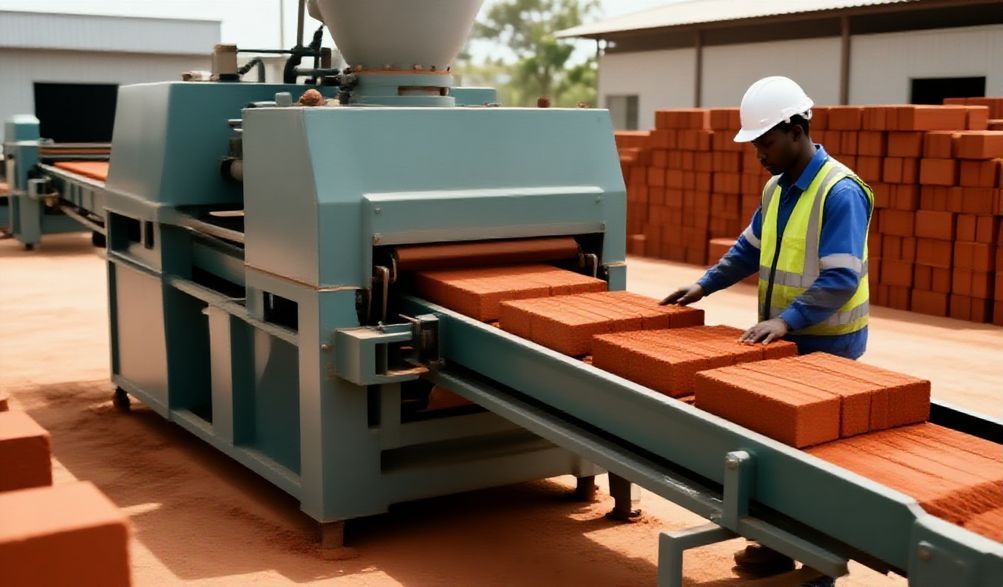
나이지리아에서 점토 벽돌 제조 기계의 궁극적인 가이드 | FUDA 블록 제조 공장과 협력하세요
소개
나이지리아의 건설 부문은 전례 없는 성장을 경험하고 있습니다. 야심 찬 연방 인프라 프로젝트부터 긴급한 주택 수요까지, 내구성 있고 고품질의 건축 자재에 대한 수요가 지금보다 더 커진 적은 없었습니다. 이 건설 붐의 중심에는 시대를 초월한 재료인 점토 벽돌이 자리 잡고 있습니다. 그러나 나이지리아의 원토를 신뢰할 수 있고 수익성 있는 벽돌 공급으로 연결하는 다리는 적절한 생산 장비입니다. 바로 여기에서 전문성이 결정적으로 중요해집니다.
10년 이상, FUDA 블록 제작 공장은 단순한 장비 판매업체를 넘어서, 나이지리아 건설 진화의 적극적인 파트너로 자리매김해 왔습니다. 우리의 엔지니어들은 남서부의 붉은 라테라이트부터 북부의 사질 양토에 이르기까지, 6개 지리정치적 구역 전역에서 직접 현장 작업을 해왔습니다. 우리는 변동이 심한 전력 공급, 다양한 토양 구성, 확장 가능한 솔루션에 대한 필요성이라는 독특한 도전 과제들을 이해합니다. 이 깊고 실질적인 경험이 우리의 권위의 기반을 형성합니다.
점토 벽돌 제조 기계 선택은 어떤 건설 사업이나 기업가에게도 가장 중요한 투자 중 하나입니다. 올바른 기계는 생산 품질, 생산 효율성, 그리고 궁극적으로 수익성을 좌우합니다. 잘못된 선택은 지속적인 가동 중단, 부적합한 벽돌, 그리고 재정적 압박으로 이어질 수 있습니다.
이 종합 가이드는 FUDA의 광범위한 현장 경험에서 정제되어, 여러분께 힘을 실어 드리기 위해 마련되었습니다. 우리는 판매 브로셔어를 넘어, 나이지리아에서의 사업을 위해 확신에 찬, 정보에 기반한 결정을 내리는데 필요한 실행 가능한 통찰력을 제공할 것입니다. 우리의 헌신은 전국적으로 확장되고 있는 설치 현황과, 우리의 확고한 지원으로 번창하는 사업을 일궈낸 고객들의 증언으로 입증되고 있습니다.
점토 벽돌이 나이지리아 건설의 기초로 남아있는 이유
기계에 투자하기 전에 제품 자체의 지속적인 가치를 이해하는 것이 필수적입니다. 점토 벽돌은 과거의 유물이 아닙니다. 그것들은 나이지리아의 현재와 미래를 위한 검증된 지속 가능한 선택입니다.
Durability and Thermal Comfort for the Nigerian Climate
Clay bricks offer exceptional structural integrity and longevity, capable of withstanding decades of harsh weather. Their high thermal mass is a natural advantage for the Nigerian climate. They absorb heat during the day and release it slowly at night, leading to cooler indoor temperatures compared to lighter materials. This translates to reduced reliance on air conditioning, offering significant long-term energy savings and enhanced living comfort.
Cost-Effectiveness and Local Material Sourcing
The primary raw material—clay—is abundantly available across Nigeria. This drastically reduces material transportation costs and fosters local economic cycles. Brick production can be set up near both the source of clay and the construction site. Furthermore, the production process, especially with modern machines, is highly efficient, minimizing waste and maximizing yield from local resources.
The Economic Opportunity: Meeting Housing and Infrastructure Demands
The Nigerian government’s focus on housing deficits and infrastructure development presents a massive opportunity. There is a consistent, high demand for quality bricks for:
* Low and medium-cost housing estates.
* 상업용 건물 프로젝트.
* Road and drainage construction (using pavers and kerbs).
Investing in brick production is not just about buying a machine; it’s about positioning your business at the core of national development.
점토 벽돌 제조 기계 이해하기: 유형 및 기술
Navigating the different types of machines is the first technical step. Your choice should align with your production scale, budget, and operational context.
Manual & Semi-Automatic Machines: Ideal for Startups and Small-Scale Production
- 수동 기계: These are lever-operated or simple mechanical presses. They require significant human effort but have a very low initial cost and no power dependency. Ideal for community projects, very small startups, or producing specialty bricks in low volume.
- 반자동 기계: This is where efficiency takes a leap. These machines use an electric or diesel engine to power the compression system, but brick removal and stacking are manual. They offer a excellent balance between output (500-2,000 bricks per day) and affordability, perfect for growing small to medium enterprises (SMEs).
Fully Automatic Machines: For High-Volume Production and Large Enterprises
For serious commercial production, fully automatic machines are the powerhouse. They integrate the entire process—mixing, molding, compaction, and stacking—onto a conveyor system with programmable logic controller (PLC) operation.
* 주요 혜택: Extremely high output (5,000 to 20,000+ bricks per 8-hour shift), consistent quality, and minimal manual labor.
* 최적 대상: Large construction firms, industrial brick manufacturers supplying major projects, and investors targeting the wholesale market.
Key Machine Components Explained: A FUDA Breakdown
Understanding the core parts helps you evaluate machine quality:
1. Mixer/Pan Mill: This is where clay, water, and sometimes a small amount of sand or cement are homogenized. A robust mixer is crucial for a consistent, plastic mix.
2. Molder/Mold Box: The heart of the machine. High-grade steel molds determine the brick’s shape and dimensions (solid, hollow, interlocking).
3. Hydraulic Compactor: Applies immense pressure to the clay in the mold. The pressure rating (measured in tons) directly impacts brick density and strength.
4. Conveyor System (in automatic models): Transports raw material to the mixer and moves finished bricks to the curing area, streamlining workflow.
Choosing the Right Machine: A FUDA Expert Checklist for Nigerian Businesses
This is where our experience becomes your roadmap. Use this checklist to guide your decision-making process.
Assessing Your Production Goals: Daily Output Requirements
Be realistic. Don’t over-invest in capacity you can’t utilize, or under-invest and miss opportunities.
* Small-scale/Local Supply: 1,000 – 3,000 bricks/day (Semi-Automatic).
* Medium-scale/Contractor Supply: 3,000 – 8,000 bricks/day (Advanced Semi-Auto or Basic Automatic).
* Large-scale/Wholesale Supply: 10,000+ bricks/day (Fully Automatic Line).
Power Considerations: Navigating Electricity, Diesel, and Hybrid Options
Nigeria’s power reality must be central to your choice.
* 전기 모델: Cleaner and quieter, but entirely dependent on stable grid power or a large-capacity generator.
* 디젤 모델: Higher fuel cost but offer complete independence from the grid. Essential for locations with unreliable power.
* Hybrid (Diesel/Electric) Models: FUDA often recommends these for Nigeria. They offer the flexibility to switch between power sources, ensuring production never halts.
Raw Material Analysis: Matching the Machine to Your Local Clay Quality
Not all clay is equal. We insist on testing your soil sample.
* Sandy Clay: May require less water and shorter curing time.
* Heavy Clay/Laterite: Might need a more powerful mixer and careful moisture control. Some machines come with adjustable compression to handle different material densities.
* 핵심 질문: Can the machine handle slight variations in moisture content, which are common in Nigeria?
Space, Labor, and Budget Planning: A Realistic Cost-Benefit Framework
- 우주 Include space for the machine, raw material storage, drying yard, and cured brick storage. Automatic lines need more space for conveyors.
- 노동 Semi-auto machines need 4-6 operators. Fully automatic lines may need only 2-3 skilled operators but require technical knowledge.
- 예산 Factor in the 총 소유 비용: Machine price + shipping + installation + foundation + initial spare parts kit + power source. The cheapest machine can become the most expensive due to downtime and repair costs.
The FUDA Block Making Factory Advantage: More Than Just a Machine
When you partner with FUDA, you invest in a system for success, built on reliability and local partnership.
Proven Machines Built for Nigerian Conditions
Our machines are engineered with Nigerian realities in mind. For instance, our FUDA-8S Semi-Automatic model features reinforced hydraulics and a corrosion-resistant paint job for humidity. Our FUDA-12A Fully Automatic Line includes a built-in voltage stabilizer to protect the PLC from power surges.
End-to-End Support: From Site Inspection to Installation & Training
We begin with a consultation, often including a site visit. Upon order, our team manages delivery and provides on-site installation and comprehensive hands-on training for your operators. We ensure your team can run the machine safely and efficiently from day one.
Reliable After-Sales Service, Parts Availability, and Technical Support
Our warehouse in Lagos stocks critical spare parts to minimize your downtime. Our network of local technicians provides prompt support. You’re not buying from a distant foreign supplier; you’re partnering with a factory with a committed Nigerian presence.
Success Snapshot: A Nigerian Client’s Results
“We started with a FUDA semi-automatic machine in Abeokuta in 2020. The training was thorough. Within 18 months, we had paid off our investment and were supplying three local housing projects. Last year, with FUDA’s guidance, we upgraded to a fully automatic line. Their support made the expansion seamless.” – Adeniyi B., Proprietor, Solid Bricks Ltd.
Critical Questions to Ask Before You Buy
Arm yourself with these questions for any supplier:
What is the true total cost of ownership (maintenance, parts, power)?
Demand a breakdown beyond the sticker price. What are the annual maintenance costs? How available and affordable are wear-and-tear parts like molds and hydraulic seals?
How does the machine handle different moisture contents in local clay?
A good machine should have some tolerance. Ask about the moisture range it can process effectively and if adjustments are easy for the operator to make.
What training and operational manuals are provided?
Is training done in Nigeria, on your site? Are manuals provided in clear English (or even local languages)? Proper training prevents operational errors that damage machines.
What is the warranty and service response time within Nigeria?
A one-year warranty on parts and labor is standard for quality machines. Crucially, ask: “If a critical part fails, what is your average response time to get me back up and running in [your state]?”
자주 묻는 질문 (FAQ)
Q1: What is the price range for a clay brick making machine in Nigeria from FUDA?
A: Prices vary significantly based on automation and capacity. As a guide, manual presses start from around ₦800,000, robust semi-automatic machines range from ₦2.5M to ₦7M, and fully automatic lines begin from ₦12M upwards. FUDA provides transparent quotations that detail all costs. We advocate for value and reliability over the false economy of cheap, uncertified imports.
Q2: Can FUDA machines use laterite or other local soil types found in Nigeria?
A: Absolutely. Our machines are designed to process a wide range of soil types, including the prevalent laterite. The key is in the mix preparation. We often recommend our optional pan mixer attachment to perfectly homogenize tougher materials, ensuring a strong, consistent final brick.
Q3: Do you offer financing or payment plans for Nigerian businesses?
A: While FUDA does not directly provide in-house financing, we have established relationships with several Nigerian financial institutions familiar with equipment financing. We can guide you toward credible partners and provide all necessary machine documentation (proforma invoice, specifications) to support your loan application.
Q4: How long does it take to set up and start production after delivery?
A: Once the machine arrives on your prepared site (with a solid, level foundation), our installation team typically completes setup, calibration, and training within 3-5 working days. This means you can often start trial production within a week of delivery.
Q5: Where is your showroom or service center located in Nigeria?
A: Our main operational office and parts warehouse is located in Lagos. We have technical teams stationed in key regions across the country to ensure prompt service. For the most current contact details and to schedule a consultation, please visit our website or call our dedicated Nigerian support line.
결론
Selecting the ideal clay brick making machine is a strategic decision that hinges on technical fit, operational reality, and, most importantly, the reliability of your partner. In Nigeria’s dynamic market, having a supplier with proven expertise, local understanding, and unwavering after-sales support is not a luxury—it’s a necessity for your business’s sustainability and growth.
FUDA Block Making Factory stands as that authoritative partner. We combine robust, context-appropriate machinery with an end-to-end support system designed for Nigerian entrepreneurs. We are invested in your success because your growth fuels Nigeria’s development.
Take the next step with confidence. Contact the FUDA expert team today for a free, no-obligation consultation. Share your production goals and, if possible, a sample of your local soil. We will analyze your specific needs and recommend the perfect clay brick making machine to build a profitable and enduring future for your business in Nigeria.
We remain committed to quality, relentless support, and empowering the builders of Africa’s largest economy.
<