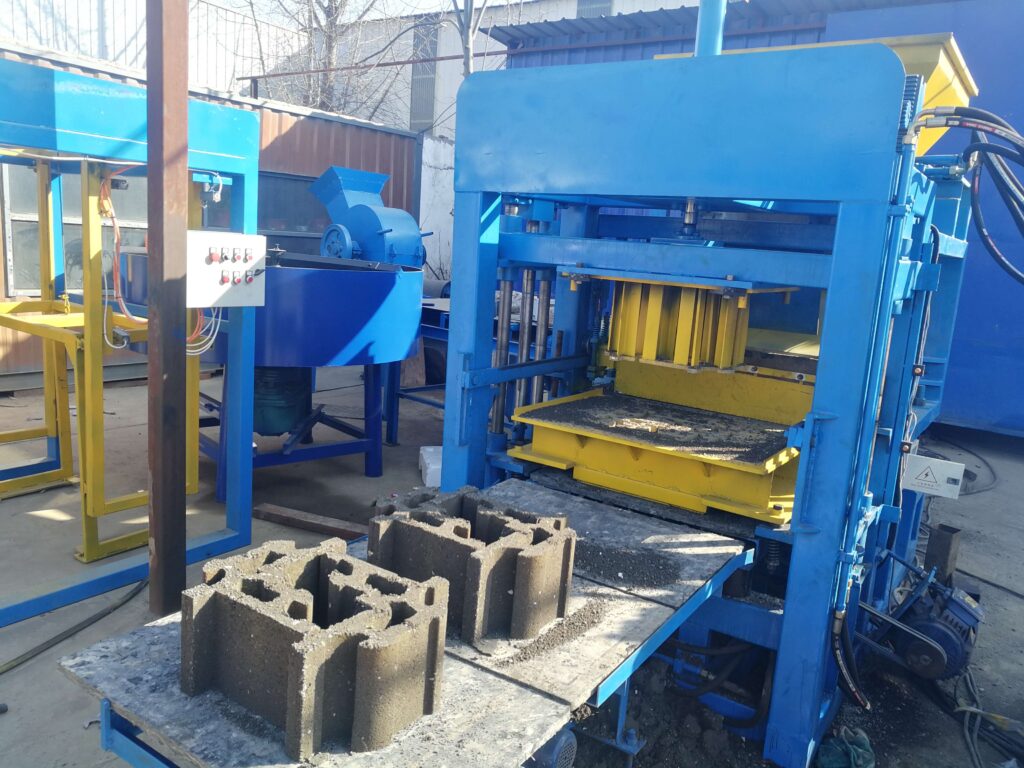
원료 처리 및 배합 시스템
성공적인 생산 라인의 기초는 일관된 투입 품질과 자동화된 공급을 보장하도록 설계된 정교한 원자재 관리 시스템에서 시작됩니다. 현대식 설비는 50톤에서 200톤 용량의 시멘트계 재료 저장 사일로를 다수 통합하며, 통합 수위 모니터링과 자동 재충전 트리거 기능을 갖추고 있습니다. 골재 처리 시스템은 일반적으로 수취 호퍼, 컨베이어 네트워크, 과대 입자와 오염물을 자동으로 제거하는 선별 장비를 포함합니다. 배칭 공정은 목표 중량의 ±0.5% 이내 정확도를 가진 정밀 계량 호퍼를 사용하며, 수분 함량과 재료 밀도 변화를 자동으로 보정하는 컴퓨터화된 배칭 시스템에 의해 제어됩니다. 첨단 라인은 실시간 재료 추적 시스템을 도입하여 최적의 재고 수준을 유지하고, 미리 설정된 임계값에 도달하면 자동으로 구매 주문서를 생성합니다. 원자재 처리에서의 이러한 수준의 자동화는 원천에서 품질 변동을 제거하고, 작업자의 전문성이나 주의 수준에 관계없이 24시간 내내 일관된 배합 비율을 보장합니다.
기술과 물질 수송의 융합
생산 일관성의 핵심은 제품 강도 발현에 중요한 정확한 물-시멘트 비율을 유지하면서 재료를 철저히 혼합하는 믹싱 기술에 있습니다. 현대 생산 라인은 회차당 750~5,000리터 용량의 트윈 샤프트 믹서를 사용하며, 내마모성 블레이드와 라이너가 작동 수명 동안 혼합 효율을 유지합니다. 물 측정 시스템은 ±1% 정확도의 유량계를 포함하고, 고급 시스템에는 골재의 수분 함량에 따라 자동으로 물 투입량을 조절하는 수분 센서가 통합되어 있습니다. 혼합 시간은 재료 특성에 따라 90~180초로 정밀하게 제어되며, 프로그래머블 로직 컨트롤러가 모든 배치에 동일한 혼합 작용을 보장합니다. 믹서에서 블록 성형기로의 재료 이송은 일반적으로 재료 분리와 수분 손실을 방지하기 위해 스크래퍼와 커버가 장착된 벨트 컨베이어 시스템을 사용합니다. 혼합과 성형 단계 간의 통합에는 믹서 유지보수나 청소 주기 중에도 기계의 연속 가동을 보장하는 버퍼 시스템이 포함됩니다.
생산 코어 및 자동화 시스템
성형 기술과 압축 역학
중앙 생산 모듈은 최소한의 감독으로 연속 운전이 가능하도록 설계된 대용량 블록 기계를 특징으로 합니다. 이 시스템들은 140~320 bar의 유압과 4,000~7,000 RPM의 고주파 진동을 결합하여 최적의 재료 다짐과 제품 밀도를 달성합니다. 현대식 기계는 제품 교체 시간을 수 시간에서 수 분으로 단축하는 신속 교체 금형 시스템을 도입하여 시장 수요에 맞춘 유연한 생산 일정 계획이 가능합니다. 팔레트 순환 시스템은 양생용 팔레트를 자동으로 기계에 공급하고, 성형된 신선한 제품을 수작업 없이 양생 구역으로 운반합니다. 고급 기계는 자동 높이 조절 기능을 갖추어 금형 마모와 재료 변동을 보상함으로써 장비의 전 운전 수명 동안 일관된 제품 치수를 보장합니다. 완전한 라인의 생산 능력은 8시간 교대 기준으로 표준 블록 10,000~60,000개 범위이며, 일부 특수 시스템은 최적화된 사이클 시간과 병렬 처리 구성을 통해 일일 100,000개 이상을 생산합니다.
자동화 취급 및 경화 관리
성형 후 처리는 자동화가 제품 손상과 노동력 요구를 크게 줄이는 중요한 단계입니다. 로봇 팔레타이저는 생산 팔레트에서 양생 랙으로 미경화 제품을 ±2mm 이내의 위치 정확도로 신중하게 이동시켜 모서리 손상과 변형을 방지합니다. 양생 시스템 구성은 자연 대기 양생부터 온도와 습도 관리를 통해 강도 발현을 가속화하는 완전 제어 챔버 시스템까지 다양합니다. 고급 라인은 양생 랙을 위한 자동화된 저장 및 검색 시스템을 도입하여 정확한 양생 일정을 유지하면서 공간 활용을 최적화합니다. 기후 제어 양생 챔버는 온도를 40-70°C 사이로, 상대 습도를 90% 이상으로 유지하여 제품 더미 전체에 걸쳐 균일한 강도 발현을 보장하면서 양생 시간을 수주에서 수시간으로 단축합니다. 에너지 회수 시스템의 통합은 다양한 공정 단계에서 발생하는 열을 포집하여 재사용함으로써 기존 시스템 대비 양생 에너지 요구량을 30-50% 절감합니다.
품질 관리 및 프로세스 최적화
통합 품질 관리 시스템
현대 생산 라인은 여러 공정 단계에서 포괄적인 품질 모니터링을 도입하여, 관련 기준을 충족하거나 초과하는 일관된 생산물을 보장합니다. 레이저 측정 시스템은 ±0.2mm 정확도로 제품 치수를 지속적으로 모니터링하며, 허용 오차에 근접할 경우 자동으로 기계 조정을 유발합니다. 압축 시험기는 생산 흐름에서 무작위로 샘플을 선별하여 압축 강도 발달을 측정하고, 자동 배합 조정을 위한 데이터를 제공합니다. 색상 일관성은 분광광도계를 사용하여 모니터링되며, 상업적으로 중요한 문제가 되기 전에 미세한 색상 변이를 감지합니다. 모든 품질 모니터링 스테이션의 데이터는 중앙 제조 실행 시스템으로 전송되어 공정 매개변수와 제품 품질을 상관관계 분석하며, 예측 조정과 지속적인 공정 개선을 가능하게 합니다. 이러한 통합적 품질 관리 접근법은 일반적으로 제품 불량률을 반자동화 공정의 3-8%에 비해 0.5% 미만으로 감소시키면서, 고객 사양과 규제 요구사항을 지속적으로 준수하도록 보장합니다.
프로세스 분석 및 최적화 도구
생산 라인의 디지털 전환은 데이터 기반 최적화를 가능하게 하여 효율을 극대화하고 운영 비용을 최소화합니다. 에너지 관리 시스템은 모든 장비 구성 요소의 전력 소비를 모니터링하여 부하 이동 및 효율 개선 기회를 식별합니다. 생산 분석은 장비 가동률을 추적하여 병목 현상을 찾아내고 생산 일정을 최적화하여 처리량을 극대화합니다. 예측 유지보수 시스템은 장비의 진동, 온도 및 성능 데이터를 분석하여 고장 발생 전에 유지보수를 예약하며, 일반적으로 장비 가용성을 8-15% 향상시킵니다. 고급 시스템은 인공 지능 알고리즘을 통합하여 다양한 소재 조합과 제품 유형에 대한 최적의 기계 매개변수를 식별하기 위해 생산 데이터를 지속적으로 분석합니다. 이러한 최적화 도구는 일반적으로 운영되는 생산 라인에 비해 전체 장비 효율성을 12-25% 개선하고 에너지 소비를 15-30%, 유지보수 비용을 20-40% 절감하는 효과를 제공합니다.
전략적 실행 및 운영 고려사항
Project Planning and Implementation Timeline
The successful deployment of an integrated production line requires meticulous planning and phased implementation. Site preparation typically requires 3-6 months for civil works including foundation construction, utility connections, and building modifications. Equipment installation and mechanical commissioning generally span 4-8 weeks, followed by 2-4 weeks for electrical and control system integration. Process optimization and production ramp-up typically require an additional 4-6 weeks to achieve design capacity and quality standards. The complete project timeline from order placement to full production generally ranges from 8 to 14 months, depending on line complexity and site conditions. Successful implementation requires detailed project management with clearly defined milestones, regular progress reviews, and contingency planning for potential delays in equipment delivery or regulatory approvals.
Staffing Requirements and Skill Development
While automated lines significantly reduce direct labor requirements, they create demand for higher-skilled technical personnel. A typical production line operates with 4-8 personnel per shift including a line supervisor, machine operator, quality technician, and maintenance support. Technical support teams typically include mechanical and electrical technicians with specialized training in hydraulic systems, programmable controllers, and automation technology. Comprehensive training programs spanning 4-8 weeks ensure operational proficiency, covering equipment operation, routine maintenance, troubleshooting, and safety procedures. Many operations implement continuous improvement programs that engage operational staff in identifying efficiency opportunities and process enhancements, leveraging their daily exposure to equipment performance and production challenges.
결론
Integrated brick and block production lines represent the current zenith of masonry manufacturing technology, delivering unparalleled levels of productivity, quality consistency, and operational efficiency. The strategic implementation of these systems transforms traditional masonry manufacturing from a labor-intensive craft to a technology-driven industrial process, creating sustainable competitive advantages through superior economics and product quality. The significant capital investment required is justified through dramatically reduced operating costs, minimal product rejection, and the ability to consistently meet the exacting requirements of modern construction projects. As construction methodologies continue to evolve toward greater precision and faster project timelines, the role of fully integrated production systems becomes increasingly vital for masonry manufacturers seeking to maintain market relevance and profitability. The ongoing digital transformation of these systems promises further improvements in efficiency, flexibility, and sustainability, ensuring their continued evolution as the manufacturing platform of choice for quality-conscious masonry producers worldwide.
자주 묻는 질문 (FAQ)
Q1: What are the typical space requirements for a complete production line installation?
A: Space requirements vary based on production capacity and configuration, but generally range from 2,000 to 8,000 square meters for the production facility itself. This includes areas for raw material storage (400-1,200 m²), production equipment (800-2,500 m²), product curing (600-3,000 m²), and finished goods storage (500-1,800 m²). Additional outdoor space is typically required for raw material stockpiles and ancillary facilities. The layout efficiency significantly impacts operational workflow, with optimized designs reducing material handling distances by 30-50% compared to conventional arrangements.
Q2: How does the operational cost structure differ between automated lines and conventional manufacturing?
A: Automated lines demonstrate fundamentally different cost structures: labor costs typically reduce from 25-35% of production cost to 8-15%; energy costs increase from 8-12% to 15-22% due to automation systems but with lower energy cost per unit produced; maintenance costs rise from 4-6% to 7-10% but with higher equipment availability; and raw material utilization improves by 8-15% through precise batching and reduced product damage. The overall production cost per unit typically decreases by 25-40% despite higher capital investment, creating compelling economic justification for automation.
Q3: What infrastructure utilities are required for optimal production line operation?
A: Key utility requirements include: electrical power ranging from 400-1,200 kVA depending on line capacity; water supply of 10-40 m³ per day with consistent pressure and quality; compressed air at 7-10 bar with sufficient volume for automation systems; and drainage capacity for process water and stormwater. Additional considerations include natural gas connections for curing systems where applicable, telecommunications infrastructure for data systems, and appropriate road access for material delivery and product shipment. Utility reliability significantly impacts production consistency, making backup power systems and water storage economically justified in many locations.
Q4: What environmental considerations and compliance requirements apply to modern production lines?
A: Environmental compliance typically addresses: air quality management through dust collection systems with 99.9% efficiency; water management through closed-loop systems that minimize consumption and discharge; noise control through acoustic enclosures and isolation systems; and waste management through material recycling and byproduct utilization. Modern systems typically incorporate sustainability features including energy recovery systems, water recycling, and the use of industrial byproducts as raw materials. Regulatory compliance generally requires environmental impact assessments, continuous emissions monitoring, and regular reporting to relevant authorities.
Q5: How does production line flexibility accommodate different product types and market demands?
A: Modern lines achieve remarkable flexibility through: quick-change mold systems that enable product changeovers in 15-45 minutes; programmable recipes that automatically adjust machine parameters for different products; modular material handling that accommodates various product dimensions and weights; and sophisticated production planning software that optimizes production sequences for efficiency. Advanced systems can simultaneously produce multiple product types through parallel processing arrangements or rapid changeover protocols. This flexibility enables manufacturers to maintain optimal inventory levels across product ranges while responding quickly to changing market demands and custom orders.