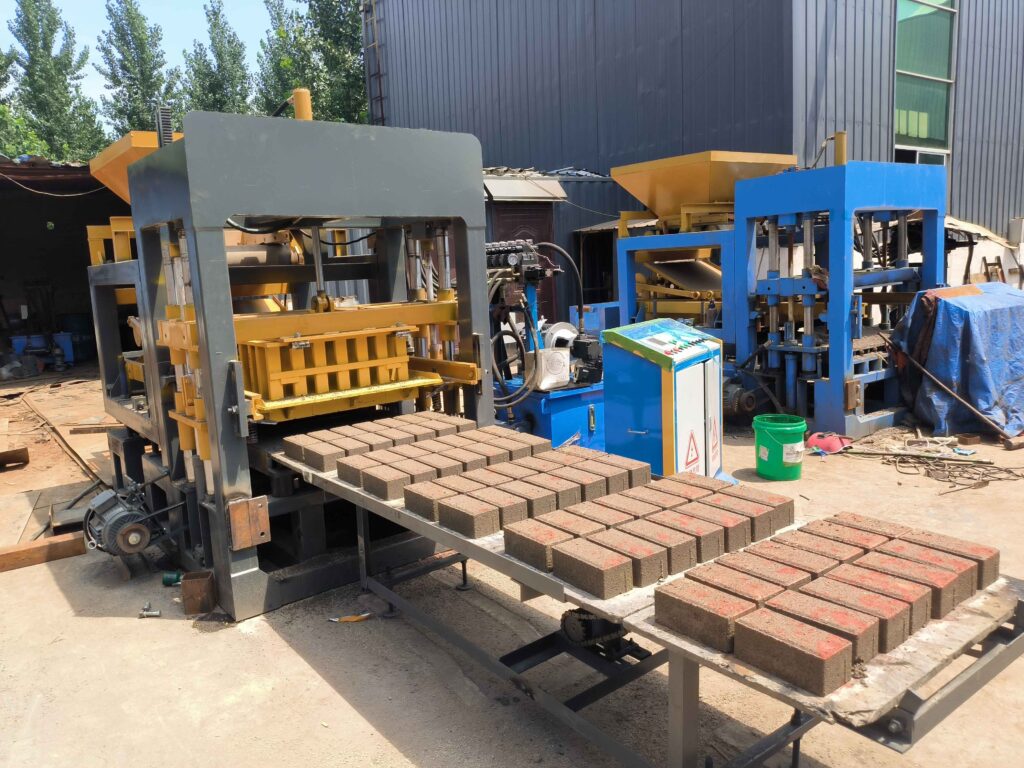
주요 기계 유형의 기술적 검토
제조 환경은 특정 원자재, 제품 사양 및 사업 규모에 맞는 여러 가지 독특한 기술들로 정의됩니다. 기술 선택은 제품 포트폴리오, 생산 효율성 및 초기 자본 지출을 결정합니다.
1. 정적 프레스 기계: 대량 생산의 핵심 장비
정적 프레스는 고밀도 콘크리트 블록, 포장석 및 인터록킹 벽돌을 생산하는 데 가장 일반적이고 다용도로 사용되는 기술을 나타냅니다.
- 운용 원리:이 기계들은 "진동 다짐" 원리로 작동합니다. 준비된 슬럼프가 낮은 콘크리트 믹스가 견고한 강철 생산 테이블 위의 몰드 박스에 공급됩니다. 유압 프레스 헤드가 하강하여 믹스를 다지면서 강력한 전기 또는 유압 진동기가 재료를 밀집시킵니다. 이 동시에 가해지는 압력과 진동은 최적의 밀도와 강도를 보장합니다. 그런 다음 들어 올려진 몰드 박스에서 갓 성형된 제품이 팔레트나 양생 랙으로 배출됩니다.
- 주요 하위 시스템 및 변형:
- 급식 시스템용적식(단순) 또는 전자 배치 공급식(정밀)으로 일관된 제품 품질을 유지할 수 있습니다.
- 금형 시스템:교환 가능한 몰드 박스를 사용하면 단일 기계로 다양한 제품 치수와 프로파일(실속, 중공, 단열)을 생산할 수 있습니다.
- 제어 시스템기본적인 수동 작동을 위한 릴레이 논리에서부터 프레스 압력, 진동 시간, 팔레트 인덱싱을 제어하는 완전한 PLC(프로그래머블 로직 컨트롤러) 자동화까지 다양한 범위를 갖습니다.
- 제품 산출 및 적합성표준 건축 블록, 경량 블록 및 조경 제품에 이상적입니다. 모델 자동화 수준에 따라 8시간 교대 근무당 생산량은 1,000개에서 5,000개 이상의 표준 블록까지 다양할 수 있습니다.
압출기: 연속 점토 벽돌 생산의 대가
압출 성형은 내구성과 미적 품질로 높이 평가되는 소성 점토 벽돌 및 일종의 다공성 점토 블록 제조에 주로 사용되는 기술입니다.
- 운용 원리:이 과정은 준비된 가소성 점토를 오거 시스템을 사용하여 고압 하에 성형된 다이를 통과시키는 것을 포함합니다. 연속적인 점토 기둥이 다이를 빠져나오면서, 와이어나 칼날로 개별 단위로 절단됩니다. 이 "기둥"은 벽돌의 경우 단단할 수도 있고, 속이 빈 블록의 경우 복잡한 구조일 수도 있습니다. 그런 다음 생산된 (소성되지 않은) 제품은 건조된 후 가마에서 소성됩니다.
- 주요 하위 시스템 및 변형:
- 퍼그밀(점토 준비)점토를 혼합, 균질화, 탈기하여 가소성을 확보하고 결함을 제거하는 핵심 구성 요소입니다.
- 압출 스크류와 다이:기계의 심장. 경화된 강철 다이가 제품의 단면 형상을 결정합니다. 압출기 내부의 진공 챔버가 기포를 제거하여 소성 강도를 높입니다.
- 절단기 및 핸들링 시스템:自动化系统将柱体精确切割至指定长度,并轻柔地将绿色产品转移至干燥架上。
- 제품 산출 및 적합성고용량 점토 벽돌 및 타일 생산을 위한 최적의 솔루션입니다. 외장 벽돌, 포장재 및 구조용 점토 제품을 지역 시장에 공급하는 대규모 공장에 적합합니다.
3. 모바일 블록 제작 기계: 현장 및 소규모 생산을 위한 유연성
이러한 자립형 유닛은 종종 트레일러에 탑재되어 건설 현장이나 소규모 지역 시장에 직접 생산을 제공합니다.
- 운용 원리:일반적으로 더 작은 정적 프레스나 에그레이어(egg-layer) 방식의 기계입니다. "에그레이어"는 블록을 성형한 후 기계가 앞으로 이동하여 다음 블록을 만들기 전에 이를 평평한 지면이나 콘크리트 슬래브 위에 직접 놓는 방식으로 작동합니다. 이 기계는 최소한의 기초만 필요하며 소규모 인력으로 운영할 수 있습니다.
- 주요 하위 시스템 및 변형:
- 모빌리티 프레임:安装在拖车或滑橇框架上,便于运输。
- 전원 공급 장치通常配备柴油发动机,以实现完全独立于现场。
- 단순함高自动化设计中,以坚固耐用和操作简便为核心。
- 제품 산출 및 적합성원격 프로젝트에 적합하며, 현지 주택에 필요한 블록을 필요한 곳에서 직접 생산하여 운송 비용을 절감합니다. 하루 생산량은 보통 500~2,000개로 낮지만, 비교할 수 없는 물류적 이점을 제공합니다.
시장 역학 및 전략적 투자 고려 사항
제조 기술의 선택은 목표 시장, 원자재 가용성 및 재정 능력에 의해 영향을 받는 전략적 결정입니다.
Analyzing the Target Product and Market
- Geographic Material Preferences: Concrete block machines dominate in regions where aggregate is plentiful. Extrusion machines are key in areas with rich clay deposits. Understanding local building codes and aesthetic preferences (e.g., demand for clay facades) is crucial.
- 운영 규모 A large-scale stationary plant supplying a city requires a high-automation static press line with palletizers and curing systems. A entrepreneur serving a rural community may start with a single mobile egg-layer machine.
- 제품 다각화 Static presses offer the easiest route to a diverse catalog. A single machine with multiple molds can produce everything from standard blocks to decorative pavers and garden edging, allowing a manufacturer to respond to various market demands.
Comprehensive Cost Structure and Pricing Tiers
The price of machinery is a direct reflection of its automation level, build quality, and output capacity. Investment must be viewed as a Total Cost of Ownership (TCO).
- Capital Expenditure (CapEx) Breakdown:
- 초급 (수동/반자동) Includes basic mobile machines and small static presses with manual feed and product handling. Price Point: Comparable to a mid-range heavy truck or van. Focus is on affordability and low-volume production.
- Mid-Range (Fully Automatic Standalone): Encompasses fully automatic static presses with automatic feeders, mixers, and pallet dispensers. These are turnkey stations for serious SMEs. Price Point: A significant industrial investment, often requiring financing. Offers the best balance of output and cost for growing businesses.
- High-End (Fully Integrated Production Lines): Includes complete plants with robotic handling, automated curing systems, and sophisticated extrusion lines with dryers and kilns. Price Point: Represents a major capital project, akin to establishing a full-scale factory. Justified by massive, continuous output.
- Operational Expenditure (OpEx) and Hidden Costs:
- Raw Material Processing: Costs for crushers, screens, and mixers for concrete, or pugmills and dryers for clay.
- 전력 소비량: Hydraulic systems and vibrators are energy-intensive. High-efficiency drives are a selling point.
- Labor and Training: Higher automation reduces direct labor but requires more skilled technicians for maintenance.
- Mold and Wear Parts: Mold boxes, extrusion dies, and wear parts for the auger are recurring costs that vary by material abrasiveness.
- Curing and Handling: Costs for pallets, racking, and forklifts for concrete, or kiln fuel and maintenance for clay.
Conclusion: Building a Profitable Supply Chain Partnership
For distributors and dealers, success in the brick and block machinery market hinges on moving beyond transactional sales to become consultative partners. This requires a deep understanding of a client’s business model, local market conditions, and growth aspirations. The right machine is not the most expensive one, but the one that perfectly aligns with the client’s production goals, raw material access, and financial roadmap.
The future of this sector is tied to sustainable construction. Machinery that can efficiently utilize fly ash, slag, recycled aggregates, or produce highly insulating blocks is increasingly valuable. Furthermore, offering comprehensive packages—including machine installation, operator training, mold supply, and reliable after-sales service—creates indispensable, long-term client relationships. By providing the correct technology and support, you empower your clients to build the literal foundations of their communities, securing your position as a cornerstone of the construction supply chain.
자주 묻는 질문 (FAQ)
Q1: What is the main difference between a machine for concrete blocks and one for clay bricks?
A: The core difference lies in the process and raw material. Concrete block machines use a vibro-compaction process with a semi-dry concrete mix in a static mold. Clay brick machines typically use an 압출 process, forcing wet, plastic clay through a die to form a continuous column which is then cut. The technologies are not interchangeable.
Q2: What level of technical expertise is required to operate and maintain these machines?
A: It varies by type. Basic mobile or semi-automatic presses require practical mechanical skill for routine maintenance. Fully automated lines and extrusion systems demand knowledge of hydraulics, electronics, PLC controls, and, for clay, thermodynamics (kilns). Quality distributor support includes thorough training and clear technical documentation.
Q3: How do we determine the right production capacity (blocks per day) for a client?
A: Conduct a detailed market analysis with the client. Key factors include: local annual construction volume, the client’s target market share, availability of raw materials, and investment budget. It is often wiser to start with a machine that can be run for two shifts to meet growing demand, rather than an oversized, underutilized machine.
Q4: Beyond the machine itself, what other equipment is needed for a complete setup?
A: A full production line requires supporting equipment. For concrete: a mixer (pan or planetary), conveyor belts, a cement silo, pallet handling equipment (forklift, stacker), and a curing area. For clay: a clay crusher, pugmill, dryer, and a tunnel or chamber kiln for firing. The “balance of plant” costs can be substantial.
Q5: What are the key factors affecting the final quality and strength of the produced blocks?
A: Machine performance is only one factor. Quality depends on: Raw Material Consistency (gradation of aggregates, clay composition), Mix Design (correct cement/water ratio, additives), Proper Compaction (achieved by the machine’s vibration and pressure), and Adequate Curing (controlled moisture and temperature for concrete; precise drying and firing cycles for clay).
Q6: What is the typical payback period for an investment in a medium-capacity automatic block making machine?
A: The payback period is highly sensitive to local block pricing, production costs, and machine utilization. A well-managed operation with a good market can often see a return on investment within 18 to 36 months. This is calculated by comparing the profit margin per block against the daily output and the total capital and operating costs. A detailed financial projection is essential before purchase.