1. 서론
글로벌 건설 산업은 효율성과 지속가능성이라는 두 가지 절대적 요구에 의해 주도되는 조용한 혁명을 겪고 있습니다. 이러한 변화의 최전선에는 조립 방식을 재정의하는 제품인 인터록킹 벽돌이 있습니다. 기존의 석공 작업과 달리, 이 공학적으로 설계된 단위체들은 정밀한 기하학적 설계를 통해 견고한 구조물을 형성하며, 전통적인 습식 모르타르 사용을 필요로 하지 않습니다. 유통업자, 판매업자, 조달 전문가들에게 이러한 혁신적인 구성 요소를 생산하는 기계, 즉 산업용 인터록킹 벽돌 제조기는 단순한 제품 라인이 아닌, 고성장 시장 세그먼트로의 관문을 의미합니다. 이 기술은 고객이 더 빠르고, 더 튼튼하며, 비용 효율적으로 건설할 수 있도록 지원하여, 저렴한 주택에서 견고한 인프라에 이르기까지 중요한 과제들을 해결합니다. 본 글은 이러한 변혁적인 제조 기술을 이해, 공급 또는 투자하려는 B2B 이해관계자들을 위한 포괄적인 전략적 및 기술적 개요를 제공합니다.
2. 연결의 공학: 인터록 벽돌 기술 설명
2.1. 모르타르를 넘어서: 기계식 드라이 스태킹의 원리
근본적인 혁신은 벽돌의 설계에 있습니다. 각 유닛은 상단과 하단 표면에 정밀하게 성형된 돌출부(노브)와 이에 대응하는 오목부(포켓)를 갖추고 있습니다. 쌓을 때 이러한 요소들이 서로 맞물려 수평 이동(전단)과 수직 변위를 제한하는 기계적 결합을 형성합니다. 수직면을 따라 설치된 특허 받은 "립" 또는 "홈" 시스템이 추가로 횡방향 안정성을 강화하여 벽돌 층을 함께 고정합니다. 이 건식 쌓기 방법은 모르타르 도포, 양생, 그리고 줄눈 메우기에 필요한 시간, 비용, 재료 낭비, 숙련된 인력을 제거합니다.
2.2. 디자인 진화: 기본 블록에서 통합 시스템으로
현대식 인터록킹 브릭은 정교한 건축 시스템의 일부입니다. 디자인은 단순한 형태에서 통합 부품으로 진화했으며, 여기에는 다음이 포함될 수 있습니다:
- 표준 인터록 블록:일반 벽체 시공용입니다.
- 코너와 하프 블록:깔끔한 공개와 최적화된 레이아웃을 위해.
- 채널 차단:수직 철근과 콘크리트 그라우트를 위한 연속적인 보강 공간을 만들어 내진성과 하중 지지 능력을 향상시킵니다.
- 캡핑 유닛:완성된 상단 표면을 제공하기 위해.
이러한 체계화는 완전하고 코드를 준수하는 구조물의 구축을 가능하게 하여, 이 기술의 적용 범위를 경계 벽을 넘어 주요 건물까지 확장합니다.
2.3. 현대식 인터록 벽돌 제조기의 핵심 구성 요소
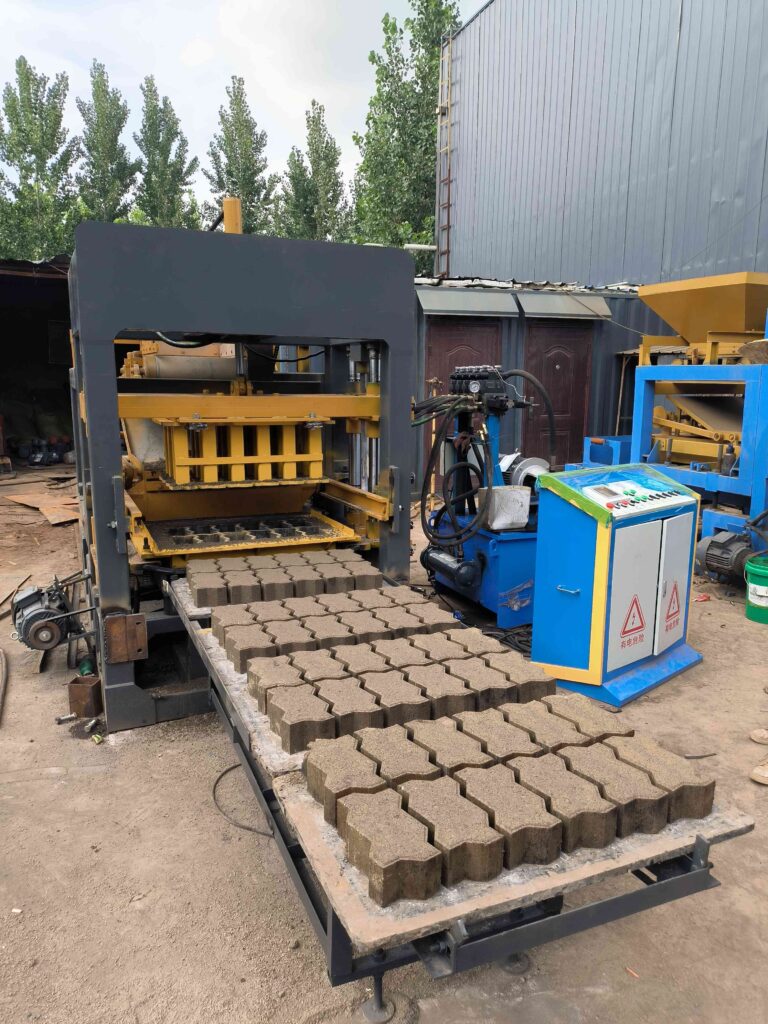
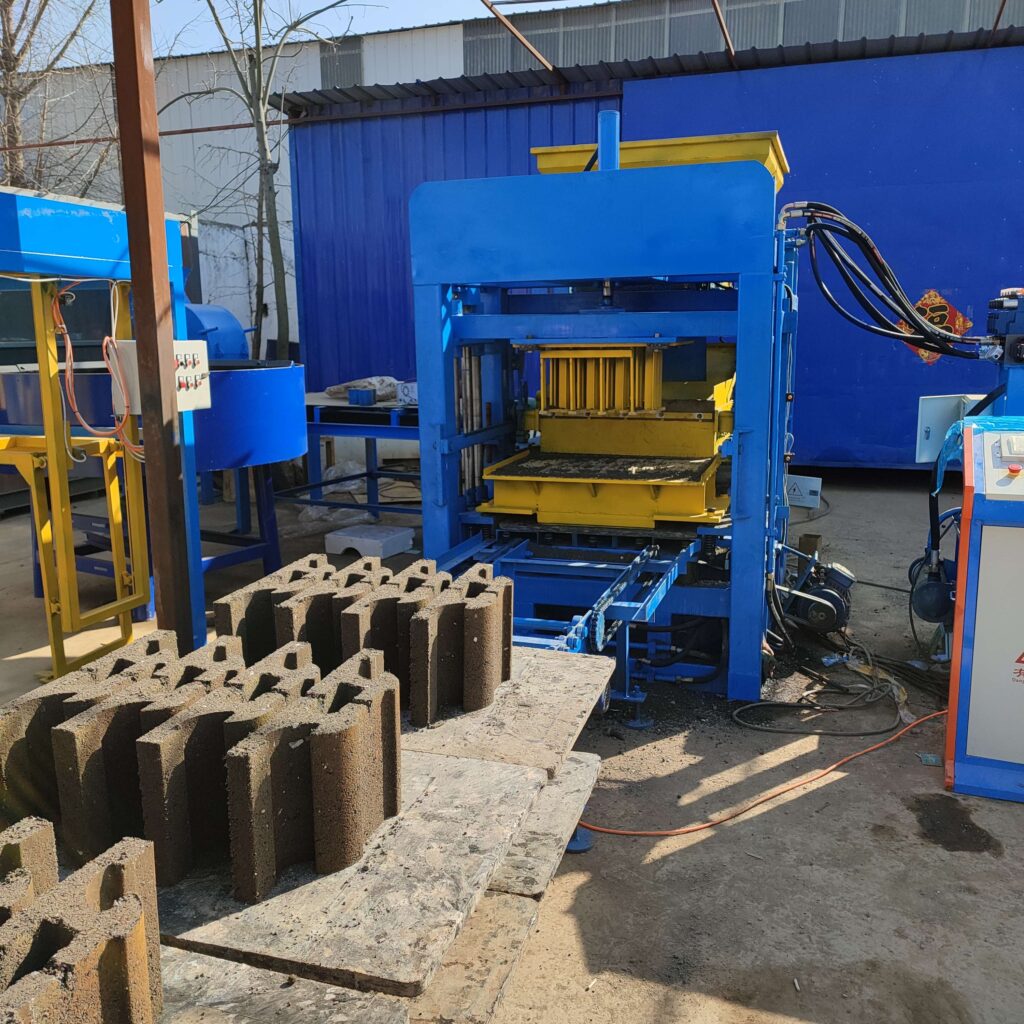
이러한 정밀 부품을 생산하려면 특수화된 기계가 필요합니다. 주요 하위 시스템은 다음과 같습니다:
- 고중량 프레스 프레임극한의 순환 압력을 견디는 견고한 구조로, 수천 번의 주기에 걸쳐 치수 정확도를 보장합니다.
- 듀얼 액션 유압 시스템:건식 또는 반건식 혼합물의 초고압축에 필요한 거대하고 제어된 힘(종종 200~1000톤 이상)을 제공합니다.
- 정밀 금형(몰드 및 팔레트):경화되고 크롬 도금된 강철 금형은 공정의 핵심으로, 복잡한 연동 형상을 만들기 위해 엄격한 공차로 가공됩니다. 특정 팔레트가 금형과 함께 연동하여 작동합니다.
- Programmable Automation: A central PLC controls the entire cycle—material batching, feeding, pressing, stripping, and product transfer—ensuring consistency and efficiency.
- Vibration and Compression Integration: Many machines combine high-frequency vibration with hydraulic compression to achieve optimal density and surface finish for cementitious mixes.
3. Market Dynamics and Strategic Opportunities
3.1. Drivers of Global Demand
Multiple powerful trends converge to fuel demand:
- 건설 속도 Projects can be completed 30-50% faster due to dry-stacking and simplified alignment.
- Labor Skill Mitigation: Reduces dependence on highly skilled masons, a critical advantage in regions facing labor shortages.
- Material and Cost Efficiency: Elimination of mortar saves 15-20% on overall wall costs; reduced construction time lowers financing costs.
- 재난 복원력: Properly engineered and grouted interlock systems demonstrate excellent performance in seismic and high-wind events.
- Sustainability Mandates: The process uses less water, can utilize industrial by-products (fly ash, slag), and reduces site waste.
3.2. Applications and End-User Sectors
The market extends far beyond residential walls:
- 저렴한 주택 프로젝트: Governments and NGOs are major adopters seeking rapid, durable housing solutions.
- Commercial and Industrial Warehouses: For cost-effective, rapid-enclosure perimeter and interior walls.
- Infrastructure: Retaining walls, sound barriers, and flood control structures.
- Disaster Relief and Military Construction: For deployable, rapid-building systems.
- High-End Architectural Projects: For thermally efficient, modern aesthetic designs using specialized finishes.
3.3. Competitive Advantages for Resellers
For the B2B partner, this technology offers a compelling portfolio addition:
- High-Value Solution Selling: Moves the conversation beyond price-per-brick to total project cost savings.
- Differentiation: Establishes the reseller as a provider of innovative, future-ready construction technology.
- Recurring Revenue Streams: Beyond the machine sale, revenue is generated from mold tooling for new block designs, spare parts, and technical service contracts.
- Market Expansion: Opens doors to public sector tenders and large-scale development projects previously inaccessible with conventional brick machinery.
4. Technical Deep Dive: Machine Capabilities and Production Process
4.1. The High-Pressure Compaction Cycle
The production of structurally sound interlocking bricks requires a meticulously controlled process:
- 자동 배치 및 혼합: Raw materials (cement, sand, stone dust, additives) are batched and mixed to a consistent, semi-dry consistency.
- Precise Mold Cavity Filling: An automated feeder deposits a measured volume of mix into the intricate mold cavity. Uniform filling is critical for block integrity.
- Simultaneous Vibration and Compression: The mold table vibrates at high frequency to settle the material, while the hydraulic ram applies extreme downward pressure, compacting the mix to near-zero porosity.
- Stripping and Ejection: The newly formed block is carefully stripped from the mold and transferred onto a curing pallet without damaging its delicate interlocking features.
- Curing and Quality Testing: Pallets move to a controlled curing chamber. Finished blocks are tested for compressive strength, dimensional tolerance, and water absorption.
4.2. Material Science: Compatibility and Mix Design
These machines are highly versatile but require specific mixes. They can process:
- Cement-Stabilized Soil: For low-cost, on-site production.
- Concrete Mixes: (Cement, sand, aggregates) for high-strength applications.
- Fly Ash & Slag-Based Mixes: For eco-friendly, high-performance blocks.
- Crushed Stone & Quarry Dust: For optimal density and finish.
Expertise in advising clients on locally-sourced, cost-effective mix designs adds immense value to the machinery sale.
4.3. Automation, Output, and Quality Control
Industrial-grade machines are designed for uninterrupted production. Key performance indicators include:
- 사이클 타임: Typically between 10-30 seconds per block, depending on size and complexity.
- 출력 용량: Ranges from 1,500 to over 10,000 standard blocks per 8-hour shift.
- Integrated Quality Systems: Modern machines feature sensors that monitor pressure, filling levels, and ejection force, automatically rejecting or flagging sub-standard cycles to ensure near-zero defect output.
5. Investment Analysis and Partner Selection Framework
5.1. Assessing Total Cost of Ownership (TCO) and ROI
A strategic purchase analysis must look beyond the invoice price:
- Capital Expenditure: Machine, tooling, and installation costs.
- 운영 비용 Energy consumption (hydraulic and vibration systems), labor, preventive maintenance, and mold refurbishment.
- Revenue Potential: Based on block output, market price, and demand.
- ROI Horizon: Typically, well-operated plants can achieve full ROI in 1-3 years due to high margins and strong demand for the finished blocks.
5.2. Critical Evaluation Criteria for Equipment
B2B partners must vet machinery based on:
- Press Force and Stability: Determines ultimate block strength and suitability for load-bearing applications.
- Tooling Quality and Availability: The durability and precision of molds are non-negotiable. Assess the supplier’s tooling support.
- Automation Level and Ease of Use: From semi-automatic to fully automatic with robotic pallet handling.
- After-Sales Support Infrastructure: Availability of local service engineers, spare parts inventory, and technical training programs is paramount.
- Compliance and Certification: Does the machine produce blocks that meet or exceed relevant international (ASTM, EN) or local building codes?
5.3. Building a Value-Added Partnership Network
Successful market penetration requires more than a sales transaction. It involves:
- Technical Demos and Sample Production: Providing clients with samples from their local materials is the most powerful sales tool.
- Training and Business Planning Support: Helping clients set up operations, source materials, and market their blocks.
- Creating an Ecosystem: Connecting block producers with architects, engineers, and contractors to drive demand for the interlocking building system.
6. 결론
The industrial interlock brick making machine is a catalyst for transformation in the construction supply chain. It addresses pressing global needs for speed, affordability, and resilience, creating significant value for manufacturers and builders alike. For the discerning distributor, dealer, or investor, this technology represents a strategic pivot towards high-margin, solution-oriented equipment with demonstrable market demand. By mastering the technical nuances, understanding the driving market forces, and selecting manufacturing partners based on robust quality and support, B2B professionals can position themselves at the forefront of a constructive revolution, building profitable businesses while enabling better, smarter construction worldwide.
7. Frequently Asked Questions (FAQ) for B2B Decision-Makers
Q1: How does the structural integrity of a dry-stack interlock wall compare to a traditional mortared wall?
A: When designed as a system and optionally grouted, interlock walls meet or exceed the structural standards of conventional masonry. The mechanical interlock provides excellent shear resistance. For full load-bearing or seismic applications, the hollow cores are reinforced with rebar and filled with concrete, creating a monolithic, reinforced concrete structure that is exceptionally strong.
Q2: What is the learning curve for operators transitioning from conventional block machines?
A: The core operation is similar, with a focus on mix consistency and machine maintenance. The primary difference is the heightened need for precision in mold handling and setup. Comprehensive training from the equipment supplier typically enables a skilled team to achieve proficient production within a few weeks.
Q3: Can a single machine produce multiple interlocking block designs?
A: Absolutely. Versatility is a key feature. By changing the mold set (which includes the mold box, head, and stripper shoe), the same press can produce a wide array of interlocking shapes—standard blocks, corners, channel blocks, etc. This allows a producer to offer a complete building system from one machine, maximizing market responsiveness.
Q4: What are the primary maintenance concerns, and how is downtime managed?
A: Key maintenance focuses on the precision tooling (mold wear), hydraulic system (fluid cleanliness, seals), and vibration mechanisms. A proactive, scheduled maintenance plan based on operating hours is essential. Reputable suppliers design for serviceability with easy access to key components and provide detailed maintenance manuals to minimize downtime.
Q5: Is this technology suitable for very small-scale or start-up ventures?
A: The market offers a spectrum of machines. While large, fully industrial models target high-volume producers, there are robust stationary or mobile models with lower output (500-1500 blocks per day) that are ideal for community-scale projects, small businesses, or entrepreneurs. The business model remains viable at smaller scales due to the high perceived value of the finished blocks.