
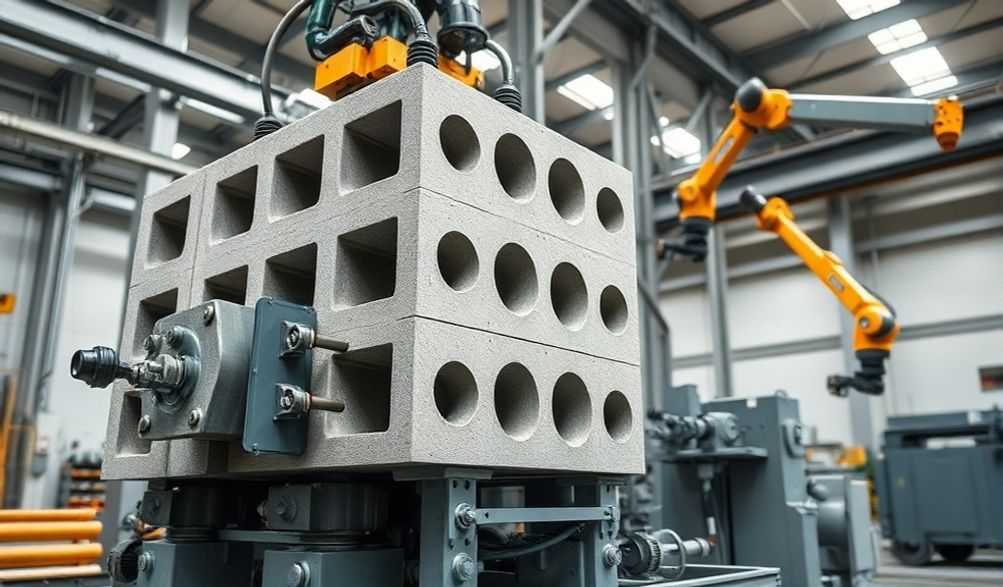
최고 품질의 콘크리트 블록 제조기 공장 찾기: 2026년 구매자 가이드
당신의 콘크리트 블록 제조기는 단순한 장비가 아닙니다. 그것은 생산 라인의 심장이자 투자의 초석입니다. 잘못된 선택은 일관성 없는 블록 품질, 치명적인 가동 중단, 그리고 이익을 갉아먹는 수리 비용과 같은 연쇄적인 비용 문제로 이어질 수 있습니다. 규모와 신뢰성으로 마진이 결정되는 이 업계에서, 제조기 뒤에 있는 공장은 기계 자체만큼 중요합니다.
이 가이드는 수십 년간의 산업 경험, 엔지니어링 분석, 그리고 글로벌 제조 표준에 대한 직접적인 관찰을 바탕으로 만들어졌습니다. 우리는 귀하가 단순한 업체 목록이 아니라 신뢰할 수 있고 실행 가능한 프레임워크를 필요로 한다는 점을 이해하고 있습니다.식별, 평가, 선택앞으로 20년 동안 믿고 의지할 수 있는 공장 파트너. 화려한 브로셔와 기본 사양을 넘어, 중요한 기준, 꼭 물어봐야 할 핵심 질문, 그리고 치명적인 구매 실수를 피할 수 있는 위험 신호를 제공해 드리겠습니다.
콘크리트 블록 기계에서 '최고 품질'을 정의하는 요소는 무엇인가요?
"최고 품질"은 자주 사용되지만 정의되기 드문 용어입니다. 콘크리트 블록 기계의 세계에서는 단순한 기능 목록을 넘어섭니다. 이는 설계 단계부터 공장 현장, 그리고 수십 년간의 운영에 이르기까지 모든 단계에 영향을 미치는 내재된 철학입니다.
엔지니어링 및 디자인 철학
프리미엄 팩토리는 전체 라이프사이클을 위해 설계됩니다. 이는 다음을 의미합니다:
* 디자인 라이프기계는 보증 기간뿐만 아니라 20년 이상의 서비스를 위해 설계되었습니다. 여기에는 지속적인 동적 하중을 견딜 수 있도록 프레임에 대한 고급 유한 요소 분석(FEA)이 포함됩니다.
* 유지 보수 접근성신중한 설계는 유압 호스, 전기 패널 및 마모 부품에 쉽게 접근할 수 있도록 하여 정기 점검으로 인한 가동 중단 시간을 최소화합니다.
* 혁신 통합:에너지 효율이 높은 진동 시스템을 찾으세요. 이는 낮은 전력 소비로 최적의 다짐 효과를 제공해야 합니다. 또한 레시피 저장, 결함 진단 및 생산 모니터링을 위한 잠재적인 IoT 연결이 가능한 스마트 PLC 제어 기능도 갖추어야 합니다.
Core Manufacturing Standards
The precision of the build process dictates machine longevity.
* 자격증: ISO 9001 certification is a baseline indicator of a documented quality management system.
* 정밀 가공: Critical components like mould boxes, pallets, and feeder shoes should be CNC-machined to micron-level tolerances. This ensures block dimensional accuracy and reduces wear.
* Robotic Welding: For major structures like the main frame, robotic welding ensures consistent, deep-penetration welds that are far stronger and more reliable than manual alternatives.
Material Integrity
Spec sheets should name names. The best factories are transparent about their supply chain.
* 구조용 강재 High-grade, stress-relieved steel (e.g., S355JR) is used for frames and major components to resist fatigue and deformation.
* Hydraulic & Electrical Components: The use of world-renowned brands like Bosch Rexroth, Parker, or Siemens for hydraulics and controls is a strong quality proxy. These components offer reliability and global serviceability.
* Wear-Resistant Alloys: Areas subject to abrasion—mould liners, mixer blades—should use hardened steel or specialized alloys like AR400 or AR500 to dramatically extend service life.
Consistency and Output Quality
A quality machine produces the ten-thousandth block with the same precision as the first. This is achieved through:
* Stable Vibration Systems: Balanced, forced-vibration mechanisms that distribute energy evenly for uniform block density.
* Precision Guidance Systems: Linear guides or hardened columns that ensure the mould head and feeder move without play, cycle after cycle.
* Rigorous Final Testing: Factories should conduct comprehensive dry-run tests under simulated load, checking for alignment, pressure, and cycle consistency before disassembly for shipping.
Key Criteria for Evaluating a Machine Factory
Arm yourself with this experienced-based checklist to compare potential suppliers objectively.
Factory Heritage and Reputation (Authoritativeness)
Longevity and a global footprint are strong trust signals.
* 운영 연한 A factory with 30+ years of history has likely navigated multiple industry cycles and iteratively improved its designs.
* Installed Base: Ask for the number of machines operating worldwide and request references from your specific region (e.g., North America, Southeast Asia, Africa).
* 시장 평판: Research their standing in demanding markets like Europe or North America, where compliance and durability standards are exceptionally high.
R&D and Innovation Capability
A factory that invests in the future is a better long-term partner.
* Dedicated R&D Department: This shows commitment to improving efficiency, automation, and adapting to new materials like lightweight aggregates or insulating concrete.
* Patent Portfolio: Patents on vibration systems, automation solutions, or energy recovery are tangible proof of innovation.
* 맞춤 설정 능력: Can they modify a standard design to produce a unique block profile or optimize for locally available aggregates? This demonstrates engineering depth.
Production Process & Quality Control
The journey from raw steel to finished machine is telling. The best factories welcome you to witness it.
* 공정 중 품질 관리: Quality checks should occur at multiple stages—material inspection, after welding, after machining, during assembly.
* Testing Protocols: Inquire about their specific testing procedures. Do they perform pressure tests on hydraulic circuits? Run the vibration system for an extended period?
* Final Inspection & Documentation: A comprehensive checklist should be signed off before shipping, and you should receive detailed assembly, hydraulic, and electrical diagrams.
After-Sales Service & Support Structure (Trustworthiness)
This is the single greatest differentiator between a vendor and a partner.
* Spare Parts Logistics: Do they maintain a centralized and regional spare parts warehouse? What is their guaranteed dispatch time for critical components?
* 기술 지원 Is support available 24/7, especially during your commissioning phase? Is it provided via phone, remote desktop, or through local agents?
* 교육 프로그램: Comprehensive training for your operators and maintenance team—both at their factory and on your site—is essential for maximizing uptime and machine life.
Top Global Hubs for Concrete Block Machine Manufacturing
Understanding the geographic landscape helps set expectations for price, performance, and support.
German & European Engineering
Synonymous with precision, high automation, and premium quality. Factories here are leaders in fully automated turnkey plants with robotic handling systems. The focus is on maximum output with minimal labor, exceptional energy efficiency, and a price tag to match. Ideal for large-scale investors where total cost of ownership and resale value are key metrics.
Turkish Manufacturing Prowess
Turkey has emerged as a powerhouse, striking an excellent balance between quality, features, and price. Turkish factories are particularly strong in robust semi-automatic and fully automatic machines. They often offer more customization flexibility than European counterparts and have developed strong service networks in emerging markets across the Middle East, Africa, and Eastern Europe.
Chinese Industrial Scale and Evolution
The Chinese market is a spectrum. On one end, there are countless generic manufacturers competing solely on low price, often with significant quality and support risks. On the other, a tier of highly sophisticated, quality-focused factories has emerged. These leaders invest heavily in modern CNC equipment, employ European engineering consultants, and use international component brands. Due diligence here is absolutely critical, but the value proposition from top-tier Chinese factories can be compelling.
Emerging and Regional Manufacturers
Other countries, including some in India, Italy, and South America, also have manufacturers. The key consideration with regional players is the availability and quality of local after-sales support. A machine that is slightly less advanced but backed by exceptional, readily available local service can be a wiser choice than a “better” machine with no support network.
A Step-by-Step Guide to Vetting Your Shortlist
Turn your research into a disciplined, evidence-based selection process.
Phase 1: Desktop Research & Initial Contact
- Website Analysis: Scrutinize their project gallery, technical PDFs, and certifications. A professional, detailed website reflects a professional operation.
- Initial Inquiry: Go beyond “send me a quote.” Ask for a general catalog, a list of standard features, and their lead time. Gauge their responsiveness and the technical depth of their reply.
Phase 2: The Deep-Dive Technical Discussion
Prepare a list of non-negotiable questions:
* “Can you provide the material certificates for the steel used in the main frame?”
* “What are the brand and model of the primary hydraulic pump and PLC?”
* “What is the expected energy consumption per cycle for this model?”
* “What is the design service life of the core vibration assembly?”
Phase 3: The Factory Audit (Virtual or In-Person)
Request a live video tour. Your checklist should include:
* Workshop organization and cleanliness.
* The condition and age of major machine tools (CNC, robotic welders).
* Quality control stations with measuring instruments.
* How finished machines are stored and prepared for shipment.
Phase 4: Reference Checks and Site Visits
This is the most crucial step.
* Reference Checks: Request 3-5 contacts for customers in a climate and production environment similar to yours. Ask about machine reliability, block quality consistency, and most importantly, the speed and effectiveness of after-sales support.
* Site Visit: If feasible, visit a running machine. Listen to its operation, observe the blocks produced, and speak directly with the plant manager about their experience.
Red Flags and Common Pitfalls to Avoid
Heed these warnings to avoid costly mistakes.
Unrealistically Low Prices
Deconstruct the price. A quote 40% below market average almost always means:
* Inferior, non-branded hydraulic components that will fail.
* Thin-gauge, low-grade steel that will crack under stress.
* Minimal to no final testing.
* No meaningful after-sales support. You are buying a disposable asset.
Vague Specifications and Guarantees
- Performance Warranty: Avoid promises like “produces 5000 blocks per day” without defined conditions (block type, crew size, aggregate). The warranty should clearly cover defects in materials and workmanship.
- “Lifetime Support”: A meaningless term unless defined. Is it the life of the company? The machine? What does it actually include?
Lack of Transparency
A reputable factory has nothing to hide. Be wary if they:
* Refuse to name component brands.
* Cannot provide a recent factory tour video or photos of the production process.
* Are hesitant to connect you with existing customers.
Poor Communication
Slow, untechnical, or evasive responses during the sales process are a powerful predictor of your experience when you have a real problem and need urgent help. The sales phase is when they are trying their hardest to impress you.
자주 묻는 질문 (FAQ)
Q1: What is the most important factor when choosing a concrete block machine factory?
A: While machine specifications are vital, the factory’s proven commitment to long-term after-sales support and spare parts availability is paramount. A slightly less advanced machine with exceptional, responsive support will yield a better return on investment over 10-20 years than a high-tech machine you can’t maintain.
Q2: Is it worth paying more for a machine from a European factory?
A: It depends entirely on your project’s scale, budget, and local support infrastructure. For large-scale, high-output plants where automation, precision, and ultimate durability are critical, the European investment is often justified. For many mid-range projects, a quality-focused factory in Turkey or the top tier in China may offer a superior balance of performance and value.
Q3: How can I verify a factory’s quality claims if I can’t visit in person?
A: Insist on a comprehensive live video tour of the production floor. Request certified material test reports for steel. Most importantly, obtain contact details for 3-5 recent international customers and conduct thorough interviews. Ask about specific interactions with the support team.
Q4: What should a comprehensive warranty cover?
A: A strong warranty (typically 12-24 months) should explicitly cover defects in materials and workmanship for the entire machine. It should be backed by a clear service level agreement (SLA) for parts dispatch. Be very cautious of warranties that only cover the “main frame,” leaving all the expensive, failure-prone components (hydraulics, motors, controls) unprotected.
결론
Selecting the best quality concrete block machine factory is a strategic decision that will impact your profitability for decades. It hinges on a balanced assessment of engineering excellence, transparent and rigorous manufacturing processes, and—above all—an unwavering, well-structured after-sales support system.
Our final expert recommendation is to shift your mindset from evaluating initial price to analyzing 총 소유 비용. This includes the purchase price, plus the projected costs of maintenance, spare parts, downtime, and energy consumption over the machine’s productive life.
Use this guide as your actionable checklist. Conduct relentless due diligence, communicate directly with factories, and trust the evidence you gather during the vetting process. The right manufacturing partner will not only be transparent but will be eager to demonstrate their quality at every single step, proving they are invested in your long-term success.
<