
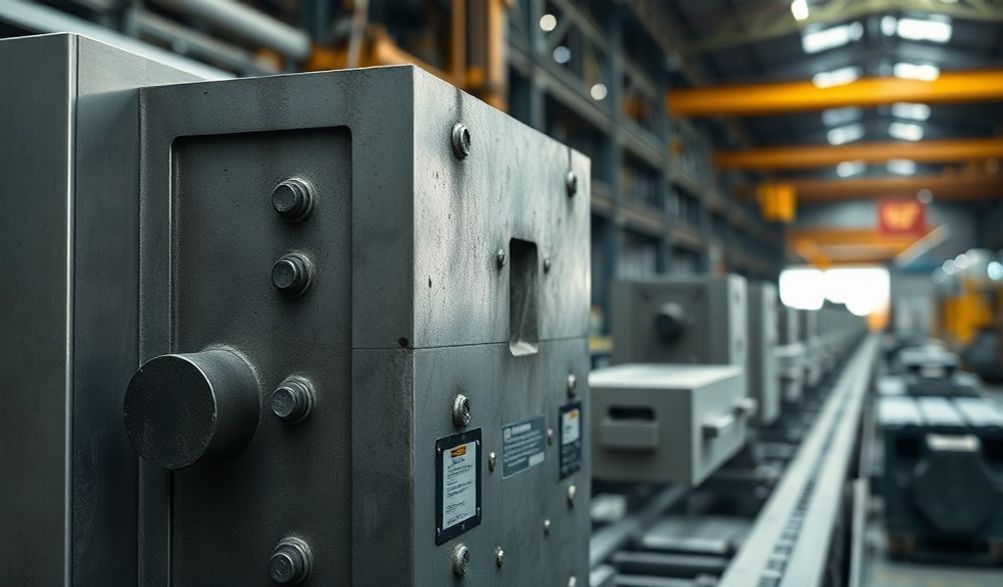
최고 품질의 콘크리트 블록 제조기 공장 찾기: 2026년 구매자 가이드
소개
콘크리트 블록 제조 기계는 단순한 장비가 아닙니다. 그것은 수익성의 심장부입니다. 가동 시간과 일관성이 마진을 좌우하는 이 산업에서, 기계의 품질은 생산하는 모든 블록의 구조적 견고성부터 사업의 장기적 생존까지 모든 것을 결정합니다. 품질이 낮은 기계는 합리적인 선택이 아니라, 재앙적인 가동 중단, 끊임없는 수리 비용, 그리고 평판을 훼손하는 열등한 제품으로 이어지는 잠재적 위험입니다.
진정으로 고품질 제조업체를 찾기 위한 글로벌 시장 탐색은 압도적으로 느껴질 수 있습니다. "최고 품질 콘크리트 블록 제조 기계 공장"을 검색하면 비슷해 보이는 웹사이트와 과장된 주장이 끝없이 펼쳐집니다. 본 가이드는 마케팅의 소음을 뚫고 나갑니다. 수십 년간의 업계 통찰력, 엔지니어링 평가, 현장 경험을 바탕으로 구성된 이 가이드는 구매자인 여러분에게 법의학적 렌즈와 같은 분석력을 제공하는 것을 목표로 합니다. 우리는 모호한 "품질" 개념을 공장의 설계, 재료, 공정, 지원을 평가하기 위한 구체적이고 실행 가능한 체크리스트로 전환해 드릴 것입니다.
이 가이드를 마칠 때쯤이면, 시장 리더와 마케팅 리더를 구분하는 명확한 기준, 질문해야 할 핵심 질문 목록, 그리고 향후 10년 동안 비즈니스의 기반을 다질 투자를 확신을 가지고 결정할 수 있게 될 것입니다.
블록 머신 제조에서 '최고 품질'을 진정으로 정의하는 것은 무엇인가?
"최고 품질"은 단순히 빛나는 도장 마감이나 제품 사양서에 기재된 높은 생산률 이상의 의미를 지닙니다. 그것은 공학, 재료, 공정 관리라는 세 가지 핵심 기둥으로 구현되는 철학이 깃든 개념입니다.
엔지니어링 및 디자인 철학
기계의 청사진은 그 운명을 결정짓는다. 우수한 공학은 단순한 기능이 아닌, 장수와 정밀함에 초점을 맞춘다.
- 구조적 건전성과 견고성기계의 프레임은 그 뼈대와 같습니다. 수백만 번의 강렬한 진동에도 피로 없이 견딜 수 있도록 보강된 박스 단면 강철을 사용한 설계를 찾아보세요. 금속이 가공되기 전에 응력 지점을 시뮬레이션하는 설계 단계의 유한 요소 분석(FEA)은 진지한 제조업체의 특징입니다.
- 금형 및 부품 가공의 정밀도금형 캐비티의 정확도는 블록의 치수 공차를 직접적으로 정의합니다. 고품질 공장에서는 CNC(컴퓨터 수치 제어) 가공 센터를 사용하여 거의 완벽한 공차와 거울 같은 표면 마감을 금형 라이너에 구현함으로써 마찰, 마모 및 블록 고착을 줄입니다.
- 진동 시스템의 혁신:이것이 블록 머신의 핵심입니다. 최고의 시스템은 정밀하게 균형 잡힌 편심 샤프트나 격리된 플랫폼에 장착된 고급 유압식 진동기를 사용합니다. 목표는 고주파수, 다방향의 진동력을 몰드 박스 전체에 고르게 분산시켜 최소의 에너지 낭비로 최적의 다짐과 밀도를 달성하는 것입니다.
재료 과학 및 부품 선정
뛰어난 설계라도 열등한 재료로 지으면 실패한다. 품질은 모든 구성 요소의 본질에 의해 결정된다.
- Grade of Steel: The frame, mold boxes, and wear plates should be constructed from high-tensile, abrasion-resistant steel (e.g., Hardox or equivalent). Ask for material certification. Standard mild steel will deform and wear rapidly under constant load.
- Quality of Hydraulic Systems: Hydraulics are the circulatory system. The difference between brands like Bosch Rexroth, Kawasaki, or Parker and generic systems is night and day in terms of reliability, leak resistance, and control accuracy. Premium components maintain consistent pressure, leading to uniform block density and far fewer failures.
- 전기 부품: The nervous system must be robust. Look for recognized global brands for Programmable Logic Controllers (PLCs) like Siemens or Schneider, and for sensors and motors. These ensure reliable automation, precise cycle control, and easier troubleshooting.
Manufacturing Process & Quality Control
This is where the rubber meets the road. A factory’s processes reveal its true commitment to quality.
- In-house Machining Capability: Top-tier factories control their critical path. They have in-house CNC, laser cutting, and welding bays. This allows for strict quality oversight at every stage, unlike factories that merely assemble outsourced, often inconsistently manufactured parts.
- Welding Standards and Stress-Relieving: Look for certified welders and processes. After welding, critical frames and structures should undergo a stress-relieving heat treatment. This process prevents internal stresses from causing cracks or warping later—a common failure point in cheaply made machines.
- Stage-by-Stage Testing: Every machine should undergo a rigorous protocol. This includes hydraulic pressure tests, electrical safety checks, dry runs of all automated sequences, and, most importantly, a trial production run with real materials to verify performance, noise levels, and output quality before crating.
Key Global Hubs for Concrete Block Machine Manufacturing
Understanding the strengths and nuances of major manufacturing regions is your first strategic filter.
German & European Engineering
- Hallmark: Synonymous with precision engineering, deep automation, and legendary durability. These factories set the global benchmark for “top-tier” quality, often pioneering innovations in vibration technology and Industry 4.0 integration.
- 고려 사항: The initial capital investment is significant. These machines are engineered for decades of high-volume, relentless operation with minimal downtime. They represent the pinnacle of Total Cost of Ownership (TCO) for serious, large-scale producers.
Turkish Manufacturing Prowess
- Hallmark: Turkey has mastered the excellent balance between quality, advanced features, and competitive pricing. The sector is particularly strong in robust semi-automatic and fully automatic machines that offer great value. Many factories have evolved from importing European designs to developing their own substantial R&D.
- 고려 사항: The market spectrum is wide. You can find factories whose quality rivals European standards and others cutting corners. Due diligence—using the checklist in this guide—is absolutely critical here. The factory visit or deep video audit is non-negotiable.
Chinese Industrial Scale & Evolution
- Hallmark: Unbeatable variety, model choice, and aggressive pricing. The narrative has evolved: while the low-end market remains vast, China’s high-end manufacturing segment now produces machines that genuinely rival global quality, using imported components and advanced processes.
- 고려 사항: The key challenge is filtration. The goal is to identify the factories that invest in their own R&D, rigorous QC, and use premium materials—not just those operating as assembly shops. Look for evidence of vertical integration and a focus on export markets with stringent standards.
Your Factory Evaluation Checklist: Beyond the Brochure
Move past sales presentations. Use this actionable checklist to gather evidence of quality.
Verifying Technical Capabilities
- Don’t just ask for a brochure; request detailed CAD drawings or 3D models of the machine’s core structure.
- Ask for a live or recorded video tour of the production floor, focusing on the machining and assembly areas.
- Require material test certificates for the primary steel and documentation proving the use of branded hydraulic and electrical components.
- Inquire about the size and qualifications of their in-house R&D team. Do they hold any patents for their vibration systems or control software?
Assessing Quality Control Protocols
- Ask for a step-by-step list of tests performed on every machine before shipment. “We test it” is not an answer.
- Request copies of relevant international certifications (e.g., ISO 9001 for quality management, CE for European safety standards). Understand what they certify.
- The most valuable data: ask for contact information for 2-3 past clients in a geographical region or climate similar to yours. Speaking to a long-term user is invaluable.
Evaluating After-Sales Support & Service
- Scrutinize the warranty document. What is covered (parts, labor, shipping)? What is explicitly excluded? A one-year parts-only warranty is very different from a two-year full-machine warranty.
- Ask to see samples of their technical documentation: comprehensive parts manuals, electrical wiring diagrams, and PLC program access. Are they clear, detailed, and in your language?
- Understand their service network structure. Do they have in-house engineers for remote support? Do they have trained local agents in your country? What is their guaranteed response time for critical breakdowns?
Critical Questions to Ask Any Shortlisted Factory
Arm yourself with these technical and business questions to gauge depth and transparency.
Questions About the Machine
- “What is the expected lifespan in cycles or years of your core vibration shaft and bearings under normal 16-hour/day operation?”
- “Can you detail your mold hardening process (e.g., nitriding, induction hardening) and what is the expected production cycle count before the mold faces need re-surfacing or replacement?”
- “What is the measured power consumption (in kWh) per 1,000 standard hollow blocks produced? Can you provide test data?”
Questions About the Business
- “How many years has your current engineering team been refining this specific model? Can I see the revision history?”
- “Is it possible to speak directly with one of your project or design engineers to discuss my specific raw material properties, rather than only with sales?”
- “What is your standard lead time for supplying wear parts like mold liners or hydraulic seals, and what shipping methods do you use?”
Red Flags: Signs a Factory May Not Deliver Lasting Quality
Protect your investment by recognizing these warning signs early.
- Unwillingness to Provide References or Visual Proof: Hesitance to share client contacts or offer a real-time video factory tour.
- Vague Warranty Language: A warranty that uses phrases like “under normal conditions” without clear definition, or that excludes most wear parts.
- Pressure Against Inspection: Resistance to or discouragement of having an independent third-party engineer inspect the machine before final payment is released.
- Unrealistically Low Pricing: A price significantly (20%+) below reputable competitors for a similar specification, without a clear, justifiable reason (e.g., local subsidies, obsolete model).
- Lack of Technical Documentation: No professional manuals, diagrams, or PLC software files available. This cripples future maintenance and troubleshooting.
자주 묻는 질문 (FAQ)
Q1: Is a more expensive machine always higher quality?
A: While not an absolute rule, it is a very strong indicator. Price reflects material costs, engineering hours, and component brands. An anomalously cheap machine almost always compromises in these areas. Focus on 가치—the intersection of proven quality, features, and long-term operating cost—rather than just the initial price tag.
Q2: How important is it to visit the factory in person?
A: For any major capital investment, a factory visit is one of the highest-return activities you can undertake. It allows you to verify scale, witness QC processes, and gauge the team’s expertise firsthand. If travel is impossible, insist on a comprehensive, live video tour conducted by an engineer, where you can direct the camera and ask spontaneous questions.
Q3: Should I prioritize the machine price or the cost of production per block?
A: Always prioritize the 총 소유 비용 (TCO). Calculate the cost per block, which includes the machine’s depreciation, energy consumption, maintenance, wear parts, and expected downtime. A robust, efficient machine with a higher upfront cost but lower operating expenses will be far more profitable over a 5-10 year horizon.
Q4: What’s the single most important quality indicator?
A: Verified, long-term customer testimonials. A factory with a portfolio of case studies showing machines operating reliably in the field for 5, 10, or 15 years is providing the most compelling evidence of quality. Ask for these stories and speak to those customers directly.
결론
Finding the best quality concrete block making machine factory is not a passive browsing exercise; it’s an active, systematic investigation. It requires moving beyond glossy brochures and stated outputs to verify the underlying pillars of engineering excellence, material integrity, controlled manufacturing, and committed support.
Remember, you are not just buying a machine; you are entering a long-term partnership. Choose a factory that communicates with transparency, values your long-term success as a reflection of their own, and provides the evidence to back up their claims.
Use this guide as your foundational checklist. For a final layer of due diligence, consider consulting with an independent industry expert before signing a major contract. Dive into technical forums and seek out user reviews for specific model numbers. Your diligence today is the bedrock upon which your profitable, sustainable block-making business will be built for years to come.
<