
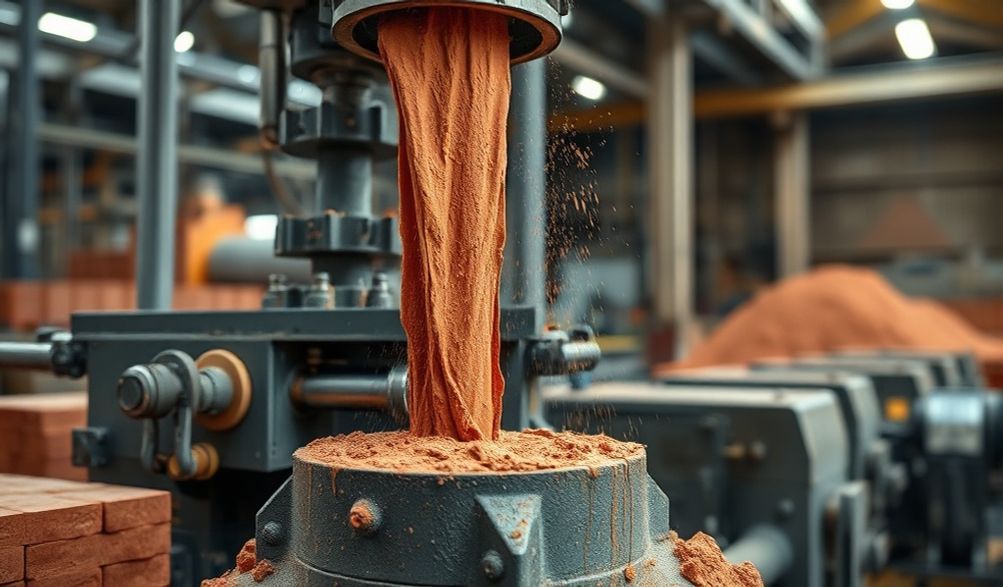
점토에서 건설까지: 점토 벽돌 제작 기계 완벽 가이드
수천 년 동안, 벽돌은 문자 그대로 그리고 상징적으로 인류 문명의 기초를 이루어왔습니다. 고대 바빌론의 성벽부터 현대 도시의 스카이라인에 이르기까지, 그 내구성과 다용도성은 비교할 수 없습니다. 그러나 벽돌 제작의 기술은 심오한 혁명을 겪었습니다. 순수하게 수작업에 의존하고 노동 집약적인 성형의 시대는 지났습니다. 오늘날에는,점토 벽돌 제작 기계효율적이고 일관성 있으며 확장 가능한 건설 자재 생산의 중추 역할을 합니다. 이 가이드는 이론뿐만 아니라실제 공학 원리와 현장 경험성공적인 제조업을 정의하는 요소들입니다. 예비 창업자가 사업을 평가하거나, 건설 전문가가 재료에 대한 깊은 통찰력을 얻고자 하거나, 공정에 매료된 엔지니어이든, 이 포괄적인 개요는 기계화된 벽돌 생산의 세계를 밝혀줄 것입니다. 우리는 다양한 기계의 종류를 탐구하고, 생산 공정을 쉽게 이해할 수 있도록 설명하며, 주요 구성 요소를 개요로 제시하고, 원점토를 믿음직한 건축 자재로 변환하는 데 적합한 장비를 선택하는 실용적인 프레임워크를 제공할 것입니다.
점토 벽돌 제조 이해하기: 현대화된 시대를 초월한 공예
기계에 대해 깊이 들어가기 전에, 현대 벽돌 제작을 가능하게 하는 진화 과정과 핵심 원리를 이해하는 것이 중요합니다.
간략한 역사: 수제 성형에서 자동화까지
수세기 동안 벽돌 제작은 계절적이며 고도의 숙련을 요하는 수공예였다. 점토를 파내어 발이나 손으로 반죽한 후, 나무 틀에 넣어 햇볕에 말린 뒤 단순한 노(窯)나 가마에서 소성했다. 이 과정은 느리고 날씨에 좌우되었으며, 크기와 강도가 일정하지 않은 벽돌을 생산했다. 산업 혁명으로 최초의 증기 기계가 도입되었지만, 진정한 변화는 20세기에 자동 압출 공법과 터널 가마의 개발과 함께 찾아왔다. 이러한 전환은 벽돌 제작을 수공예에서 정밀하고 연중무휴의 산업 공정으로 바꾸었으며, 오늘날의 첨단 기계의 기반을 마련했다.
기계화 생산의 이유는? 주요 장점
이동은점토 벽돌 제작 기계단순히 속도에 관한 것이 아닙니다. 그것은 품질과 경제성의 근본적인 업그레이드입니다.
* 일관성과 품질:기계는 균일한 크기, 밀도, 구조적 안정성을 가진 벽돌을 끊임없이 생산합니다.
* 높은 압축 강도:진공 탈기와 같은 현대적 공정은 공기 주머니를 제거하여 벽돌의 강도와 내한성을 크게 향상시킵니다.
* 대규모 산출량자동화 공장은 시간당 수천 개의 벽돌을 생산할 수 있어 대규모 건설 수요를 충족시킵니다.
* 노동력 및 비용 절감자동화는 필요한 노동력을 크게 줄여 장기적인 생산 비용을 낮추고 작업자의 안전성을 향상시킵니다.
* 자재 효율성혼합 및 압출 과정을 정밀하게 제어함으로써 원자재 낭비를 최소화합니다.
핵심 원료: 적합한 점토의 과학
기계는 그것이 처리하는 점토만큼만 좋습니다. 모든 점토가 동일하지는 않습니다. 최적의 결과를 위해서는기계 제작점토는 다음을 갖추어야 합니다:
* 가소성:압출 시 성형 가능하고 형태를 유지할 수 있는 능력. 이것이 가장 중요한 특성입니다.
* 작동 가능한 구성:다양한 입자 크기(점토, 실트, 미세 모래)의 혼합이 이상적입니다. 순수한 미세 점토는 너무 끈적거리고 과도하게 수축할 수 있습니다.
* 낮은 불순물 함량 Stones, limestone nodules, or organic matter can damage machinery and cause defects in the final brick. Proper preparation is key.
Types of Clay Brick Making Machines
The market offers a range of machines, from simple to sophisticated, to match different scales of operation.
수동 및 반자동 벽돌 제작 기계
Ideal for small-scale projects, startups, or regions with lower labor costs, these machines require more hands-on operation.
* 수동 프레스 Operated by a lever, they compress clay in a mold to form a single brick at a time. Output is very low but requires minimal investment.
* Semi-Automatic “Egg-Laying” Type: These mobile machines mold bricks and deposit (“lay”) them directly onto the ground. They are electrically or diesel-powered for the mixing and molding process, but bricks are handled manually for setting and drying. They offer a good balance of output and affordability for small businesses.
완전 자동 벽돌 제조 공장
This is the pinnacle of 점토 벽돌 제작 기계 for large-scale production. These are integrated systems where the raw material enters one end, and finished, stacked green bricks emerge at the other.
* The process is fully synchronized: mixing, extruding, cutting, and stacking.
* They feature high-level automation with Programmable Logic Controller (PLC) systems, requiring minimal human intervention.
* Output can reach 20,000+ bricks per shift. They represent a significant capital investment but offer the lowest per-unit cost and highest consistency.
Specialized Machines: Extruders vs. Presses
The core forming technology defines the machine’s purpose.
* 압출기: The most common type for clay. A rotating auger inside a barrel pushes the plastic clay mix through a shaped die, creating a continuous column of clay which is then wire-cut into individual bricks. Vacuum extruders remove air for stronger bricks. This method is perfect for:
* 솔리드 브릭
* Perforated bricks
* Hollow blocks
* 유압 프레스 기계: These use immense hydraulic pressure to compact semi-dry or dry clay powder into a mold. They produce very high-density, precision bricks (like engineering bricks or pavers) but are less common for standard building bricks from plastic clay.
The Clay Brick Machine Making Process: Step-by-Step
Understanding the journey from raw clay to a finished brick is essential to appreciate the machine’s role.
1단계: 원료 준비 및 혼합
The process begins long before the clay reaches the molding machine.
1. Crushing & Screening: Lumps of raw clay are crushed and passed through screens to remove stones and achieve a uniform particle size.
2. Blending & Tempering: The clay is then blended with additives (like sand to reduce shrinkage, or fly ash for certain properties) and the correct amount of water in a mixer or pugmill. This creates a homogeneous, plastic mass ready for extrusion.
Stage 2: Forming and Molding – The Heart of the Machine
여기가 바로 그곳입니다.clay brick machine performs its core function.
* The prepared clay is fed into the extrusion chamber.
* 인vacuum extruder, the clay enters a sealed chamber where air is extracted. This de-airing is crucial for increasing density and strength by up to 25%.
* The auger then forces the clay through the extrusion barrel and out through a precision-engineered die. The die’s shape defines the brick’s profile (solid, hollow, etc.).
Stage 3: Cutting and Setting
The continuous clay column exiting the die is now cut into individual bricks.
* Wire-Cut Systems: A frame with taut wires slices through the clay column at precise intervals. This can be a simple manual rack or a fully automatic synchronized cutter.
* The soft, “green” bricks are then carefully transferred onto dryer cars or setting racks by hand, robot, or automatic stacker, preparing them for the next critical phase.
Stage 4: Drying and Firing (Post-Machine Process)
While not part of the machine itself, these steps are vital and often integrated into a complete plant.
* 건조: Green bricks contain 15-20% moisture. They must be slowly and evenly dried in chamber or tunnel dryers to prevent cracking. This can take 24-48 hours.
* 해고 The dried bricks are then fired in a kiln (like a Tunnel Kiln or Hoffman Kiln) at temperatures between 900°C and 1200°C. This process vitrifies the clay, giving the brick its permanent strength, hardness, and color.
Key Components of a Quality Brick Making Machine
The durability and performance of your operation hinge on these critical parts.
The Extrusion Auger & Barrel: Design and Materials
- This is the highest-wear component. It must be made from high-chromium alloy steel for abrasion resistance.
- The helix design affects mixing efficiency and extrusion pressure. A worn auger will lead to poor quality and low output.
- Maintenance Tip: Regular inspection and timely hardfacing or replacement are non-negotiable for continuous production.
Hydraulic System & Power Unit
- In hydraulic press machines, this system provides the molding pressure. Its reliability is paramount.
- Look for robust pumps, valves, and cylinders from reputable brands. System pressure (measured in psi or bar) directly correlates to brick density.
- Energy-efficient systems can significantly reduce long-term operational costs.
Mold & Die Design: Determining Brick Shape and Size
- The die is the “cookie cutter” of the extrusion process. Precision machining ensures dimensional accuracy.
- Quality machines offer interchangeable dies to produce different brick profiles (solid, perforated, hollow block) from the same base equipment.
- Die liners should be wear-resistant to maintain tolerances over time.
Control System: From Manual Levers to PLC Automation
- Basic machines use manual levers and switches.
- Semi and fully automatic machines utilize PLC panels for controlling extrusion speed, cutter timing, and stacker sequences. A user-friendly PLC interface simplifies operation and troubleshooting.
Choosing the Right Clay Brick Machine: A Buyer’s Guide
Selecting equipment is a major decision. Here’s how to approach it like an expert.
생산 요구 사항 평가: 생산 능력과 산출량
자문해 보세요:
* What is my target output in bricks per hour or per day?
* Is this for a specific project or an ongoing business?
* What type of bricks does my local market demand (solid, hollow)?
* Industry Practice Shows: It’s often better to buy a machine with 20-30% more capacity than your initial need to allow for business growth.
전원 및 운영 비용
- 전기 Clean, quiet, and efficient for fixed installations with reliable grid power.
- 디젤: Essential for sites without electricity. Higher fuel costs and maintenance.
- 하이브리드: Offers flexibility. Consider the total cost of ownership, including power consumption, wear parts, and labor.
Machine Durability and After-Sales Support
This is the cornerstone of 신뢰성 in your purchase.
* 빌드 품질: Inspect the frame thickness, weld quality, and component brands. A heavier machine is often more stable and durable.
* Manufacturer Reputation: Choose established companies with a proven track record.
* 예비 부품 가용성: Ensure critical spare parts (augers, dies, hydraulic seals) are readily available. Long lead times for parts can shut down your operation for weeks.
* 기술 지원 Does the manufacturer offer installation guidance, training, and troubleshooting support?
Safety Features and Ease of Maintenance
- Look for proper guarding on moving parts, emergency stop buttons, and lock-out/tag-out points.
- A machine designed for easy maintenance (with good access panels, grease points, and simple component removal) will save you time and money over its lifespan.
Maximizing Efficiency and Brick Quality
Owning the machine is just the start. Optimal operation is key.
Optimal Clay Preparation Techniques
- Ensure clay is properly weathered and free of impurities.
- Consistently monitor moisture content. Too wet leads to deformation; too dry causes cracking and extrusion strain.
- Use a pugmill for thorough, homogeneous mixing.
Routine Maintenance Checklist for Your Machine
Preventative care prevents catastrophic downtime.
* Daily: Grease all bearings, check oil levels, clean the machine, inspect wires on the cutter.
* Weekly: Check auger and liner for wear, inspect hydraulic hoses for leaks, tighten bolts and fasteners.
* Monthly: Perform a comprehensive inspection of electrical connections, calibrate sensors (on automatic machines), and test safety systems.
Troubleshooting Common Machine Issues
- Cracking Bricks: Usually caused by improper clay mix (too dry, uneven tempering) or too-rapid drying after extrusion.
- Poor Extrusion/Low Output: Often a sign of a worn auger/liner, incorrect die design, or overly stiff clay.
- Power Loss in Hydraulic System: Check for pump issues, valve blockages, or low hydraulic fluid.
FAQ Section
Q1: What is the average production capacity of a standard clay brick machine?
Capacity varies wildly. A small manual press might make 500-1000 bricks per day, a semi-automatic egg-layer 2000-5000 per day, and a fully automatic plant 15,000-40,000 bricks per 8-hour shift.
Q2: Can one machine produce different types and sizes of bricks?
Yes, but with limitations. The core extruder can produce different profiles by changing the extrusion die. However, significant changes in brick height or a switch from solid to hollow block may require adjustments to the cutter and handling systems.
Q3: What is the approximate investment required for a small-scale clay brick making unit?
For a basic semi-automatic setup (machine, mixer, simple dryer), investment can start from $15,000 to $50,000, excluding land and kiln infrastructure. Fully automatic plants begin at $100,000+.
Q4: How important is the “de-airing” or vacuum process in the extruder?
Critically important for quality building bricks. De-airing increases density, strength, and durability while reducing water absorption and improving frost resistance. It’s a key feature for producing bricks that meet modern construction standards.
Q5: What are the main differences between fly ash brick machines and traditional clay brick machines?
Fly ash bricks use a non-plastic mixture of fly ash, cement, and sand, compacted under high pressure in a hydraulic press. Traditional 점토 벽돌 기계 process plastic clay through an extruder. The raw materials, forming process, and curing (chemical vs. firing) are fundamentally different.
Q6: What kind of after-sales service should I expect from a reputable manufacturer?
Expect detailed installation manuals, operator training (on-site or at their facility), a comprehensive parts catalog, availability of critical spares, and access to technical support via phone or video call. A warranty on parts and workmanship is standard.
결론
The journey from understanding the history of brick making to selecting the right clay brick machine is one of connecting timeless material science with modern engineering. We’ve explored how mechanization brings consistency, strength, and scale to this ancient craft, examined the machines that make it possible, and broken down the process into clear, actionable stages. The key to success lies in applying this foundational knowledge practically: by thoroughly assessing your needs, prioritizing machine durability and manufacturer support, and committing to diligent operation and maintenance. Clay brick machine making is more than just equipment; it’s a partnership between robust engineering and skilled operation, forming a sustainable, efficient, and profitable cornerstone for the future of construction. Use this guide as your starting point, consult with technical experts, and always insist on demonstrations from suppliers to make the most informed decision for your venture.
<