
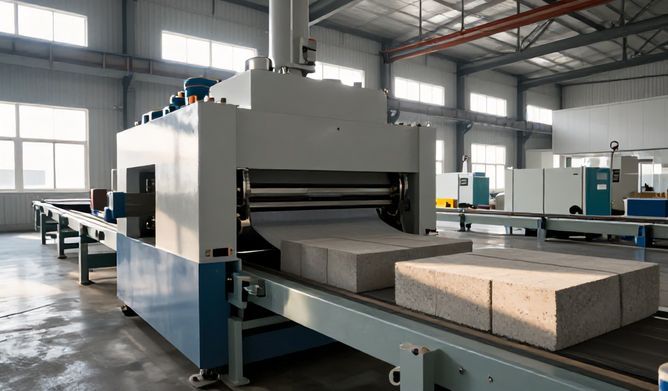
The Complete Guide to Machine Block Making: Inside the FUDA Brick Making Factory
소개
The skyline of our modern world is a testament to one fundamental truth: the quality of our construction begins with the quality of our building blocks. From towering skyscrapers to resilient family homes, the humble concrete block is the unsung hero of structural integrity. Yet, behind every reliable wall lies a critical choice—the method of production. This is where precision engineering and industrial expertise separate the ordinary from the exceptional.
Enter FUDA Brick Making Factory, a name synonymous with innovation and reliability in the construction machinery industry. With over two decades of dedicated experience, FUDA has evolved from a manufacturer into a comprehensive solutions provider, mastering both the creation of advanced block making machines and the high-volume production of superior construction blocks. This dual expertise provides a unique, ground-level understanding of what truly drives efficiency and quality on the production floor.
This guide is compiled from direct insights provided by FUDA’s senior engineering team and reflects decades of collective industry experience, bridging the gap between theoretical knowledge and practical, factory-proven application.
Our purpose here is to serve as your definitive resource. We will demystify the technology, walk you through the processes inside a modern 푸다 벽돌 제조 공장, and clearly outline the tangible benefits that automated machine block making can bring to your projects, whether you’re a startup entrepreneur or managing a large-scale construction operation.
What is Machine Block Making? Modernizing Construction
Machine block making represents the industrialization of one of the world’s oldest crafts. It is the process of using automated or semi-automated machinery to manufacture concrete blocks (hollow, solid, paving, interlocking) with high precision, consistency, and speed. This method has fundamentally reshaped the construction materials supply chain, moving it from a labor-intensive artisanal practice to a streamlined, engineering-driven industry.
수동 노동에서 자동화된 정밀함으로
The history of brick and block making is a journey of human ingenuity. For millennia, it relied on manual molding, sun-drying, and later, basic kiln firing. The industrial revolution introduced steam-powered presses, but the true paradigm shift came with the advent of fully integrated block making machines in the 20th century.
This shift moved the focus from sheer manpower to mechanical force and electronic control. Automation introduced:
* 일관성 Every block is identical in dimension and density.
* 규모 Production capacities increased from hundreds to thousands of blocks per day.
* Complexity: It enabled the reliable production of sophisticated designs like interlocking blocks and honeycomb pavers, which are difficult to make by hand.
블록 제작기의 핵심 구성 요소
Understanding the machine begins with its core systems. While models vary, every modern stationary block making machine, like those engineered at FUDA, integrates these key components:
- 호퍼: The entry point for raw materials (cement, aggregate, sand).
- 믹서: Blends raw materials with water to create a homogeneous concrete mix. Pan mixers are common for their thoroughness.
- 몰드 또는 몰드 박스 The heart of the machine. This is the precision cavity that gives the block its shape. Molds are interchangeable to produce different block types.
- 진동 시스템 High-frequency vibrators compact the concrete mix within the mold, eliminating air pockets and ensuring maximum density and strength.
- 유압 시스템: Provides the immense pressure (measured in MPa or tons) to compress the vibrated concrete, forming a solid, stable block.
- 제어판 The brain of the operation. Modern panels feature PLC (Programmable Logic Controller) systems for setting cycle times, vibration duration, and pressure, allowing for precise, repeatable operation.
- Pallet Feeder & Conveyor: Automatically feeds empty pallets to the molding area and transports freshly pressed blocks to the curing area.
Visual Suggestion: Imagine a cross-section diagram of a FUDA machine, with clean labels pointing to each of these components, showcasing their integration.
Inside the FUDA Brick Making Factory: A Hub of Expertise
Walking into a 푸다 벽돌 제조 공장 is not just entering a manufacturing plant; it’s entering an ecosystem built on precision. The environment itself reflects a philosophy where every process is optimized, and every component is scrutinized.
FUDA’s Manufacturing Philosophy: Quality and Innovation
FUDA’s approach is built on two pillars: uncompromising quality and continuous innovation. This is not merely a slogan but a documented process.
* 연구개발 초점: A dedicated team works on improving vibration mechanics, hydraulic efficiency, and control software to enhance output and reduce energy consumption.
* 품질 관리: From sourcing certified steel for frames to testing every hydraulic valve, components undergo rigorous checks. Finished machines are subjected to 48-hour continuous production runs for performance validation.
* 프리미엄 소재: Wear parts like mold liners are made from specially hardened steel to withstand abrasion and ensure long-lasting dimensional accuracy for the blocks produced.
A Walk-Through the Production Line
The journey of a FUDA-manufactured block is a lesson in controlled efficiency:
- Raw Material Inspection & Batching: Incoming cement, aggregates, and sand are tested for consistency. They are then precisely batched by weight, not volume, for mix integrity.
- 믹싱 Materials move to an industrial mixer. Water and additives (like color pigments or strength enhancers) are added with precision to achieve the exact slump (consistency) required.
- 성형: The mix is fed into the 블록 제작 기계. Here, the synchronized dance of vibration and high-pressure hydraulics forms the block. A FUDA machine’s controlled vibration frequency is key—it ensures compaction without segregating the mix.
- 치유: Fresh blocks, on their pallets, are moved to a controlled curing chamber. Optimal temperature and humidity are maintained to allow the cement to hydrate fully, achieving its designed compressive strength efficiently.
- 팔레타이징 및 보관: After curing, blocks are depalletized, stacked, and wrapped for storage or immediate shipment. The empty pallets are automatically returned to the machine’s feeder, closing the loop.
The FUDA Machine Portfolio: From Semi-Automatic to Fully Automatic Lines
Understanding that needs vary, FUDA offers a scalable range of solutions:
- 반자동 기계: Ideal for startups and small-scale projects. They mechanize the pressing and vibration but may require manual handling of blocks and pallets. Excellent for mastering the process with a lower initial investment.
- 완전 자동 정지형 기계: The core of a medium to large-scale 블록 제조 공장. These integrate automatic pallet feeders, block conveyors, and stackers. One operator can manage an entire production line producing thousands of blocks per shift.
- Mobile (Egg-Laying) Block Machines: Designed for on-site production. The machine “lays” blocks directly onto a level concrete floor, eliminating the need for pallets. Perfect for large, remote construction projects where transport costs are prohibitive.
Key Advantages of Using FUDA Block Making Machines
Investing in a FUDA machine is an investment in predictable, high-quality output. The advantages are measurable and directly impact your project’s bottom line and reputation.
Unmatched Productivity and Output Consistency
Automation translates directly to scalable output. A mid-range FUDA automatic machine can produce between 2,000 to 5,000 standard blocks in an 8-hour shift, depending on the model and block type. More importantly, every single block from cycle 1 to cycle 5,000 will have the same dimensions and weight. This consistency eliminates waste on-site from ill-fitting blocks and speeds up the bricklaying process.
Superior Block Quality and Strength
The machine’s controlled environment is the secret to superior blocks.
* 더 높은 압축 강도: The combination of optimal vibration and hydraulic pressure creates a denser matrix. FUDA-produced blocks routinely meet and exceed ASTM C90 standards for load-bearing units.
* Excellent Dimensional Accuracy: Precision-machined molds and stable machine frames ensure blocks are produced to tolerances of ±1mm. This leads to straight walls, less mortar use, and a better finish.
* Lower Breakage Rates: Uniform density and proper curing result in blocks that can withstand handling and transport with minimal damage.
Significant Cost Efficiency & ROI
While the initial capital outlay is a consideration, the long-term savings are substantial:
* 노동력 절감 One automated line can replace 15-20 manual laborers.
* 자재 효율성 Precise batching and reduced breakage minimize waste of costly cement and aggregates.
* 다운타임 감소 FUDA machines are built for reliability, ensuring your production schedule—and your client commitments—are met.
Versatility in Block Design and Type
A single FUDA machine is a multi-product factory. By changing the mold box—a relatively quick process—you can switch production between:
* Hollow blocks (4″, 6″, 8″)
* 고체 콘크리트 블록
포장 돌과 인터록 포장재
* Kerbstones and landscaping blocks
* Special shapes for architectural features
This agility allows you to respond to market demand without investing in separate, dedicated machinery.
Choosing the Right Block Making Machine for Your Needs
Selecting a machine is a strategic decision. Here is a framework, based on countless customer consultations at FUDA, to guide your choice.
프로젝트 규모와 산출물 요구사항 평가하기
자신에게 이러한 근본적인 질문을 던져 보세요.
* Daily/Weekly Block Need: What is your current and projected demand? (e.g., supplying a housing project vs. running a commercial block yard).
* Available Space & Infrastructure: Do you have a factory shed? What is your 3-phase power capacity? Is there space for raw material storage and block curing?
* Budget & Financing: Consider total investment, including machine, mold sets, pallets, and material handling equipment.
Key Machine Specifications to Compare
Look beyond the price tag. Compare these technical parameters:
* Pressure (Ton/MPa): Determines block density and strength. For heavy-duty blocks, higher pressure is critical.
* Vibration Frequency & Amplitude: Affects compaction quality. FUDA machines use a balanced system that prevents mix segregation.
* 사이클 타임: The time to produce one pallet of blocks. Shorter cycles mean higher output.
* 자동화 수준: Semi-auto, fully-auto, or with robotic stackers. Match this to your available labor skill and desired output.
* 전력 소비량: An efficient machine saves significant operational costs over its lifespan.
Why FUDA Machines Are a Trusted Investment
The machine is just the beginning of the relationship. FUDA’s support system ensures your investment is protected:
* Comprehensive After-Sales Support: A global network of technical partners provides local service.
* Detailed Training: Factory or on-site training for your operators and maintenance technicians is standard.
* 보증 및 예비 부품: Clear warranty terms and guaranteed availability of critical spare parts to minimize downtime.
* 검증된 실적: As one of our clients in East Africa reported: “Our FUDA automatic line has been running for 6 years with only routine maintenance. It’s the backbone of our business, producing consistent quality blocks that are the preferred choice for local contractors.”
Best Practices for Operating and Maintaining Your Block Machine
A FUDA machine is built to last, but its longevity and performance depend on proper care. Here is distilled wisdom from our service team.
Daily Operational Checks for Optimal Performance
- Check and tighten any loose bolts or nuts, especially on the mold and vibration table.
- Lubricate all moving parts (guide rods, bearings) as per the manual.
- Inspect the hydraulic system for leaks and check the oil level.
- Clean the mold box, pallets, and feeder thoroughly at the end of each shift to prevent concrete buildup.
Essential Maintenance Schedule
- Weekly: Inspect and clean the mixer blades. Check the condition of vibrator motors.
- Monthly: Replace hydraulic oil filters. Inspect electrical connections for wear.
- Yearly: Conduct a full machine inspection. Replace worn seal kits in hydraulic cylinders. Re-calibrate the control system sensors.
Troubleshooting Common Issues
- Poor Block Strength: Likely causes are incorrect water-cement ratio, insufficient vibration time, or low hydraulic pressure. Verify mix design and machine settings.
- Blocks Sticking in Mold: Usually indicates a worn or damaged mold liner, insufficient mold release agent, or an overly wet concrete mix.
- Uneven Block Height: This often points to an unlevel pallet, a worn pallet conveyor, or uneven wear on the mold’s pressure head.
The Future of Block Making: Sustainability and Smart Technology
The industry is evolving, and FUDA is at the forefront, integrating responsibility and intelligence into its DNA.
Eco-Friendly Practices at the FUDA Factory
Sustainability is engineered into the process. FUDA machines are designed to efficiently produce blocks using:
* 산업 부산물: They can optimally utilize fly ash (from coal plants) or slag, reducing cement content and repurposing waste.
* Recycled Aggregates: Crushed construction waste can be incorporated into the mix design for certain block types.
* 에너지 효율 Newer models feature variable-frequency drives (VFDs) on motors and optimized hydraulic circuits to reduce power consumption by up to 20%.
Integration of IoT and Automation
The next frontier is connectivity. Future-ready FUDA systems are embracing:
* Remote Monitoring: Allowing technicians to diagnose machine health and performance metrics from a central office.
* 예측적 유지보수: Sensors that monitor vibration patterns, hydraulic temperature, and pressure can forecast component failure before it causes downtime.
* Data-Driven Optimization: Production data (blocks per shift, downtime causes, energy use) is analyzed to continuously fine-tune the manufacturing process for peak efficiency.
FAQ Section
Q: What is the typical lead time for a FUDA block making machine?
A: Lead times vary based on model complexity and customization. For standard models, delivery typically ranges from 30 to 60 days after order confirmation. We prioritize thorough factory testing and calibration over rushed shipment to ensure your machine arrives ready for peak performance.
Q: Can FUDA machines use local raw materials, or do they require specific mixes?
A: FUDA machines are designed for global adaptability. While we provide optimal mix design guidelines, our engineering team can help you test and adapt your locally available sand, aggregate, and cement to produce high-quality blocks. We often assist customers in optimizing their local mix for the best results.
Q: What kind of training is provided with the purchase of a machine?
A: We provide comprehensive training. This includes detailed operation and maintenance manuals, instructional videos, and typically 3-5 days of on-site training by a FUDA technician during commissioning. For larger plants, we offer advanced training programs at our factory.
Q: How does the block quality from a machine compare to traditional handmade blocks?
A: Machine-made blocks are superior in almost every measurable aspect. They have significantly higher and more consistent compressive strength, perfect dimensional accuracy (leading to faster construction), lower water absorption rates (improving durability), and a uniform, professional appearance. Handmade blocks cannot match this consistency at scale.
Q: What is the expected lifespan of a FUDA block making machine with proper maintenance?
A: A FUDA machine is a capital asset built to last. With a proper maintenance regimen and using genuine spare parts, you can confidently expect a service life of 15 years or more. Many of our earliest machines are still in productive operation today, a testament to their robust design and build quality.
결론
The evolution from manual molding to machine block making is more than a technological upgrade; it’s a fundamental shift towards reliability, efficiency, and quality in construction. In this landscape, choosing the right partner is paramount. The 푸다 벽돌 제조 공장 represents more than just a manufacturer—it is a repository of deep, practical expertise, where machines are born from the same environment in which blocks are produced at an industrial scale.
This unique position allows FUDA to engineer solutions that are not just theoretically sound but proven under real factory conditions. The result is a range of block making machines that deliver tangible advantages: unwavering productivity, superior block quality, long-term cost savings, and the versatility to grow with your business.
Ready to transform your block production?
* Primary CTA: Contact the FUDA engineering team today for a personalized consultation. Discuss your project needs and explore the possibility of a factory visit to see our machines in action and witness our quality processes firsthand.
* Secondary CTA: Visit our resource section to download detailed technical specification sheets for our entire machine portfolio or view high-definition video demonstrations of our equipment running at full capacity.