1. 서론
2. 본문
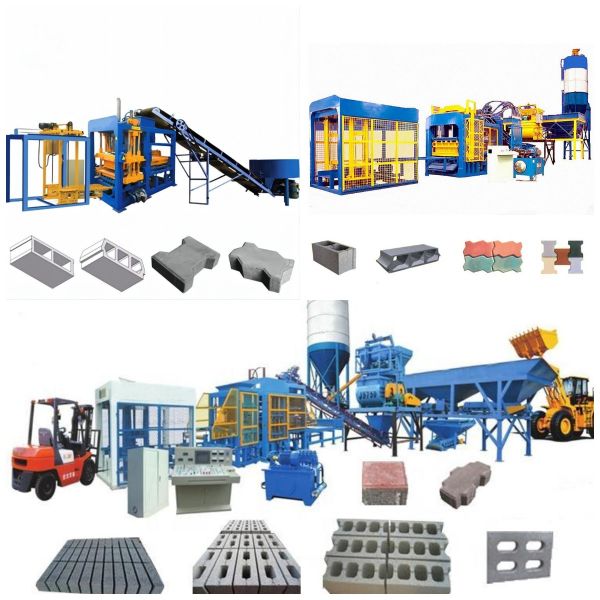
2.1 What Is an Automatic Brick Block Laying Machine?
An automatic brick block laying machine is a advanced construction equipment designed to automate the process of placing bricks, concrete blocks, or other masonry units into predefined wall structures with minimal human intervention. Unlike semi-automatic models that require manual feeding or positioning, fully automatic versions integrate robotics, sensors, and computerized controls to handle every stage of the laying process—from picking up blocks from a stack to applying mortar (if required) and placing units with precision.
The primary objective of these machines is to address the limitations of manual laying: they boost productivity by 3–5 times compared to manual labor, ensure consistent bond lines and wall alignment, reduce material waste (especially mortar), and minimize the physical strain on workers. These machines are versatile enough to work with a range of masonry units, including standard clay bricks, concrete hollow blocks, fly ash blocks, and interlocking blocks, making them suitable for residential, commercial, and industrial construction projects.
Key distinguishing features of automatic brick block laying machines include:
- Computer-aided design (CAD) integration to follow digital blueprints.
- Robotic arms or gantry systems for precise block placement (accuracy within ±2mm).
- Automatic mortar mixing and application systems (adjustable thickness).
- Sensor-based navigation to adapt to site conditions (e.g., uneven surfaces).
- Remote operation or autonomous mode for enhanced safety and convenience.
2.2 How Does an Automatic Brick Block Laying Machine Work?
The operation of an automatic brick block laying machine follows a streamlined, automated workflow that aligns with modern construction processes. Below is a detailed breakdown of the key stages, from setup to completion:
2.2.1 Pre-Operation Setup & Programming
Before deployment, the machine undergoes a critical setup phase to ensure alignment with project requirements:
- Blueprint Integration: Operators upload digital CAD drawings of the wall structure into the machine’s control system. This includes specifications such as wall height, length, thickness, window/door openings, and bond pattern (e.g., stretcher bond, header bond, Flemish bond).
- Material Preparation: The machine is loaded with masonry units (bricks/blocks) via a hopper or conveyor system. These units must be consistent in size and shape (standardized dimensions are recommended to ensure precision). Mortar is loaded into a separate reservoir; the machine’s mixing system adjusts the water-cement-sand ratio to achieve the desired consistency (typically 1:3 or 1:4 mortar mix).
- Site Calibration: Using laser sensors and GPS technology, the machine calibrates its position relative to the foundation. It scans the work area to detect obstacles, uneven surfaces, or deviations from the blueprint, adjusting its path accordingly. Some advanced models can even compensate for minor foundation irregularities during laying.
2.2.2 Automated Block Handling & Mortar Application
Once setup is complete, the machine initiates the laying process with minimal human oversight:
- Block Retrieval: A robotic arm or vacuum gripper (equipped with pressure sensors to avoid damaging blocks) retrieves a single block from the hopper. The gripper is designed to accommodate different block sizes and weights (up to 50kg for large concrete blocks).
- Mortar Application: If the project requires mortar, the machine’s automated nozzle applies a uniform layer of mortar to the top of the previously laid course or the base of the new block. The mortar thickness is adjustable (usually 8–12mm) via the control system, ensuring compliance with construction standards. For dry-stacked or interlocking blocks, this stage is skipped, and the machine relies on the block’s design for interlock.
- Precision Placement: Guided by the CAD blueprint and sensor data, the robotic arm positions the block with millimetric accuracy. The machine ensures consistent horizontal and vertical alignment, using laser levels to verify each course before moving to the next. If a block is misplaced (detected by sensors), the machine automatically adjusts or replaces it.
2.2.3 Wall Construction & Quality Control
The machine repeats the retrieval-application-placement cycle to build the wall course by course:
- Continuous Laying: The machine moves horizontally along the wall, laying blocks in a continuous sequence. For corners or complex geometries (e.g., curved walls), the robotic arm adjusts its angle and position to maintain the bond pattern and alignment.
- Opening Management: When reaching a window or door opening, the machine pauses to allow workers to install lintels or reinforcement (if required), then resumes laying around the opening as per the blueprint. Some advanced models can integrate reinforcement bars into the wall during laying, further streamlining the process.
- Real-Time Quality Checks: Built-in cameras and sensors monitor each block’s placement, bond line thickness, and wall plumbness. Data is transmitted to a central control panel (or remote device) for operators to review. If a defect is detected (e.g., insufficient mortar, misalignment), the machine alerts the operator or stops automatically to prevent further issues.
2.2.4 Post-Laying Finishing & Machine Relocation
Once a section of the wall is complete, the machine proceeds to the next phase:
- Mortar Cleaning: Some models include a cleaning attachment to remove excess mortar from the wall surface, reducing the need for manual finishing.
- Relocation: The machine moves to the next section of the wall (or to a new wall) using its wheeled or tracked base. The navigation system ensures seamless transition between work areas, maintaining alignment with the overall project layout.
2.3 Types of Automatic Brick Block Laying Machines
Automatic brick block laying machines are available in several configurations, each tailored to specific project scales, site conditions, and masonry unit types. Distributors and purchasers must match the machine type to client needs to maximize value. Below is a classification based on mobility, production capacity, and application:
2.3.1 By Mobility
- Fixed/Stationary Machines: Designed for large-scale, repetitive projects (e.g., high-rise buildings, housing complexes). These machines are mounted on a fixed frame or gantry system that spans the work area. They offer high production capacity but lack flexibility—they can only work within the gantry’s range. Fixed machines are ideal for manufacturers supplying to commercial construction firms with dedicated job sites.
- Mobile/Crawler-Mounted Machines: Equipped with tracked or wheeled bases for easy movement across construction sites. These machines are versatile and can work on multiple walls or projects without disassembly. They are suitable for residential construction, small-to-medium commercial projects, or sites with limited space. Mobile machines range in size from compact models (suitable for narrow alleyways) to larger units for industrial sites.
- Semi-Mobile Machines: Combine elements of fixed and mobile models—they can be relocated but require partial disassembly or a trailer for transport. They offer a balance of production capacity and flexibility, making them popular for mid-sized projects (e.g., office buildings, schools).
2.3.2 By Production Capacity
- Low-Capacity Machines (500–1,500 Blocks/8 Hours): Compact, lightweight models designed for small projects (e.g., single-family homes, garden walls). They are easy to operate, require minimal maintenance, and have a smaller footprint. These machines are ideal for distributors targeting small construction companies or independent contractors. Key features: Manual block feeding (semi-automatic), basic CAD integration, and mortar application systems.
- Medium-Capacity Machines (1,500–3,000 Blocks/8 Hours): Semi-automated or fully automated models with higher throughput. They include automatic block feeding, advanced navigation, and real-time quality control. Suitable for mid-sized projects (e.g., apartment buildings, retail stores) and regional distributors serving multiple small-to-medium clients. Key features: Robotic arms with multiple grippers, adjustable mortar mixing, and remote monitoring.
- High-Capacity Machines (3,000+ Blocks/8 Hours): Industrial-grade machines designed for large-scale projects (e.g., skyscrapers, infrastructure projects). They are fully automated, with integrated conveyor systems for block and mortar supply, and can operate 24/7 with minimal downtime. These machines are targeted at large construction firms, government projects, or distributors serving industrial clients. Key features: Multi-axis robotic arms, AI-powered navigation, and integration with building information modeling (BIM) systems.
2.3.3 By Application
- Wall-Laying Machines: The most common type, designed for building load-bearing and non-load-bearing walls. They work with standard bricks and blocks and can handle various bond patterns.
- Partition-Wall Machines: Compact models designed for interior partition walls (thinner walls, lighter blocks). They are maneuverable and suitable for confined spaces (e.g., office interiors, apartment complexes).
- Interlocking Block Machines: Specialized models optimized for interlocking masonry units (no mortar required). They use precision grippers to ensure proper interlock between blocks, ideal for fast-track projects or low-skill labor environments.
2.4 Key Features of Automatic Brick Block Laying Machines
When evaluating automatic brick block laying machines for resale or purchase, certain features directly impact performance, reliability, and client satisfaction. Below are the must-have features to prioritize:
2.4.1 Precision & Accuracy
- Positioning Accuracy: Look for machines with a placement accuracy of ±2mm or better. This ensures wall plumbness, consistent bond lines, and compliance with construction codes.
- Laser & Sensor Integration: Laser levels, GPS, and ultrasonic sensors enable the machine to adapt to site conditions and maintain alignment, reducing rework.
2.4.2 Automation & Control
- CAD/BIM Compatibility: The ability to import digital blueprints (CAD/BIM files) eliminates manual measurement errors and streamlines setup.
- Remote Operation: Machines with remote control (via tablet or smartphone) allow operators to monitor and adjust the machine from a safe distance, improving site safety.
- Autonomous Mode: Advanced models can operate independently once programmed, reducing the need for on-site staff.
2.4.3 Versatility
- Block Compatibility: The machine should handle a range of block sizes (e.g., 240x115x57mm bricks, 200x200x400mm concrete blocks) and types (clay, concrete, fly ash, interlocking).
- Bond Pattern Flexibility: The ability to switch between bond patterns (stretcher, header, Flemish) via the control system caters to diverse project requirements.
2.4.4 Durability & Reliability
- Robust Construction: The frame and components should be made of high-strength steel to withstand harsh construction site conditions (dust, moisture, vibrations).
- Weather Resistance: Machines with IP54+ protection ratings can operate in rain, dust, or extreme temperatures, ensuring year-round usability.
- Low Maintenance: Easy-to-access components, durable grippers, and self-lubricating systems reduce downtime and maintenance costs.
2.4.5 Safety Features
- Emergency Stop Buttons: Visible, easily accessible emergency stops on the machine and remote control.
- Collision Detection: Sensors that stop the machine if it encounters obstacles (e.g., workers, tools) to prevent accidents.
- Overload Protection: Systems that prevent the robotic arm from lifting blocks beyond its capacity, reducing component wear and safety risks.
2.5 Price Factors of Automatic Brick Block Laying Machines
The price of automatic brick block laying machines varies widely based on several key factors. Distributors and purchasers must understand these variables to accurately quote clients, negotiate with manufacturers, and ensure value for money. Below is a detailed breakdown of the primary price determinants:
2.5.1 Production Capacity
Production capacity is the single largest driver of price. As capacity increases, the machine’s size, complexity, and component quality (e.g., more powerful motors, larger robotic arms) also increase, leading to higher costs:
- Low-Capacity Machines: $10,000–$20,000. These are compact, semi-automatic models suitable for small projects. They often require manual block feeding and have basic control systems.
- Medium-Capacity Machines: $30,000–$50,000. Fully automated with automatic feeding, advanced navigation, and higher throughput. They are the most popular segment for distributors serving mid-sized construction firms.
- High-Capacity Machines: $50,000–$100,000+. Industrial-grade models with 24/7 operation, BIM integration, and multi-axis robotic arms. They are typically custom-ordered for large-scale projects.
2.5.2 Level of Automation
The degree of automation directly impacts price. Fully automatic machines cost significantly more than semi-automatic models due to the integration of robotics, sensors, and advanced software:
- Semi-Automatic Machines: $5,000–$10,000. Require manual feeding of blocks and mortar but automate placement. They are a budget-friendly option for small contractors but lack the efficiency of fully automatic models.
- Fully Automatic Machines: $12,000–$50,000+. Handle all stages (feeding, mortar application, placement, quality control) automatically. The price increases with additional features like remote operation, BIM integration, and AI navigation.
2.5.3 Mobility & Size
Mobile machines are generally more expensive than fixed models due to the added cost of tracks/wheels, navigation systems, and compact design:
- Fixed Machines: $5,000–$50,000. Lower cost due to simpler design but limited to large, fixed work areas.
- Mobile Machines: $10,000–$20,000+. Tracked/wheeled bases, GPS navigation, and compact frames add to the cost but offer versatility.
2.5.4 Features & Technology
Advanced features and technology significantly increase the price. Below are common premium features and their impact:
- CAD/BIM Integration: Adds $5,000–$20,000. Enables seamless blueprint integration and reduces setup time.
- Robotic Arms with Multiple Grippers: Adds $10,000–$30,000. Increases production speed by allowing the machine to handle multiple blocks at once.
- AI-Powered Navigation: Adds $15,000–$40,000. Enables autonomous operation and real-time adaptation to site changes.
- Remote Monitoring & Diagnostics: Adds $3,000–$10,000. Allows operators to monitor performance and troubleshoot issues remotely.
- Solar-Powered Options: Adds $8,000–$25,000. Ideal for off-grid sites but increases upfront cost.
2.5.5 Manufacturer & Country of Origin
The manufacturer’s reputation and country of origin also influence price:
- Established Manufacturers: Machines from reputable manufacturers (with a track record of reliability) cost 10–30% more than unknown brands. However, they offer better after-sales support and durability.
- Country of Origin: Machines manufactured in Europe, North America, or Japan typically cost 20–50% more than those from China, India, or Southeast Asia. This is due to higher labor, material, and quality control costs. However, Asian manufacturers often offer competitive pricing for mid-range machines with similar features.
2.5.6 Additional Costs (Total Cost of Ownership)
Purchasers must consider additional costs beyond the upfront price to calculate the total cost of ownership (TCO):
- Shipping & Installation: $5,000–$30,000 (depending on machine size and destination). Includes transportation, on-site assembly, and calibration.
- Training: $2,000–$10,000. Manufacturers often charge for operator and maintenance training, which is critical for optimal machine performance.
- Spare Parts: $3,000–$15,000/year. Replacement parts (grippers, sensors, motors) should be budgeted for, especially for high-capacity machines.
- Maintenance: $5,000–$20,000/year. Includes regular servicing, lubrication, and software updates.
- Warranty: Extended warranties (2–5 years) cost 5–15% of the machine price but reduce long-term risk.
2.6 Market Value & ROI for Distributors & Purchasers
For distributors and purchasers, automatic brick block laying machines offer strong market value and return on investment (ROI) due to their ability to solve critical construction industry pain points. Below is an analysis of their market potential and ROI:
2.6.1 Market Demand Drivers
- Labor Shortages: The global construction industry faces a severe labor shortage (estimated 650,000 workers in the US alone, 1.2 million in Europe). Automatic machines replace 4–6 manual workers per unit, making them a necessity for firms struggling to find skilled labor.
- Productivity Gains: Manual bricklayers lay 300–500 blocks/day, while automatic machines lay 1,500–3,000+ blocks/day. This reduces project timelines by 30–50%, allowing construction firms to take on more projects and increase revenue.
- Cost Savings: Automatic machines reduce material waste (mortar waste drops from 15–20% to 5–8%) and labor costs (savings of $50–$100/hour in labor). Over a year, a medium-capacity machine can save a construction firm $100,000–$300,000.
- Sustainability: Reduced material waste and energy efficiency (modern machines use 10–15 kWh/hour) align with global sustainability goals, making them attractive to green construction projects.
2.6.2 ROI Calculation
The ROI period for automatic brick block laying machines typically ranges from 6 months to 3 years, depending on usage and machine type:
- Example 1: Medium-Capacity Machine ($100,000):
- Daily output: 2,000 blocks.
- Labor savings: $80/hour (replaces 5 workers at $16/hour).
- Daily labor savings: $640 (8-hour shift).
- Material waste savings: $100/day (reduced mortar waste).
- Total daily savings: $740.
- Annual savings (250 working days): $185,000.
- ROI period: ~6.5 months.
- Example 2: High-Capacity Machine ($300,000):
- Daily output: 4,000 blocks.
- Labor savings: $120/hour (replaces 8 workers at $15/hour).
- Daily labor savings: $960 (8-hour shift).
- Material waste savings: $200/day.
- Total daily savings: $1,160.
- Annual savings (250 working days): $290,000.
- ROI period: ~12 months.
For distributors, the high ROI makes automatic brick block laying machines easy to sell—clients can see a clear path to recouping their investment quickly. Additionally, recurring revenue from spare parts, maintenance, and training further boosts profitability.
2.6.3 Target Markets for Distributors
Distributors should focus on the following high-potential markets:
- Residential Construction: Small-to-medium home builders and housing developers (demand for medium-capacity machines).
- Commercial Construction: Firms building offices, retail stores, and hotels (medium-to-high capacity machines).
- Industrial Construction: Companies working on factories, warehouses, and infrastructure projects (high-capacity machines).
- Government & Public Projects: Municipalities and government agencies undertaking affordable housing, schools, or road projects (often require large orders of machines).
- Emerging Markets: Countries in Asia, Africa, and Latin America (growing construction sectors, labor shortages, and increasing demand for efficiency).
3. Conclusion
Automatic brick block laying machines are no longer a niche product—they are a critical tool for modern construction firms looking to overcome labor shortages, boost productivity, and reduce costs. For distributors, distributors, and purchasers, these machines represent a high-growth, high-margin opportunity in the construction equipment market. Their ability to deliver consistent quality, speed up projects, and align with sustainability goals makes them highly attractive to a wide range of clients, from small contractors to large industrial firms.
When evaluating automatic brick block laying machines, it’s essential to prioritize factors like production capacity, precision, durability, and after-sales support—not just upfront price. The total cost of ownership, including training, maintenance, and spare parts, should be factored into purchasing decisions to ensure long-term value. For distributors, positioning these machines as a “productivity investment” (rather than a mere expense) will resonate with clients, as the ROI is clear and measurable.
As the construction industry continues to evolve toward automation and sustainability, the demand for automatic brick block laying machines will only grow. By staying informed about the latest technological advancements, price trends, and market needs, distributors and purchasers can position themselves as leaders in this dynamic sector, driving growth and profitability for their businesses.
4. FAQ
Q1: What is the difference between a fully automatic and semi-automatic brick block laying machine?
A fully automatic machine handles all stages of the laying process—block feeding, mortar application, placement, and quality control—without manual intervention. It integrates robotics, sensors, and CAD/BIM compatibility for maximum efficiency. A semi-automatic machine requires manual feeding of blocks and mortar but automates placement. Fully automatic machines are more expensive but offer higher productivity, while semi-automatic models are budget-friendly for small projects.
Q2: Can automatic brick block laying machines work with interlocking blocks (no mortar)?
Yes. Most modern automatic machines are compatible with interlocking blocks. They use specialized grippers to ensure proper interlock between blocks and adjust their placement algorithm to eliminate the need for mortar. Some machines can switch between mortar-based and dry-stacked (interlocking) modes via the control system.
Q3: How long does it take to train operators to use an automatic brick block laying machine?
Training typically takes 2–5 days, depending on the machine’s complexity. Basic operation (loading blueprints, starting/stopping the machine) can be learned in 1–2 days, while advanced features (calibration, troubleshooting, CAD integration) may take 3–5 days. Manufacturers usually provide on-site or online training as part of the purchase package.
Q4: What is the average lifespan of an automatic brick block laying machine?
With proper maintenance, an automatic brick block laying machine has a lifespan of 8–12 years. Key factors affecting lifespan include:
- Build quality (steel frame, durable components).
- Usage (operating within capacity, regular maintenance).
- Site conditions (protection from extreme weather, dust, and moisture).
- Availability of spare parts for repairs.
Q5: Are automatic brick block laying machines suitable for small construction projects (e.g., single-family homes)?
Yes. Low-capacity automatic machines (500–1,500 blocks/day) are designed for small projects. They are compact, easy to transport, and cost-effective ($20,000–$50,000). These machines reduce labor costs and project timelines for small contractors, making them a viable investment even for single-home builds.
Q6: What after-sales support should I expect from a manufacturer?
Reputable manufacturers offer the following after-sales support:
- A 1–3 year warranty for the main machine and 6–12 months for wear parts (grippers, sensors, motors).
- Local or regional spare parts warehouses for quick delivery (3–7 days).
- On-site or remote technical support (24/7 for emergency issues).
- Operator and maintenance training (included in the purchase price or available for a fee).
- Software updates to enhance machine performance and add new features.
Q7: Can automatic brick block laying machines operate in extreme weather conditions?
Most machines are designed to operate in temperatures ranging from -10°C to 45°C and are dust- and water-resistant (IP54+ rating). However, extreme cold (below -10°C) can affect mortar consistency and battery performance, while heavy rain may require additional protection (e.g., a canopy). Solar-powered models are ideal for hot, sunny regions, while diesel-powered options are suitable for cold or off-grid areas.
Q8: How much space does an automatic brick block laying machine require?
Space requirements vary by type:
- Low-capacity mobile machines: 3x3x2 meters (width x length x height) – suitable for narrow sites.
- Medium-capacity mobile machines: 5x4x3 meters – requires a slightly larger work area.
- High-capacity fixed machines: 10x8x5 meters – designed for large construction sites with dedicated space.All machines require additional space for block storage and mortar mixing (typically 10–20 square meters).