
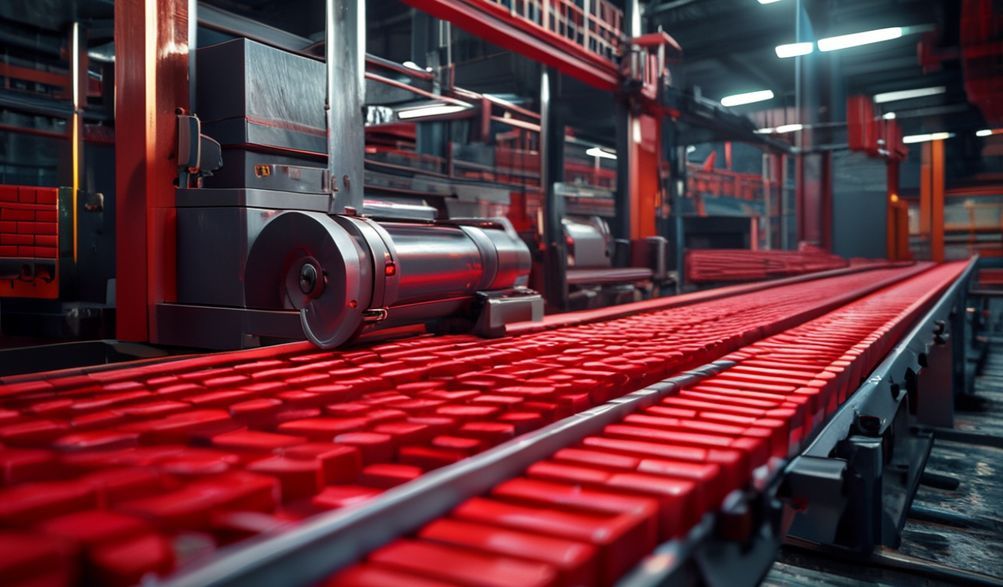
2026년 벽돌 자동화 기계 가격 안내: 비용, 유형 및 투자 수익률 분석
소개
모든 건설업체 대표나 프로젝트 매니저는 이런 딜레마를 잘 알고 있습니다: 수요를 충족하고 성장하기 위해 벽돌 생산을 늘려야 하지만, 새로운 장비의 선투자 비용은 부담스럽고 위험한 도약처럼 느껴집니다. "벽돌 자동화 기계 가격"을 검색하면 종종 명확한 답보다 더 큰 혼란에 빠지게 되는데, 가격이 수천 달러에서 수십만 달러까지 다양하기 때문입니다. 이 초기 투자를 장기적인 생산성과 수익성이라는 약속과 어떻게 균형 있게 맞춰야 할까요?
이 종합 가이드는 불필요한 정보를 걷어내고 핵심을 전달하기 위해 설계되었습니다. 업계 데이터, 제조사 명세서 직접 수집 자료, 그리고 벽돌 생산 경제학에 대한 실용적 통찰을 바탕으로, 단순한 가격 목록을 넘어서고자 합니다. 우리는 비용을 결정하는 요인, 실제 필요 사항을 평가하는 방법, 궁극적으로 구매의 실제 가치와 투자 수익률(ROI)을 계산하는 명확한 프레임워크를 제공할 것입니다. 기계 유형, 자동화 수준, 생산 능력, 그리고 핵심 기능이 가격표에 어떻게 직접적인 영향을 미치는지 배우게 될 것입니다.
시작하기 전 중요한 참고사항: 언급된 가격은 현재 시장 분석과 2026년 예상 트렌드를 바탕으로 한 대략적인 범위입니다. 이는 원자재 비용, 기술 발전, 그리고 공급업체별 특정 구성에 따라 변동될 수 있습니다. 본 가이드는 올바른 질문을 할 수 있도록 도와주지만, 정확한 예산 수립을 위해 신뢰할 수 있는 공급업체로부터 상세하고 맞춤형 견적을 받을 것을 강력히 권장합니다.
벽돌 기계 가격 결정 요인 이해하기
지능적인 투자를 하려면 먼저 자동 벽돌 제조기의 가격을 결정하는 핵심 요소를 이해해야 합니다. 이는 단순한 상품이 아니라, 비용이 성능, 내구성 및 기술을 직접적으로 반영하는 정교한 산업 장비입니다.
핵심 머신 타입 및 기술 투자
자동화 수준이 가격의 주요 결정 요인입니다. 이는 노동력 요구 사항, 일관성 및 생산 속도를 좌우합니다.
- 수동 vs 반자동 vs 완전 자동:수동 기계는 저렴하지만 노동 집약적입니다. 반자동 모델은 혼합이나 배출과 같은 일부 공정이 기계화되어 중간 지점을 제공합니다.완전 자동 벽돌 기계최상위 계층을 대표합니다. 이들은 자재 공급, 혼합, 다짐, 성형, 적재 과정을 최소한의 인력 개입으로 통합하여 최대 생산량과 일관성을 보장하며, 이로 인해 더 높은 가격을 형성합니다.
- 고정식 대 이동식 기계고정식 공장 설비는 대량 생산과 고정 위치 생산을 위해 설계되어 무겁고 지속적인 사용에 적합하므로 그 비용을 정당화합니다. 이동식 벽돌 제조기는 현장 생산에 유연성을 제공하지만 일반적으로 낮은 생산 능력을 가지며, 이는 가격과 사용 사례에 영향을 미칩니다.
- 제어 시스템기계의 "뇌"는 비용에 큰 영향을 미칩니다. 기본 릴레이 시스템은 더 저렴합니다.PLC(프로그래머블 로직 컨트롤러) 시스템 및 터치스크린 인터페이스진동 시간, 압력, 순서를 정밀하게 제어할 수 있습니다. 이 기술은 제품 균일성을 보장하고 폐기물을 줄이며 작동을 단순화하지만, 비용이 더 듭니다.
Production Capacity: The Biggest Cost Factor
In the world of brick machinery, price scales almost directly with output. Capacity is usually measured in bricks per hour (BPH) or blocks per cycle.
- The Output-Price Correlation: A machine designed to produce 2,000 BPH will be fundamentally different—in terms of motor power, structural steel, and hydraulic systems—from one built for 10,000 BPH. This difference is the single most significant driver of cost.
- Price Comparison Brackets:
- Small-scale (< 1,000 BPH): Ideal for niche products or very small businesses. Lower power and simpler mechanics keep costs down.
- 중간 규모(시간당 1,000~5,000병): The most common range for growing block yards and standard construction suppliers. Offers a balance of output and investment.
- Large-scale industrial plants (>5,000 BPH): These are complete production lines. Pricing jumps significantly as they incorporate extensive automation and material handling systems.
주요 구성 요소 및 제작 품질
The adage “you get what you pay for” is profoundly true here. The quality of core components dictates not only the price but also the machine’s lifespan and operating costs.
- The Cost of Durability: A machine frame built from high-grade, reinforced steel costs more than one using lighter materials. Similarly, powerful, brand-name vibration motors and precision-engineered hydraulic pumps and cylinders add to the initial cost but ensure reliable, year-after-year operation.
- 금형 정밀도: High-chrome, CNC-machined molds produce bricks with sharp edges and consistent dimensions. Cheaper molds wear faster and lead to product rejection.
- The False Economy: Industry practice shows that opting for a cheaper machine with inferior components leads to exponentially higher long-term costs through frequent breakdowns, costly spare parts, and production downtime that erodes your ROI.
2026 Price Ranges for Automatic Brick Making Machines
Based on current market analysis and projected trends, here are the authoritative price brackets you can expect in 2026. Remember, these ranges are for the core machine; ancillary equipment is covered in the next section.
Entry-Level / Small-Scale Automatic Machines
These are often single-hopper, basic automatic machines suitable for entrepreneurs or businesses with specialized, lower-volume needs.
- 전형적인 출력 800 – 2,500 bricks per 8-hour shift.
- 2026 Price Range: $8,000 – $25,000.
- Common Features & Ideal Use Cases: Often feature a basic PLC or relay control system. Ideal for producing interlocking paving bricks, landscape blocks, or for small construction projects where consistent, but not massive, output is needed.
Mid-Range / Semi-Automatic & Standard Automatic Machines
This bracket represents the workhorse of the industry, offering a significant leap in productivity for a manageable investment.
- 전형적인 출력 2,500 – 12,000 bricks per 8-hour shift.
- 2026 Price Range: $25,000 – $70,000.
- Common Features & Ideal Use Cases: These are robust, often multi-layer machines with stronger vibration systems. They may include features like automatic pallet feeders and product stackers. Perfect for growing block manufacturing yards supplying local builders and contractors with standard hollow or solid blocks.
High-Capacity / Fully Automatic Production Lines
These are turnkey solutions for industrial-scale production, where the machine is just one part of an integrated system.
- 전형적인 출력 12,000+ bricks per 8-hour shift, often exceeding 20,000.
- 2026 Price Range: $70,000 – $250,000+.
- 설명: This price buys a complete system. It typically includes automatic pan mixers, conveyor belt feeding systems, the core brick making machine, automatic stackers, palletizers, and sometimes even robotic arms for pallet handling. The price is for a synchronized production solution that minimizes labor to just a few supervisors.
Beyond the Sticker Price: Calculating Total Investment
The machine’s price tag is only the beginning. A true budget must account for the total cost of ownership. Failing to plan for these expenses is a common pitfall for first-time buyers.
Ancillary Equipment & Setup Costs
- 곰팡이: Each brick type requires a specific mold. A set of molds for hollow, solid, and paving blocks can cost $2,000 – $10,000+, depending on quality and complexity.
- 원자재 취급 You’ll need a feeder, a mixer (if not integrated), and conveyors. Budget an additional $5,000 – $30,000 for this ecosystem.
- Curing & Space: Automated machines produce bricks fast. You must account for the cost of a covered curing area, racks, and possibly a steam curing system, which is a significant infrastructure investment.
- 설치 및 교육: Professional commissioning, electrical work, and initial operator training by the supplier can add $1,500 – $10,000 to your project.
Operational Costs & Efficiency
- 전력 소비량: High-power vibration and hydraulic motors consume significant electricity. Operational data suggests this can be a major ongoing cost, so efficiency matters.
- 노동 비용 절감 This is your primary savings. A fully automatic line may replace 10-15 manual laborers. Calculate your local wage savings against the machine’s cost.
- 유지보수 및 예비 부품: Regular maintenance is non-negotiable. Factor in the cost and lead time for spare parts like hydraulic seals, vibration motor bearings, and wear plates. A supplier with a local parts depot is invaluable.
How to Get the Best Value: A Buyer’s Checklist
Armed with knowledge on pricing drivers, use this actionable checklist to ensure you get the best value, not just the lowest price.
Defining Your Needs Pre-Quote
- Assess Demand: What is your target daily/weekly production volume? Be realistic about current and near-future needs.
- Brick Type Portfolio: What types of blocks will you sell (solid, hollow, paving, interlocking)? Each may require different machine pressures or mold investments.
- Raw Material Audit: Evaluate the local availability and consistency of your raw materials (fly ash, cement, aggregate, soil). Machine settings vary, and some machines handle certain mixes better than others.
Vetting Manufacturers & Suppliers
- After-Sales Support is King: A one-year warranty on core parts is standard. More important is the availability of local or regional technical support. Can they send an engineer if needed?
- Seek Proof: Request customer references and, if possible, visit an existing installation. Seeing a machine run in a real-world setting is invaluable.
- Compare Comprehensive Quotes: Ensure quotes are for the same basis (FOB, CIF, etc.) and include the same items (installation, training, spare parts kit). A slightly higher quote with included training and a parts kit often offers better value.
Key Questions to Ask Before Purchasing
- “Can you provide a performance test report using a sample of my local raw materials to verify the output and brick quality?”
- “What is the guaranteed uptime percentage, and what is your average lead time for critical spare parts?”
- “Does your price include installation supervision and comprehensive training for my operators and maintenance team?”
- “Can the machine be upgraded or expanded (e.g., adding an auto-stacker) in the future?”
자주 묻는 질문 (FAQ)
Q: What is the cheapest automatic brick machine available?
A: While basic, small-scale models can be found starting around $8,000, it’s critical to understand that the “cheapest” machine can become the most expensive due to frequent downtime, high repair costs, and inconsistent output. Focus on value, reliability, and total cost of ownership for your specific production needs.
Q: Can I get a precise quote online?
A: Reputable manufacturers rarely provide final, binding prices online. The configuration is too complex. The best practice is to contact them directly with your detailed production requirements (desired output, brick types, level of automation) to receive a formal, detailed quotation.
Q: How long does it take to see a return on investment (ROI)?
A: ROI is highly variable. It depends on your local market brick price, achieved production volume, and the labor costs you’re replacing. Common feedback from plant managers indicates that a well-chosen automatic machine in a steady market can often show a full ROI in 1 to 3 years due to massive gains in output speed, consistency, and labor savings.
Q: Are there significant price differences between manufacturers from different countries?
A: Yes, notable differences exist. Machines from regions like China or India often have a lower initial purchase price. Those from Europe or North America may be higher, often reflecting stricter material standards, advanced technology integration, and potentially more robust after-sales support networks. Always compare the total value package.
Q: What are the most important after-sales services to look for?
A: Prioritize suppliers who offer: 1) On-site installation and commissioning supervision, 2) Thorough, hands-on operator and maintenance training, 3) A clear and comprehensive warranty (at least 1 year on core components), and 4) Readily available technical support and spare parts inventory.
결론
Navigating the “brick automatic machine price” landscape requires looking beyond the initial number. As we’ve explored, the final cost is a direct variable of your production ambitions, desired level of automation, and the uncompromising quality of the machine’s construction. It represents a strategic capital investment that will define your business’s productivity and profitability for the next decade.
Our final expert recommendation is this: invest more time in the needs-assessment and supplier vetting process than in hunting for the absolute lowest price. Use the framework and checklist in this guide to structure your discussions with potential suppliers. Request detailed quotes, ask the probing questions we’ve outlined, and always prioritize long-term reliability and support over short-term savings.
As a future-proofing note, the industry is trending towards more energy-efficient designs and “smart-factory” connectivity. When choosing your machine, consider not just today’s needs, but also its scalability for tomorrow’s growth. Make your investment a confident, value-driven decision that builds the foundation for your success.
<