1. 서론
건설 및 조경 산업에서 포장 설치의 효율성, 정밀성 및 비용 효율성은 오랫동안 프로젝트 수익성과 고객 만족도에 영향을 미치는 핵심 요소였습니다. 이 분야에서 활동하는 유통업체와 구매자에게는 운영 역량을 강화하면서도 일관된 결과를 제공할 수 있는 장비를 선별하는 것이 가장 중요합니다. 벽돌 포장 설치 기계는 전통적인 수동 시공 방식의 한계를 해결하기 위해 설계된 혁신적인 도구로 부상했습니다. 본 문서는 이러한 기계의 핵심 기능, 기술 사양, 운영상의 이점, 적용 시나리오 및 투자 가치를 포괄적으로 개요하여 산업 전문가들이 정보에 기반한 구매 및 유통 결정을 내릴 수 있도록 필요한 지식을 제공하고자 합니다. 궁극적으로 역동적인 시장에서 비즈니스 성장과 경쟁 우위를 확보하는 데 기여하는 것을 목표로 합니다.
2. 핵심 기능과 운영 메커니즘
2.1 기본 작동 원리
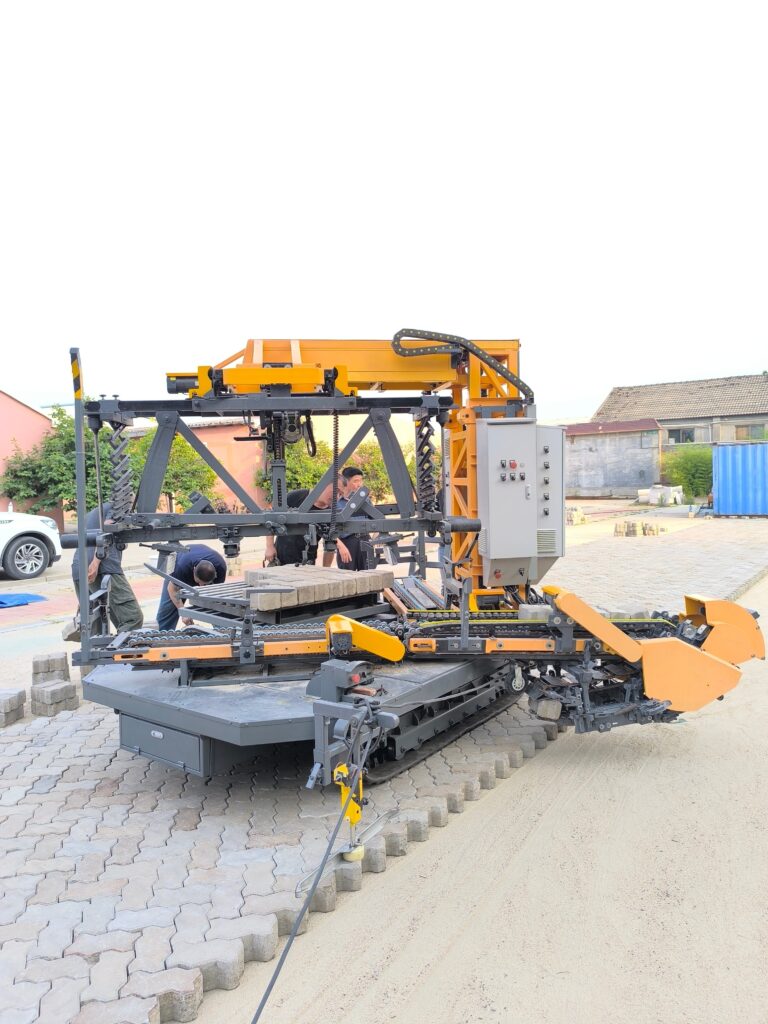
벽돌 포장 기계는 벽돌 포장재를 정밀하고 균일한 패턴으로 놓는 과정을 자동화하도록 설계되어, 노동 집약적인 수작업의 필요성을 없앱니다. 핵심 작동 원리는 세 가지 주요 단계, 즉 재료 공급, 위치 조정, 설치를 중심으로 이루어집니다. 먼저, 벽돌 포장재는 호퍼나 매거진 시스템에 적재되어 하나씩 컨베이어 메커니즘으로 공급됩니다. 조절 가능한 가이드가 장착된 이 전송 시스템은 각 포장재가 설치 헤드에 도달하기 전에 정확하게 정렬되도록 보장합니다. 그런 다음 고급 유압 또는 전기 시스템으로 제어되는 설치 헤드는 포장재를 모래, 자갈 또는 모르타르와 같은 준비된 기초 재료 위에 일정한 압력과 정확도로 내려놓습니다.
이러한 기계를 차별화하는 요소는 레이저 안내, GPS 또는 센서 기반 시스템을 포함할 수 있는 포지셔닝 기술의 통합입니다. 이러한 기술은 기계가 사전에 프로그램된 패턴을 따라 직선을 유지하고 포장 블록 사이의 균일한 간격을 보장할 수 있게 해주는데, 이는 수작업으로 진행할 때 시간이 많이 소요되고 인간의 실수가 발생하기 쉬운 작업입니다. 또한 대부분의 현대식 포장 블록铺设 기계는 블록 크기, 두께 및 간격에 대한 조정 가능한 설정을 갖추고 있어 다양한 포장 블록 치수와 프로젝트 요구 사항을 처리할 수 있을 만큼 다목적으로 설계되었습니다.
2.2 핵심 기능 구성 요소
벽돌 포장 기계의 운영 효율성을 이해하려면 핵심 구성 요소와 각각의 역할을 살펴보는 것이 필수적입니다.
- 호퍼/매거진 시스템이 구성 요소는 벽돌 포장재를 저장하고 조절된 속도로 컨베이어 시스템에 공급합니다. 호퍼의 용량은 모델에 따라 다르며, 대형 유닛은 수백 개의 포장재를 보관할 수 있어 자주 재장전할 필요가 없어 가동 중단 시간을 최소화합니다.
- 전달 메커니즘일반적으로 벨트, 체인 또는 롤러로 구성된 전송 시스템은 포장재를 호퍼에서 배치 헤드로 운반합니다. 이 시스템은 포장재의 손상을 방지하고 일관된 정렬을 보장하기 위해 부드럽게 처리하도록 설계되었습니다.
- 배치 담당자기계의 심장인 배치 헤드는 각 포장재를 정확하게 위치시키고 놓는 역할을 합니다. 이는 유압 또는 전기 액추에이터를 사용하여 포장재를 기초 재료 위에 정밀한 압력으로 내려놓아 적절한 접착과 정렬을 보장합니다. 일부 모델은 회전식 배치 헤드를 장착하여 원형이나 곡선 패턴의 설치를 가능하게 합니다.
- 유도 시스템앞서 언급했듯이, 이 시스템은 레이저, GPS 또는 센서를 사용하여 기계를 원하는 경로를 따라 안내합니다. 레이저 유도 시스템은 직선과 넓은 개방 공간에 이상적이며, GPS 기능이 탑재된 시스템은 복잡한 배치와 야외 작업에 더 큰 유연성을 제공합니다.
- 동력 장치벽돌 포장기계는 디젤 엔진이나 전기 모터로 구동됩니다. 디젤 구동 장치는 이동성이 뛰어나 전력 공급이 없는 야외 프로젝트에 적합한 반면, 전기 모델은 소음이 적고 환경 친화적이며 소음과 배출이 문제되는 실내나 도시 프로젝트에 이상적입니다.
- 제어판: The user interface of the machine, the control panel allows operators to adjust settings such as paver spacing, laying speed, and pattern selection. Modern models feature intuitive touchscreen displays, making it easy for operators to program and monitor the machine’s performance.
3. Technical Specifications and Performance Parameters
3.1 Paver Compatibility
One of the most important technical considerations for distributors and purchasers is the machine’s ability to handle different types and sizes of brick pavers. Brick paver laying machines are designed to accommodate a wide range of paver dimensions, with most models supporting paver lengths from 100mm to 300mm, widths from 100mm to 200mm, and thicknesses from 50mm to 100mm. They can handle various paver materials, including concrete, clay, and stone, as long as the pavers are uniform in size and shape. Some high-capacity models can even handle larger pavers, up to 400mm in length, making them suitable for heavy-duty applications such as industrial pavements or large commercial plazas.
3.2 Laying Speed and Efficiency
Laying speed is a critical performance parameter that directly impacts project timelines and labor costs. Brick paver laying machines offer significantly higher laying speeds compared to manual methods. On average, a single machine can lay between 500 and 2,000 pavers per hour, depending on the model, paver size, and pattern complexity. In contrast, a skilled manual worker can lay only 100 to 200 pavers per hour. This translates to a 5 to 10 times increase in efficiency, allowing projects to be completed in a fraction of the time required by manual labor. For example, a 1,000-square-meter pavement project that would take a team of 10 workers 5 days to complete manually can be finished by one brick paver laying machine in just 1 to 2 days.
3.3 Precision and Accuracy
Precision is another key advantage of brick paver laying machines. The integration of advanced guidance systems ensures that pavers are laid with consistent spacing and alignment, with a typical accuracy of ±2mm. This level of precision is difficult to achieve with manual laying, where human error can result in uneven spacing, misalignment, and unsightly gaps. Consistent precision not only improves the aesthetic quality of the pavement but also enhances its structural integrity, as uniform spacing and alignment reduce the risk of pavers shifting or cracking over time. Additionally, precise laying minimizes the need for rework, further reducing project costs and delays.
3.4 Mobility and Maneuverability
Brick paver laying machines are designed to be highly mobile and maneuverable, allowing them to operate in a variety of job site conditions. Most models feature wheeled or tracked chassis, with tracked models offering better traction on uneven or soft terrain. The machine’s size and weight also vary by model, with compact units suitable for narrow spaces or indoor projects and larger, more powerful units designed for large-scale outdoor applications. Many models also feature adjustable steering and speed controls, making it easy for operators to navigate around obstacles and maintain consistent laying speed.
3.5 Durability and Maintenance Requirements
Durability is a key consideration for any industrial equipment, and brick paver laying machines are built to withstand the rigors of construction sites. They are typically constructed with high-quality steel frames and components, designed to resist wear and tear from heavy use and exposure to the elements. The machine’s moving parts, such as the conveying system and placement head, are often equipped with protective covers and lubrication systems to minimize friction and extend their lifespan.
In terms of maintenance, brick paver laying machines are relatively low-maintenance compared to other construction equipment. Routine maintenance tasks include cleaning the machine after use, checking and replenishing lubricants, inspecting for wear and tear, and replacing damaged parts as needed. Most manufacturers provide detailed maintenance manuals and offer spare parts support, ensuring that distributors and purchasers can keep their machines in optimal working condition with minimal downtime. Additionally, many models feature easy access to key components, making maintenance tasks quick and straightforward.
4. Advantages for Distributors, Distributors, and Purchasers
4.1 Cost Savings and Return on Investment (ROI)
One of the most significant advantages of brick paver laying machines is the cost savings they offer. By automating the laying process, these machines reduce the need for manual labor, which is often one of the largest expenses in pavement installation projects. For example, a project that requires 10 manual workers can be completed with just 1 to 2 operators and one machine, resulting in substantial labor cost savings. Additionally, the increased laying speed means that projects are completed faster, reducing overhead costs such as equipment rental, site management, and insurance.
For distributors and purchasers, investing in brick paver laying machines can deliver a strong return on investment. While the initial purchase price may be higher than traditional tools, the cost savings from reduced labor and faster project completion quickly offset this investment. For example, a mid-range brick paver laying machine costing \(50,000 can save a company up to \)100,000 per year in labor costs, resulting in a payback period of just 6 months. Additionally, the machine’s durability and low maintenance requirements mean that it can provide reliable service for many years, generating consistent cost savings and revenue for the business.
4.2 Market Demand and Competitive Advantage
The demand for brick paver laying machines is growing rapidly, driven by the increasing focus on efficiency and quality in the construction and landscaping industries. As more contractors and construction companies recognize the benefits of automation, the market for these machines is expanding, creating significant opportunities for distributors and purchasers. By offering brick paver laying machines, distributors can tap into this growing market, attract new customers, and differentiate themselves from competitors who only offer traditional manual tools.
For purchasers, investing in brick paver laying machines can give them a competitive edge in the market. By being able to complete projects faster and with higher quality, they can win more contracts and command higher prices for their services. Additionally, the ability to handle a wider range of projects, from small residential driveways to large commercial plazas, expands their business opportunities and increases their market share.
4.3 Versatility and Application Flexibility
Brick paver laying machines are highly versatile, making them suitable for a wide range of applications. They can be used for installing pavements in residential areas (driveways, patios, walkways), commercial spaces (shopping centers, office parks, plazas), industrial sites (warehouses, loading docks), and public areas (parks, sidewalks, bike paths). Additionally, they can handle various laying patterns, including straight lines, herringbone, basketweave, and circular designs, allowing contractors to meet the unique aesthetic requirements of each project.
This versatility makes brick paver laying machines a valuable asset for distributors and purchasers, as they can cater to a diverse customer base and adapt to changing market demands. Whether a customer needs a small residential project or a large-scale commercial development, a brick paver laying machine can handle the job, increasing the machine’s utility and marketability.
4.4 Improved Safety and Worker Satisfaction
Manual brick paver laying is a physically demanding task that involves bending, lifting, and repetitive movements, which can lead to musculoskeletal injuries and fatigue. Brick paver laying machines eliminate the need for these repetitive tasks, reducing the risk of workplace injuries and improving worker safety. By automating the laying process, operators can control the machine from a safe, ergonomic position, minimizing physical strain and creating a safer working environment.
Improved safety not only reduces the risk of costly workplace accidents and workers’ compensation claims but also enhances worker satisfaction and retention. When employees are not subjected to physically demanding work, they are more likely to be satisfied with their jobs, leading to lower turnover rates and a more productive workforce. For distributors and purchasers, this translates to a more reliable and efficient team, further improving project outcomes and business performance.
5. Application Scenarios and Case Studies
5.1 Residential Pavement Installation
Residential projects, such as driveways, patios, and walkways, are ideal applications for brick paver laying machines. These projects typically require precise laying and an attractive finish, which the machine can deliver with ease. For example, a residential driveway installation that would take a team of 2 to 3 workers 2 days to complete manually can be finished by one machine in just 4 to 6 hours. The machine’s ability to handle small pavers (100mm x 100mm) and intricate patterns (such as herringbone or basketweave) makes it perfect for enhancing the curb appeal of homes.
A case study from a residential construction company in the United States found that using a brick paver laying machine reduced their driveway installation time by 75% and labor costs by 60%. The company also reported higher customer satisfaction rates, as the machine-delivered pavements were more uniform and aesthetically pleasing than those installed manually. This led to an increase in referrals and repeat business, helping the company grow its customer base and revenue.
5.2 Commercial and Industrial Projects
Commercial and industrial projects, such as shopping center parking lots, office park walkways, and industrial warehouse floors, require large-scale pavement installation with high durability and efficiency. Brick paver laying machines are well-suited for these applications, as they can handle large volumes of pavers and lay them quickly and accurately. For example, a shopping center parking lot covering 5,000 square meters can be installed by one machine in just 3 to 4 days, compared to 2 weeks with manual labor.
A case study from a commercial construction firm in Europe showed that using a brick paver laying machine for a large office park project reduced the project timeline by 60% and saved the company over $200,000 in labor costs. The machine’s ability to lay pavers with consistent spacing and alignment also improved the pavement’s structural integrity, reducing the risk of damage from heavy traffic. This resulted in lower maintenance costs for the client and a higher level of satisfaction with the project outcome.
5.3 Public Infrastructure and Landscaping
Public infrastructure projects, such as park walkways, sidewalks, and bike paths, often require pavement installation in high-traffic areas with strict quality and safety standards. Brick paver laying machines are ideal for these projects, as they can deliver precise, durable pavements that meet the requirements of public authorities. For example, a city park walkway project covering 1,000 square meters can be installed by one machine in just 1 day, minimizing disruption to park visitors and reducing the project’s environmental impact.
A case study from a municipal government in Asia found that using brick paver laying machines for sidewalk renovations reduced the project’s duration by 80% and saved the city over $50,000 in labor costs. The machine’s ability to lay pavers with uniform spacing and alignment also improved pedestrian safety, as the pavement was less likely to have tripping hazards. Additionally, the machine’s low noise and emissions made it suitable for use in urban areas, minimizing disturbance to nearby residents and businesses.
6. 결론
Brick paver laying machines represent a significant advancement in the construction and landscaping industries, offering distributors, distributors, and purchasers a range of benefits, including increased efficiency, cost savings, improved quality, and enhanced safety. By automating the brick paver laying process, these machines eliminate the limitations of manual labor, allowing projects to be completed faster, more accurately, and at a lower cost. Their versatility and adaptability make them suitable for a wide range of applications, from small residential driveways to large-scale commercial and public infrastructure projects.
For distributors, brick paver laying machines present a lucrative business opportunity, as the growing demand for efficient and high-quality pavement installation creates a strong market for these machines. By offering these machines, distributors can attract new customers, differentiate themselves from competitors, and generate consistent revenue. For purchasers, investing in brick paver laying machines can deliver a strong return on investment, improve project outcomes, and give them a competitive edge in the market.
As the construction and landscaping industries continue to evolve, brick paver laying machines will play an increasingly important role in driving efficiency and innovation. With their advanced technology, durable construction, and user-friendly design, these machines are poised to become an essential tool for any business involved in pavement installation. By understanding the core functions, technical specifications, and advantages of brick paver laying machines, distributors, distributors, and purchasers can make informed decisions that drive business growth and success.
7. FAQ
7.1 What types of brick pavers can the machine handle?
The machine is designed to handle a wide range of brick paver types, including concrete, clay, and stone pavers. It supports paver dimensions ranging from 100mm x 100mm x 50mm to 400mm x 200mm x 100mm, as long as the pavers are uniform in size and shape. For non-standard paver sizes, custom adjustments can be made to the machine’s hopper, conveying system, and placement head to ensure compatibility.
7.2 How long does it take to train an operator to use the machine?
Most brick paver laying machines feature intuitive control panels and user-friendly designs, making operator training relatively quick. A new operator can typically learn the basic functions of the machine in 1 to 2 days, including loading pavers, programming patterns, and adjusting settings. For more complex operations, such as laying curved or circular patterns, additional training may be required, but this usually takes no more than a week. Manufacturers often provide on-site training and instructional videos to help operators get up to speed quickly.
7.3 What is the average lifespan of a brick paver laying machine?
With proper maintenance, a brick paver laying machine can have an average lifespan of 8 to 10 years. The machine’s durability depends on factors such as usage frequency, operating conditions, and maintenance practices. Regular cleaning, lubrication, and inspection can significantly extend the machine’s lifespan, while timely replacement of worn parts ensures optimal performance. Most manufacturers offer warranties ranging from 1 to 3 years, covering defects in materials and workmanship.
7.4 Can the machine be used in wet or cold weather conditions?
Brick paver laying machines are designed to operate in a variety of weather conditions, but some precautions should be taken in extreme environments. In wet weather, the machine’s chassis and moving parts should be protected from water damage, and the base material should be properly drained to prevent slipping. In cold weather, diesel-powered machines may require winter-grade fuel and engine heaters to ensure reliable startup, while electric models should be protected from freezing temperatures. It is also important to ensure that the pavers and base material are not frozen, as this can affect the machine’s laying accuracy and the pavement’s structural integrity.