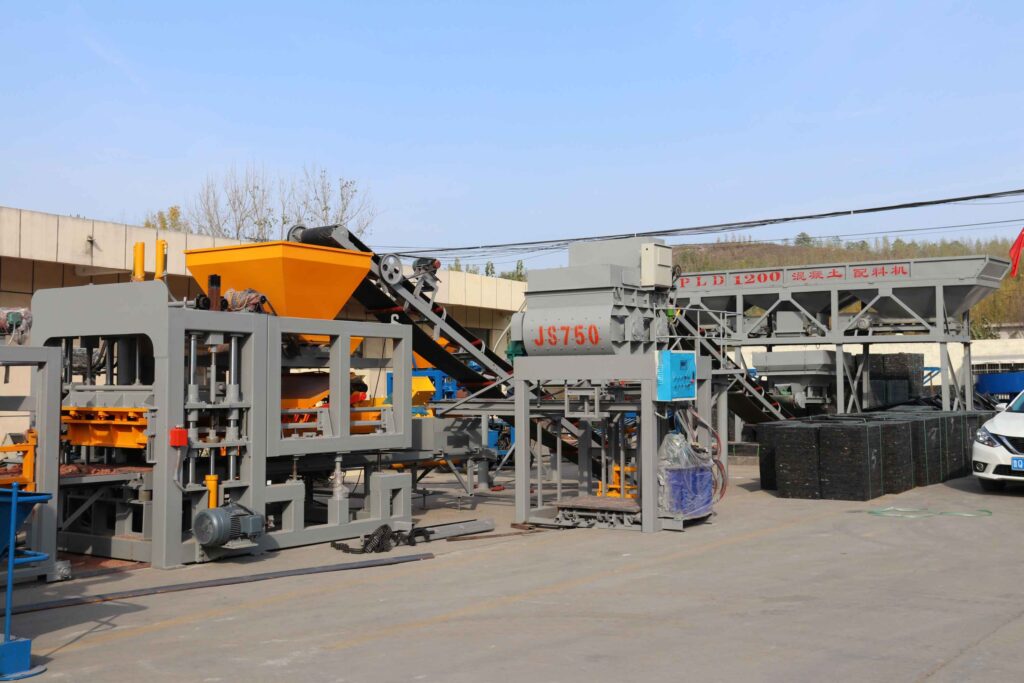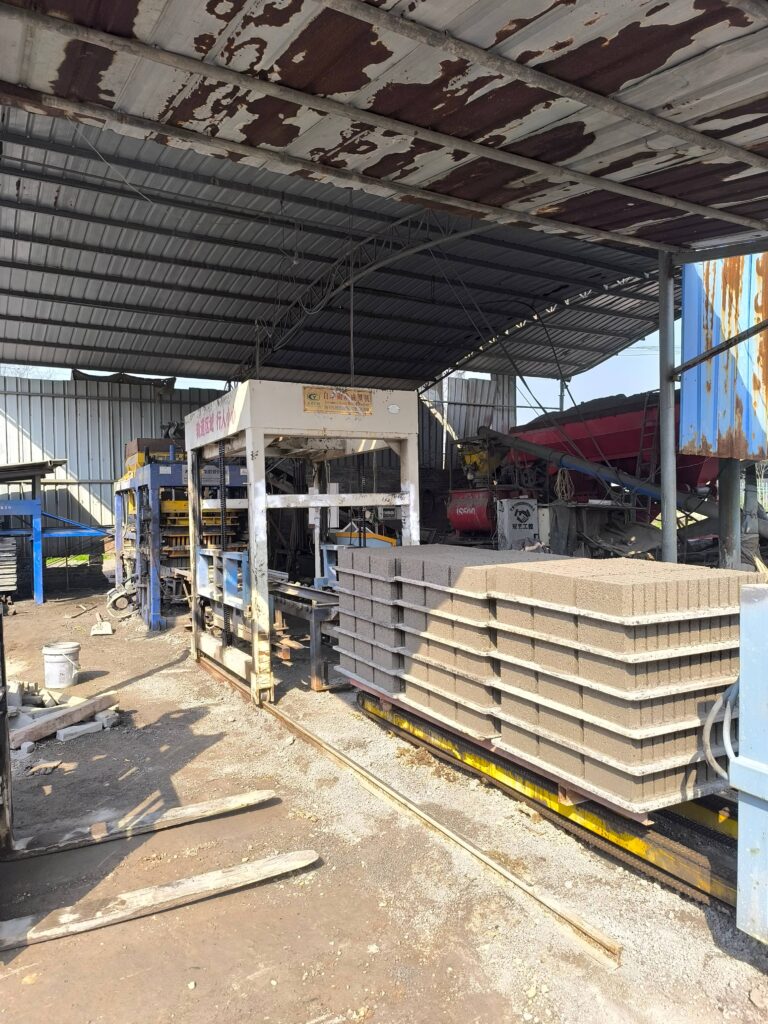
투자 해체: 종합적 비용 분석
완전 자동 점토 벽돌 기계의 가격은 단순한 숫자가 아니라, 공학 철학, 제조의 진정성, 그리고 시장 적용성을 종합적으로 반영한 결과물입니다. 이 구조를 이해하는 것이 중요합니다.
I. 기본 비용 동인: 엔지니어링 및 생산 규모
A. 핵심 시스템 아키텍처 및 처리량
기계의 설계 철학은 재무적 기반선을 직접적으로 결정합니다.
- 생산 능력과 라인 동기화가격은 보장된 지속 가능한 생산량(예: 8시간 교대당 15,000개 대 50,000개 벽돌)에 따라 상승합니다. 높은 생산 능력은 급속, 성형, 절단, 취급과 같은 하위 시스템이 병목 현상 없이 지속적이고 고속으로 운영되도록 설계된 동기화를 요구합니다. 이러한 동기화는 비용을 증가시키는 주요 요소입니다.
- 통합 및 자동화 수준
- 기본 자동 프레스자동 재료 공급 및 압착을 포함하지만 생벽돌의 수동 취급이 필요할 수 있습니다. 이는 자동화의 진입점입니다.
- 완전 통합 압출 라인:프리미엄 세그먼트를 대표합니다. 이러한 시스템은 압출기(또는 믹싱기), 탈공기용 진공 챔버, 자동 절단기, 로봇 세팅 시스템, 때로는 자동 팔레타이저를 통합합니다. 각 통합 모듈은 복잡성과 비용을 증가시키지만 노동력을 줄이고 일관성을 향상시킵니다.
- 압출 대 프레싱 기술:점토 벽돌의 경우, 완전 자동화 시스템은 주로 압출 기술을 사용합니다. 고토크, 이중축 압출기와 강력한 진공 펌프의 비용은 상당합니다. 일관된 압출 압력과 진공 수준을 유지하기 위한 엔지니어링은 다른 재료에 사용되는 유압 프레스 시스템과 구별되는 주요 비용 요소입니다.
B. 재료 무결성 및 부품 계층 구조
부품의 품질은 수명, 가동 시간, 그리고 궁극적으로 생산되는 벽돌당 비용을 결정합니다.
- 구조적 견고성24시간 산업용으로 설계된 기계는 프레임과 구조물에 두꺼운 응력 완강 강철을 사용합니다. 마모 부품인 압출 오거, 다이 입구, 커터 와이어 등은 특수 경화 합금으로 제작됩니다. 이러한 부품의 재료 비용과 가공 정밀도는 상당합니다.
- 구동 및 동력 시스템고용량 산업용 모터(압출기, 진공 펌프, 컨베이어 구동 장치용)와 정밀 기어박스 또는 가변 주파수 드라이브(VFD)가 비용의 상당 부분을 차지합니다. VFD는 다양한 점토 종류에 맞춰 압출 공정을 최적화하는 정밀한 속도 제어를 가능하게 하지만, 초기 가격을 높이는 요인입니다.
- 제어 및 감각 아키텍처:릴레이 로직에서 분산형 I/O와 HMI(인간-기계 인터페이스)를 갖춘 포괄적인 PLC(프로그래머블 로직 컨트롤러) 시스템으로의 전환은 상당한 비용 단계를 수반합니다. 진보된 시스템은 진공도, 압출 압력, 커터 위치를 모니터링하는 센서를 포함하여 폐루프 제어와 예측 정비 알림을 가능하게 합니다. 이 전자 신경 시스템은 핵심 가치 동인입니다.
- 핸들링과 로보틱스: The integration of servo-driven multi-axis robotic arms or sophisticated cross-transfer systems for handling unfired (green) bricks without deformation is a high-cost, high-value addition that dramatically reduces labor and breakage.
II. The Expanded Financial Framework: Beyond the Machine Quotation
The supplier’s pro forma invoice is the beginning of the financial commitment. A strategic assessment requires a broader lens.
A. Direct Ancillary and Logistical Expenditures
- Logistics and Trade Terms (EXW, FOB, CIF): The chosen Incoterm fundamentally alters financial responsibility. An Ex-Works (EXW) price is lowest but leaves all logistics, insurance, and export formalities to the buyer. Cost, Insurance, and Freight (CIF) to a destination port provides predictability but at a higher upfront cost. For large lines, specialized heavy-lift or flat-rack shipping may be required.
- Import Duties, Taxes, and Port Charges: These are often overlooked in initial budgeting. Duties can range from 5% to 20%+ depending on the country of import and its classification of industrial machinery. Local VAT or GST will also apply upon clearance.
- Installation, Commissioning, and Civil Works: This includes the cost of a reinforced concrete foundation, utility hook-ups (high-power electrical, water, compressed air), and the fees for technical supervisors from the supplier to oversee assembly, calibration, and production startup.
- Essential Ancillary Systems: The brick machine is the core of a production ecosystem. This ecosystem includes box feeders or forklifts for raw clay, crushers and feeders for additives, aging/weathering space for clay, and often a sophisticated drying system (chamber dryers) prior to firing. These are separate, major investments.
B. Lifecycle Operational and Implicit Costs
The true financial picture emerges over years of operation.
- Energy Consumption Profile: A fully automatic line with extruders, vacuum pumps, and robotics is energy-intensive. The efficiency of the drive systems and the design of the drying stage (if integrated) are critical determinants of long-term operating cost. A machine with a higher price but 15% better energy efficiency can justify the premium within a few years.
- Maintenance Regime and Spare Parts Inventory: The abrasive nature of clay accelerates wear on specific components. The expected lifecycle and cost of wear parts (augers, liners, dies, cutter heads) must be modeled. A supplier with an expensive but long-lasting, locally stocked spare part may offer a lower TCO than one with cheap but frequently failing parts.
- Labor Cost Restructuring: While a fully automatic line reduces direct labor for brick handling, it requires more skilled (and costly) technicians for maintenance, programming, and supervision. This shift in labor cost and skill profile must be factored into the client’s business plan.
- Cost of Downtime and Technological Obsolescence: Unplanned downtime in a high-throughput line is catastrophic. The reliability engineered into the machine, backed by a responsive service agreement, has direct financial value. Furthermore, a machine with a modular, updatable control system is more future-proof than a closed, proprietary system.
Strategic Procurement and Value Proposition Development
For the distributor, the goal is to align machine cost with client ambition, creating a compelling investment case.
I. Conducting a Total Cost of Ownership (TCO) Analysis
A disciplined TCO analysis over a 7-10 year horizon is the most powerful tool for justification. It must include:
- Capital Expenditure (CAPEX): Machine price, shipping, duties, taxes, installation, and essential ancillaries.
- Operational Expenditure (OPEX): Annual costs for energy, skilled labor, routine maintenance, and wear parts.
- Cost of Capital: Interest if financed.
- Residual Value: Potential resale value of the robust machine at end of period.
Presenting this analysis contrasts the true cost of a “cheap” machine (high OPEX, high downtime) versus a “premium” machine (higher CAPEX, lower OPEX).
II. Building the Client’s Return on Investment (ROI) Model
Your role is to help the client build their business case. The model should be localized and project:
- Revenue Potential: Based on brick selling price and the machine’s 현실적인 annual capacity after accounting for maintenance and market demand.
- Variable Cost Savings: Highlight the reduction in direct labor per thousand bricks and the potential for optimized raw material use (less waste) through precise extrusion and cutting.
- Quality Premium: The ability to produce consistent, high-density, dimensionally accurate bricks can command a higher market price, especially for facing bricks.
- Payback Period and IRR: Calculate the simple payback (Investment / Annual Net Profit) and the more sophisticated Internal Rate of Return (IRR). A machine with a 24-month payback and a 35% IRR is an outstanding investment, even with a high initial price.
III. Market Segmentation and Strategic Positioning
- Tier 1 (Modernizing Traditional Producers): Target manufacturers seeking to move from manual/semi-auto to full automation. Emphasize labor savings, consistency, and the ability to meet larger contract volumes. Price must be justified by a clear, rapid ROI.
- Tier 2 (Greenfield Industrial Plants): For large-scale, new entrants or government-backed housing projects. The discussion centers on project feasibility, output guarantees, and lifecycle cost. The value is in being a turnkey solution provider, not just a machine seller.
- Tier 3 (Niche & Architectural Brick Producers): Focus on machines with high flexibility—quick-change dies, programmable texture rollers, and color feeding systems. The price premium is justified by the higher margins in the architectural brick market.
결론
Navigating the cost landscape of fully automatic clay brick making machinery is a defining competency for the successful B2B construction materials specialist. It requires a shift from transactional price negotiation to strategic value partnership. The most economically sound decision is invariably rooted in a rigorous analysis of total cost of ownership, a clear-sighted projection of client ROI, and a deep understanding of the engineering quality that underpins long-term reliability. By mastering this triad—Cost, Capability, and Calculation—distributors can transcend the role of equipment vendors to become indispensable advisors, empowering their clients to build not just bricks, but scalable, profitable, and future-ready industrial enterprises. In this paradigm, price becomes a function of demonstrable value, and the investment becomes a cornerstone of shared, long-term success.
FAQ (Frequently Asked Questions)
Q1: What is the typical price range for a complete, fully automatic clay brick production line, and what does it include?
A complete line capable of industrial-scale production typically starts in the range of $12,000 to $50,000+ for a basic to mid-range setup (EXW price). This generally includes the core automated extruder with vacuum system, automatic cutter, and a setting or stacking system. A high-capacity line with advanced robotics, integrated chamber dryers, and sophisticated material handling can exceed $70,000. It is crucial to define “complete,” as many quotes are for the core machinery only, excluding clay preparation equipment (crushers, feeders) and the essential drying system.
Q2: How significant is the cost of the drying stage, and is it integrated into the machine price?
The drying stage is a critical and major separate investment, often comparable to or exceeding the cost of the extrusion and shaping machinery itself. Industrial chamber dryers with precise humidity and temperature control are necessary to prevent cracking in the green bricks before firing. They are rarely included in a standard “brick making machine” quote. This must be budgeted separately and is a key part of the overall plant design.
Q3: What are the most important factors affecting long-term operational costs for the end-user?
The “big three” are:
- Energy: Consumption of the extruder, vacuum pump, and especially the drying system.
- 착용 부품: The replacement cost and frequency for the extrusion auger, liner, die, and cutter mechanisms, which degrade due to abrasive clay.
- 숙련 노동 While fewer in number, the wages for PLC technicians and maintenance engineers are higher than for manual laborers.
A reputable supplier will provide estimated consumption rates and wear part lifecycles for financial modeling.
Q4: Can the output and product type of these machines be easily changed, or is it a fixed design?
Modern fully automatic lines are designed for flexibility, but changes incur cost and time. Quick-change die systems allow for different brick profiles (perforated, hollow, solid). Changing brick dimensions (length/height) involves reprogramming the cutter and handling systems, which is relatively straightforward. However, a significant change in the production rate or a switch to a radically different clay body with different plasticity may require mechanical adjustments or even different auger designs, which are not instantaneous. Flexibility is a valued feature that influences the base price.
Q5: How does financing typically work for such a large equipment purchase, and what should we look for?
Large machinery purchases are often financed through:
- Supplier-Arranged Financing: Some manufacturers have partnerships with export-import banks or leasing companies, offering structured loans.
- Third-Party Equipment Leasing: Specialized firms purchase the machine and lease it to the end-user.
- Local Bank Industrial Loans.
Key points for negotiation: the down payment percentage (typically 30%), the interest rate, the loan term (3-7 years), and the inclusion of ancillaries and installation in the financed amount. Clear ownership transfer terms at the end of a lease are also critical.