
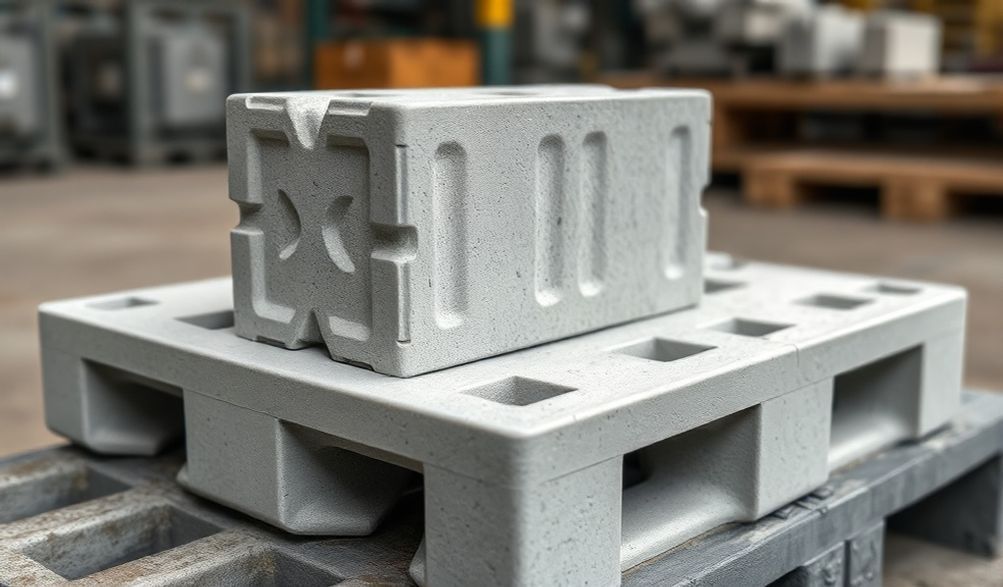
벽돌 기계용 GMT 팔레트: 내구성과 고성능 몰드를 위한 최종 가이드
소개
벽돌 제조 사업을 하고 계신다면, 이런 상황이 너무나 익숙하실 겁니다. 생산이 본궤도에 오르는 바로 그때, 휘어진 목재 팔레트로 인해 벽돌이 어긋나 생산이 멈추거나, 닳아빠진 금형을 갈고, 밀봉하고, 교체하는 끝없는 반복 작업을 마주하게 됩니다. 이렇게 가동이 중단되는 것은 단순한 불편함이 아닙니다. 이는 납기 지연, 일관성 없는 제품 품질, 그리고 치솟는 운영 비용으로 이어져 결국 수익성에 직접적인 타격을 줍니다.
이 가이드는 수십 년간의 콘크리트 제품 제조 현장 경험과 심화된 재료 과학 전문 지식을 바탕으로, 혁신적인 해결책을 소개합니다. 우리는 복잡한 이론을 걷어내고 본질에 대해 이야기하려 합니다.벽돌 기계용 GMT 팔레트생산 현장의 내구성과 효율성을 재정의하는 기술적 도약입니다. 글래스 매트 서모플라스틱(GMT) 팔레트는 단순한 대안이 아니라, 기존 목재, 강철, 표준 플라스틱 팔레트의 만성적인 문제점을 해결하도록 설계된 전략적 업그레이드입니다.
이 포괄적인 가이드를 마칠 때쯤이면, 여러분은 GMT 팔레트가 무엇인지, 그 뛰어난 장점들, 여러분의 작업에 맞는 적절한 팔레트를 선택하는 방법, 그리고 수명을 극대화하기 위한 최상의 실천 방법에 대해 명확하고 전문가가 뒷받침하는 이해를 갖추게 될 것입니다. 우리의 목표는 생산 라인을 최고의 효율성, 우수한 벽돌 품질, 그리고 장기적인 수익성을 위해 최적화할 수 있는 지식을 여러분에게 제공하는 것입니다.
GMT 팔레트란 무엇인가? (강도의 과학적 원리)
GMT 팔레트가 왜 판도를 바꾸는 혁신인지 이해하려면, 근본적으로 무엇이 그들을 차별화하는지 알아야 합니다. 이는 단순히 다른 플라스틱이 아니라, 극한의 성능을 위해 설계된 정교한 복합재입니다.
GMT 소재 이해하기
GMT는 그리니치 평균시를 의미합니다.글래스 매트 열가소성 수지고성능 복합재료로서, 두 가지 핵심 구성 요소로 이루어져 있습니다:
* 무작위 유리 섬유 매트이는 인장 강도와 강성을 제공하여 보강 골격 역할을 합니다.
* 열가소성 폴리머 매트릭스:일반적으로 폴리프로필렌으로, 이는 유리 섬유를 함께 결합하여 충격 저항성, 화학적 안정성 및 형태를 제공합니다.
마법은 적층 공정에서 일어납니다. 유리 섬유 매트는 고열과 고압 하에서 녹은 열가소성 수지로 완전히 함침되고 융합됩니다. 그 결과, 유리 섬유가 균일하게 분포되어 모든 방향에서의 응력을 견딜 수 있는 탁월한 강도 대 중량비를 지닌 균질한 시트가 만들어집니다.
벽돌 기계용 GMT 팔레트 제조 방법
GMT 시트를 정밀 벽돌 금형으로 전환하는 것은 공학적 전문 지식을 요구하는 과정입니다. 이는 단순한 절단이 아닌 정밀 성형에 가깝습니다.
- 정밀 절단GMT 시트는 최종 팔레트에 필요한 정확한 블랭크 크기로 절단됩니다.
- 열성형:블랭크는 가소성이 생길 때까지 가열된 후, 고압 하에서 크고 맞춤 제작된 금형으로 성형됩니다. 이 금형은 원하는 벽돌 모양과 질감의 네거티브입니다.
- Cooling and Finishing: The formed pallet is cooled to set its shape permanently. Edges are trimmed, and any necessary holes for machine mounting are drilled with precision.
The entire process is tailored to match specific brick machine models (like Zenith, Hess, or Besser) and exact brick dimensions, ensuring a perfect fit and consistent performance from day one.
Key Advantages of Using GMT Pallets in Brick Production
Switching to GMT pallets isn’t a mere substitution; it’s an operational upgrade. Here’s how they deliver tangible benefits where it matters most.
뛰어난 내구성과 긴 수명
This is the cornerstone of the GMT value proposition. These pallets are built to endure.
* Abrasion Resistance: The hard thermoplastic surface and glass reinforcement stand up to the constant scraping of concrete and aggregates far better than wood or weaker plastics.
* Moisture & Chemical Immunity: Unlike wood, GMT does not absorb water, swell, rot, or react with the alkaline compounds in wet concrete. It remains dimensionally stable in humid plant conditions.
* Lifespan Comparison: In our field experience, while wooden pallets may last a few months under heavy use, and other plastics might survive a couple of years, high-quality GMT pallets consistently deliver a service life of 3 to 7 years or more, dramatically reducing changeover frequency.
Superior Dimensional Stability & Brick Quality
Precision is profitability in brick manufacturing. GMT pallets excel here.
* No Warping: Their resistance to moisture and heat prevents the warping and twisting common in wood, which leads to misshapen bricks and production jams.
* Thermal Stability: They exhibit minimal expansion and contraction with temperature fluctuations, ensuring brick dimensions remain consistent from the first batch in the morning to the last batch at night.
* 결과 You achieve a higher yield of first-quality bricks with smooth finishes, sharp edges, and uniform dimensions. This reduces waste, minimizes customer rejections, and protects your brand’s reputation for quality.
Significant Operational Cost Savings
Look beyond the initial price tag. The Total Cost of Ownership (TCO) tells the true story.
* Reduced Replacement Costs: The multi-year lifespan eliminates the recurring cost of purchasing wooden or short-life plastic pallets.
* 최소화된 가동 중단 시간 Fewer pallet changes mean more continuous production time. Less time spent on maintenance is more time spent making sellable product.
* 낮은 유지 관리 Forget about weekly sanding, sealing, or painting. GMT pallets require only routine cleaning, freeing up labor for more valuable tasks.
Enhanced Worker Safety and Efficiency
A smoother operation is a safer and faster one.
* Lighter Weight: GMT pallets are significantly lighter than their steel counterparts. This makes them easier and safer for operators to handle, reducing fatigue and risk of injury during setup or changeover.
* Excellent Release Properties: The non-porous, smooth surface of GMT prevents concrete from adhering aggressively. Bricks release more cleanly, which speeds up the production cycle and reduces the need for excessive release agents.
How to Choose the Right GMT Pallets for Your Brick Machine
Investing in GMT pallets is a strategic decision. Making the right choice requires careful consideration of your specific operation. Here’s our unbiased advice.
Critical Compatibility Factors
Getting the fit wrong is not an option.
* Machine Model and Type: This is non-negotiable. You must specify the exact make, model, and type of your brick machine (e.g., fully automatic, semi-automatic, manual). The mounting hole pattern, dimensions, and pallet thickness must be a perfect match for your machine’s carriage.
* Brick Size and Design: Are you producing standard hollow blocks, pavers, solid bricks, or a special architectural shape? The GMT pallet must be molded to the precise cavity design, including any desired surface textures (smooth, split-face, rock-faced, etc.).
Evaluating GMT Pallet Specifications
Not all GMT is created equal. Ask your supplier for these details.
* Thickness and Ply: Thicker pallets (e.g., 8mm, 10mm, 12mm) generally offer greater load capacity and longevity for heavy block production. Some are made from multiple laminated layers (ply) for added strength.
* Glass Fiber Content: A higher percentage of glass fiber (e.g., 40% vs. 30%) typically translates to greater stiffness, strength, and resistance to deformation under load.
* 표면 마감 Discuss the finish needed for your brick’s aesthetic. A polished mold surface will produce a smooth brick, while a textured mold will impart a rustic look.
Supplier Vetting: Questions to Ask
Your supplier’s expertise is as important as the product.
1. Can you provide material certifications or test data for your GMT composite?
2. Do you have case studies or testimonials from brick manufacturers with similar machines and production volumes?
3. What is the warranty period and what does it cover?
4. Do you offer custom engineering support for unique brick designs or machine adaptations?
5. What is your after-sales service and support process?
Installation, Maintenance, and Best Practices
To get the full return on your GMT pallet investment, proper handling and care are essential. Based on common feedback from operators, here are the key protocols.
Proper Installation for Optimal Performance
A correct start prevents problems.
* Ensure the machine carriage is clean and free of old concrete debris or damaged mounting hardware.
* Carefully align the mounting holes on the GMT pallet with those on the carriage. Do not force them.
* Use the correct bolts or fasteners, typically provided or specified by the pallet manufacturer. Tighten them evenly and to the recommended torque to avoid creating stress points.
Routine Maintenance and Cleaning Protocol
Consistency is key to longevity.
* Daily/Per Shift: Use a stiff-bristled brush or plastic scraper to remove loose concrete residue. A quick blow-down with compressed air can be effective.
* Weekly/As Needed: For more stubborn buildup, wash with a mild detergent and water. Critical: Avoid harsh chemical solvents, acids, or abrasive steel brushes, as these can degrade the thermoplastic surface over time.
* Release Agents: If a release agent is needed, use a water-based, non-petroleum product compatible with plastics. Apply sparingly.
Troubleshooting Common Issues
- Brick Sticking: First, ensure the pallet is clean. If sticking persists, slightly increase the amount of release agent or consult your supplier for a recommended brand. Check that the concrete mix water content is not too high.
- Surface Wear: Regularly inspect the pallet surface for deep scratches or wear patterns. Minor surface gloss loss is normal. Significant wear in a specific area may indicate an alignment issue with the machine or mixer.
- When to Call the Supplier: For any cracking, de-lamination (separation of layers), or persistent dimensional issues, contact your supplier immediately. Do not attempt major repairs in-house, as this may void warranties.
Frequently Asked Questions (FAQ) About GMT Pallets
Q1: Are GMT pallets more expensive than traditional wood pallets?
A: Yes, the initial purchase price is higher. However, when evaluated on a cost-per-cycle또는cost-per-brick basis, GMT pallets are far more economical. You eliminate the constant, recurring cost of wood pallet replacement, associated labor for maintenance, and the hidden cost of production downtime. The long-term savings are substantial.
Q2: Can GMT pallets be used for all types of concrete bricks and blocks?
A: They are exceptionally versatile and suitable for the vast majority of products, including standard hollow blocks, solid bricks, pavers, and landscaping blocks. For extremely high-temperature curing processes (e.g., certain aggressive steam curing regimes), it’s crucial to consult your supplier to ensure the specific GMT composite’s heat deflection temperature is suitable.
Q3: How long can I expect a set of GMT pallets to last?
A: With proper maintenance and under normal production conditions, a quality set of GMT pallets can last between 3 and 7 years. This range depends on factors like your machine’s cycle speed, the abrasiveness of your concrete mix, and how rigorously cleaning protocols are followed.
Q4: Do you offer custom sizes and designs?
A: Reputable manufacturers specialize in custom engineering. They can create GMT pallets to match any brick machine model and produce custom cavity designs for unique brick shapes, sizes, and surface textures.
Q5: What is the best way to clean and store GMT pallets?
A: For cleaning, use non-abrasive tools (plastic scrapers, stiff brushes) and mild detergents. Avoid harsh chemicals. For storage, if pallets are to be removed for an extended period, clean them thoroughly, allow them to dry completely, and store them flat in a cool, dry place away from direct sunlight to prevent any unnecessary thermal stress.
결론
GMT pallets for brick machines represent a clear evolution in manufacturing technology. By offering a combination of exceptional durability, superior dimensional stability, and significant long-term cost savings, they provide a solution to the most persistent challenges on the brick production floor. Moving from a cycle of frequent replacement and maintenance to a model of reliable, high-performance tooling is a strategic decision that modernizes your operation and boosts your competitive edge.
This guide, built on professional expertise in brick manufacturing technology, demonstrates that the investment in GMT is an investment in the consistency, quality, and efficiency of your entire production process.
Ready to optimize your production line and end the cycle of pallet-related downtime? Contact our expert engineering team today for a free, no-obligation consultation and a precise quote on custom GMT pallets designed for your specific brick machine.
<