유압 블록 기계 작동에 대한 심층 분석
핵심 원칙과 서브시스템 개요
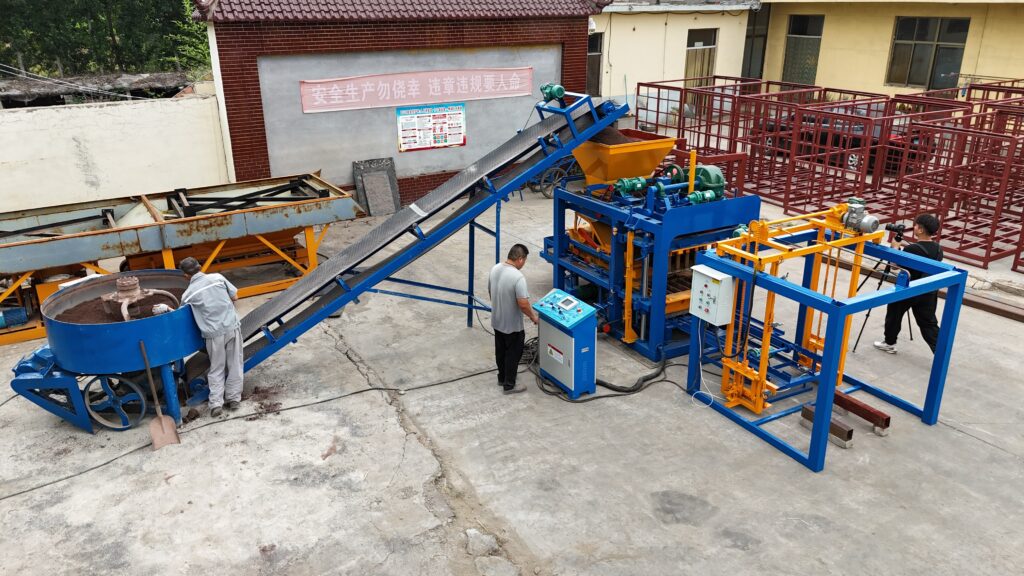
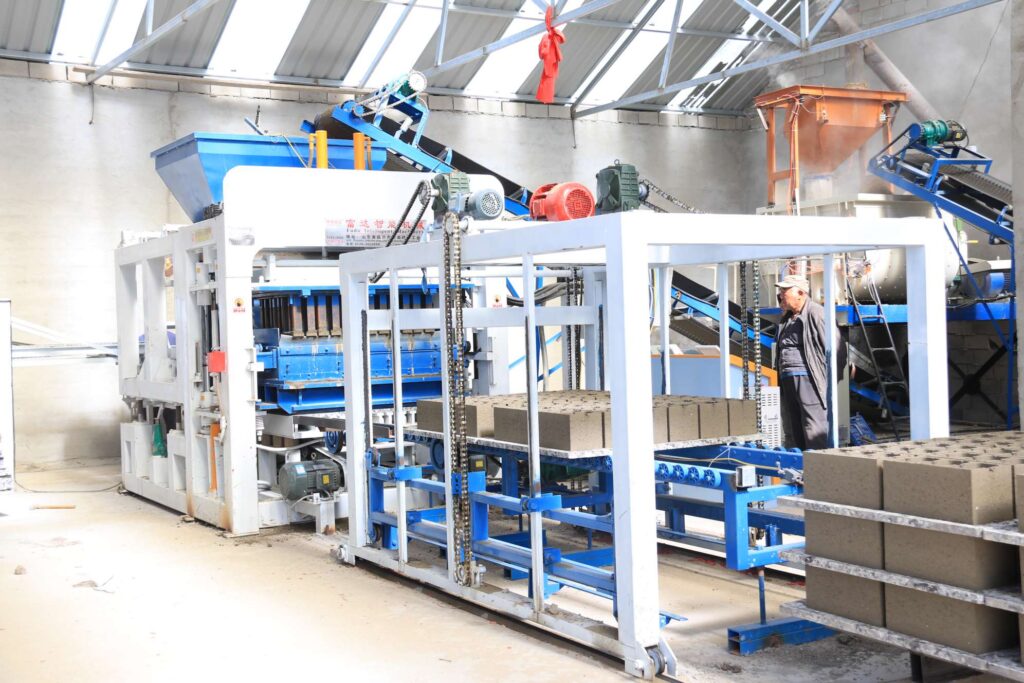
본질적으로, 수압 블록 제조기는 프레스입니다. 이 장치는 가압된 수압 유체를 이용하여 거대하고 제어 가능한 힘을 생성하며, 이 힘은 몰드 캐비티 내부의 반건식 콘크리트 혼합물을 다지기 위해 적용됩니다. 이 공정은 완전한 충전 및 공기 제거를 보장하기 위해 진동으로 보강됩니다. 이 기계의 작동 원리는 상호 의존적인 네 가지 하위 시스템을 살펴보면 이해할 수 있습니다.
- 구조적 프레임:견고한 골격은 일반적으로 고장력 강판으로 제작되어 기초를 형성합니다. 이는 유압 프레스와 진동 시스템 양쪽으로부터 발생하는 막대한 반복 하중을 휨 없이 견뎌내어 일관된 정렬과 제품 치수를 보장해야 합니다.
- 유압 동력 장치(HPU):기계의 심장입니다. 전기 모터, 유압 펌프, 밸브, 액추에이터(실린더), 오일 탱크, 필터, 냉각 시스템으로 구성됩니다. 전기 에너지를 제어된 유체 동력으로 변환합니다.
- 곰팡이 및 진동 시스템:금형과 동적 코어. 여기에는 중형 진동 테이블에 장착된 금형 상자(속이 빈 블록용 마모 라이너와 코어 로드 포함)가 포함되며, 이는 고주파 전기 진동기 모터로 구동됩니다.
- 전자 제어 시스템:기계의 두뇌. 프로그래머블 로직 컨트롤러(PLC)는 센서와 작업자 명령으로부터 입력을 받아, 프로그램된 순서에 따라 유압 밸브를 작동시키고 진동 타이밍을 제어하며, 전체 생산 사이클을 정밀하게 관리합니다.
생산 사이클: 단계별 분석
기계는 반복적이고 자동화된 사이클로 작동합니다. 각 단계는 하위 시스템들 간의 정밀하게 연출된 상호작용입니다.
1단계: 금형 준비 및 사출
- 프로세스:진동 테이블에 고정된 빈 몰드 박스는 공급 호퍼 아래에 위치시킵니다. 동시에 팔레트(목재 또는 강철)가 몰드 캐비티 아래로 운반되어 제자리에 놓입니다. 정확히 계량된 반건식 콘크리트 배합물이 호퍼에서 몰드로 투입됩니다. 이는 일반적으로 몰드 개구부를 가로지르는 공급 서랍이나 회전식 공급 드럼에 의해 수행됩니다.
- 하위 시스템 역할:
- 유압공학:一个小型液压缸驱动进给机构。
- 조작 방법:PLC는 팔레트가 정확한 위치에 있는지 확인하고, 미리 설정된 시간 또는 사이클 수 동안 공급 시퀀스를 작동시켜 올바른 혼합량을 달성합니다.
단계 2: 1차 다짐 및 진동
- 프로세스:이는 블록의 밀도와 강도를 확보하는 가장 중요한 단계입니다. 공급 장치가 후퇴하고, 혼합물이 채워진 몰드가 프레스 스테이션으로 이동합니다(또는 프레스 헤드가 몰드 위로 이동합니다). 두 가지 동작이 동시에 이루어집니다.
- 더진동 테이블이 작동합니다.금형에 고주파, 저진폭의 진동을 보내 콘크리트 혼합물을 유동화시켜 입자가 밀집하게 정착되고 갇힌 공기를 배출하게 합니다.
- 더메인 유압 압축 실린더开始其向下运动。压实头(或冲头)进入模具型腔,对振动中的混合物施加巨大的压力——通常以数百吨计。
- 하위 시스템 역할:
- 유압공학:主泵向大口径压实油缸输送高压油液。溢流阀和控制阀将压力调节至预设值,该值对确保产品密度一致性至关重要。
- 진동 시스템진동 모터는 종종 조정 가능한 주파수와 함께 전원이 공급됩니다.
- 조작 방법:PLC는 진동과 프레스 하강의 시작을 동기화합니다. 설정된 "머무름 시간"(예: 2-5초) 동안 고압을 유지하여 완전한 압축을 보장합니다.
3단계: 금형 분리 및 블록 배출
- 프로세스:체류 시간이 지나면 압축 헤드가 후퇴합니다. 그런 다음 금형 박스가 유압식 스트리핑 실린더에 의해 수직으로 들어 올려집니다. 금형이 올라가면서 팔레트에 부착된 완전히 압축된 블록이 드러나며, 팔레트 위에 정지 상태를 유지합니다. 정밀 가공된 "스트리퍼 슈"가 블록의 상단 표면을 부드럽게 잡아 금형에서 깨끗하게 분리되도록 도울 수 있으며, 특히 깊은 코어가 있는 복잡한 형상의 경우에 유용합니다.
- 하위 시스템 역할:
- 유압공학:주 실린더가 후퇴합니다. 분리된 탈형 실린더가 전체 금형 조립체를 들어 올립니다.
- 조작 방법: The PLC sequences the retraction and stripping actions, often with pressure monitoring to ensure smooth release.
Phase 4: Pallet Ejection and Reset
- 프로세스: The pallet carrying the fresh “green” block is conveyed out of the machine, typically onto a roller conveyor leading to a curing area. Simultaneously, a new empty pallet is fed into position from a pallet magazine or stack. The mold box lowers back onto the vibration table, resetting the machine for the next cycle.
- 하위 시스템 역할:
- 유압공학: Small cylinders or hydraulic motors may drive the pallet conveyor system.
- 조작 방법: The PLC manages the pallet indexing, ensuring precise positioning for the next feed cycle.
Advanced Functional Capabilities
Modern hydraulic block machines incorporate features that enhance their versatility and efficiency beyond this basic cycle.
- Multi-Stage Pressing: For optimal density, some machines use a multi-stage pressing profile. An initial pre-pressing at lower pressure organizes the mix, followed by a final high-pressure compaction. This can improve strength and surface finish, especially for deep or complex molds.
- Proportional Hydraulics and Pressure Control: Advanced machines use proportional valves that allow for infinitely variable control of cylinder speed and pressure during the stroke. This enables smoother acceleration and deceleration, reducing shock loads and enabling complex press profiles for different products.
- Closed-Loop Vibration Control: Sophisticated systems monitor vibration frequency and amplitude in real-time, making automatic adjustments to account for changes in load (mix weight) or component wear, ensuring consistent compaction energy in every cycle.
Strategic Advantages for Manufacturers
Understanding the 어떻게 illuminates the 왜—the tangible benefits this technology delivers to the end-user, which form the core of the sales narrative.
- 우수한 제품 밀도와 강도 The combination of high static pressure and vibration produces blocks with exceptionally low void content, translating directly to higher compressive strength, better durability, and lower water absorption.
- Exceptional Dimensional Accuracy and Surface Finish: The rigid frame and controlled, linear action of the hydraulic press produce blocks with tight tolerances and smooth, well-defined surfaces, critical for architectural applications and precise masonry work.
- 재료 유연성: The immense pressing force can effectively compact a wider range of mix designs than other methods, including those with lower cement content, marginal aggregates, or high percentages of recycled materials (e.g., fly ash, crushed concrete).
- Process Control and Consistency: Every parameter—pressure, dwell time, vibration duration—is digitally set and replicated exactly for every cycle. This eliminates operator-dependent variability, guaranteeing uniform product quality from the first block to the ten-thousandth.
- Operational Durability: When properly maintained, hydraulic systems are incredibly robust and capable of millions of cycles. The separation of the power generation (HPU) from the work site (cylinders) also allows for protective enclosures, boosting longevity in harsh industrial environments.
결론
The operation of a hydraulic block machine is a masterclass in applied industrial engineering, where brute force is meticulously directed by precision control. It is not simply a matter of “squashing” concrete into a shape, but a carefully calibrated process that imparts essential physical properties to the final product. For professionals in the equipment supply chain, this deep technical understanding is transformative. It allows you to move beyond feature listings to explain cause and effect: how the closed-loop pressure control ensures every block meets strength specification; how the synchronized vibration eliminates voids; how the robust construction guarantees a decade of reliable service.
This knowledge empowers you to justify investment, troubleshoot operational challenges authoritatively, and ultimately, become a trusted advisor rather than a transactional supplier. In a market where quality and consistency are paramount, the hydraulic block machine stands as a proven technology, and your expertise in its operation becomes a critical component of your client’s success. The machine works by transforming fluid power and vibration into precision building blocks; you, in turn, transform technical insight into commercial trust and long-term partnership.
FAQ
Q1: Why is the “dwell time” under full pressure so important?
A: Dwell time is critical for stress relaxation within the compacted concrete. When pressure is first applied, the mix particles rearrange and compress. Maintaining the pressure for a few seconds allows internal friction to be overcome and any remaining air to be expelled, resulting in a more homogeneous, stable, and stronger final product. Insufficient dwell time can lead to lower strength and potential lamination or cracking.
Q2: How does the hydraulic system manage the tremendous force without damaging itself?
A: It is designed with significant safety margins and protective features. Key elements include:
- Pressure Relief Valves: These are set to a maximum safe pressure and will open to divert fluid back to the tank if this limit is exceeded, preventing component failure.
- Overload (Cushioning) Designs: Cylinders often have built-in cushioning at the end of their stroke to decelerate the massive moving parts smoothly, preventing damaging impact.
- Robust Components: Tubes, hoses, fittings, and cylinders are rated for pressures far exceeding normal operating ranges. Regular maintenance of fluid cleanliness and seal integrity is vital to preserve this safety margin.
Q3: What are the most common maintenance requirements specific to the hydraulic system?
A: Hydraulic system reliability hinges on proactive maintenance:
- Fluid Condition: Regular checks and changes of hydraulic oil per the manufacturer’s schedule are paramount. Oil degrades from heat, contamination, and oxidation.
- Filtration: Regularly replacing inlet and pressure filter elements prevents abrasive particles from damaging pumps, valves, and cylinder seals.
- Seal Inspection: Monitoring for external leaks and investigating drops in system pressure can indicate worn seals that need replacement before they fail catastrophically.
- Cooling: Ensuring the oil cooler (air or water) is functioning to prevent overheating, which accelerates oil degradation.
Q4: Can the machine’s pressure be adjusted for different products, and what is the effect?
A: Yes, and this is a fundamental advantage. The compaction pressure is a key parameter stored in the PLC’s product “recipe.” For example:
- High-Street Pavers: Require very high pressure (e.g., 180-220 bar) for maximum density and wear resistance.
- Lightweight Horticultural Blocks: Require lower pressure (e.g., 100-130 bar) to achieve the required shape without crushing lightweight aggregates.
Adjusting pressure directly controls the block’s density and, consequently, its compressive strength and weight.
Q5: How does a hydraulic machine compare energy-wise to a strong vibro-compression machine?
A: Traditionally, hydraulic machines had higher energy consumption due to the continuous operation of the hydraulic pump against pressure. However, modern designs have closed this gap significantly through:
- Variable Displacement Pumps: These only deliver the flow and pressure needed for the current action, idling at low power during pauses.
- Energy-Saving Circuits: Systems that recover energy during cylinder retraction or use accumulators to store energy.
- Efficient Motor & Pump Packages.
While a top-tier hydraulic machine may still consume more than a basic vibro-compressor, the difference is much smaller than before, and the payoff is in superior product quality, material flexibility, and control. The energy cost per block is often competitive when total output and quality are factored in.