
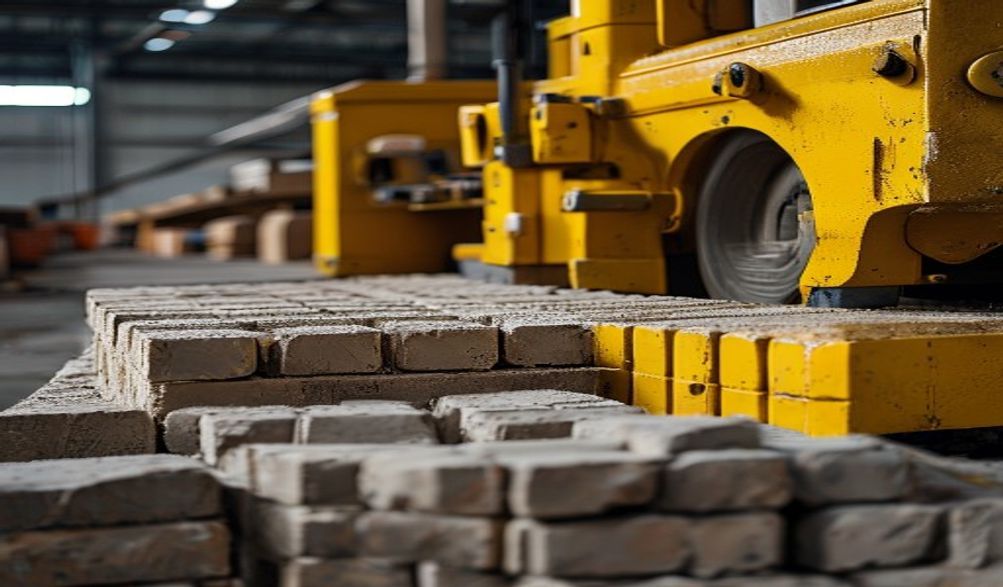
반자동 벽돌 성형기 선택 방법: 최종 구매자 가이드
당신은 중대한 결정을 내렸습니다: 벽돌 제조 사업을 시작하거나 업그레이드하기로 한 것입니다. 사전 조사를 마쳤으며, 순수 수작업이나 완전 자동 시스템의 큰 투자에 비해 반자동 기계가 향상된 생산량, 일관된 품질, 그리고 관리 가능한 비용이라는 이상적인 균형점을 제공한다는 것을 알고 있습니다.
하지만 그러다 보면 시장을 살펴보게 됩니다. 수십 가지 모델, 상충되는 기술 사양, 그리고 각자 최고라고 약속하는 브랜드의 바다. 정보의 양이 너무 방대해 압도당할 수 있습니다. 어떻게 소음을 뚫고오른쪽수익을 위한 신뢰할 수 있는 엔진이 될 기계—끊임없는 고장과 병목 현상의 원인이 아닌 기계를 찾고 계신가요?
이 가이드는 여러분의 확실한 로드맵이 되도록 설계되었습니다. 수년간의 업계 경험, 엔지니어링 컨설팅, 그리고 성공적인 운영을 성공으로 이끄는 요소를 분석하여 집대성한 이 가이드는 단순히 가격만으로 기계를 선택하는 치명적인 실수를 피할 수 있도록 도와줍니다. 잘못된 선택은 벽돌 품질의 불균일, 생산량 부족, 그리고 심각한 재정적 압박으로 이어질 수 있습니다.
이 글을 다 읽고 나면 명확하고 실행 가능한 프레임워크를 갖추게 될 것입니다. 자신의 필요를 평가하고, 전문가처럼 기술적 특징을 분석하며, 실제 비용을 계산하고, 비즈니스 목표에 완벽히 부합하는 반자동 벽돌 제조 기계를 선택하는 방법을 정확히 알게 될 것입니다. 먼저 자신의 운영에 초점을 맞추는 것부터 시작해 보겠습니다.
고객의 니즈와 비즈니스 목표를 이해하기
The most common error buyers make is starting with the machine’s specifications. The correct starting point is your own business plan. This self-assessment ensures you invest in capability, not just hardware, building a foundation for long-term success.
제작 요건 정의하기
Your machine’s capacity must match your market demand, both present and future. Think in concrete terms.
- Calculate Output Needs: Don’t guess. Look at current orders, project future contracts, and understand your local market’s demand. Do you need 2,000 bricks per day or 10,000? Be realistic about your sales pipeline.
- Understand “Cycles Per Hour”: Manufacturers often state a “cycle time” (e.g., 20-45 seconds). A cycle produces one mold of bricks (like 4, 6, or 10 bricks). Calculate: (3600 seconds/hour / cycle time) x bricks per cycle = theoretical hourly output. This is a starting point.
- Factor in Realistic Operations: Theoretical output assumes perfect, continuous operation. In reality, you must account for:
- Loading time for raw materials.
- Mold changes for different products.
- Pallet handling and brick removal.
- Worker breaks and minor stoppages.
- A sustainable 8-hour shift output is typically 60-70% of the theoretical maximum. Plan your machine size accordingly.
- Consider if you’ll run a single or double shift. Choosing a machine that can comfortably exceed your single-shift needs gives you room to grow without immediate reinvestment.
Identifying Your Brick Types and Specifications
Not all machines make all bricks. Your product line dictates your machine requirements.
- 일반적인 제품 유형:
- Solid/Hollow Blocks:구조용 벽체.
- 포장 벽돌 (포장 블록):차도, 산책로, 테라스용.
- 인터록킹 브릭스:드라이스택 건설을 위한 모르타르 사용량 절감
- Curbstones & Landscape Products: For borders and decorative elements.
- The Critical Role of Molds: The mold is what defines your brick. Key considerations include:
- Compatibility: Ensure the machine you choose has readily available, well-designed molds for your desired products.
- 맞춤 설정: Can the supplier create a custom mold for a unique design? What is the cost and lead time?
- 신속 교체 시스템: How easily can you swap molds? A system that allows changeover in minutes maximizes flexibility and productivity.
- Market Standards: Know the required dimensions, density (kg/cm³), and 압축 강도 (measured in N/mm² or MPa) for your target customers. Residential projects have different standards than commercial or municipal ones. Your machine must be capable of producing bricks that meet these specifications consistently.
원자재 가용성 분석
Your machine must work with what you have locally; you shouldn’t have to import expensive materials.
- 재료 유연성: A good semi-automatic machine should handle a variety of mixes:
- Cement-stabilized soil.
- Fly ash (a eco-friendly and cost-effective option).
- Crushed stone dust/sand.
- Quarry waste.
- Concrete aggregates.
- 전처리 필요 사항: Assess your raw materials. Do they require crushing, sieving, or consistent grading? The machine’s mixer must homogenize your specific mix effectively. The ideal moisture content for optimal compaction is also crucial; some materials may need pre-drying or slight wetting.
Key Technical Features to Evaluate
Now that you know 뭐 you need to produce, you can intelligently evaluate 어떻게 a machine achieves it. This is where technical expertise matters.
Machine Capacity and Output
Decoding the model numbers and claims is your first step.
- Understanding Model Numbers: Often, they reveal key specs. For example, a “QM4-45” often signifies:
- QM: Machine Type.
- 4: Number of standard blocks produced per cycle.
- 45: Approximate cycle time in seconds.
- Sustainable vs. Theoretical Output: Always ask the supplier for the realistic, daily production output under normal working conditions for the specific brick type you want to make. This number is far more valuable than the peak theoretical speed.
Power Source and Consumption
Your location and operating costs are defined by this choice.
- 전기 모델: Most common. They are cleaner, quieter, and have lower per-hour running costs. Crucially, check voltage: Single-phase (220V) is suitable for smaller machines and areas without industrial power. Three-phase (380V/415V) is required for most medium to large machines and provides more stable, powerful operation.
- 디젤 모델: Offer complete independence from the electrical grid, ideal for remote sites or areas with unreliable power. However, fuel costs are higher, and they require more maintenance (oil, filters) and produce exhaust.
- Hybrid Models (Electric/Diesel): Offer the flexibility to switch between power sources, providing a valuable backup but at a higher initial cost.
- Calculate Operating Cost: Factor in your local electricity tariff or diesel price. A slightly more expensive but energy-efficient machine can save thousands over its lifespan.
Automation Level and Ease of Operation
“Semi-automatic” covers a wide spectrum. Understand what automation is included.
- Core Definition: In a semi-automatic machine, the core processes—vibration, compaction, and often mold lifting—are powered and automatic. The feeding of raw material into the hopper and the handling of pallets/bricks are typically manual.
- Labor-Saving Features: Look for options that bridge the gap towards higher efficiency:
- Automatic Mixing Feeder: Ensures a consistent, measured amount of mix is delivered to the mold chamber, improving brick consistency and speed.
- 컨베이어 벨트: To move raw material to the hopper or move away finished bricks.
- 유압 시스템: Provide more consistent and powerful compression than purely mechanical lever systems, leading to denser, stronger bricks with less operator effort.
- Control Panel & Usability: The interface should be intuitive. Clear controls for vibration time, hydraulic pressure, and safety cut-offs are essential. Well-labeled, robust buttons/levers are a sign of good design.
Build Quality and Core Components
This is where cheap machines cut corners, leading to premature failure. Inspect these parts with a critical eye.
- 프레임과 구조 The machine’s skeleton must be heavy-duty steel (minimum 8-12mm thick channels and plates), welded with precision. A lightweight frame will flex under load, causing misalignment, poor brick quality, and rapid wear. It must withstand constant, powerful vibration.
- 진동 모터:이것은heart of the machine. It creates the density. Key factors:
- Power (KW): More power generally means better compaction for denser bricks.
- 빈도 Affects the compaction characteristics for different mixes.
- Brand & Quality: Reputable, industrial-grade motors (from known brands) last longer and perform consistently. Ask for the motor brand and specifications.
- 유압 시스템: If the machine is hydraulic, the system’s quality is paramount.
- 압력 용량 Higher pressure allows for stronger compaction.
- Pump & Valve Quality: Branded components (e.g., Rexroth, Yuken) are more reliable.
- Seals & Hoses: High-quality seals prevent leaks, which are a major maintenance headache.
- 곰팡이: They endure immense abrasion and pressure.
- 강재 등급:찾아보세요high-carbon, hardened, and often chromium-plated steel. This resists wear and ensures a smooth brick finish.
- Machining Precision: Molds must be machined to exact tolerances for consistent brick dimensions.
- 유지보수 용이성: Should be designed for easy cleaning and replacement of wear parts.
Beyond the Machine: Total Cost of Ownership
The invoice price is just the entry ticket. A truly informed decision requires a holistic financial view.
초기 투자 대비 장기적 가치
- Complete Price Breakdown: A quotation should itemize:
- Base machine cost.
- Cost of the initial set of molds.
- Standard spare parts kit (springs, seals, bolts).
- Optional but critical accessories (pan mixer, pallet feeder, brick cart/stacker).
- Shipping and insurance costs.
- The False Economy Warning: The cheapest machine often becomes the most expensive. It may have inferior components that break down frequently, halting production. Downtime costs you lost orders, idle labor, and urgent repair bills. Investing 20% more upfront in a robust machine from a reputable supplier almost always yields a higher return on investment.
운영 및 유지 비용
- 노동 A typical semi-automatic setup requires 3-5 workers for optimal efficiency (feeding, operating, pallet handling, curing yard management). A well-designed machine with good ergonomics can reduce this number.
- Routine Maintenance: Ask for the recommended maintenance schedule. Regular lubrication, bolt tightening, and filter changes are essential. Factor in the cost of lubricants and routine spare parts.
- Spare Parts Availability & Cost: This is a critical trust signal. Before buying, ask for a list of common spare parts and their prices. Are they readily available from the supplier? Are they proprietary (expensive, locked to one supplier) or standard industrial components (easily sourced locally)? Long lead times for parts can cripple your business.
Supplier Evaluation and After-Sales Support
Your relationship with the supplier is as important as the machine itself.
- Manufacturer Reputation: Research how long they have been in business. Look for client testimonials, videos of working installations, and their presence at industry exhibitions.
- Non-Negotiable Support Services:
- 설치 및 시운전: Does the price include an engineer to supervise installation, level the machine, and commission it on your site?
- 종합 훈련 They must provide thorough, hands-on training for your operators and maintenance staff on-site.
- 상세 매뉴얼 Clear manuals in your language (parts manual, operation manual, maintenance guide) are essential.
- 보증 약관: Read the fine print. What is covered (parts, labor)? For how long? What is excluded? A 12-month warranty on core components is standard for reputable brands.
- 지역 서비스 네트워크 Is there a trained technician or service partner within a reasonable distance? For urgent issues, this is invaluable.
Making the Final Decision: A Step-by-Step Checklist
Use this actionable checklist to guide your procurement process.
- Revisit Your Needs: Have your production targets, brick specifications, and raw material analysis from Section 1 written down. This is your benchmark.
- Shortlist Suppliers: Based on research, reputation, and product alignment, select 3-4 serious contenders. Avoid unknown brands with prices that seem too good to be true.
- Request Detailed Quotations: Ask each for a formal quote specifying everything: model, technical specs, mold details, accessory prices, warranty, and delivery terms.
- Check References & Visit: Ask for contact details of 2-3 clients who have used the same model for at least 6 months. Call them. If geographically possible, visit a working installation to see the machine in action and speak to the owners directly.
- Demand a Live Demonstration: Insist on seeing the machine run. Ideally, provide a sample of your own raw materials for the test. Observe brick quality, ease of operation, and build quality.
- Scrutinize the Support Contract: Compare warranty terms, training offers, and spare parts policies side-by-side.
- Finalize the Decision: Make your choice based on the best long-term value—the combination of machine quality, output reliability, and supplier partnership—not merely the lowest ticket price.
자주 묻는 질문 (FAQ)
Q: What is the average production output of a semi-automatic brick machine?
A: Output varies significantly based on the model, brick size, and operator efficiency. A small machine might produce 800-1,500 bricks in an 8-hour shift, while a large, well-optimized setup can produce 4,000-6,000 bricks or more. Always base your estimate on the supplier’s realistic daily output figure for your specific product.
Q: How much space is required to install and operate this machine?
A: You need space for more than just the machine. Consider: the machine footprint (e.g., 4m x 2m), area for raw material storage and mixing, space for fresh bricks to be stacked for initial curing (often 24-48 hours), and a large, covered area for the 2-3 week curing period. A minimum of 200-300 square meters is a good starting point for a small operation.
Q: What is the main difference between semi-automatic and fully automatic machines?
A: The key difference is in material and pallet handling. A 반자동 machine automates vibration and compression but requires manual feeding of raw material and manual removal/stacking of bricks on pallets. A 완전 자동 machine uses robotic feeders, conveyors, and automatic stackers to handle these tasks, maximizing output (10,000+ bricks/day) and minimizing labor but at a much higher initial investment and complexity.
Q: Can one machine produce different types and sizes of bricks?
A: Yes, absolutely. This is a major advantage. By changing the mold, the same machine can produce blocks, pavers, interlocking bricks, etc. The critical factors are the machine’s compatibility with different mold sizes and the ease of the mold changeover process.
Q: What are the most common problems with semi-automatic brick machines?
A: Most issues stem from poor maintenance or an unsuitable initial choice. Common problems include:
* Inconsistent brick density/strength (often due to a weak vibration motor or inconsistent feeding).
* Hydraulic oil leaks (from low-quality seals/hoses).
* Loose bolts and frames due to vibration (requires regular tightening).
* Rapid mold wear (using soft-grade steel molds).
* Electrical failures in control panels (from dust/water ingress or cheap components).
결론
Choosing a semi-automatic brick making machine is a strategic decision that will define the productivity and profitability of your venture for years to come. It’s not about finding the cheapest option, but about identifying the most capable partner for your specific business plan.
By thoroughly understanding your own production needs, critically evaluating the machine’s core components, calculating the true total cost of ownership, and vetting the supplier’s support structure, you move from a position of uncertainty to one of confident investment.
Prioritize robust build quality, reliable after-sales service, and a machine that offers room for growth. Use the step-by-step checklist provided to guide your negotiations. Do your due diligence, and you will invest in a machine that becomes a cornerstone of your success, producing not just bricks, but consistent profit and opportunity.
We wish you the very best in your brick-making venture. If you have specific questions about your raw materials or production goals, feel free to ask in the comments below for further tailored insights.
<