
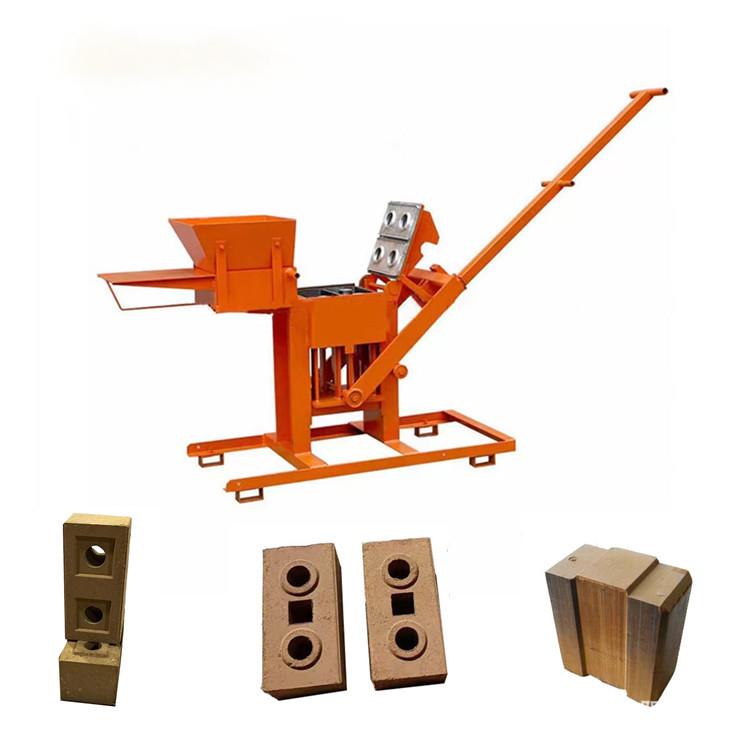
제품 정의 및 핵심 시장 포지셔닝
2.1. 다중 캐비티 수동 생산의 경제성
4개 및 6개 캐비티 기계의 근본적인 혁신은 노동 주기당 생산량의 배가에 있습니다. 단일 캐비티 프레스가 압축 주기당 하나의 블록을 생산하는 반면, 이 모델들은 단일 작업자의 동작으로 네 개 또는 여섯 개를 동시에 생산합니다. 이는 전기 동력, 복잡한 유압 장치, 또는 정교한 제어 장치를 도입하지 않고도 노동 생산성을 기하급수적으로 향상시킵니다. 경제적 모델은인간의 노력을 활용한수작업을 제한 요소에서 확장 가능하고 효율적인 생산 투입 요소로 전환합니다. 이로 인해 이 기술은 신뢰할 수 있는 전기나 상당한 초기 자본에 대한 접근이 제한되지만 노동력은 이용 가능한 지역에 특히 적합합니다.
2.2. 4-캐비티 대 6-캐비티 머신: 전략적 비교
이러한 모델 중 선택하는 것은 최종 사용자에게 있어 특정 요인에 따라 좌우되는 기초적인 비즈니스 결정입니다.
- 4-캐비티 머신:일반적으로 더 가벼워서 기계적 이점이 더 유리하여 레버 당 힘이 덜 필요합니다. 기동이 더 쉬우며 사이클 시간이 약간 더 빠르고, 보통 체력의 작업자나 레이아웃이 더 좁은 생산 공간에 이상적입니다. 처음 사업을 시작하는 소유자에게 훌륭한 시작점이 됩니다.
- 6-캐비티 머신:사이클당 출력을 극대화하여 순수 수동 시스템으로는 최고의 잠재적 일일 생산량을 제공합니다. 일반적으로 지속적인 운영을 위해서는 더 강인한 작업자나 두 명의 팀(한 명은 투입, 한 명은 압착)이 필요합니다. 이는 모터 장비로 전환하지 않고 생산량을 확장하려는 기존 소규모 기업에게 최적의 선택을 나타냅니다.
2.3. 대상 기업 정의: 소규모에서 소기업 규모의 생산자
이상적인 고객은 명확하게 정의된 상업적 틈새 시장에서 활동합니다.
- 로컬라이즈드 블록 야드:마을이나 소규모 도시 내 주거 건설용 벽돌을 공급하는 것, 외부 자재의 운송 비용이 과도하게 높은 경우.
- The Project-Specific Contractor: A builder undertaking a series of houses or a small commercial project, producing blocks on-site to ensure quality, control costs, and guarantee supply.
- The Cooperative or Community Enterprise: A group pooling resources to establish a shared asset, creating employment and supplying affordable building materials for local development.
- The Complementary Business: Existing businesses in hardware, building supplies, or agriculture diversifying into block manufacturing to capture more value from the local construction chain.
3. Technical Specifications and Operational Mechanics
3.1. Mechanical Design: Leverage, Frame Integrity, and Ejection Systems
The effectiveness of these machines hinges on robust engineering:
- Compound Leverage System: Utilizes a network of levers and pivots to amplify the operator’s input force by a factor of 15x to 30x, generating sufficient pressure (3-8 tons total over all cavities) for adequate block compaction.
- Reinforced Steel Frame: Constructed from heavy-gauge rectangular tubing and plate. The frame must resist not just downward pressure but also torsional stress during the lever stroke to maintain cavity alignment.
- Integrated Ejection Mechanism: A critical feature. After compression, a secondary lever or a cam system uniformly lifts the entire mold block, stripping all newly formed bricks from the cavities simultaneously and depositing them onto a curing pallet, ensuring consistent product release and operator safety.
3.2. The Precision Mold Block: Heart of the Multi-Cavity System
The mold block is a single, machined steel component containing the four or six cavities. Quality is paramount:
- Cavity Consistency: Each cavity must be identical in volume and dimensions to ensure uniform block size and weight.
- Interchangeable Mold Inserts: Advanced systems allow for the mold block to accept different cavity inserts (for solid blocks, hollow blocks, or different styles), significantly enhancing the machine’s versatility.
- Surface Finish and Hardening: The internal surfaces should be smooth and often hardened to reduce friction during ejection, extend service life, and improve the surface finish of the brick.
3.3. Standard Output and Real-World Production Scenarios
Output is measured in “cycles per day” and is highly dependent on the work organization:
- Cyclic Output: A skilled operator can complete a cycle (fill, press, eject, reset) in 45-75 seconds.
- 일일 생산량 A well-organized 2-person team (mixer/feeder and press operator) can realistically produce 800 to 1,500 bricks per 8-hour day with a 4-cavity machine, and 1,200 to 2,200+ bricks with a 6-cavity machine. This factors in breaks, material preparation, and pallet management.
4. Business Model and Commercial Viability Analysis
4.1. Capital Efficiency and Rapid Return on Investment (ROI)
This is the most compelling financial argument. With machine costs being a fraction of automated systems, the break-even point is exceptionally fast.
- Typical ROI Period: Can be as short as 3 to 8 months of active operation, depending on local brick prices, material costs, and production volume. This allows entrepreneurs to quickly recoup their investment and begin generating pure profit, facilitating reinvestment and business growth.
4.2. Labor Optimization and Workspace Dynamics
The business scales by adding labor teams, not expensive machinery.
- Team-Based Model: A single machine can be operated in two shifts. Multiple machines can be deployed in one workshop, each managed by a separate team, creating a scalable “hub” model.
- 최소한의 인프라 Requires only a flat, shaded area (a simple shed or open yard), basic hand tools for mixing, and access to raw materials (soil/sand, cement). No deep foundations or three-phase power connections are needed.
4.3. Versatility and Market Responsiveness through Mold Sets
The ability to produce different brick types from one machine is a powerful competitive tool.
- 제품 다각화 A producer can switch between solid bricks for foundations, hollow blocks for walls, and even decorative pavers by changing the mold inserts.
- Meeting Specific Demand: Allows the business to respond to custom orders from contractors, increasing its value and securing higher-margin work.
5. Strategic Considerations for Distribution and Sourcing
5.1. Key Procurement Criteria: Evaluating Build Quality and Safety
Distributors must scrutinize:
- Material Thickness and Welding Quality: Inspect the frame welds for penetration and consistency. Substandard materials lead to frame fatigue and failure.
- Safety Features: Ensure the machine has secure locking pins for the lever in the raised position to prevent accidental collapse, and smooth, predictable ejection action.
- Standardization of Wear Parts: Check that common wear items (pivot bushings, lever pins, ejection plates) are made from standard, replaceable materials.
5.2. The Distributor’s Value-Add: Beyond the Machine Sale
Success in this market requires a service-oriented approach:
- Bundled Start-Up Kits: Offer packages including the machine, a starter mold set, a mixing tool, a soil sieve, and a basic business guide.
- On-Site Training: Provide or facilitate hands-on training covering not just machine operation, but also optimal mix design, curing practices, and basic quality control.
- Business Networking: Connect new producers with local contractors or material suppliers, helping them launch their customer base.
5.3. Identifying and Mitigating Operational Risks for End-Users
Proactively addressing risks builds client trust:
- Risk: Inconsistent brick quality.
- Mitigation: Training on standardized mixing and consistent pressing technique.
- Risk: Physical fatigue and injury.
- Mitigation: Emphasize proper ergonomics, team rotation, and machine maintenance.
- Risk: Market saturation.
- Mitigation: Advise on product differentiation through block type, color (using pigments), or focusing on underserved local geographies.
6. 결론
The manual 4-cavity and 6-cavity brick making machine occupies a vital and economically resilient niche in the global construction materials supply chain. It democratizes manufacturing, turning determination and labor into viable enterprise. For the B2B stakeholder, distributing this technology is a partnership in economic empowerment. It offers a product with a clear, rapid value realization for the end-user, fostering client success and loyalty. By focusing on quality equipment, comprehensive support, and a deep understanding of the micro-enterprise landscape, distributors can build a profitable business that has a tangible, positive impact on local communities. In markets where agility and low overhead are paramount, these machines remain an unbeatable tool for foundational economic development and sustainable construction.
7. Frequently Asked Questions (FAQ) for B2B Partners
Q1: What is the primary mechanical advantage of a 6-cavity over a 4-cavity machine if the operator’s effort is similar?
A: The mechanical advantage (leverage ratio) is typically calibrated to make the total pressing force required feel similar to the operator, regardless of cavity count. However, the productivity advantage of the 6-cavity machine is its 50% higher output per cycle. The trade-off is often a slightly longer or more deliberate stroke, and potentially greater machine weight. The choice is not about ease of pressing, but about maximizing output for a similar level of human effort over a workday.
Q2: Can these machines produce interlocking blocks, or are they only for standard rectangular bricks?
A: They can absolutely produce interlocking blocks, provided the mold is designed for it. The precision of the interlocking features (knobs and grooves) is entirely dependent on the quality of the mold inserts. Distributors should seek manufacturers capable of supplying precise, hardened steel interlocking molds. This significantly elevates the value of the blocks produced, allowing clients to access the growing dry-stack construction market.
Q3: What is a realistic production space requirement for a client operating one of these machines?
A: A efficient workshop layout requires approximately 80 to 150 square meters. This space should be allocated for: the machine operation zone (4m x 4m), raw material storage (sand, soil, cement), a mixing area, a curing area (where blocks are stacked and kept moist for 14-28 days), and storage for finished, cured blocks. Adequate space for material flow is critical for productivity.
Q4: What are the most common points of failure or wear, and what should be included in a basic spare parts kit?
A: High-wear components include:
- Pivot Pins and Bushings: In the lever mechanism.
- Ejection Plate Guides and Rollers.
- Mold Liner Inserts (if applicable).
- Springs or Return Cables for the lever.
A starter spare parts kit offered with the machine should include duplicates of these high-wear items, standard grease, and basic tools for adjustment. This proactive approach minimizes client downtime.
Q5: As a distributor, how do we address potential concerns about labor intensity and attract modern entrepreneurs?
A: Frame the discussion around business ownership and asset control, not just manual labor. Position the machine as a low-risk, high-agility business starter kit. Highlight the rapid ROI, the independence from grid power, and the ability to directly meet local demand. Complement this by showcasing successful case studies of young entrepreneurs or women-led cooperatives who have built thriving small businesses using this model, emphasizing the economic empowerment and community respect it generates, not just the physical work involved.
