1. 서론
수동 벽돌 제조 기계는 소규모 생산에 있어 뛰어난 접근성, 경제성, 단순성을 제공하며, 글로벌 건설 장비 시장에서 중요하지만 종종 간과되는 부문을 차지하고 있습니다. 자동화 또는 반자동화 방식과 달리, 이러한 수동식 기계는 전기가 필요하지 않고, 최소한의 자본 투자로 운영할 수 있으며, 기술적 전문 지식이 전혀 필요하지 않아, 인프라가 제한된 농촌 지역의 기업가, 외딴 지역 사회, 재난 구호 프로젝트, 신흥 경제국에 필수적입니다. B2B 분야에서 활동하는 유통업체, 도매업체 및 구매자에게 수동 벽돌 제조 기계는 지속적인 수요가 있는 대량 생산, 저위험 제품 범주를 대표합니다.
2. 수동 벽돌 제작 기계의 독특한 가치 제안
2.1 완전 자동 및 반자동 모델 대비 핵심 장점
수동 벽돌 제작 기계는 가격에 민감하고 인프라가 제한된 고객의 요구에 부응하는 뚜렷한 장점으로 시장에서 두각을 나타냅니다. 유통업체와 도매업체는 이러한 독특한 판매 포인트를 강조하여 수동 모델을 고가의 대안과 차별화해야 합니다.
- 제로 파워 의존성수동 벽돌 제작 기계의 가장 큰 장점은 전기나 디젤 없이도 작동할 수 있다는 점입니다. 이는 전력망이 불안정한 지역(예: 아프리카 농촌, 동남아시아)이나 전기가 공급되지 않는 지역(예: 외딴 산간 마을, 재해 지역)에 이상적입니다. 구매자에게는 이로 인해 에너지 비용과 정전으로 인한 생산 중단 시간이 제거됩니다.
- 초저자본 투자: Manual machines are priced at $500-$3,000, a fraction of the cost of semi-automatic ($5,000-$30,000) or automatic ($50,000-$200,000) models. This low barrier to entry attracts small-scale entrepreneurs, village cooperatives, and individual builders who cannot afford expensive equipment. For distributors, this translates to a broad customer base and high sales volume.
- Simplicity and Ease of Operation: Manual brick making machines require no technical training or specialized skills. Operators can learn to load clay, compact, and demold bricks in 30 minutes or less. The absence of complex control panels, hydraulic systems, or electrical wiring reduces the risk of operator error and machine breakdowns.
- Portability and Minimal Installation: Most manual machines weigh 100-500 kg and feature a compact design, allowing for easy transportation via truck, cart, or even by hand in remote areas. They require no foundation or dedicated floor space—any flat, level surface (e.g., dirt, concrete, grass) is sufficient for operation. This portability is a key advantage for mobile brick production (e.g., construction sites in rural areas).
- Low Maintenance and Repair Costs: Manual machines have fewer moving parts (typically just a mold, compaction lever, and frame), reducing the need for maintenance. Wear parts (e.g., molds) are inexpensive ($50-$200) and easy to replace, with no requirement for specialized tools or technicians. For purchasers in regions with limited repair services, this minimizes downtime and operational costs.
- Raw Material Flexibility: Manual brick making machines can process a wide range of local materials, including clay, soil, sand, fly ash, and even construction waste. This flexibility allows purchasers to use low-cost, locally available raw materials, reducing production costs and environmental impact.
2.2 Market Segmentation: Identifying High-Potential Clients
Manual brick making machines cater to specific client segments that automated models cannot reach. Distributors and wholesalers should target these niche markets to maximize sales:
2.2.1 Rural Entrepreneurs and Small-Scale Brick Yards
- Profile: Individuals or small teams operating in rural areas, producing bricks for local construction (e.g., village homes, rural roads, small farms). They have limited capital, no access to electricity, and require low-cost, easy-to-operate equipment.
- Key Needs: Affordability, portability, and raw material flexibility. They typically produce 500-2,000 bricks per day, selling directly to local builders or construction projects.
- Sales Strategy: Position manual machines as a “business-in-a-box” solution, highlighting quick setup and low investment. Offer bundled packages with molds, raw material sieves, and basic tools to increase value.
2.2.2 Disaster-Relief Organizations and NGOs
- Profile: International aid organizations (e.g., Red Cross, UNICEF) and non-profits working in disaster-stricken areas (e.g., earthquakes, floods, hurricanes). They need fast, portable brick production to build temporary shelters, schools, and clinics.
- Key Needs: Rapid deployment, no power requirement, and durability. Manual machines can be shipped in small containers and set up within hours of arrival.
- Sales Strategy: Emphasize the machine’s portability and quick production (15-20 seconds per brick). Offer bulk discounts for large orders and provide training materials for aid workers.
2.2.3 Remote Construction Projects
- Profile: Construction companies or government agencies working on projects in remote areas (e.g., rural road construction, forestry camps, mining sites) with no access to electricity or brick suppliers.
- Key Needs: Mobile production, low transportation costs, and minimal setup. Producing bricks on-site eliminates the need to transport bricks from distant yards, saving time and money.
- Sales Strategy: Highlight the machine’s portability and ability to produce bricks at the construction site. Offer custom mold sizes to match project requirements (e.g., road paving bricks, retaining wall blocks).
2.2.4 Artisanal and Custom Brick Producers
- Profile: Small-scale producers creating decorative or custom-shaped bricks (e.g., textured bricks, colored bricks, traditional-style bricks) for high-end residential or heritage restoration projects.
- Key Needs: Mold customization, precision, and low production volume flexibility. Manual machines allow for hands-on quality control, ensuring each brick meets custom specifications.
- Sales Strategy: Promote interchangeable custom molds and the ability to produce small batches (100-500 bricks) without wasting materials. Target architects, heritage restoration firms, and boutique construction companies.
2.2.5 Educational and Training Institutions
- Profile: Vocational schools, technical colleges, and training centers teaching brick making skills in developing countries. They need durable, easy-to-operate machines for student training.
- Key Needs: Safety, simplicity, and affordability. Manual machines have no moving parts that can cause injury, making them ideal for classroom use.
- Sales Strategy: Offer educational discounts and provide training manuals in local languages. Position machines as a tool to empower students with income-generating skills.
2.3 Global Market Demand: High-Growth Regions
Manual brick making machines have strong demand in regions with limited infrastructure, low income levels, and growing construction needs. Distributors and wholesalers should focus on these high-potential markets:
2.3.1 Sub-Saharan Africa
- Demand Drivers: Rapid population growth (projected to reach 2.5 billion by 2050), rural-to-urban migration, and a shortage of affordable housing. Over 60% of the population lives in rural areas with no access to electricity, making manual machines the only viable option for brick production.
- Key Markets: Nigeria, Ethiopia, Kenya, Tanzania, and Ghana. These countries have large rural populations and government initiatives to build affordable housing and rural infrastructure.
- Sales Tips: Partner with local NGOs and government agencies to distribute machines. Offer payment plans (e.g., weekly installments) to address low purchasing power.
2.3.2 South Asia
- Demand Drivers: Abundant clay and soil resources, a large informal construction sector, and government programs to build rural housing (e.g., India’s Pradhan Mantri Awas Yojana). Countries like India and Bangladesh have millions of small-scale brick makers using manual methods.
- Key Markets: India, Bangladesh, Pakistan, and Nepal. These markets have high demand for low-cost brick making machines to replace traditional manual molding (which is labor-intensive and produces inconsistent bricks).
- Sales Tips: Offer molds in local brick sizes (e.g., India’s standard brick: 230×115×75mm). Highlight the machine’s ability to increase production by 50% compared to traditional methods.
2.3.3 Southeast Asia
- Demand Drivers: Rural development projects (e.g., Vietnam’s 新农村建设,Indonesia’s Village Development Program) and disaster-relief efforts (e.g., typhoon-prone Philippines, flood-prone Cambodia).
- Key Markets: Vietnam, Indonesia, Philippines, and Cambodia. These countries have large rural populations and frequent natural disasters, creating sustained demand for manual brick making machines.
- Sales Tips: Emphasize the machine’s portability for disaster relief. Offer dual-purpose molds (e.g., bricks and paving stones) to increase versatility.
2.3.4 Latin America and the Caribbean
- Demand Drivers: Rural poverty (over 40% of the population lives in rural areas), limited access to electricity in remote regions, and a growing informal construction sector.
- Key Markets: Brazil, Mexico, Colombia, and Haiti. Haiti, in particular, has high demand for manual machines due to ongoing reconstruction efforts after natural disasters.
- Sales Tips: Partner with local construction cooperatives to promote machines. Offer training workshops to demonstrate production efficiency.
2.3.5 Central Asia and the Caucasus
- Demand Drivers: Rural infrastructure development (e.g., road construction, water supply projects) and a large agricultural sector requiring farm buildings.
- Key Markets: Afghanistan, Uzbekistan, Tajikistan, and Kyrgyzstan. These countries have mountainous regions with no electricity, making manual machines essential for brick production.
- Sales Tips: Highlight the machine’s ability to process local soil and clay. Offer durable models designed to withstand harsh weather conditions (e.g., extreme cold, dust).
3. Technical Specifications and Sourcing Considerations
3.1 Core Components of Manual Brick Making Machines
Manual brick making machines have a simple design, but the quality of components directly impacts durability and performance. Distributors and purchasers should evaluate these key components when sourcing machines:
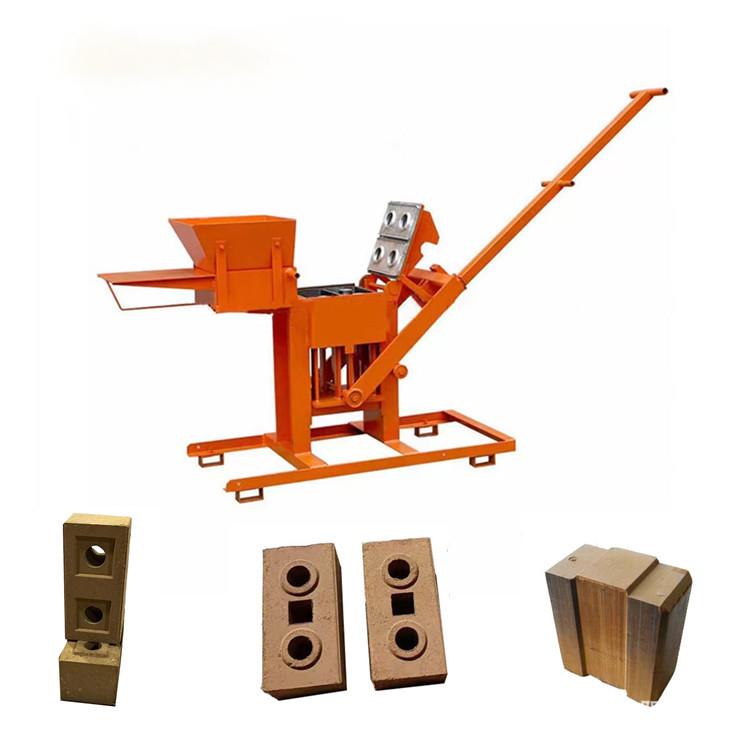
- Frame: The frame is the backbone of the machine, providing stability during compaction. It should be made of high-grade steel (preferably 3-5mm thick) to withstand the pressure of manual lever operation. Welded joints should be strong and free of cracks to prevent breakage.
- Mold: The mold determines the size, shape, and quality of the bricks. It should be made of wear-resistant material (e.g., mild steel, aluminum, or cast iron) to withstand repeated compaction. Molds should be interchangeable, allowing purchasers to produce different brick sizes (e.g., standard, hollow, interlocking) by changing the mold.
- Compaction Lever: The lever is used to apply pressure to the clay, compacting it into the mold. It should be made of solid steel with a comfortable grip to reduce operator fatigue. The lever’s length (typically 1-1.5 meters) should provide sufficient mechanical advantage to achieve compaction pressure of 5-10 MPa (required for strong bricks).
- Base Plate: The base plate supports the mold and provides a stable surface for brick demolding. It should be flat and rigid, with non-slip feet to prevent the machine from moving during operation.
- Clay Feeding Hopper: Some manual machines feature a small hopper to guide clay into the mold, ensuring uniform filling. The hopper should be made of lightweight material (e.g., aluminum) for easy cleaning.
3.2 Key Technical Specifications to Evaluate
When sourcing or investing in manual brick making machines, B2B stakeholders should compare these critical specifications to ensure quality and performance:
| 사양 | Minimum Standard | High-Quality Standard |
|---|---|---|
| Production Capacity (Bricks/Day) | 500-800 | 1,500-2,000 |
| Compaction Pressure | 5-7 MPa | 8-10 MPa |
| Mold Size Compatibility | Standard Brick (240×115×57mm) | Standard + Custom Sizes (Hollow, Interlocking) |
| 기계 무게 | 100-200 kg | 300-500 kg (More Stable) |
| Frame Material | 2-3mm Steel | 4-5mm Steel (Welded) |
| Mold Material | Mild Steel | Cast Iron/Aluminum (Wear-Resistant) |
| Lever Length | 1.0 Meter | 1.2-1.5 Meters (Better Mechanical Advantage) |
| Demolding Mechanism | Manual Lift | Spring-Assisted (Easier Demolding) |
| Raw Material Moisture Range | 20-25% | 15-22% (Wider Flexibility) |
| Brick Compressive Strength (After Curing) | 5-8 N/mm² | 10-12 N/mm² |
3.3 Raw Material Compatibility and Preparation
Manual brick making machines are flexible with raw materials, but proper preparation is essential for high-quality bricks. Distributors should educate purchasers on raw material requirements:
- Clay/Soil: The ideal raw material is plastic clay or loamy soil with a particle size of less than 2mm. Soil with high sand content (over 30%) may require the addition of clay to improve plasticity. Soil with organic matter (over 5%) should be dried and sieved to remove debris.
- Moisture Content: Raw materials should have a moisture content of 15-22%. Too much moisture (over 25%) causes bricks to crack during drying; too little (under 15%) reduces compaction and brick strength. Operators can test moisture content by squeezing a handful of clay—if it holds its shape without crumbling or oozing water, it is suitable.
- Additives: To improve brick strength and durability, purchasers can add small amounts of cement (5-10% of raw material weight), lime (3-5%), or fly ash (10-15%). These additives are optional but recommended for bricks used in load-bearing structures.
- Preparation Process: Raw materials should be sieved to remove stones, roots, and other impurities (using a 2mm sieve). They should then be mixed with water to achieve the correct moisture content, either by hand or with a small mixing tool.
3.4 Quality Control and Testing
To ensure the reliability of manual brick making machines, distributors and purchasers should conduct simple quality tests before and after purchase:
- Visual Inspection: Check for cracks, loose welds, or bent components in the frame and lever. The mold should be free of dents and have smooth inner surfaces (to prevent brick sticking).
- Compaction Test: Produce a sample brick and test its compressive strength after 7 days of natural curing. The brick should withstand a load of at least 5 N/mm² (can be tested using a simple compression tool or by stacking bricks until failure).
- Dimensional Accuracy: Measure the length, width, and height of sample bricks. Variations should be within ±2mm to ensure consistency during construction.
- Durability Test: Immerse a cured brick in water for 24 hours. It should not disintegrate or lose more than 10% of its weight, indicating good water resistance.
3.5 Sourcing Reliable Manufacturers
Distributors and wholesalers must partner with reliable manufacturers to ensure product quality and timely delivery. Key factors to evaluate when selecting a manufacturer:
- Production Experience: Manufacturers with 3+ years of experience in manual brick making machines have a proven track record of quality. Avoid new manufacturers with no client references.
- Quality Control Processes: Manufacturers should conduct strict quality checks (e.g., frame welding inspection, mold dimensional accuracy testing) before shipping. Ask for sample bricks produced by the machine to evaluate quality.
- Customization Capabilities: Manufacturers should offer custom mold sizes and designs to meet regional brick standards (e.g., local sizes in India, Africa, or Southeast Asia).
- Lead Time: Standard models should have a lead time of 1-2 weeks; custom models should take 3-4 weeks. Avoid manufacturers with lead times exceeding 6 weeks, as this can delay sales.
- After-Sales Support: Manufacturers should provide a warranty (at least 6 months for frame and lever, 3 months for molds) and offer replacement parts at competitive prices.
4. Business Strategy for Distributors and Wholesalers
4.1 Pricing and Profitability Analysis
Manual brick making machines offer attractive profit margins for distributors and wholesalers, thanks to low manufacturing costs and high demand. A typical pricing structure:
- Manufacturer Cost: $200-$800 per machine (depending on quality and components).
- Distributor/Wholesaler Markup: 100-150% (resulting in a selling price of $400-$2,000 per machine).
- Profit Per Unit: $200-$1,200 per machine.
For high-volume sales (e.g., 100 machines per month), annual profits can exceed $240,000-$1.44 million. Distributors can increase profitability by:
- Bundling Products: Offer packages including the machine, 2-3 extra molds, a sieve, and a mixing tool. Bundle prices can be 15-20% higher than individual product prices, increasing average order value.
- Spare Parts Sales: Molds, lever handles, and base plates are wear parts that need replacement every 6-12 months. Distributors can sell these parts at a 200-300% markup, generating recurring revenue.
- Training and Consulting Services: Offer paid training workshops (e.g., $50-$100 per participant) to teach operators about raw material preparation, brick curing, and machine maintenance. This adds value and increases customer loyalty.
4.2 Marketing and Sales Tactics
To succeed in selling manual brick making machines, distributors and wholesalers should use targeted marketing and sales tactics:
- Local Partnerships: Collaborate with local NGOs, government agencies, and construction cooperatives to distribute machines. These partners have existing networks in rural areas and can promote the machines to potential clients.
- Trade Shows and Expos: Participate in regional construction equipment trade shows (e.g., AfricaBuild, India Build Tech, Vietnam Construction Expo) to showcase the machines. Offer live demonstrations to let potential clients test the equipment.
- Digital Marketing: Use social media (Facebook, WhatsApp, YouTube) to target rural entrepreneurs and small-scale builders. Create short videos demonstrating the machine’s operation, production speed, and brick quality. Use local languages in marketing materials to increase engagement.
- Field Demonstrations: Organize field days in rural areas to demonstrate the machine to a group of potential clients. Provide free sample bricks and allow attendees to operate the machine themselves. This hands-on experience builds trust and increases sales.
- Payment Plans: Offer flexible payment plans (e.g., 50% down payment, 50% on delivery; or weekly installments over 3-6 months) to address low purchasing power in developing markets. Partner with local microfinance institutions to provide loans to clients.
4.3 Supply Chain and Logistics Management
Manual brick making machines are lightweight and compact, making logistics manageable. Key considerations:
- Packaging: Machines should be packaged in sturdy cardboard boxes or wooden crates to prevent damage during shipping. Include foam padding around the frame and mold to protect against impact.
- Shipping Methods: For international sales, use sea freight (cost-effective for bulk orders) or air freight (fast for small orders or emergency shipments). For local sales, use trucks or motorcycles to deliver machines to rural areas.
- Customs Compliance: Familiarize yourself with import regulations in target markets (e.g., customs duties, certification requirements). Most countries classify manual brick making machines as “hand tools” or “small construction equipment,” resulting in low or no import duties.
- Local Warehousing: Establish small warehouses in key markets (e.g., Nigeria, India, Kenya) to store machines and spare parts. This reduces delivery time and shipping costs for local clients.
4.4 Scaling into Global Markets
For distributors looking to expand internationally, consider these strategies:
- Regional Representatives: Hire local representatives in target markets to promote the machines, handle sales, and provide after-sales support. Local representatives understand regional market dynamics and can build trust with clients.
- Product Localization: Adapt the machine to regional needs (e.g., smaller sizes for easy transportation in mountainous areas, larger levers for operators with limited strength). Offer molds in local brick sizes and designs.
- Government Contracts: Bid on government tenders for rural development projects, affordable housing programs, or disaster relief. Governments in developing countries often purchase manual brick making machines in bulk to distribute to rural communities.
- NGO Partnerships: Partner with international NGOs (e.g., Oxfam, CARE) working on housing and infrastructure projects. NGOs often purchase machines to empower local communities with income-generating skills.
5. Operational Guidelines for Purchasers
5.1 Installation and Setup
Manual brick making machines require minimal installation, but proper setup ensures optimal performance:
- Site Selection: Choose a flat, level surface (e.g., concrete slab, compacted dirt) to prevent the machine from moving during operation. Ensure the site is well-ventilated and has access to raw materials and water.
- Machine Assembly: Most manual machines come pre-assembled; minor assembly (e.g., attaching the lever to the frame) takes 10-15 minutes. Follow the manufacturer’s instructions to ensure correct assembly.
- Mold Installation: Insert the desired mold into the machine and secure it with bolts or clips. Ensure the mold is aligned correctly to produce bricks of uniform size.
- 원자재 준비: Sieve raw materials to remove impurities, then mix with water to achieve the correct moisture content. Test the mixture by squeezing a handful—if it holds its shape, it is ready for use.
5.2 Operation Steps
Operating a manual brick making machine is simple, but following these steps ensures consistent brick quality:
- Fill the Mold: Use a shovel or hand to fill the mold with prepared clay/soil mixture. Level the surface with a trowel to ensure uniform filling.
- Compact the Clay: Push the lever down firmly to apply pressure to the clay. Hold the lever down for 5-10 seconds to ensure full compaction.
- Demold the Brick: Lift the lever to release pressure, then carefully remove the mold from the brick. Use a gentle tapping motion if the brick sticks to the mold.
- Cure the Brick: Place the demolded brick on a drying rack or flat surface. Allow it to dry naturally for 7-14 days (depending on humidity). Turn the brick every 2-3 days to ensure even drying. Avoid exposing wet bricks to direct sunlight or rain, as this can cause cracking.
- Stack the Bricks: Once dry, stack the bricks in a covered area to protect them from moisture. Cured bricks can be used immediately or stored for future use.
5.3 Maintenance and Troubleshooting
Manual brick making machines require minimal maintenance, but regular care extends their lifespan:
- Routine Maintenance Tasks:
- Clean the mold and frame after each use to remove clay residue (use a brush or damp cloth).
- Lubricate the lever pivot point with oil (e.g., motor oil, vegetable oil) every 1-2 weeks to reduce friction.
- Inspect the frame and lever for cracks or loose welds monthly. Tighten any loose bolts or nuts.
- Replace molds when they become worn or damaged (e.g., dents, warping) to ensure brick quality.
- Common Troubleshooting Issues:
- Bricks cracking during drying: Cause: Too much moisture in raw materials or rapid drying. Solution: Reduce water content, cover bricks during drying, or turn them more frequently.
- Bricks crumbling when handled: Cause: Insufficient compaction or low moisture content. Solution: Apply more pressure with the lever, increase moisture content of raw materials.
- Bricks sticking to the mold: Cause: Mold is dirty or dry. Solution: Clean the mold, apply a thin layer of oil to the mold inner surface.
- Machine moving during operation: Cause: Uneven or soft surface. Solution: Place the machine on a flat, compacted surface or use a base plate for stability.
5.4 Safety Guidelines
Manual brick making machines are safe to operate, but following these guidelines prevents accidents:
- Wear Protective Gear: Operators should wear gloves to protect hands from clay and rough surfaces, and dust masks if working with dry soil.
- Keep the Work Area Clean: Remove debris and loose bricks from the work area to prevent tripping.
- Do Not Overload the Machine: Fill the mold only to the recommended level (do not overfill) to avoid clay spillage and machine damage.
- Use the Lever Correctly: Push the lever down slowly and evenly—do not use excessive force or jump on the lever, as this can damage the frame.
- Keep Children and Pets Away: Ensure the work area is free of children and pets to prevent accidents.
6. Conclusion
Manual brick making machines are a vital component of the global construction equipment market, offering unmatched accessibility, affordability, and simplicity for small-scale production. For distributors, wholesalers, and purchasers, these machines represent a low-risk, high-reward opportunity—catering to underserved markets (rural areas, developing countries, disaster zones) where automated equipment is impractical or unaffordable. The key to success lies in understanding the unique value proposition of manual models: zero power dependency, low capital investment, portability, and raw material flexibility. Distributors and wholesalers should target niche client segments (rural entrepreneurs, NGOs, remote construction projects) and adapt their products to regional needs (local brick sizes, durable designs for harsh conditions). By emphasizing profitability, ease of operation, and social impact (empowering small businesses, creating jobs), B2B stakeholders can capitalize on the growing demand for manual brick making machines. Purchasers, meanwhile, benefit from a cost-effective production solution that requires no technical expertise, minimal maintenance, and can be deployed anywhere—making manual brick making machines a smart investment for small-scale brick production. As global urbanization and rural development continue to drive demand for affordable housing and infrastructure, manual brick making machines will remain a critical tool for building sustainable, inclusive communities.
7. FAQ (Frequently Asked Questions)
7.1 What is the maximum production capacity of a manual brick making machine?
The production capacity depends on the machine’s design and operator skill. Most manual machines produce 500-2,000 bricks per 8-hour shift. Experienced operators can achieve the higher end of this range (1,500-2,000 bricks/day) by optimizing raw material preparation and workflow.
7.2 Can manual brick making machines produce different types of bricks?
Yes. By changing the mold, manual machines can produce standard solid bricks, hollow bricks, interlocking bricks, paving stones, and custom-shaped bricks. Molds are interchangeable and available in a range of sizes (e.g., 240×115×57mm standard bricks, 390×190×190mm hollow blocks, 200×100×60mm interlocking bricks).
7.3 How long does it take to cure bricks produced by a manual machine?
Bricks require 7-14 days of natural curing (drying) to achieve full strength. In dry, sunny climates, curing can take 7-10 days; in humid climates, it may take 12-14 days. For faster curing, bricks can be placed in a shaded, well-ventilated area or covered with a thin layer of straw to retain moisture and prevent cracking.
7.4 What raw materials can be used in a manual brick making machine?
Manual machines can process clay, loamy soil, sand-clay mixtures, fly ash, and construction waste (e.g., crushed bricks, soil from demolition sites). The ideal raw material is plastic clay with a moisture content of 15-22%. Additives like cement (5-10%) or lime (3-5%) can be mixed with the raw material to improve brick strength and durability.
7.5 How much space is required to operate a manual brick making machine?
A small area (5-10 square meters) is sufficient for the machine itself. Additional space (10-20 square meters) is needed for raw material storage, brick drying racks, and finished brick stacking. The total space required for a small-scale operation (producing 1,000 bricks/day) is 15-30 square meters.
7.6 What is the lifespan of a manual brick making machine?
With regular maintenance, a high-quality manual brick making machine can last 5-8 years. The frame and lever (made of steel) have a longer lifespan (8-10 years), while molds (wear parts) need replacement every 6-12 months (depending on usage).
7.7 Do manual brick making machines require any technical training to operate?
No. Manual machines are designed for simplicity—operators can learn to produce bricks in 30 minutes or less. Basic training covers raw material preparation, mold filling, compaction, demolding, and brick curing. Distributors typically provide a user manual and short demonstration to get operators started.
7.8 What after-sales services should distributors provide for manual brick making machines?
Essential after-sales services include:
- A warranty (6 months for frame and lever, 3 months for molds).
- Replacement parts (molds, lever handles, base plates) at competitive prices.
- User manuals in local languages.
- On-site or virtual troubleshooting support (via phone, WhatsApp, or video call).
- Optional training workshops for operators (covering raw material preparation, curing, and maintenance).These services build trust with purchasers and encourage repeat business and referrals.