
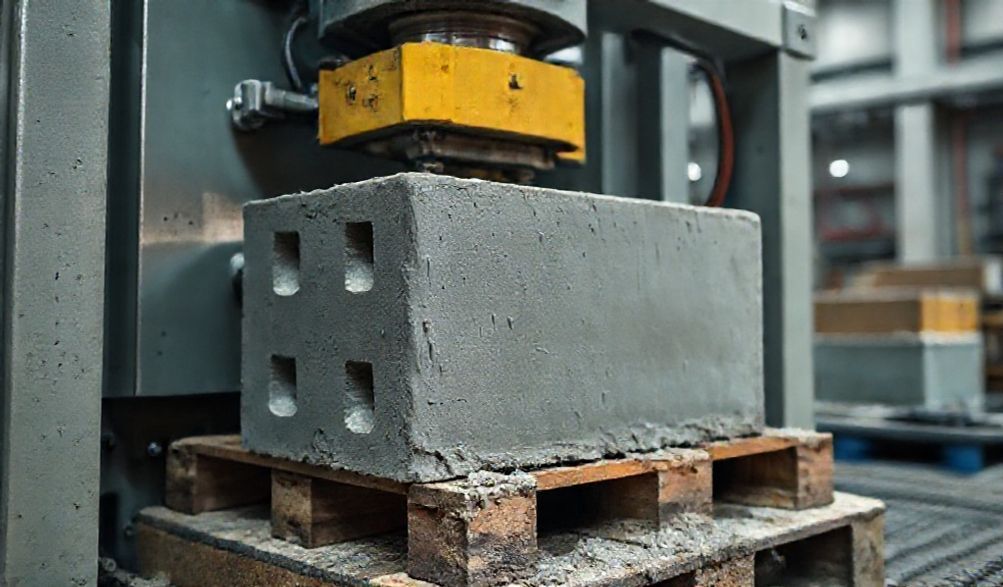
블록 생산 기계 완전 가이드: 종류, 장점, 선택 방법
소개
우리 도시의 풍경, 우리 집의 기초, 그리고 공원을 가로지르는 길은 모두 기본 단위인 콘크리트 블록 위에 세워져 있습니다. 현대 건설의 이 보편적인 요소 뒤에는 정교하고 중요한 산업이 있으며, 이는 블록 생산 기계의 끊임없는 효율성에 의해 주도됩니다. 사업주, 공장 관리자, 구매 전문가에게 적합한 기계를 선택하는 것은 단순한 장비 구매가 아닙니다. 이는 생산성, 제품 품질, 장기적인 수익성을 결정하는 전략적 결정입니다.
이 가이드는 수십 년에 걸친 산업 발전을 실행 가능한 통찰로 정제한 권위 있는 자료 역할을 합니다. 과거의 수동 프레스에서 오늘날 완전 자동화된 컴퓨터 제어 생산 라인에 이르기까지, 블록 생산 기술은 지속 가능성, 정밀성, 생산량을 우선시하는 혁명을 겪었습니다. 우리의 목표는 새로운 시설을 설립하든 기존 공장을 업그레이드하든 상관없이 정보에 기반한 결정을 내리는 데 도움이 되는 포괄적이고 신뢰할 수 있는 틀을 제공하는 것입니다. 지식의 기반을 함께 구축해 나갑시다.
블록 생산 기계란 무엇인가? 핵심 원리와 응용 분야
블록 생산 기계는 핵심적으로, 통제된 진동, 다짐 및 압력을 통해 원재료 콘크리트 혼합물을 정밀하고 내구성 있는 조적 단위로 변환하도록 설계된 산업 공학의 경이로움입니다.
기술 정의하기
블록 생산 기계(흔히 블록 성형기, 콘크리트 블록 기계, 또는 벽돌 제조 기계라고 불림)는 콘크리트 블록, 포장석, 벽돌 및 관련 제품의 성형을 자동화하는 특수 장비입니다. 이 기계는 일관성이 없고 노동 집약적인 수작업 방식을 반복 가능한 기계적 공정으로 대체합니다. 그 작동의 핵심은 반건조 상태의 콘크리트 혼합물을 공극을 제거하고 입자의 균일한 분포를 보장하여 조밀하고 강력한 형태로 다지는 능력에 있습니다.
The Basic Production Process
While machine designs vary, the fundamental production cycle follows a consistent sequence:
- 급식 A prepared concrete mix (aggregate, sand, cement, and minimal water) is loaded into the machine’s hopper.
- 미터링 및 성형: A measured amount of mix is fed into a mold box or cavity, which defines the block’s shape (e.g., hollow, solid, interlocking).
- 압축: This is the critical phase. The machine employs one or both of these methods:
- 진동 High-frequency, high-amplitude vibrations fluidize the mix, allowing it to flow into every corner of the mold and release trapped air.
- 압박 A hydraulic or mechanical press applies substantial downward force, further densifying the material.
- Curing Initiation: In many systems, the newly formed “green” block is immediately transferred onto a pallet and moved to a curing chamber (often via a stacker).
- 이젝션 및 팔레트 반환 The mold lifts, and the block is stripped from the machine, ready for curing. The empty pallet is typically cleaned and returned to the start of the cycle.
Primary Industries and Use Cases
The versatility of these machines makes them indispensable across several sectors:
- 건설: The primary market, producing:
- Hollow concrete blocks for load-bearing and partition walls.
- Solid blocks for foundations and heavy-duty applications.
- Lightweight blocks for insulation and reduced structural load.
- 조경 및 경관 설계 Manufacturing:
- Paving slabs and interlocking pavers for driveways, walkways, and plazas.
- Retaining wall units and garden edging.
- Decorative masonry for aesthetic applications.
- Specialized Manufacturing: Creating niche products like:
- Interlocking concrete blocks for dry-stack walls and flood control.
- Insulated concrete form (ICF) blocks.
- Concrete kerbstones, chimney blocks, and vent blocks.
Types of Block Production Machines: A Detailed Breakdown
Understanding the different machine categories is the first step in aligning technology with your business needs.
고정식 블록 제작 기계
These are the powerhouses of the industry, designed for high-volume, fixed-location production in a dedicated plant.
- 작전: Raw materials are brought to the machine via conveyor systems. The machine itself does not move.
- 출력: Very high, often ranging from thousands to tens of thousands of blocks per 8-hour shift.
- Key Subtypes:
- 정적 프레스 기계: Use high hydraulic pressure as the primary compaction method, often for producing very dense, high-strength paving stones and kerbs.
- “Egg-Laying” Mobile Block Machines: A hybrid where the machine moves along a concrete floor, depositing (or “laying”) blocks directly onto the casting surface before moving forward to produce the next batch. Less common in modern high-output plants.
모바일 블록 제작 기계
These offer flexibility and a lower barrier to entry, ideal for on-site production or smaller businesses.
- 작전: The machine is moved to the work area (often on wheels or a trailer). It produces blocks directly on a prepared, level ground or concrete slab, eliminating the need for pallets.
- 출력: Lower than stationary plants, suitable for small to medium-scale projects.
- 혜택 Drastically reduces material handling costs, as blocks are made where they will be used. Ideal for remote construction sites.
Automatic vs. Semi-Automatic vs. Manual Machines
This classification refers to the level of human intervention required.
- 완전 자동 The entire process—from raw material feeding to molding, compaction, curing rack handling, and pallet return—is controlled by a programmable logic controller (PLC). Requires minimal labor for supervision and maintenance. Offers the highest output and consistency.
- 반자동 Core processes like compaction and molding are mechanical, but operations like feeding raw material, removing finished blocks, or pallet handling require manual intervention. Offers a good balance between cost and productivity.
- 매뉴얼: Operated entirely by hand, often using a lever to apply pressure. Very low output, suitable only for tiny, niche operations or hobbyists. Not viable for commercial production.
전문 기계
Some machines are engineered for specific product lines:
* Pavers & Kerb Machines: Optimized for the high pressure and precise surface finish needed for paving products.
* Interlocking Block Machines: Feature specialized mold designs to create the complex tongue-and-groove profiles of interlocking blocks.
* Multilayer Machines: Capable of producing color-coated or textured blocks by placing different concrete mixes in successive layers.
Key Benefits of Investing in Modern Block Production Machinery
Moving from manual or outdated equipment to a modern block production line delivers transformative advantages.
뛰어난 효율성과 높은 생산성
Modern machines run on precise cycles measured in seconds. What might take a team of workers a day to produce can be accomplished by an automated line in an hour. This scalability is essential for fulfilling large contracts and growing your business.
Superior Product Quality and Consistency
Human variability is eliminated. Every block from a well-tuned machine has identical dimensions, weight, and density. This consistency translates to:
* Predictable structural strength (compressive strength).
* Easier, faster bricklaying with uniform mortar joints.
* Enhanced aesthetic appeal for facing blocks and pavers.
Significant Cost Reduction and ROI
While the initial investment is substantial, the long-term savings are compelling:
* 노동 비용 Automation reduces dependency on large crews.
* 재료 낭비 Precise metering and efficient compaction minimize spillage and rejected blocks.
* 운영 효율성: Faster production cycles lower the cost per unit.
A well-planned machine typically pays for itself through these savings, delivering a strong return on investment (ROI).
Enhanced Operational Safety and Ergonomics
Modern design prioritizes operator safety:
* Enclosed moving parts and safety guards.
* Ergonomic controls that reduce physical strain.
* Automated handling eliminates the heavy lifting associated with manual block production, drastically reducing the risk of musculoskeletal injuries.
Sustainability and Material Optimization
Today’s machines support greener construction practices:
* Use of Recycled Aggregates: They can effectively compact mixes containing fly ash, slag, or crushed recycled concrete.
* Reduced Cement Content: Optimal compaction achieves target strength with less cement, lowering the carbon footprint of each block.
* Less Waste: Precise production means less material ends up in landfills.
Critical Factors for Choosing the Right Block Production Machine
Selecting a machine is a multi-faceted decision. Focus on these critical areas to make a confident choice.
생산 요구사항 평가하기
Start by defining your business needs with clear numbers:
* 필요한 출력 Calculate the average number of blocks you need per day, week, and month. Add a 20-30% buffer for growth.
* 제품 포트폴리오: List all block types, sizes, and styles you plan to produce (e.g., 6-inch hollow block, 60mm paver).
* Project Scale & Market: Are you supplying a local market or large contractors? Is your demand steady or project-based?
Understanding Machine Specifications
Decode the technical sheet:
* 사이클 타임: The time to produce one mold of blocks (e.g., 15 seconds). Faster cycles mean higher output.
* 압력 힘 For press machines, measured in tons or kN. Higher pressure yields denser products.
* 진동 시스템 Frequency (Hz) and amplitude (mm). A well-balanced system is key for good compaction without excessive wear.
* Pallet Size & Mold Cavities: Determines how many blocks are made per cycle and their maximum dimensions.
* 전력 요구 사항 Ensure your facility can supply the necessary electrical (or hydraulic) power.
Quality of Construction and Key Components
The machine’s durability depends on its build:
* 프레임 Look for heavy-duty, welded steel construction for stability under load.
* 진동 모터: Branded, reliable motors with proper mounting are essential.
* 곰팡이: Hardened, precision-machined steel molds ensure product accuracy and long life.
* 유압/공압 시스템: High-quality pumps, valves, and cylinders from reputable brands (e.g., Bosch Rexroth, Parker) reduce downtime.
Manufacturer Reputation and Support (A Vital E-E-A-T Factor)
This is perhaps the most critical non-technical factor. A machine is a long-term partnership.
* Proven Experience: How long has the manufacturer been in business? Can they provide references from clients in your region?
* 예비 부품 가용성: Is there a local or responsive central warehouse for wear parts?
* 애프터 서비스: Do they offer installation supervision, comprehensive operator training, and prompt maintenance support? A strong warranty is a sign of confidence.
Budgeting: Initial Cost vs. Total Cost of Ownership
The cheapest machine can be the most expensive in the long run. Consider:
* 에너지 소비 An efficient machine saves on electricity costs daily.
* 유지 관리 비용: Factor in the cost and availability of spare parts.
* Expected Lifespan: A robust machine from a quality manufacturer should last for decades with proper care.
* Potential Downtime: The cost of production halts due to machine failure can be catastrophic.
Operational Best Practices and Maintenance
To protect your investment and ensure peak performance, adhere to these guidelines.
Essential Setup and Daily Operation Procedures
- Proper Foundation & Leveling: The machine must be installed on a solid, perfectly level concrete foundation to prevent misalignment and wear.
- Correct Mold Installation: Follow torque specifications when bolting molds to the machine table.
- 믹스 준비: Use a consistent, semi-dry concrete mix with the correct aggregate gradation and moisture content. The mix recipe is as important as the machine itself.
Routine Maintenance Checklist
- Daily: Clean excess concrete from the machine, molds, and pallets. Check hydraulic fluid levels and for any leaks.
- Weekly: Lubricate all moving parts as per the manual. Inspect and tighten bolts, especially on vibration units.
- Monthly: Conduct a thorough inspection of wear parts like mold liners, tamper shoes, and conveyor belts. Check electrical connections.
Troubleshooting Common Issues
- Poor Surface Finish/Chipped Edges: Often caused by an incorrect concrete mix (too dry or too wet) or worn mold liners.
- Low Block Density: Insufficient vibration time, weak vibration motors, or an overly dry mix.
- Blocks Sticking in Mold: Mold needs cleaning or a release agent. Could also indicate under-compaction.
Ensuring Operator Safety
- PPE is Mandatory: Safety glasses, hearing protection, steel-toe boots, and gloves.
- Lockout/Tagout (LOTO): Strict procedures must be followed during any maintenance or clearing of jams.
- Respect Guards: Never operate the machine with safety guards removed or bypassed.
FAQ Section
What is the average production capacity of a standard block machine?
Capacity varies enormously. A small mobile machine may produce 500-1,000 blocks per day. A mid-range stationary plant can produce 5,000-10,000 blocks per 8-hour shift. Large, fully automatic lines can exceed 20,000 blocks per shift.
Can one machine produce different types and sizes of blocks?
Yes, through the use of interchangeable molds. This is a standard feature. The key is to ensure the machine has the necessary pressure/vibration force and pallet size to accommodate the different product ranges you intend to make.
What is the typical lead time and process for installing a new block production line?
From order to commissioning, lead times can range from 3 to 9 months. The process involves: 1) Finalizing specifications, 2) Manufacturing, 3) Factory testing, 4) Shipping, 5) Site preparation (foundation, curing chamber), 6) Installation & mechanical assembly, 7) Electrical/control wiring, 8) Commissioning and operator training.
How important is the raw material mix design for machine performance?
It is absolutely critical. The machine is designed to work with a specific consistency (semi-dry). An improper mix will lead to poor compaction, block damage, and machine wear. Work with your material supplier and machine manufacturer to optimize your mix.
What are the most common mistakes first-time buyers make?
1. Underestimating required output, leading to an undersized machine.
2. Choosing based on price alone, ignoring quality and support.
3. Neglecting to budget for auxiliary equipment (mixers, conveyors, stackers, curing systems).
4. Not visiting an existing plant to see the machine in operation before buying.
How does automation in block production impact labor needs?
It shifts labor from manual, physically demanding tasks (lifting, carrying) to skilled roles in machine supervision, quality control, maintenance, and logistics. Overall headcount may decrease, but the required skill level increases.
What are the key certifications or standards to look for in a machine?
* CE 마킹: Essential for sale in the European Economic Area, indicating compliance with EU health, safety, and environmental standards.
* ISO 9001: Certification of the manufacturer’s quality management system, indicating consistent production quality.
* Machine-Specific Standards: Compliance with relevant local or international safety standards for machinery.
결론
Investing in a block production machine is a decisive step toward building a more efficient, profitable, and sustainable business. The right machine acts as the engine of your operation, transforming raw materials into the building blocks of infrastructure with precision and scale. As we’ve explored, the optimal choice is not merely a technical specification—it’s a strategic balance between your production goals, operational capabilities, and a partnership with a reputable manufacturer who will support you for the long haul.
Use this guide as your foundational blueprint. Let it inform your discussions, shape your questions, and clarify your priorities. The most prudent path forward is to consult with multiple established manufacturers, request detailed quotations and plant layouts, and, crucially, arrange visits to see their machines operating in real-world plants. There is no substitute for seeing the equipment in action, speaking with current owners, and verifying a manufacturer’s claims firsthand. Make your decision from a position of knowledge and confidence.
<