
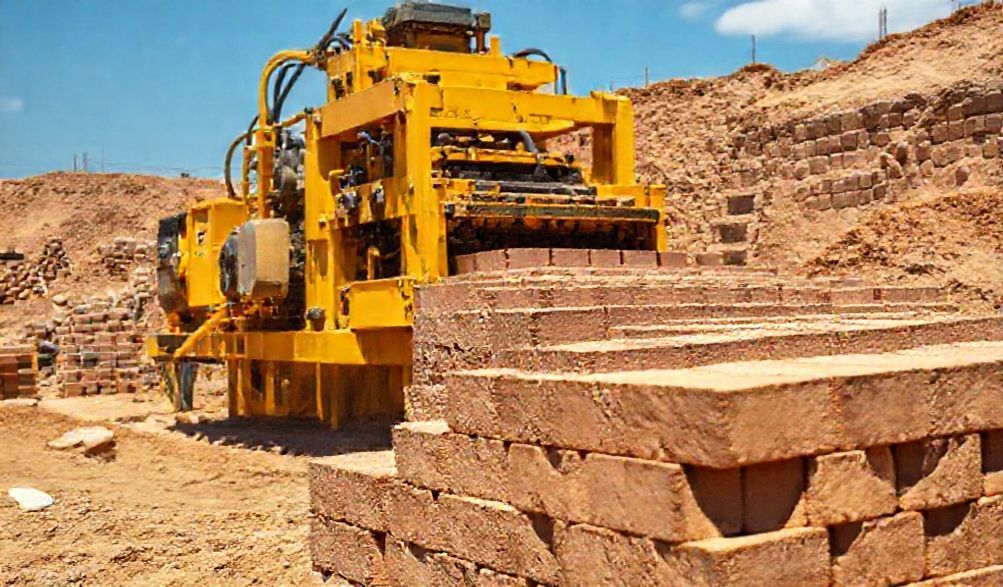
The Complete Guide to Diesel Engine Interlocking Brick Making Machines (2024)
소개
The global construction industry faces a dual challenge: the urgent need for affordable housing and infrastructure, and the growing imperative for sustainable building practices. In this landscape, compressed earth and stabilized soil bricks have emerged as a game-changing solution, offering strength, thermal efficiency, and a significantly lower carbon footprint than fired clay or concrete blocks.
But how do you produce these bricks reliably, especially in remote locations or areas plagued by unreliable electricity? Enter the diesel engine interlocking brick making machine—a robust, off-grid workhorse engineered for productivity and independence.
If you’re a contractor, entrepreneur, or development project manager researching this machinery, you’re likely seeking a reliable, fuel-efficient, and highly productive solution for small-to-medium scale production. You need a machine that won’t quit when the grid fails and can deliver the high compressive strength required for durable, code-compliant structures.
This comprehensive guide synthesizes technical specifications, operational best practices, and industry insights to help you make an informed decision. We’ll explore how these machines work, their key benefits, critical selection factors, and how to operate and maintain your investment for years of reliable service.
What is a Diesel Engine Interlocking Brick Making Machine?
At its core, this machine is a powerful mobile or stationary press. It uses a diesel engine to generate the force needed to compact raw earth—typically mixed with a small percentage of cement—into dense, precisely shaped building blocks. The defining feature of the output is the interlocking design.
핵심 기능과 출력
Unlike traditional rectangular bricks, interlocking blocks have protruding ridges and grooves on their top and sides. This ingenious design allows them to lock together like puzzle pieces during wall construction.
- Primary Benefit: This interlocking mechanism eliminates or drastically reduces the need for mortar in the bed joints, leading to massive savings on cement, sand, and skilled labor.
- The Final Product: The resulting bricks, often similar to Hydraform-type blocks, are uniform, strong, and enable faster construction speeds. Walls built with them are inherently aligned and can be designed for seismic resistance.
핵심 구성 요소와 상호 작용 방식
주요 부품을 이해하면 기계의 작동 원리가 명확해집니다.
- 디젤 엔진: The heart of the system. It provides prime power, characterized by high torque and complete independence from the electrical grid. This makes it ideal for remote or developing sites.
- 유압 시스템: This is the muscle. The diesel engine drives a hydraulic pump, which pressurizes oil to create immense, controllable force—often measured in tons—applied through hydraulic cylinders.
- Mold / Die: The defining component. This removable steel mold dictates the final brick’s shape, size, and interlocking pattern. Different molds allow one machine to produce various block styles.
- Feed Hopper and Feeding System: This is where prepared soil mix is loaded. A consistent, well-proportioned feed is critical for producing uniform bricks.
- Control Panel / Levers: The operator’s interface. Modern machines may have simple lever controls or an electronic panel to manage the compression cycle, ejection, and safety functions.
Diesel vs. Electric vs. Manual Machines: A Comparative Analysis
Choosing the right power source is crucial. Here’s a breakdown:
| Feature | Diesel Engine Machine | Electric Motor Machine | Manual / Lever Press |
| :— | :— | :— | :— |
| Power & Reliability | Excellent. High torque, perfect for off-grid or unstable grid areas. | Good, but entirely dependent on a reliable, powerful grid connection. | Poor. Limited to very low-volume, low-strength production. |
| Operational Cost | Moderate (fuel costs). Cost-effective where electricity is expensive. | Low to Moderate (electricity costs). Cheaper where grid power is reliable and subsidized. | Very Low (human labor only). |
| 초기 투자 | High. | Moderate to High. | Very Low. |
| 휴대성 | Excellent. Often mounted on a trailer for true mobility. | Limited. Requires a fixed installation near a power source. | Good. Lightweight and easy to move. |
| Brick Strength & Output| Very High. Consistent high pressure yields high-density, high-strength bricks at high speed. | High. Can match diesel if electrical supply is sufficient. | Very Low. Limited compression force results in weaker bricks; very slow output. |
| 환경적 영향| Higher (noise, exhaust emissions). Requires good ventilation. | Lower (site-dependent on power source). Quiet operation. | Minimal. |
The Verdict: Diesel machines are the undisputed choice for productivity, independence, and high-strength output in areas without robust infrastructure.
Top Benefits of Using a Diesel-Powered Interlocking Brick Press
Investing in this technology brings a suite of compelling advantages that directly address the pain points of modern construction projects.
Unmatched Operational Independence and Reliability
This is the paramount benefit. A diesel machine grants you complete freedom from the grid.
* Operate in remote rural areas where power lines don’t reach.
* Continue production seamlessly through frequent power outages common in many developing regions.
* Start work on greenfield sites long before temporary electrical connections are established. Your project timeline is in your hands.
High Torque for Superior Brick Density and Strength
Diesel engines excel at delivering consistent, high rotational force (torque) at low speeds. This translates directly to the hydraulic system.
* The machine can maintain peak compression pressure throughout the cycle, resulting in bricks with exceptionally high dry compressive strength (often exceeding 7 MPa or more with proper stabilization).
* Higher density means better durability, water resistance, and load-bearing capacity, making the bricks suitable for multi-story buildings.
Durability and Lower Long-Term Maintenance
Built for tough conditions, these machines are inherently robust.
* Diesel engines are renowned for their longevity and ability to withstand continuous heavy loads.
* The overall chassis and components are designed for the dust, vibration, and demands of a construction site.
* With a strict, simple maintenance regimen, the core machine can last for decades, with the engine itself being overhauled or rebuilt as needed.
Cost-Effectiveness for Medium to High-Volume Production
While the upfront cost is higher, the cost-per-brick over time becomes highly competitive.
* Fuel costs, while a factor, are often offset by savings from avoiding expensive grid connections or generator rentals.
* The high production speed (thousands of bricks per day) spreads fixed costs over a large output.
* The superior quality of the bricks can command a better market price and reduces long-term building maintenance costs.
구매하기 전에 고려해야 할 핵심 요소들
A successful purchase is a strategic one. Avoid costly mistakes by evaluating these key areas.
Assessing Your Production Needs: Output Capacity
Be realistic about your scale. Machine capacity is typically rated in bricks per hour or per day (e.g., 800-1000 bricks/8-hour shift vs. 3000-5000 bricks).
* Small Project/Startup: A lower-capacity machine minimizes initial investment.
* Commercial Venture/Large Project: A higher-capacity machine is necessary to meet demand and maximize return on investment. Consider future growth.
Technical Specifications Deep Dive
Look beyond the brochure. Understand what these specs mean:
* Engine Power (HP/kW): More horsepower generally means higher compression force and faster cycle times. Match this to your target brick strength.
* Brick Size & Mold Compatibility: Ensure the standard mold size fits your architectural plans. Verify the supplier offers other mold designs (e.g., half-blocks, corner blocks) for flexibility.
* Operating Pressure (Tonnage): This is a direct indicator of potential brick strength. Machines range from ~15 to over 50 tons of compression force.
* Weight & Portability: A trailer-mounted machine offers true mobility between sites. A heavier stationary unit may be more stable for ultra-high-volume, fixed-location production.
Soil Suitability and Material Preparation
This is where many projects fail. The machine is a press; it can only work with what you feed it. Your 전문성 in material science is critical.
* 토양 검사는 절대적으로 필요합니다: You must analyze your local soil’s composition (clay, silt, sand ratio). Not all soil is suitable.
* Stabilization is Key: Pure earth bricks have limitations. Adding a stabilizer—usually 5-10% Portland cement or lime—is essential for strength, durability, and water resistance.
* The Supporting Cast: Budget for essential auxiliary equipment: a soil crusher to break down clumps and a 팬 믹서 to create a homogeneous, damp (not wet) mix. Consistency in feed material is 50% of quality brick production.
Manufacturer and Supplier Evaluation: Ensuring E-E-A-T
Your choice of supplier is as important as your choice of machine. Apply the E-E-A-T (Experience, Expertise, Authoritativeness, Trustworthiness) framework:
- 경험 Do they have a long track record? Can they provide verifiable case studies or videos of machines operating in the field?
- 전문성 Do they offer deep technical support? Will they provide comprehensive manuals and, crucially, guidance on soil testing and mix design?
- 권위성 Are they a recognized name? Do they offer operator and technician training with the machine purchase?
- 신뢰성: This is paramount for diesel engines. What is their after-sales service like? Is there a clear warranty? How readily available are spare parts? Is there local or regional technical support? A machine that sits idle for months waiting for a spare part is a financial disaster.
Operating Your Machine for Optimal Results and Longevity
Proper operation and maintenance protect your investment and ensure consistent brick quality.
Step-by-Step Operational Guide
- Pre-Operation: Check diesel and hydraulic oil levels, inspect for loose bolts or hydraulic leaks, and ensure the mold is clean and secure.
- 자재 준비 Use properly sieved and mixed material with consistent moisture content (the “drop test” – a ball of mix should hold shape without crumbling or smearing).
- 생산 주기 Feed the mix into the hopper consistently. The machine cycle (fill, compress, eject) is usually automated once initiated. Handle ejected bricks carefully and place them on a pallet.
- 치유: This is vital. Keep the bricks under plastic sheeting or in a shaded area for 7-14 days, lightly sprinkling with water periodically to allow the cement to cure properly, dramatically increasing strength.
Essential Maintenance Schedule
Adhering to the manufacturer’s schedule is non-negotiable for reliability and safety.
- Daily/Weekly: Clean the machine thoroughly, especially around the mold. Check the air filter (critical in dusty environments). Look for hydraulic leaks.
- Periodic (Per Engine Hours/Manual): Change engine oil and filters. Change hydraulic oil and filters. Grease all moving pins and bearings. Check and tighten bolts and fittings.
- Annual/Heavy Use: Have a qualified technician perform a full system check, including hydraulic pressure testing and valve inspection.
Troubleshooting Common Issues
- Bricks Cracking: Usually caused by incorrect moisture content (too dry) or excessive pressure. Re-check your mix design and adjust.
- Loss of Pressure: Could indicate hydraulic oil issues, a failing pump, or internal seal leaks. Check fluid levels and for visible leaks first.
- Engine Issues: Hard starting or loss of power often trace back to fuel quality, clogged air filters, or injector problems.
- Always consult your manual and a qualified technician for major mechanical problems. DIY repairs on hydraulics can be dangerous.
FAQ: Your Questions About Diesel Brick Machines Answered
Q1: What is the average production cost per brick with a diesel machine?
A: There’s no single average, but you can calculate it. Factor in: Fuel consumption per brick, cost of soil & stabilizer (cement), labor, and a maintenance reserve. On a medium-scale operation, the direct cost (excluding labor and capital) can be very competitive, often significantly lower than conventional bricks in remote areas.
Q2: Can I use purely local soil, or are additives always required?
A: While some soils can work alone for low-strength applications, additives are almost always recommended for structural building. A small percentage (5-10%) of cement or lime is crucial for stabilization, providing compressive strength, erosion resistance, and durability against weather. Always test first.
Q3: How many workers are needed to operate one machine efficiently?
A: An efficient team typically requires 3-4 people: one machine operator, one person feeding material, and 1-2 people handling and stacking the freshly pressed bricks for curing.
Q4: What is the typical lifespan of a well-maintained diesel brick machine?
A: With diligent maintenance and proper operation, the core frame and hydraulic system can last 15-20 years or more. The diesel engine, if serviced correctly, can also last for tens of thousands of hours, with major components like cylinder liners and pistons being replaceable.
Q5: Are the bricks produced strong enough for two-story buildings?
A: Yes, absolutely. When produced with suitable soil and the correct cement stabilization, interlocking compressed earth bricks can achieve compressive strengths that meet or exceed building code requirements for two-story residential construction in many countries. Always get a batch of your bricks independently tested at a construction materials lab to confirm their strength before building.
결론
A diesel engine interlocking brick making machine represents a powerful, independent, and sustainable solution for producing high-quality building materials. It is the ideal technology for off-grid applications, areas with unreliable power, and any project where high-torque, reliable performance is non-negotiable.
Your success hinges on three pillars:
1. Choosing a reputable, experienced supplier with strong after-sales support.
2. Investing time in understanding your soil and the science of material preparation.
3. Committing to diligent, scheduled operation and maintenance of your equipment.
Now is the time to move from research to action. Contact reputable suppliers with your specific project details and location. Request their soil testing guidelines, ask for customer references or site visit opportunities, and get detailed quotations that include training and after-sales support. Your journey toward efficient, sustainable construction starts with the right foundation.
<