
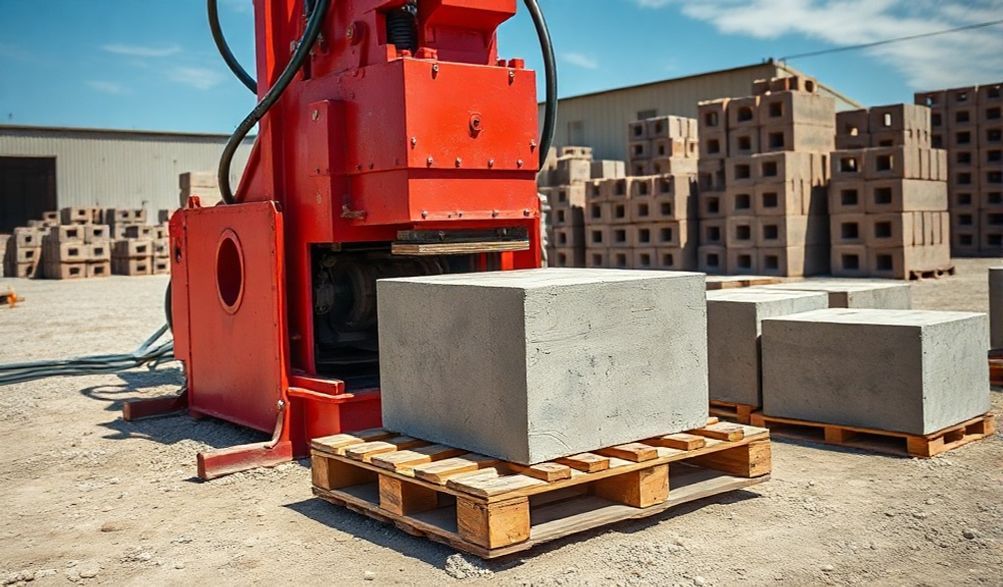
The QTJ4-28 Brick Making Machine: A Complete Guide to Features, Operation & Cost-Effectiveness
소개
For small-to-medium scale builders, contractors, and entrepreneurs, securing a consistent, affordable supply of quality bricks can be a persistent challenge. Relying on external suppliers ties up capital, introduces logistical headaches, and leaves you vulnerable to market price fluctuations and quality inconsistencies. What if you could produce durable, standardized bricks on-demand, right at your construction site or yard? This is not just a theoretical advantage—it’s a practical, achievable business model that is revolutionizing small-scale construction worldwide.
This comprehensive guide delves into the QTJ4-28 brick making machine, a workhorse model that has earned its reputation in over 50 countries for balancing performance, durability, and affordability. Our analysis is built on a foundation of technical specifications, operational principles, and, crucially, practical considerations gleaned from real-world use. We move beyond sales brochures to provide you with an unbiased, detailed look at what this machine can—and cannot—do for your project or business.
By the end of this guide, you will have a clear understanding of the QTJ4-28’s core specifications, its key advantages for specific applications, and a step-by-step overview of its operation and maintenance. Most importantly, we will provide a transparent cost-benefit analysis to help you determine if this machine is the right investment to achieve your goals of reliable, on-site brick production.
What is the QTJ4-28 Brick Making Machine? Core Specifications & Design
To make an informed decision, you must first understand the fundamental engineering and design of the QTJ4-28. This isn’t a simple manual tool; it’s a precision-engineered piece of industrial equipment designed for repetitive, heavy-duty use.
Machine Type and Operating Principle
The QTJ4-28 is classified as a stationary hydraulic “egg-laying” block making machine. This terminology is key to understanding its operation:
- Stationary Mold: The mold box, which gives the brick its shape, remains fixed in the machine’s frame.
- “Egg-Laying” Action: After the brick is molded and compacted, the machine ejects it onto a pallet on the ground directly beneath it. The machine then moves forward, “laying” the next brick on a subsequent pallet, much like a chicken laying eggs. This is distinct from mobile block machines that move over a concrete slab.
- 유압 시스템: It uses a hydraulic power pack to provide the immense pressure required for high-density compaction, resulting in stronger, more professional-grade bricks compared to purely vibratory machines.
This design places it perfectly between fully manual methods and expensive, fully automated production lines, offering a significant productivity leap with a manageable skill and investment threshold.
주요 기술 사양 한눈에 보기
Here are the verified core specifications that define the machine’s capacity and requirements:
| 사양 | 상세 내용 |
| :— | :— |
| 힘 | 11 kW (15 HP) electric motor |
| 생산량 | 2160 – 2880 pcs per 8-hour shift (standard 400x200x200mm hollow block) |
| 사이클 타임 | Approx. 15-20 seconds |
| 팔레트 크기 | 850x450mm (standard) |
| Max. Molding Pressure | Up to 21 MPa |
| 진동 | Combined table and mold vibration via dual 5.5kW motors |
| 기계 무게 | ~ 3000 kg |
| Dimensions (LxWxH) | Approx. 3120x2020x2520 mm |
Note: Output varies significantly based on block type, operator efficiency, and material mix.
Robust Construction for Longevity
The QTJ4-28 is built for endurance in demanding environments. Its longevity stems from key construction features:
- 견고한 강철 프레임: The entire structure is fabricated from thick steel plates and profiles, welded and reinforced to withstand constant vibration and stress without deformation.
- Wear-Resistant Components: Critical parts like the mold liners, core rods, and pressure head are manufactured from high-strength, hardened steel or specially treated alloys to resist abrasion from concrete mix.
- Quality Hydraulic System: A reliable gear pump, robust hydraulic cylinders, and quality control valves ensure consistent pressure and smooth operation. The system is designed for easy maintenance and part replacement.
Key Features and Advantages of the QTJ4-28 Model
The specifications tell only part of the story. The true value of the QTJ4-28 lies in the combination of features that translate into tangible benefits for the user.
High Versatility in Brick Production
This machine is not limited to one product. By simply changing the mold, the QTJ4-28 can produce a wide array of concrete products, including:
- 홀로우 블록 (6-inch, 8-inch, etc.)
- 솔리드 블록
- 포장 돌 (interlocking, standard)
- 연석과 경계석
- Gardening and Landscape Blocks
This versatility allows a small business to cater to diverse market segments—from residential construction to municipal projects and landscaping—maximizing the return on a single equipment investment.
Semi-Automatic Operation: The Perfect Balance
The “semi-automatic” nature of the QTJ4-28 is its masterstroke for the target market.
- Manual Input: Operators manually feed the prepared concrete mix into the hopper. This allows for visual quality control of the feed material.
- Automatic Core Functions: Once initiated, the machine automates the critical, labor-intensive processes: high-frequency vibration for compaction, hydraulic pressure application, mold lifting (demolding), and block ejection.
- 장점: This hybrid approach dramatically reduces labor fatigue and increases consistency compared to fully manual methods, while avoiding the high capital cost, complexity, and maintenance demands of a fully automatic robotic line. It’s the ideal productivity upgrade.
Exceptional Cost-Effectiveness and ROI
For entrepreneurs, cost is paramount. The QTJ4-28 excels here through a compelling value proposition:
- 낮은 초기 투자 비용 It is significantly more affordable than fully automatic production lines, making business entry feasible.
- 낮은 운영 비용 Energy consumption is relatively modest. Labor needs are optimized (typically 2-3 persons for the entire production line including mixing and block handling).
- Fast ROI Potential: When producing bricks for sale or for a large on-site project, the savings on purchased bricks or the revenue from sales can allow the machine to pay for itself within a surprisingly short timeframe, depending on local market conditions.
Ideal Applications and Use Cases
Understanding where the QTJ4-28 shines helps you decide if it fits your specific context.
For Small and Medium-Sized Enterprises (SMEs)
This is the prime application. An entrepreneur can start a profitable block yard business with a manageable capital outlay. By producing high-demand hollow and solid blocks for the local residential construction market, a steady revenue stream can be established.
For On-Site Construction Projects
For contractors building multiple units, warehouses, factories, or boundary walls, transporting bricks can constitute a major cost. Setting up a QTJ4-28 on-site eliminates transport costs, ensures a just-in-time supply of materials, and provides complete control over brick quality and specifications.
For Producing Specialized or Custom Blocks
Architects or builders working on projects requiring unique aesthetic blocks (e.g., special textures, sizes, or shapes) can commission custom molds. The QTJ4-28 then becomes a tool for producing these specialized components cost-effectively and on schedule.
Operational Guide: How to Run and Maintain Your QTJ4-28
Practical, experience-based knowledge is what separates successful operators from those who struggle. Here’s a foundational guide.
Raw Material Requirements and Mix Design
Consistent brick quality starts with a consistent raw material mix.
- Suitable Materials: Portland cement (OPC 42.5 or higher), clean river sand or crushed stone sand (0-5mm), coarse aggregate (3-10mm stone chips), and optionally, industrial by-products like fly ash or slag to reduce cost and improve workability.
- Example Mix Ratio (for standard hollow block): A common starting point is a 1:6:4 ratio (Cement:Sand:Aggregate) by volume, with a water-cement ratio of approximately 0.5-0.6. The mix should be semi-dry—it should hold its shape when squeezed in your hand without dripping water.
- 전문가 팁: Always conduct small test batches to calibrate the mix for your local materials and the desired block strength before full-scale production.
Step-by-Step Operational Procedure
- Setup & Safety: Ensure the machine is on a level, solid concrete foundation. Verify all safety guards are in place. Wear appropriate PPE (safety glasses, gloves, boots).
- 믹싱 Prepare a uniform batch of concrete in a pan or compulsory mixer.
- 급식 Manually load the mix into the machine’s hopper.
- Operating Cycle: Initiate the cycle. The machine will automatically: fill the mold, apply vibration and hydraulic pressure, lift the mold to demold, and eject the finished block onto a pallet.
- Block Handling: Carefully move the palletized green blocks to the curing area using a pallet jack.
- 치유: Keep the blocks moist and under cover (with plastic sheeting) for at least 24 hours, then water cure for 7-14 days for optimal strength development.
Essential Maintenance for Peak Performance
Preventive maintenance is non-negotiable for uptime and longevity.
- Daily: Clean all concrete residue from the mold, pressure head, and pallets. Check hydraulic oil level and for leaks. Inspect electrical connections.
- Weekly: Lubricate all guide rods, bearings, and pivot points with grease. Check and tighten all bolts and nuts.
- Monthly: Clean the hydraulic oil filter. Inspect vibration motors and mounts. Check wear on mold liners and core rods.
- Troubleshooting Common Issues:
- Weak Blocks: Usually caused by incorrect water content (too much or too little), insufficient vibration time, or poor-quality cement.
- Surface Imperfections: Often due to a worn mold liner, insufficient lubrication of the mold, or a dirty mold surface.
Cost Analysis: Investment, Operational Costs, and Profit Potential
Let’s build a transparent, realistic financial model. Note: All figures are illustrative and vary by region.
Breaking Down the Initial Investment
- QTJ4-28 Machine: $12,000 – $18,000 (FOB price, varies by supplier and configuration).
- 보조 장비: Concrete mixer ($2,000 – $4,000), pallets ($20-$50 each, need 100+), pallet jack ($500), basic tools.
- Setup Costs: Foundation construction, electrical connection, possible shed or shelter.
Calculating Operational Expenses (Per 1000 Blocks)
- Raw Materials (Cement, Sand, Aggregate): $80 – $120 (biggest variable).
- Electricity: $3 – $5.
- Labor (2 persons): $20 – $40 (highly region-dependent).
- Total Estimated Operational Cost: $103 – $165 per 1000 blocks.
Understanding Profit Margins and ROI
- Local Market Brick Price: Assume a selling price of $250 – $350 per 1000 hollow blocks.
- Gross Profit Per 1000 Blocks: Selling Price ($250) – Operational Cost ($135) = $115.
- Daily Gross Profit Potential: Producing 2500 blocks/day = ~$287.50.
- ROI Timeline: Deducting daily fixed costs and overhead, the initial machine investment could be recovered in 4-8 months of consistent operation and sales, depending entirely on your market, efficiency, and material costs.
This simplified model highlights the significant potential. Your due diligence must focus on verifying your local material costs and brick selling prices.
Frequently Asked Questions (FAQ) About the QTJ4-28
Q1: What is the production capacity of the QTJ4-28 brick making machine per day?
A: Under optimal conditions with a skilled crew, you can expect between 2,000 to 3,000 standard hollow blocks in an 8-hour shift. Capacity decreases for thicker, solid blocks or paving stones due to longer cycle times and more material per block.
Q2: Can one person operate this machine alone?
A: It is physically possible but highly inefficient and unsafe. The workflow is optimized for two to three people: one feeding the mixer/happer, one operating the machine controls and handling fresh blocks, and one managing cured stock. This ensures smooth, continuous production.
Q3: What kind of after-sales service and support should I expect from a supplier?
A: A reputable supplier must provide:
* Detailed installation drawings and foundation plans.
* Comprehensive operation and maintenance manuals (paper and video).
* Electrical and hydraulic circuit diagrams.
* A list of recommended spare parts.
* Remote technical support (via phone/email).
* Availability of genuine spare parts (molds, hydraulic seals, vibration motors) for purchase.
Q4: How does the QTJ4-28 compare to fully automatic block making machines?
A: It’s a trade-off between capital and labor. Fully automatic lines (like the QGM series) produce 10,000+ blocks per shift with minimal labor but cost 5-10x more and require complex maintenance. The QTJ4-28 offers 80% of the product quality at 20% of the cost, making it perfect for the scale where high labor cost isn’t the primary constraint.
Q5: What are the most common spare parts I should keep in stock?
A: To minimize downtime, consider keeping:
1. Sets of hydraulic seals and O-rings.
2. Bearings for the vibration motors.
3. Springs for the mold shock absorption system.
4. A set of wear plates or liners for your most-used mold.
5. Common hydraulic hoses and fittings.
결론
그QTJ4-28 brick making machine stands out as a remarkably versatile and cost-effective solution for small-to-medium scale brick production. Its robust semi-automatic design strikes a perfect balance, offering substantial gains in productivity and quality over manual methods without the prohibitive complexity and cost of fully automated systems.
Our final recommendation is clear: The QTJ4-28 is an ideal choice for entrepreneurs starting a block yard, contractors managing sizable on-site projects, or producers needing flexibility for custom block types. However, if your primary need is ultra-high-volume output (tens of thousands of blocks daily) with absolute minimal labor, your investment should be directed toward a fully automatic production line.
Your prudent next steps should be:
- Vet Suppliers Thoroughly: Prioritize manufacturers or exporters with a long track record. Request customer references in your region and ask for live video demonstrations of the machine in operation.
- Conduct Local Market Analysis: Precisely calculate your local costs for cement, aggregate, and electricity. Research the selling price of the blocks you intend to produce.
- Get Detailed, Comparable Quotations: Ensure quotes include all costs (FOB, CIF, insurance), delivery timelines, warranty terms, and a detailed list of what is included (e.g., number of standard molds, pallets).
Empower your construction or business venture with the capability to create its own foundation. With diligent research and planning, the QTJ4-28 can be the engine of your growth, providing control, quality, and profitability one block at a time.
<