
The Ultimate Guide to Automatic Brick Making Machines: Efficiency, Types & ROI
소개
글로벌 건설 산업은 어마어마한 규모에 도달할 것으로 전망됩니다.2030년까지 15.2조 달러, driven by urbanization, infrastructure development, and housing demands. At the heart of this growth lies a fundamental need: efficient, consistent, and high-quality building materials. For decades, brick production was synonymous with labor-intensive yards, variable quality, and significant physical strain. Manual and semi-automatic methods, while still in use, often create bottlenecks—struggling with scaling production, managing soaring labor costs, and maintaining the uniform standards modern projects require.
입력하세요자동 벽돌 제조 기계: the transformative powerhouse redefining productivity for construction businesses, block manufacturing factories, and large-scale project developers. This guide synthesizes deep industry expertise, technical engineering specifications, and real-world operational experience to cut through the noise. We’ll provide you with a clear, authoritative roadmap to understand how these machines work, their tangible benefits, the different types available, and the critical financial considerations—empowering you to make a strategic, informed investment that builds the foundation for your future growth.
자동 벽돌 제조 기계란 무엇인가요?
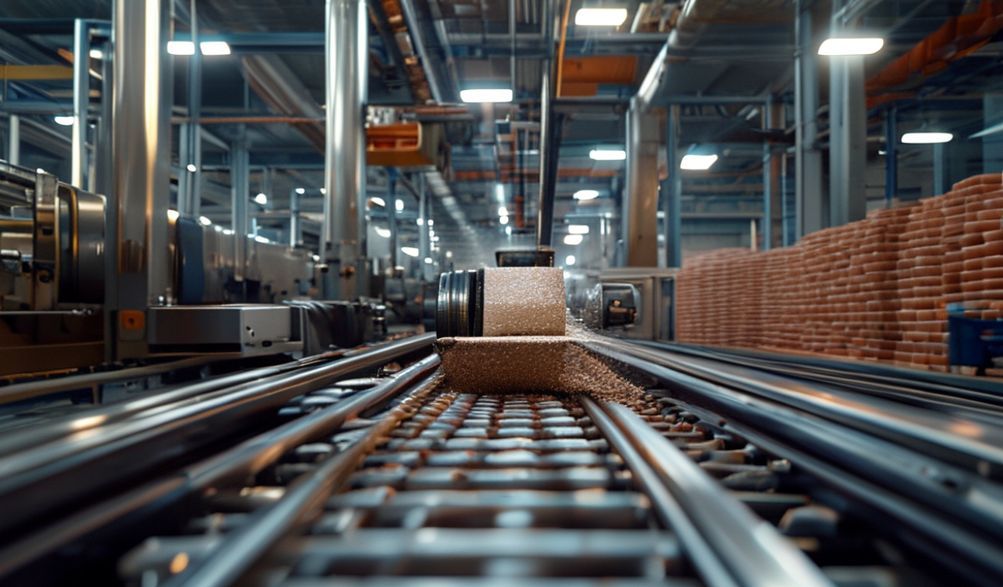
An automatic brick making machine is a sophisticated, integrated manufacturing system. At its core, it is a computer-controlled or PLC (Programmable Logic Controller) operated plant that automates the entire production cycle—from raw material feeding to the final stacking of cured bricks—with minimal human intervention. Its primary function is to transform raw materials like concrete, fly ash, or clay into uniformly shaped, high-density, and structurally sound bricks or blocks with remarkable precision and repeatability.
How It Works: The Fully Automated Production Cycle
Understanding the automated cycle demystifies the machine’s efficiency. Here’s a step-by-step breakdown:
- Automated Material Feeding & Mixing: Pre-measured quantities of raw materials (e.g., cement, sand, aggregate, water) are conveyed automatically from storage hoppers into a mixer. This ensures a perfectly consistent mix ratio for every batch, which is the first critical step toward product uniformity.
- Precision Molding & High-Pressure Compression: The mixed material is transferred into the mold cavity. A combination of powerful hydraulic pressure (often measured in tons) and high-frequency vibration compacts the material. This dual action removes air pockets and achieves the high density required for strength and durability.
- Automatic Pallet Feeding & Brick Ejection: Simultaneously, the system feeds empty pallets (steel plates that hold the fresh bricks) into position. The freshly pressed brick is then ejected onto the pallet with precision. The loaded pallet is automatically conveyed to the next stage.
- Curing & Stacking (Integrated Systems): In advanced setups, the palletized bricks move through a controlled curing chamber or are conveyed to a robotic stacker. The stacker neatly layers the cured bricks onto wooden blocks, ready for wrapping and shipment, completing the cycle with almost zero manual handling.
Visual Aid Suggestion: A flowchart or simple animated graphic illustrating this cycle would significantly enhance understanding, showing the seamless flow from raw material to finished, stacked product.
자동 시스템의 주요 구성 요소
This automation is made possible by several key components working in concert:
- PLC 제어 패널: The “brain” of the operation. This interface allows operators to set parameters like pressure, cycle time, and mix ratios, ensuring consistent output and easy operation.
- 유압 동력 장치 Provides the immense force needed for compression. The stability and power of this unit directly correlate to the final brick’s compressive strength.
- 진동 시스템 Works in tandem with hydraulic pressure to ensure even material distribution and maximum compaction within the mold.
- Conveyor Belts & Pallet Circulation System: The “logistics network” that moves materials and products between stages without manual labor.
- Molds & Dies: Interchangeable components that define the brick’s shape and size. A single machine can produce different products by switching molds—from solid and hollow blocks to paving stones and interlocking bricks.
Top Benefits of Investing in a Fully Automatic Brick Machine
Investing in automation is a strategic business decision. Here’s how it directly addresses core pain points and unlocks new opportunities.
Unmatched Productivity & Consistent Output
- 수용량 Automatic machines operate 24/7 with minimal downtime. Production capacities can range from 10,000 to over 100,000 bricks per 8-hour shift모델과 블록 유형에 따라 다릅니다.
- 일관성 Every single brick produced has identical dimensions, weight, and compressive strength. This uniformity simplifies construction, reduces mortar use, and ensures compliance with building codes (like ASTM standards), enhancing your brand’s reputation for quality.
Significant Labor & Operational Cost Reduction
- 노동 A fully automatic plant may require only 2-4 personnel for monitoring and supervision, compared to dozens for equivalent manual output. This dramatically reduces long-term wage bills and management overhead.
- 효율성 Reduced material waste from precise batching and lower rejection rates from consistent quality translate directly to a healthier bottom line. The operational cost per brick plummets.
Enhanced Versatility & Product Range
Market demands change. An automatic machine with a quick mold-change system allows you to pivot production swiftly. One machine can be your source for:
* Solid and Hollow Concrete Blocks
* Pavers and Kerbstones
* Interlocking Bricks for dry-stacking
* Decorative and Landscape Blocks
This agility lets you capitalize on different market segments and project requirements without major new capital expenditure.
Improved Safety & Working Conditions
Automation removes workers from the most hazardous tasks: heavy lifting, constant vibration exposure, and repetitive strain injuries. The work environment shifts from a labor-intensive yard to a controlled, modern factory floor, improving morale and reducing the risk and cost of workplace accidents.
Types of Automatic Brick Making Machines
Choosing the right type of machine is crucial. Here’s a breakdown based on key operational and material factors.
By Operation Type: PLC vs. Computer-Controlled
- PLC-Based Systems: The industry workhorse. Known for robustness, reliability, and user-friendly operation. Ideal for harsh industrial environments. They are excellent for setting and forgetting standard production parameters.
- Computer-Controlled Systems: Offer a higher level of data integration. They enable advanced features like detailed production logs, recipe management for dozens of products, remote monitoring via SCADA systems, and predictive maintenance alerts. Ideal for large, data-driven factories.
By Production Method: Stationary vs. Mobile Plants
- Stationary Automatic Plants: These are high-capacity, fixed installations designed for dedicated block manufacturing factories. They are the most common type, offering the highest levels of integration and output for supplying a region or city.
- Mobile Automatic Machines: A growing niche. These are compact, self-contained units that can be towed to a construction site. They enable on-site production of bricks, eliminating transport costs for the finished product—a game-changer for remote projects or where logistics are expensive.
By Raw Material
- 콘크리트 블록 제작 기계: The most widespread type, using a mix of cement, aggregates, and water. They produce the standard concrete masonry units (CMUs) used globally.
- Fly Ash (AAC) Brick Making Machines: These produce Autoclaved Aerated Concrete blocks. They use fly ash (a waste product from coal plants) and involve a chemical rising process and steam curing, resulting in very light, insulating bricks.
- 점토 벽돌 제조 기계: Fully automate the traditional clay brick process, from extruding the clay column to cutting and firing. They are common in regions where clay is the predominant traditional material.
구매하기 전에 고려해야 할 핵심 요소들
This is where due diligence separates a good investment from a regrettable one. Industry practice shows that asking the right questions upfront prevents costly operational issues.
Assessing Your Production Needs & Scale
Start with a clear business plan. Ask yourself:
* What is my required 일일 생산량 in bricks or cubic meters?
* What types of bricks/blocks does my target market demand?
* What is my available factory space (length, width, height clearance)?
* What power supply (3-phase voltage) is available?
* What is the local availability and cost of raw materials (cement, aggregate, fly ash)?
기계 사양 심층 분석
Don’t just look at the price tag; scrutinize the specs:
* 사이클 타임: How many seconds for one complete press cycle? This determines your maximum hourly output.
* 압력 (톤수): Higher tonnage (e.g., 1,000 tons vs. 500 tons) generally produces higher-density, stronger blocks suitable for load-bearing applications.
* 자동화 수준: Is it fully automatic (handles pallet feeding and stacking) or a semi-automatic with an auto-feeder? The price and labor savings differ significantly.
* After-Sales Service & Parts Availability: This is a critical trust factor. A machine is a long-term asset. Ensure the supplier has a proven track record of providing timely technical support, training, and spare parts. A long warranty period (e.g., 12-24 months) is a strong positive indicator.
Supplier Evaluation Checklist
Your supplier is your long-term partner. Vet them thoroughly:
* Reputation & History: How many years have they been manufacturing? Can they provide client lists and case studies?
* 표준 준수 Do their machines carry relevant CE, ISO, or other international safety and quality certifications?
* Warranty & Service Network: What exactly does the warranty cover? Do they have service engineers in your country or region?
* Reference Check & Site Visit: This is the most crucial step. Always request references and, if possible, visit an existing customer’s plant to see the machine running. Speak to the operators about reliability and support.
Calculating Your Return on Investment (ROI)
The upfront cost is significant, but the financial picture becomes compelling when you analyze the long-term savings. Based on typical production runs and operator reports, the ROI period for a well-utilized automatic machine is often between 18 to 36 months.
Upfront Costs vs. Long-Term Savings
Upfront Investment Includes:
* Machine Cost
* Shipping and Insurance
* Installation and Commissioning
* Initial Operator Training
* Possible foundation work and power upgrades
Ongoing Savings (Compared to Manual/Semi-Auto):
* Drastically reduced direct labor costs (60-80% savings are common).
* Lower material costs due to precise batching and less waste.
* Reduced rejection rates and rework.
* Ability to fulfill larger, more profitable contracts due to higher capacity.
Simple ROI Formula & Case Study Example
A simplified way to think about ROI is:
ROI (%) = (Annual Net Savings / Total Investment Cost) x 100
Hypothetical Case Study: “CityBlock Manufacturing”
* 투자 $200,000 in a fully automatic plant.
* Old Method: Semi-automatic system required 15 workers and produced 20,000 blocks/day.
* New Method: Automatic plant requires 3 workers and produces 60,000 blocks/day.
* Annual Net Savings: Calculated from labor reduction ($130,000), increased sales from higher capacity ($80,000), and lower waste ($15,000) = $225,000.
* Simple ROI: ($225,000 / $200,000) x 100 = 112.5% annual return, meaning the investment pays for itself in well under a year. While this is an optimized example, it illustrates the powerful financial mechanics at play.
FAQ: Expert Answers on Automatic Brick Machines
Q1: What is the average production capacity of a fully automatic brick making machine?
Capacity varies widely by model. Small to mid-range models produce 8,000-15,000 standard blocks (e.g., 400x200x200mm) per 8-hour shift. Large, high-end stationary plants can produce 30,000-100,000+ units in the same period.
Q2: How much manpower is required to operate an automatic plant?
Typically, a fully optimized plant needs only 2-4 personnel per shift: one for the control panel/monitoring, and others for handling raw material input and managing the output stacking area.
Q3: What is the typical lead time for delivery and installation?
For standard models from established manufacturers, expect 60 to 120 days from order to commissioning, depending on complexity, customization, and shipping logistics.
Q4: Can one machine produce different sizes and styles of bricks?
Yes, absolutely. This is a key advantage. By changing the mold/die set (a process that can take 30 minutes to a few hours), the same machine can produce a wide range of solid, hollow, paving, and specialty blocks.
Q5: What are the most common maintenance requirements?
Daily greasing of moving parts, checking hydraulic oil levels and filters, and ensuring conveyors are clean. The most critical periodic maintenance involves the hydraulic system and replacing wear parts like mold liners, which have a long but finite lifespan.
Q6: How do I ensure the quality of raw materials for optimal output?
Consistency is key. Use well-graded, clean aggregates. Cement must be fresh and stored properly. Moisture content in sand should be consistent. Many successful operators set up a simple lab to routinely test raw material and finished product strength.
Conclusion & Next Steps
The transition to automatic brick production is more than an equipment upgrade; it’s a strategic leap toward greater efficiency, impeccable quality, and sustained profitability. It future-proofs your business against labor shortages and rising costs while empowering you to meet the massive demand of modern construction.
Choosing the right machine is a critical decision that requires aligning advanced technology with your specific business goals, local market, and operational capabilities. The due diligence you perform today—understanding specifications, evaluating suppliers, and calculating ROI—will pay dividends for years to come.
Your Next Steps:
- For Further Research: We encourage you to request detailed specification sheets and watch actual machine operation videos from manufacturers to better visualize the process.
- For a Tailored Quote: Contact 3-4 reputable shortlisted suppliers. Provide them with your specific production requirements (output, block types) to obtain a customized quotation and proposal.
- The Ultimate Step: If feasible, arrange a visit to the manufacturer’s facility or, even better, an existing customer’s plant. Seeing the machine in operation, hearing directly from current users, and assessing build quality firsthand is the most powerful way to gain confidence before making your investment.