
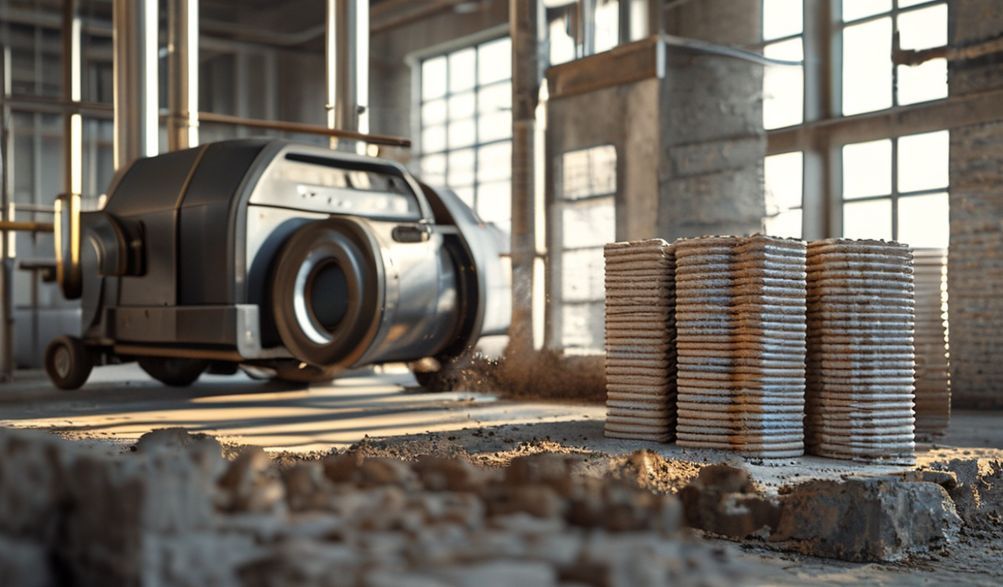
The Ultimate Guide to Compressed Earth Brick Machines: Inside the FUDA Block Making Factory
소개
The global construction landscape is undergoing a profound transformation. As the world grapples with climate change, resource depletion, and the urgent need for affordable housing, the search for sustainable, durable, and cost-effective building materials has never been more critical. For decades, the industry has relied on energy-intensive fired clay bricks and carbon-heavy concrete blocks, materials whose production comes with a significant environmental and economic cost.
Enter a solution that is both ancient and innovative: Compressed Earth Bricks (CEBs). This modern incarnation of earth architecture represents a viable, high-performance path forward. But the true potential of CEBs is unlocked not just by the material, but by the machine that forms it. The right equipment is the cornerstone of quality, efficiency, and scalability.
This is where expertise matters. The FUDA Block Making Factory has established itself as a leading force in this sustainable building revolution. With years of dedicated engineering experience, FUDA specializes in designing and manufacturing robust, reliable compressed earth brick machines for projects of all scales—from community-led housing initiatives to large-scale commercial developments.
This guide is built on a foundation of real-world engineering knowledge and field-tested insights. Our goal is to provide builders, contractors, developers, and entrepreneurs with trustworthy, actionable information. You will gain a comprehensive understanding of CEB technology, explore the range of machines available, learn what sets FUDA apart, and discover the key considerations for making a successful investment in your sustainable construction future.
What Are Compressed Earth Bricks? A Sustainable Building Revolution
Compressed Earth Bricks are precisely what the name suggests: building blocks created by compressing a damp mixture of earth under extremely high pressure within a mold. Unlike traditional sun-dried adobe, the high-pressure compaction creates a dense, strong, and dimensionally consistent unit ready for building.
This process modernizes one of humanity’s oldest building techniques, delivering a product that meets contemporary construction standards while honoring ecological principles.
The Science Behind the Strength
The integrity of a CEB lies in its simple yet precise composition and the physics of compression.
- Optimal Soil Mix: The ideal blend typically includes:
- Subsoil: The primary ingredient, usually sourced on-site or locally.
- 클레이: Acts as a natural binder.
- Sand/Aggregate: Provides skeletal structure and reduces shrinkage.
- Stabilizer (Optional): A small percentage (3-10%) of cement or lime can be added to increase durability, water resistance, and compressive strength for certain climates and applications.
- The Hydraulic Compression Process: The mixed material is fed into a steel mold/die. A hydraulic ram then applies immense pressure—often between 10 to 30 tons or more. This force mechanically locks the soil particles together, eliminating air pockets and creating a brick of remarkable density and strength.
A well-made CEB can achieve compressive strengths ranging from 2 MPa to over 10 MPa, often meeting or exceeding the standards for load-bearing masonry units. This means they can perform comparably to fired clay bricks and concrete blocks in many structural applications, but with a fraction of the embodied energy.
Key Benefits of Building with CEBs
Choosing CEBs is a decision that pays dividends across environmental, economic, and performance metrics.
-
Environmental Superiority:
- Ultra-Low Carbon Footprint: The production process consumes minimal energy, especially when compared to the fossil fuels required to fire clay bricks or produce cement.
- 지역 자재 활용 Utilizes on-site or locally available soil, drastically cutting transportation emissions and costs.
- Minimal Waste: Any spoilage or broken bricks can be returned to the soil mix, creating a near-zero-waste production cycle.
- Non-Toxic & Recyclable: The bricks are made from natural materials, ensuring healthy indoor air quality and are fully recyclable back into the earth.
-
경제적 이점:
- 급격한 재료비 절감 Soil is often the cheapest possible building material. Stabilizer cost is the primary material expense.
- 노동 비용 절감 Especially with interlocking CEB systems, wall construction can be faster and require less skilled labor, as the design simplifies alignment and can reduce or eliminate mortar.
- Energy Savings: The thermal performance of the finished building translates to lower lifetime costs for heating and cooling.
-
Exceptional Building Performance:
- Excellent Thermal Mass: CEB walls absorb heat during the day and release it at night, naturally regulating indoor temperatures and reducing reliance on HVAC systems.
- 내화성 Earth does not burn, providing a high level of inherent fire safety.
- Acoustic Insulation: The dense mass of the bricks offers superior sound dampening.
- Moisture Buffering: Clay in the bricks can help regulate indoor humidity levels.
Inside the FUDA Block Making Factory: Expertise in Engineering
At the heart of every durable CEB is a durable machine. The FUDA Block Making Factory was founded on the principle that sustainable technology must be built to last. Our philosophy is rooted in robust engineering, not just assembly.
Our Manufacturing Philosophy: Durability & Innovation
Based on our years of manufacturing experience and direct feedback from operators in the field, we understand that a block-making machine operates in demanding conditions. It must be reliable.
- High-Grade Components: We use premium-grade steel for critical structural parts, frames, and molds to withstand constant high-pressure stress without deformation.
- 프리시전 유압 시스템: The core of our machines features reliable, efficient hydraulic systems engineered for consistent pressure delivery, which is the key to producing uniform, high-strength bricks batch after batch.
- 엄격한 품질 관리: Every machine undergoes stringent testing protocols before leaving our factory. This includes pressure tests, cycle endurance runs, and final operational checks to ensure it meets our performance standards and your project requirements.
A Machine for Every Project Scale
There is no one-size-fits-all solution in construction. FUDA offers a spectrum of machines designed to empower every level of builder.
Manual & Semi-Automatic Presses
Ideal for small-scale projects, owner-builders, community cooperatives, and entrepreneurs starting with lower capital.
* 주요 특징: Portability, simplicity of operation, low maintenance, and independence from grid power (for manual models).
* 최적 대상: Custom homes, workshops, perimeter walls, and pilot projects. They offer a hands-on, low-risk entry into CEB construction.
Fully Automatic Interlocking Block Machines
Engineered for commercial production and large-scale projects where output, consistency, and efficiency are paramount.
* 주요 특징: High production capacity (hundreds to thousands of blocks per day), automated feeding and pressing cycles, and integration of interlocking brick designs.
* The Interlocking Advantage: These bricks feature designed tongues and grooves. This allows for faster, more accurate wall assembly, reduces mortar use (or enables dry-stacking for certain applications), and can enhance seismic resistance through improved wall cohesion.
Customizable Solutions
Your soil and your design vision are unique. Our engineering team can adapt machine specifications, pressure settings, and mold designs to optimize performance for your specific local soil conditions or to create custom brick shapes and sizes. This flexibility is a direct result of our deep technical expertise.
Choosing the Right Compressed Earth Brick Machine: A Buyer’s Guide
Investing in a CEB machine is a significant step. Making an informed choice requires careful consideration of your needs and a clear understanding of machine specifications.
프로젝트 요구사항 평가하기
Start by answering these key questions:
* 프로젝트 규모 How many bricks do you need per day or per month? (e.g., for a single home vs. a housing development).
* 예산 What is your total investment capacity for both the machine and setup?
* 노동과 기술 What is the skill level of your operating team? Is simplicity or maximum automation a priority?
* Soil Type: Have you tested your local soil? Its composition will influence stabilizer needs and machine pressure requirements.
* Brick Specs: Do you need standard rectangular blocks, or interlocking bricks for a specific building system?
Critical Machine Specifications to Compare
When evaluating machines, look beyond the price tag and focus on these core specs:
* Pressure Force (Tons): The primary indicator of potential brick strength. Higher pressure generally yields denser, stronger blocks suitable for load-bearing work.
* 생산 능력 (블록/시간): The practical output under normal working conditions. Be wary of theoretical maximums.
* 전원 공급 장치 매뉴얼 (human-powered), 전기 (for stable grid/workshop use), or 디젤 (for complete off-grid site independence).
* 이동성 Does the machine have wheels or a trailer hitch for moving around a site or between locations?
* Die Customization: Can you easily change molds to produce different brick types? A versatile machine protects your long-term investment.
Beyond the Machine: The FUDA Support Ecosystem
The true value of partnering with FUDA extends far beyond the machine itself. We invest in your success through a comprehensive support framework.
- Training & Onboarding: We provide clear operational manuals and, for larger machines, on-site or video training. This covers not just machine operation, but also crucial knowledge on soil selection, mix design, and basic troubleshooting.
- Technical Support & Spare Parts: Our relationship doesn’t end at delivery. We offer accessible long-term technical support. Furthermore, we maintain a reliable supply chain for genuine, factory-quality spare parts to minimize your machine’s downtime.
- Site Planning & Business Advice: For clients establishing a block yard or a brick-making business, we can offer practical guidance on layout, workflow optimization, and production planning, drawing from our observations of successful operations worldwide.
FAQs: Your Questions About CEB Machines Answered
Q1: What type of soil is best for a compressed earth brick machine?
A: A well-graded mixture of sand, silt, and clay is ideal. Pure clay will crack, and pure sand will not bind. A simple “jar test” can help analyze your soil. Most soils can be used, but some may require blending with imported sand or clay. We advise on soil testing as a first step.
Q2: How much does a FUDA compressed earth block machine cost?
A: Cost varies significantly based on the level of automation and production capacity. Manual presses start at a few thousand dollars, semi-automatic machines are in the mid-range, and high-output fully automatic lines represent a larger industrial investment. We focus on discussing the long-term value and Return on Investment (ROI) a reliable machine provides through durability and consistent production.
Q3: Can interlocking CEBs be used for load-bearing walls?
A: Absolutely. When produced with adequate pressure and proper stabilizer content, interlocking CEBs are engineered for load-bearing applications. Their interlocking design can even improve wall integrity. Always consult local building codes and have your bricks tested for compressive strength.
Q4: What kind of maintenance do these machines require?
A: Maintenance is straightforward but essential. Regular tasks include cleaning the mold and press head after use, checking hydraulic fluid levels, greasing moving parts, and inspecting for loose bolts. We provide a detailed maintenance schedule with every machine.
Q5: Does FUDA provide installation and commissioning services?
A: Yes. For our automatic and semi-automatic machines, we typically provide detailed installation manuals and video guidance. For large-scale industrial lines, we can arrange for an engineer to supervise installation and commissioning on-site to ensure optimal setup.
Q6: Where can I see case studies or projects built with FUDA machines?
A: We maintain a growing portfolio of projects from around the globe. You can view these case studies, along with client testimonials and videos of machines in operation, on our official website’s project gallery. These real-world examples build trust and demonstrate our machines’ capabilities.
결론
Compressed Earth Brick technology stands at the intersection of ecological responsibility, economic pragmatism, and building excellence. It offers a tangible solution for creating durable, beautiful, and healthy structures. The cornerstone of harnessing this potential is a reliable, well-engineered brick-making machine.
The FUDA advantage lies in combining this robust machinery with deep industry expertise and an unwavering commitment to client support. We are more than a manufacturer; we are a partner in your sustainable building journey, providing the tools, knowledge, and ongoing assistance needed to succeed.
Ready to build a sustainable future?
* Primary CTA: Contact the FUDA engineering team today for a personalized consultation and quote. Discuss your project specifics and get expert recommendations.
* Secondary CTA: Download our detailed technical specification sheet for a complete overview of our machine range, specifications, and capabilities.
* Tertiary CTA: Explore our project gallery to see FUDA machines in action and the inspiring structures built with them worldwide.