
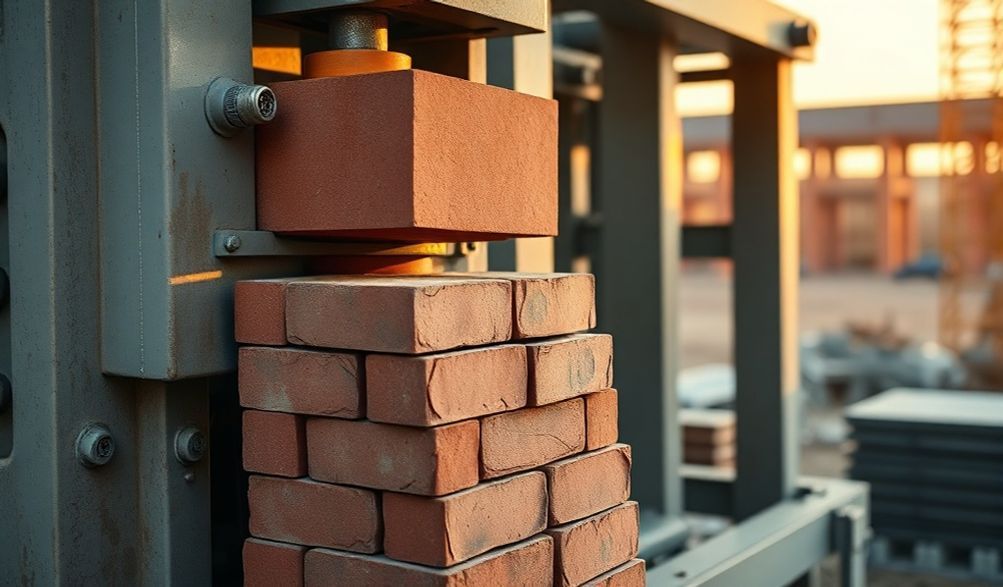
인터로킹 벽돌 기계의 궁극적인 가이드: 종류, 장점 및 선택 방법
소개
재료비를 최대 50%까지 절감하고, 건축 기간을 3분의 1로 단축하며, 모든 건물의 환경 발자국을 크게 줄일 수 있는 건설 기술을 상상해 보세요. 이는 미래적인 개념이 아닙니다—바로 인터로킹 벽돌 기계가 제공하는 현실로, 전 세계 건설 환경을 재편하고 있는 혁신입니다.
수십 년 동안 건설업자들은 전통적인 소성 점토 벽돌의 한계와 씨워왔습니다: 생산 과정이 에너지 집약적이며 상당한 양의 이산화탄소를 배출하고, 가격 변동이 심하며, 시공 속도가 느려 숙련된 노동력과 다량의 모르타르를 필요로 합니다. 무겁고 깨지기 쉬운 자재를 운반하는 물류적 어려움은 부담만 가중시킵니다.
인터로킹 브릭 머신은 기업가, 계약자, 심지어 지역사회 협동조합까지도 역량을 강화하는 혁신적이면서도 우아하게 단순한 기술입니다. 이 기계는 현지에서 구할 수 있는 흙, 모래, 그리고 소량의 시멘트를 믿기 힘들 정도로 강한, 모르타르 없이 쌓을 수 있는 건축 블록으로 변환합니다. 이 가이드는 심층적인 산업 분석, 기술 사양, 그리고 실제 적용 사례 통찰력을 바탕으로 제작되었습니다. 우리의 목표는 과대 광고를 넘어, 여러분이 확신에 찬, 정보에 기반한 결정을 내리는 데 필요한 포괄적인 지식을 제공하는 것입니다.
이 글을 마칠 때쯤이면, 여러분은 이러한 기계들이 어떻게 작동하는지, 그들이 제공하는 실질적인 이점은 무엇인지, 사용 가능한 다양한 유형들, 그리고 프로젝트나 사업에 딱 맞는 모델을 선택하기 위한 명확한 단계별 프레임워크를 정확히 이해하게 될 것입니다.
인터록킹 벽돌 기계란 무엇인가요?
인터록킹 벽돌 기계의 핵심은, 원료의 축축한 혼합물을 압축하여 독특한 디자인 특징인 윗면과 측면에 능선과 홈이 있는 정밀한 기하학적 벽돌로 만드는 장치입니다.
핵심 기능과 원리
원리는 고압 압축에 있으며 소성은 아닙니다. 준비된 혼합물을 몰드 챔버에 투입한 후, 수동, 전기 또는 유압으로 작동하는 강력한 압출기가 혼합물에 강한 압력을 가해 고밀도로 압축합니다. 그 결과 생성된 벽돌은 특정한 연결 설계, 가장 일반적으로 "돌기와 홈" 또는 "지그재그" 패턴을 가지고 배출됩니다.
이 '연결 결합' 기능이 바로 게임 체인저입니다. 쌓을 때 이 벽돌들은 3차원 퍼즐 조각처럼 서로 맞물려 안정적이고 통일된 벽체 구조를 형성합니다. 이러한 기계적 결합은 전통적인 습식 모르타르의 필요성을 획기적으로 줄이거나 많은 경우 완전히 없애주어, 막대한 비용 절감과 속도 향상을 가져옵니다.
원료: 무엇을 사용할 수 있을까요?
원자재의 다용도성은 핵심적인 강점입니다. 가장 일반적인 혼합물에는 다음이 포함됩니다:
- 흙-시멘트:현지에서 조달된 심토(일반적으로 85-90%)와 포틀랜드 시멘트(10-15%)를 혼합한 것입니다. 토양은 유기물 함량이 낮고 상당히 안정적이어야 합니다.
- 라테라이트-시멘트:열대 지역에서 철분이 풍부한 라테라이트 토양은 훌륭하고 쉽게 구할 수 있는 재료입니다.
- 시멘트와 혼합된 파쇄석/모래 For maximum strength, a mix of finely crushed quarry dust or sand with cement is used.
Critical Note: Material testing is non-negotiable. Simple on-site tests for particle size distribution and moisture content, and lab tests for compressive strength, are essential to calibrate your mix for optimal, code-compliant results. This sustainable model often uses on-site or locally quarried materials, slashing transportation costs and environmental impact.
인터로킹 벽돌 기계 사용의 주요 이점
The advantages of this technology cascade from the production yard directly to the finished building, offering compelling practical and economic benefits.
비용 절감 효과
The financial savings are multi-layered:
- Material Costs: Drastically less cement is used compared to concrete blocks. The elimination of mortar saves further on cement and sand.
- 노동 비용 Dry-stacking is faster and can be done with semi-skilled labor, reducing dependency on highly paid master masons.
- 물류 비용 Producing bricks on or near the construction site eliminates multiple middlemen and long-distance transport of fragile fired bricks.
- Overall Project Cost: Studies and real-world projects consistently show total wall cost reductions of 30-50% compared to conventional methods.
Unmatched Construction Speed & Simplicity
Think of it as Lego-like construction for real-world buildings. Without the need to wait for mortar to set between courses, walls rise with remarkable speed. The interlocking system is intuitive, making construction simpler and reducing errors. This speed translates directly into faster project completion and return on investment.
Superior Strength and Durability
Don’t let the simplicity fool you. The high-pressure compaction (often achieving 5-10 MPa or more) creates a dense, robust brick.
- 압축 강도 Properly made interlocking bricks easily meet and often exceed the strength requirements for single and multi-story residential buildings.
- Seismic Resistance: The interlocking design creates a monolithic wall structure that can flex and dissipate energy, offering superior performance in earthquake-prone zones compared to rigid, mortar-bound walls.
- 내후성 When properly capped and plastered (if desired), these walls are highly durable against rain and wind.
환경적 지속가능성
This is a cornerstone benefit for the eco-conscious builder:
- Zero Firing: No kilns means no coal consumption and no associated greenhouse gas or particulate emissions.
- Minimal Cement Use: Cement production is a major global CO2 source. Reducing its use is a direct environmental win.
- Local Materials: Utilizing on-site soil minimizes landscape scarring from quarries and reduces the carbon footprint of transportation.
- Waste Potential: Some machines can incorporate certain industrial by-products (like fly ash) into the mix, promoting a circular economy.
인터로킹 벽돌 기계의 종류
Choosing the right class of machine is your first major decision. They fall into three broad categories, defined by their power source and level of automation.
수동 기계
- 최적 대상: Individual homeowners, small-scale DIY projects, community-led housing initiatives, NGOs, and entrepreneurs testing the market with minimal capital.
- 장점:
- 극히 낮은 초기 투자 비용.
- Completely portable—no need for electricity.
- Simple to understand, operate, and maintain.
- 단점:
- Low production output (typically 100-500 bricks per 8-hour day).
- Physically demanding labor.
- Brick quality can vary more with operator fatigue.
Semi-Automatic Electric/Hydraulic Machines
- 최적 대상: Small to medium-sized businesses, contractors undertaking multiple projects, and production yards with a steady demand.
- 장점:
- Excellent balance between output, cost, and automation.
- Higher and more consistent production (500-2,000 bricks per day).
- Significantly less physically demanding than manual machines.
- Delivers uniform, high-quality bricks due to consistent hydraulic pressure.
- 단점:
- Requires a reliable electricity connection (or a generator).
- Higher upfront cost than manual models.
- Requires basic technical knowledge for maintenance.
Fully Automatic Hydraulic Press Machines
- 최적 대상: Large-scale commercial production plants, government housing projects, and businesses supplying bricks to a wide market.
- 장점:
- Very high output (2,000+ bricks per day).
- Fully automated cycle: auto-feeding, pressing, and ejection.
- Ultimate consistency in brick quality and dimensions.
- Maximizes labor efficiency.
- 단점:
- Substantial capital investment.
- Requires a robust electrical setup and more space.
- More complex maintenance requiring specialized technical skills.
How to Choose the Right Machine for Your Needs
Navigating the market requires a clear assessment of your goals and a sharp eye for key details.
Assess Your Project Scale & Business Goals
Start by asking:
* What is my daily/weekly brick requirement? (Based on project size or sales forecasts).
* What is my available startup budget?
* Do I have a reliable power source on site?
* Am I looking for a one-off project solution or a long-term business asset?
A simple matrix can guide you:
* < 500 bricks/day + Tight Budget = Manual Machine.
* 500 – 2,000 bricks/day + Business Focus = Semi-Automatic Machine.
* > 2,000 bricks/day + Industrial Production = Fully Automatic Machine.
Critical Technical Specifications to Compare
When comparing models, look beyond the price tag:
- 생산 능력 Never rely on the “theoretical maximum.” Ask for realistic, sustained output per hour with a standard crew.
- Brick Size & Mold Options: Ensure the machine produces a brick size suitable for your region’s standards. Check if the manufacturer offers different mold designs (standard, curved for arches, etc.).
- Motor Power & Operating Pressure: This directly correlates to final brick strength (measured in PSI or MPa). A machine with higher hydraulic pressure can compact a wider variety of materials into stronger bricks.
- Build Quality & After-Sales Support: This is paramount. Inspect the frame thickness, welding quality, and cylinder brand. Crucially, evaluate:
- Warranty length and terms.
- Availability of spare parts locally or via swift shipping.
- Whether installation and operator training are included.
- The manufacturer’s reputation and responsiveness.
Budgeting and Calculating ROI
Your total investment includes:
* Machine Cost + Shipping & Customs.
* Foundation/Setup for the machine.
* Raw material processing tools (sieve, mixer, wheelbarrows).
* Initial stock of cement and other materials.
ROI 프레임워크:
1. Calculate your cost per brick (materials + labor + machine depreciation).
2. Research the selling price of comparable bricks (fired clay or concrete) in your local market.
3. Estimate your daily production volume.
4. Your simple payback period = (Total Investment) / ((Price per Brick – Cost per Brick) * Bricks Sold per Day).
A well-run operation with a semi-automatic machine often sees a payback period of 6-18 months.
Step-by-Step: Operating and Maintaining Your Machine
Proper operation and maintenance are what separate a profitable, long-term asset from a broken-down piece of equipment.
Site and Material Preparation
- 흙 Sieve to remove stones, roots, and organic matter. The ideal is a mix of sand, silt, and a small amount of clay.
- Mixing Ratio: Start with a standard mix (e.g., 10% cement, 90% soil) and conduct test batches. Adjust for your soil’s properties.
- 수분 함량 This is critical. The mixture must be damp enough to bind but not wet. The “hand-squeeze” test should result in a ball that holds its shape without crumbling or dripping water.
Basic Operational Cycle
- Pre-check: Lubricate moving parts and ensure the machine is clean.
- 급식 Place the uniformly mixed material into the machine’s hopper or feeding chamber.
- 압축: Activate the lever or switch to engage the ram and compress the material.
- 이젝션 Release the brick onto a pallet or curing area.
- 치유: Immediately move bricks to a shaded area, keep them moist by sprinkling water 2-3 times a day, and cover with plastic sheeting for 14-28 days. Proper curing is essential for achieving full strength.
Essential Maintenance Checklist
- Daily: Clean the machine thoroughly after use. Check for loose bolts and nuts. Lubricate all pivot points.
- Weekly: Inspect hydraulic hoses for leaks. Check electrical connections on automatic models. Clean the mold cavity with a wire brush if any material buildup occurs.
- Monthly: Check hydraulic oil level and quality. Inspect the wear plates on the mold and ram. Tighten all major structural bolts.
Troubleshooting Common Issues:
* Bricks sticking in mold: Likely due to over-wet mix or a worn/dirty mold. Adjust moisture and clean thoroughly.
* Bricks breaking easily: Usually caused by incorrect mix (too sandy, not enough cement/binder), insufficient compaction pressure, or improper curing.
* Machine losing pressure: Check for hydraulic oil leaks, a faulty pump, or a worn seal.
자주 묻는 질문 (FAQ)
Q1: How strong are interlocking bricks compared to fired clay bricks?
A: A well-produced interlocking brick can achieve a compressive strength of 5-10 MPa (700-1450 PSI), which is comparable to or exceeds many standard fired clay bricks (typically 3-5 MPa). They are more than adequate for load-bearing walls in 1-3 story buildings. Always have your bricks tested and consult your local building codes for specific requirements.
Q2: Can I start an interlocking brick business with a small budget?
A: Absolutely. Many successful businesses start with a single manual or semi-automatic machine. Begin by supplying bricks for small local projects (homes, fences, garden walls) to prove the concept and build capital. Reinvest profits to scale up to a higher-output machine—this is a proven, low-risk growth path.
Q3: Do interlocking brick buildings require plastering?
A: It is optional but recommended. The bricks can be left exposed for a rustic, modern look, but a plaster coat provides an extra layer of weatherproofing and a smooth finish for painting. The key advantage is that plastering requires less material and effort because the brick surfaces are already flat and even.
Q4: What is the curing process, and how long does it take?
A: Curing is the process of keeping the bricks moist to allow the cement to hydrate fully and gain strength. It involves sprinkling water on the stacked bricks 2-3 times a day and covering them with plastic to retain moisture. Full strength is typically gained in 28 days, though bricks can often be used in construction after 7-14 days of careful curing.
Q5: Where can I get training on using these machines?
A: Reputable manufacturers should provide comprehensive hands-on training as part of the purchase package. This is a major red flag if it’s not offered. Additionally, seek out construction NGOs, technical institutes, or online video tutorials from established industry experts to supplement your knowledge. Nothing replaces hands-on, manufacturer-specific training.
결론
The interlocking brick machine represents more than just a piece of equipment; it embodies a shift towards more rational, sustainable, and accessible construction. It democratizes the ability to build quality housing and infrastructure by slashing costs, accelerating timelines, and leveraging local resources.
Your journey starts with a clear definition of your needs. Prioritize build quality, proven performance, and—above all—comprehensive after-sales support from your manufacturer over the allure of the lowest price. This technology is an investment that, when chosen wisely, pays dividends for years to come.
Ready to move from research to action? [Download our free comparison checklist of the top 10 interlocking brick machine specifications] to systematically evaluate your options.
Have a specific project or business plan in mind? [Contact our expert team for a personalized consultation] to match you with the ideal solution.
By embracing this innovative technology, you’re not just building structures; you’re contributing to a future of smarter, greener, and more affordable construction for communities worldwide.
<