
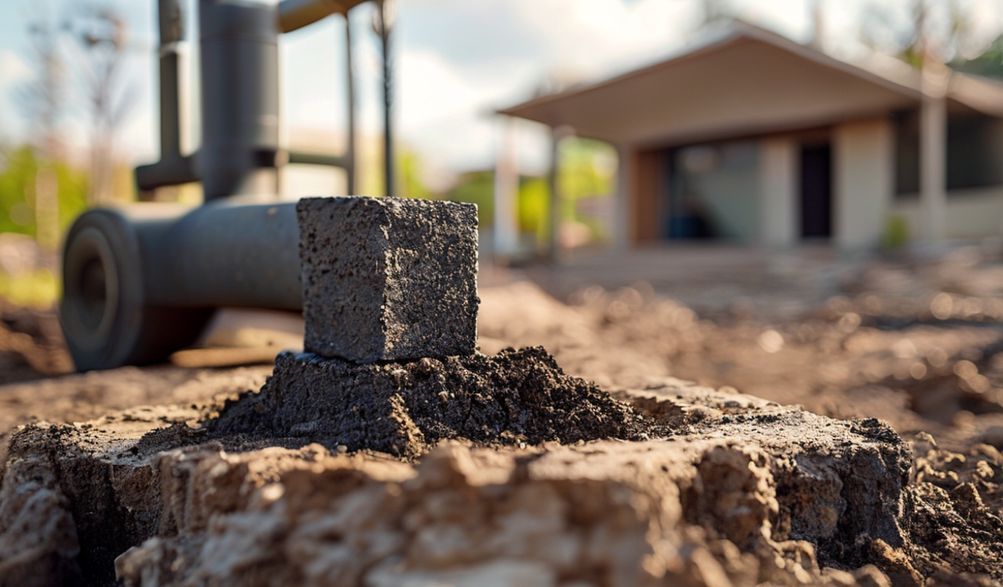
The Ultimate Guide to Interlocking Soil Block Making Machines: Build Sustainably
소개
The global twin crises of affordable housing and climate change are forcing us to reimagine how we build. From sprawling urban centers to rural communities, the demand for durable, low-cost shelter is immense. Yet, the very materials we traditionally rely on—fired clay bricks and concrete blocks—are often part of the problem. Their production is energy-intensive, carbon-heavy, and can strain local economies with high material and transport costs.
There is, however, a time-tested solution that is experiencing a modern renaissance: earth itself. Specifically, Interlocking Compressed Stabilized Earth Blocks (ICSEBs). This is not the fragile, sun-dried adobe of old. This is a precision-engineered, high-strength building material that leverages the soil beneath our feet. But to move from a niche, labor-intensive technique to a scalable, efficient building solution, you need the right technology.
입력하세요interlocking soil block making machine. This ingenious device is the linchpin, transforming raw earth into standardized, interlocking blocks that can be used to construct walls with remarkable speed and efficiency. It’s the key that unlocks the potential of sustainable construction for builders, entrepreneurs, development projects, and self-builders alike.
This guide is crafted from industry knowledge and technical expertise to serve as your comprehensive resource. We will demystify how these machines work, detail their profound benefits, provide a clear buyer’s guide for choosing the right model, and walk you through the process from soil selection to finished wall. Our goal is to equip you with trustworthy, practical information to confidently explore this transformative building technology.
What is an Interlocking Soil Block Making Machine?
At its core, this machine is a powerful press. It mechanizes the ancient practice of earth building, applying precise, high pressure to create a superior, consistent product.
핵심 기능과 기본 원리
An interlocking soil block machine is a mechanical or hydraulic press designed to compress a damp mixture of soil, a small percentage of stabilizer (like cement or lime), and water into a high-density block with a specific geometric profile. The defining characteristic is the interlocking design molded into the top and bottom or sides of each block.
- 과정: The prepared soil mix is fed into a mold box. A ram or piston then applies immense pressure—often measured in tons—to compact the mixture. This compression aligns the soil particles, drastically reducing voids and creating a block of remarkable strength.
- 핵심 차이점: Unlike conventional brick kilns, this process requires no firing. The blocks gain their strength from compression and chemical stabilization, not from heat. This eliminates the need for fossil fuels and slashes the embodied energy of the material.
The Result: Understanding Interlocking Compressed Earth Blocks (ICSEBs)
The machine’s output is a precisely formed Interlocking Compressed Stabilized Earth Block (ICSEB).
- Strength & Properties: Properly made ICSEBs typically achieve compressive strengths between 3 and 10+ MPa, making them suitable for load-bearing walls in multi-story buildings. They also possess high thermal mass, naturally regulating indoor temperatures by absorbing heat during the day and releasing it at night.
- 인터로킹 디자인: This is the game-changer. Blocks feature a tongue-and-groove or puzzle-like design. This allows them to fit together seamlessly.
- Mortar Minimization: The interlock provides mechanical stability, which means walls can be built using the “dry-stack” method (with little to no mortar in the joints) or with a thin slurry mortar. This leads to significant savings on cement, sand, labor, and construction time.
인터로킹 흙 블록 기계 사용의 주요 이점
Adopting this technology offers a compelling array of advantages that span economic, practical, and environmental domains.
Economic and Practical Advantages
- 비용 효율성: Construction costs can be reduced by 30-50% for walling. Savings come from:
- Using locally available, often free, subsoil.
- Drastically reducing or eliminating mortar use.
- Increasing the speed of construction, lowering labor costs.
- Minimizing transport costs for materials.
- 건설 속도 A trained team can erect walls remarkably quickly. The uniform block size and interlocking design simplify alignment, and the reduced need for mortar bedding accelerates progress significantly compared to conventional bricklaying.
- 단순함 Operating the machine requires minimal formal education. The core skills—mixing, operating the press, and curing—can be taught in a matter of days. Similarly, masonry with interlocking blocks is easier to learn than traditional bricklaying.
Environmental and Performance Benefits
- 지속 가능성: This is arguably the largest benefit. The process has an ultra-low carbon footprint. There is no firing, it uses local materials (reducing transport emissions), and cement use is minimized to just 5-10% for stabilization. It turns a site’s excavation waste into a building asset.
- 에너지 효율 The high thermal mass of earth walls creates naturally comfortable interiors. They keep buildings cool in hot climates and warm in cool climates, reducing reliance on mechanical heating and cooling systems and lowering a building’s operational energy for decades.
- 내구성 When properly stabilized, compacted, and protected with appropriate roof overhangs and plaster, earth blocks are highly durable and weather-resistant. Historical examples of earth construction around the world stand testament to its longevity.
How to Choose the Right Machine: A Buyer’s Guide
Selecting the correct machine is critical to your project’s success. Your choice should be guided by your project scale, budget, and available resources.
기계의 종류: 수동, 반자동 및 완전 자동
- 수동 기계: Operated by a hand-operated lever. They are the most affordable, portable, and require no electricity.
- 최적 대상: Small-scale projects, self-builders, NGOs in off-grid locations, and pilot projects. Production: 300-500 blocks per day with a dedicated team.
- 반자동 기계: Feature an electric or diesel motor to power the hydraulic system. The operator fills the mold and activates the cycle, but compression and ejection are powered.
- 최적 대상: Small to medium businesses, community housing projects, and commercial block yards. Production: 1,000 – 3,000+ blocks per day.
- 완전 자동 기계: These are production-line systems with automated feeding, compression, and stacking. They require a significant investment and consistent power supply.
- 최적 대상: Large-scale commercial block manufacturing for major construction projects. Production: 5,000+ blocks per day.
Critical Technical Specifications to Evaluate
Beyond type, scrutinize these details:
- Block Size & Design: Ensure the supplier offers the necessary molds. Standard rectangular blocks are essential, but availability of corner blocks, half-blocks, and lintel blocks is crucial for efficient, waste-free construction.
- 생산 능력 Look at both pressure rating (e.g., 20 MPa) and cycles per hour. Higher pressure generally yields stronger blocks, but a faster cycle time increases output.
- 전원 공급 장치 Match it to your context. Manual (human power), Electric (grid/reliable generator), Diesel (off-grid sites), or Tractor PTO (common in agricultural settings).
Soil Suitability and Stabilization Requirements
This is the most critical technical step, and it happens 이전 you buy a machine.
- Soil Testing is Non-Negotiable: Not all soil is equal. You need to understand the composition of your local soil—its percentages of clay, silt, sand, and gravel. Simple field tests (like the jar test) can give an initial indication, but professional lab testing is recommended for commercial projects.
- 안정화의 역할: Stabilization, typically with 5-10% Portland cement or lime, is what gives the blocks their strength and water-erosion resistance. The stabilizer chemically bonds with the soil particles. The exact percentage depends on your soil’s clay content and the required block strength.
- Expert Advice: Reputable machine suppliers should provide guidance on soil analysis and mix design. If they don’t, consider it a red flag. Start with soil testing, then choose a machine suited to work with your stabilized mix.
The Step-by-Step Process: From Soil to Wall
Success with ICSEBs depends on a disciplined process. Here’s how it flows.
Phase 1: Material Preparation and Mixing
- Sourcing & Sieving: Excavate soil from below the topsoil layer. Sieve it to remove stones, roots, and organic matter. A 10mm sieve is common.
- 비율 조정: Accurately measure the sieved soil, stabilizer (cement), and water by volume or weight. Consistency is key to uniform blocks.
- 믹싱 Use a mechanical mixer (e.g., a pan or rotary mixer) for best results. Mix the dry soil and cement thoroughly first, then add water gradually to achieve a homogeneous, damp (not wet) mix. It should hold its shape when squeezed.
Phase 2: Block Production and Curing
- 생산 Fill the machine’s mold chamber with the mix, compress, and eject the “green” block. Handle these fresh blocks with care.
- 스태킹 및 큐어링 Stack green blocks on pallets in a shaded, covered area. They must be kept moist for a minimum of 7-14 days (and ideally 28 days) to allow the cement to hydrate fully and gain strength. This is done by covering them with plastic sheeting or regularly spraying with water. Poor curing is a primary cause of weak blocks.
Phase 3: Construction Techniques
- Foundation: Requires a stable, level foundation, typically a reinforced concrete strip footing, raised above ground level to prevent moisture ingress.
- Laying Blocks: Start from the corners. A thin slurry mortar (made from the same soil-cement mix) is often brushed into the joints of dry-stacked blocks to ensure wind and insect proofing. The interlocking design ensures alignment.
- Weatherproofing: Essential for longevity. Design with generous roof overhangs (at least 0.5m) and apply a permeable plaster (like earthen or lime plaster) to protect the walls from direct, driving rain.
Applications and Project Ideas
The versatility of ICSEBs is vast, suitable for a wide range of structures.
Residential and Community Building
- 저렴한 주택: The core application. Enables communities and governments to build high-quality, low-cost homes.
- Single-Family Homes & Extensions: Perfect for owner-builders looking for a sustainable, cost-effective, and beautiful material.
- 커뮤니티 인프라 Ideal for constructing schools, health clinic walls, community halls, and library buildings.
Commercial and Agricultural Use
- Utility Buildings: Storage sheds, workshop walls, garage, and boundary walls.
- Retaining Walls: The mass and permeability of earth blocks make them excellent for garden and landscape retaining walls.
- Sustainable Tourism: Eco-lodges, resort cabins, and visitor centers where aesthetics, thermal comfort, and ecological ethos are paramount.
Addressing Common Challenges and Myths
Let’s confront the most frequent doubts head-on.
“Are earth blocks strong enough?”
Absolutely. Compressive strength data doesn’t lie. A properly produced ICSEB with 7-10% cement stabilization can easily achieve strengths of 5-7 MPa, exceeding the requirements for single and two-story load-bearing walls in many building codes. They are consistently stronger than standard fired clay bricks in many regions.
“Won’t they wash away in the rain?”
This is a misconception about unstabilized earth. An ICSEB is a stabilized, compressed product. When combined with the essential architectural details—a good foundation, proper roof overhangs, and a sacrificial plaster coat—an earth block wall is as durable as any conventional masonry. The plaster takes the weathering, protecting the block behind it.
“Is finding the right soil too difficult?”
Virtually any soil can be used with the correct stabilization protocol. The goal is to have a balanced mix of clay (the binder), silt, and sand/gravel (the aggregate). Simple field tests can identify problematic soils (excess clay or sand). In extreme cases, soils can be amended by adding sand or clay. The machine supplier should assist with this analysis.
자주 묻는 질문 (FAQ)
Q1: What is the typical cost range for an interlocking soil block machine?
A: Prices vary widely based on type and capacity. Manual machines can start from $1,500 – $5,000. Semi-automatic machines typically range from $8,000 – $25,000. Large, fully automatic systems can cost $40,000+. Consider the Return on Investment (ROI) based on the per-block cost savings versus purchased bricks.
Q2: Can I use pure soil without any cement?
A: For durable, load-bearing interlocking blocks exposed to the elements, stabilization is highly recommended. While unstabilized compressed earth blocks exist, they are more susceptible to water erosion. The 5-10% cement is a small investment for major gains in strength, durability, and builder/regulator confidence.
Q3: How many blocks can one machine produce per day?
A: This is highly variable. A manual machine with a 3-person team might produce 300-500 blocks in an 8-hour day. A semi-automatic machine can produce 1,000 to 3,000+, depending on the model and crew efficiency. Always use supplier estimates as a guide and factor in mixing and curing time.
Q4: Do I need special skills or training to operate the machine?
A: The basic machine operation is simple to learn. The more nuanced skills involve soil mix design, moisture control, and systematic curing. Reputable suppliers offer training programs. Seeking guidance from an experienced earth builder for your first project is invaluable.
Q5: Are buildings made with interlocking earth blocks approved by building codes?
A: Acceptance is growing rapidly. Many countries (e.g., India, New Zealand, France, parts of the US) now have standards for compressed earth construction. The key is early engagement with your local building authority. Be prepared to provide engineering test reports for your specific block’s compressive strength to demonstrate compliance.
결론
The interlocking soil block making machine is more than just a piece of equipment; it’s a catalyst for change. It democratizes sustainable construction, turning the abundant resource of earth into a reliable, high-performance building material. The benefits are clear: radical cost savings, accelerated construction timelines, a minimal environmental footprint, and the creation of healthy, comfortable living spaces.
The journey from concept to completed wall requires diligence—starting with soil testing, leading to an informed machine purchase, and following through with meticulous production and construction practices. We encourage you to take the next step with confidence. Connect with experienced builders, visit ongoing projects if possible, and request material samples or machine demonstrations from suppliers.
By embracing technologies like the interlocking soil block press, we are not just building houses; we are building a more resilient, equitable, and sustainable future—one block at a time.
<