
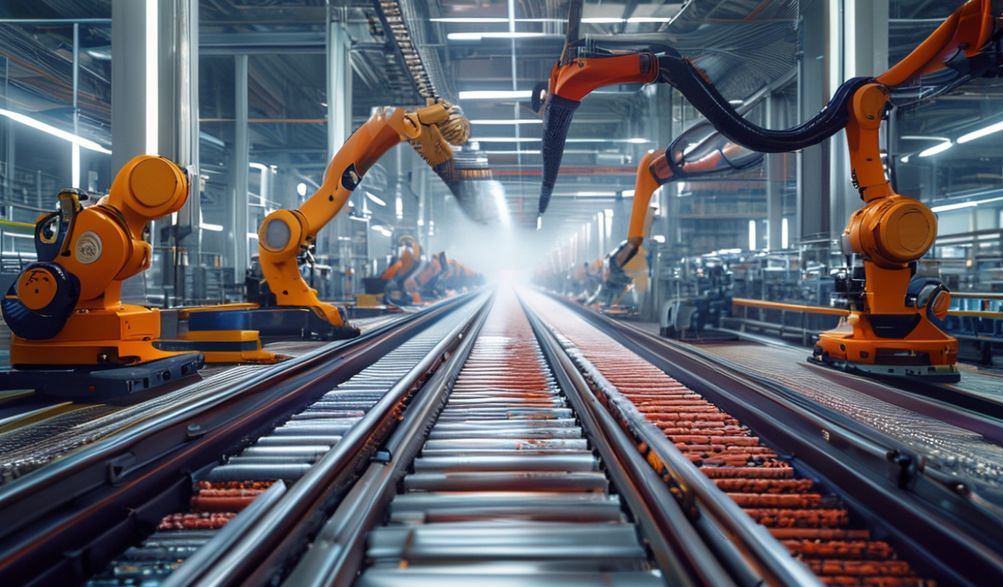
The Ultimate Guide to Paving Bricks Machines: Inside the FUDA Brick Making Factory
소개
Are you a construction professional, contractor, or entrepreneur looking for durable, high-quality paving bricks? You’re not alone. The challenge of sourcing pavers that are consistent, strong, and cost-effective is a common hurdle in our industry.
The secret to superior pavers lies not just in the material, but in the machinery that makes them. The choice between investing in your own equipment or partnering with a specialized factory can define your project’s budget, timeline, and final outcome.
이 포괄적인 가이드는 세계로 깊이 파고들어paving bricks machines, with a special focus on the processes and expertise of the 푸다 벽돌 제조 공장. We’ll explore how the right machinery, backed by factory-level experience, translates to efficiency, quality, and value for your projects. Understanding this connection is crucial for making informed purchasing and sourcing decisions.
지식의 기초를 쌓아봅시다.
포장용 벽돌 기계 이해하기: 핵심 기술과 유형
Before choosing a path, it’s essential to understand the engine of production: the paving bricks machine itself. This technology transforms raw concrete into the precise, interlocking units that pave our world.
How Does a Modern Paving Bricks Machine Work?
At its core, a modern machine automates and refines the ancient process of molding. The goal is to produce a dense, strong concrete block through high-pressure compaction.
The process typically follows these stages:
- 믹싱 Cement, aggregates (sand, stone dust, gravel), pigment, and water are precisely batched and mixed to a consistent, semi-dry consistency.
- 성형: The concrete mix is fed into a mold box on a steel pallet. This mold defines the paver’s shape, size, and surface texture.
- 압축: This is the critical step. A hydraulic ram applies immense pressure (often hundreds of tons) to the mix inside the mold. Simultaneous vibration helps eliminate air voids, creating a dense, uniform product.
- 이젝션 & 큐어링: The freshly molded, “green” paver is ejected onto a conveyor or rack. It is then moved to a controlled curing environment where it gains strength over time.
이를 가능하게 하는 핵심 구성 요소는 다음과 같습니다.유압 시스템 (the powerhouse), the mold box (the designer), the 제어판 (the brain), and the pallet feeder/circulation system (the conveyor).
Types of Paving Bricks Machines: From Manual to Fully Automatic
Not all machines are created equal. The right type depends entirely on your scale and goals.
-
수동 및 반자동 기계:
- 최적 대상: Small-scale production, startups, or specialized, low-volume projects.
- 작전: Require significant manual labor for feeding mix, removing blocks, and pallet handling.
- 투자 Lower initial cost, but higher per-unit labor cost and lower output.
-
완전 자동 포장 블록 기계:
- 최적 대상: Large-scale factories like FUDA, requiring high, consistent output.
- 작전: Entire process—from feeding raw material to stacking finished blocks—is automated via PLC controls.
- 유형: Include linear machines (operate in a straight line) and rotary machines (stations rotate for different functions). These are the workhorses of industrial paver production.
-
고정식 대 이동식 블록 제작 기계
- 문구류 These are fixed installations, like in the FUDA factory. They are heavy-duty, high-output systems designed for permanent, optimized production lines.
- 모바일: Smaller units that can be towed to a construction site. They trade maximum output for flexibility, ideal for producing bricks directly where they are needed.
Key Specifications to Evaluate in a Brick Making Machine
If you’re considering a purchase, look beyond the price tag. These specs determine capability and ROI:
- 생산 능력 Measured in blocks per hour or per 8-hour shift. A small semi-auto might make 1,000 blocks/day, while a full-auto factory machine can exceed 30,000.
- 압력 힘 Measured in tons or kilonewtons (kN). Higher pressure (e.g., 300+ tons) creates denser, stronger pavers with lower water absorption.
- 금형의 다용도성: Can the machine easily switch molds? A good supplier offers dozens of options for different patterns (herringbone, cobblestone, circle kits).
- Automation Level & Power: Defines labor needs and operating costs. Full automation requires a significant electrical connection but minimal operating staff.
Inside the FUDA Brick Making Factory: A Model of Expertise and Scale
Understanding machinery is one thing. Seeing it deployed within a professional factory ecosystem is another. Let’s step inside a model like the 푸다 벽돌 제조 공장 to see how scale and process guarantee quality.
The FUDA Production Philosophy: Quality from Raw Material to Finished Paver
For a factory, quality isn’t a checkpoint; it’s a continuous process that begins before the raw materials even enter the gate.
- Raw Material Mastery: Factories like FUDA don’t use arbitrary mixes. They source specific grades of cement and carefully screened, washed aggregates. Pigments are UV-stable and precisely dosed for color consistency across batches.
- Protocol-Driven Control: Quality is managed through Standard Operating Procedures (SOPs). This includes:
- Input Testing: Verifying the specs of incoming cement and aggregates.
- Process Monitoring: Constant checks on mix proportions, moisture content, and compaction pressure.
- Final Product Audits: Regular testing of random samples for compressive strength, dimensional tolerance, and absorption rates against standards like ASTM C936.
A Walkthrough of the FUDA Factory Production Line
Imagine a synchronized, industrial ballet. Here’s how the production line flows:
- 자동 배치 및 혼합: Silos and conveyors feed materials into a computer-controlled batching system, ensuring perfect mix ratios every time. A large industrial mixer creates uniform batches.
- 자동 성형 및 다짐: The mix is conveyed to fully automatic paving bricks machines. Here, high-pressure hydraulic molds form the pavers at a rapid, relentless pace. Pallets circulate automatically beneath the press.
- Controlled Curing: Fresh pavers enter a curing chamber. Steam curing (at carefully controlled temperature and humidity) accelerates strength gain, allowing pavers to reach over 70% of their strength within 24 hours.
- Packaging & Palletizing: After curing, pavers are automatically stacked, wrapped in plastic, and banded onto pallets for secure shipping.
This seamless, integrated flow is what separates factory production from standalone equipment. It’s a system engineered for consistency.
How Factory-Level Machinery Benefits the End-User
Why does this factory process matter to you, the buyer or specifier?
- 뛰어난 일관성: Every pallet of pavers has identical dimensions, color, and strength. This eliminates sorting and waste on-site, ensuring a perfectly uniform installation.
- 더 높은 압축 강도: Industrial-grade pressure (often 50+ MPa) and optimal curing create pavers that withstand heavy vehicular traffic and harsh freeze-thaw cycles.
- Cost-Effectiveness at Scale: Economies of scale make high-quality, engineered pavers accessible for both residential and massive commercial projects.
- 디자인 유연성 You gain access to a full catalog. Beyond standard shapes, factories offer varied finishes—tumbled (aged look), polished (sleek), or textured (anti-slip)—without needing to change your core production machinery.
Choosing the Right Solution: Machine Purchase vs. Sourcing from a Factory
This is the pivotal decision. Should you bring production in-house or outsource to experts? There’s no universal answer, only the right answer for your situation.
When to Invest in Your Own Paving Bricks Machine
Consider this path if the following scenarios apply:
- You are starting a block manufacturing business to supply the local market.
- You have a very large, long-duration project (e.g., a multi-year township development) where on-site production cuts transport costs.
- You require highly customized pavers continuously and have the technical staff to manage production.
Consider the Total Cost of Ownership:
* Machine capital cost
* Factory space, foundation, and power setup
* Skilled labor for operation and maintenance
* Ongoing costs for spare parts, molds, and raw material inventory
When to Source Directly from an Established Factory like FUDA
Partnering with a factory is often the most efficient and reliable choice for most projects.
- You have a fixed project with defined paver requirements.
- You need certified, guaranteed quality and lack the means to test it yourself.
- Capital is better spent on construction than on setting up a manufacturing line.
- You want to avoid operational hassle—no hiring machine operators, no maintenance headaches, no raw material sourcing.
The advantages are clear: guaranteed specs, expert technical support for installation queries, and the ability to order exact quantities as needed.
Key Questions to Ask Machine Suppliers or Brick Factories
Do your due diligence with this checklist:
For Machine Suppliers:
* What is included in after-sales service (installation, training, warranty)?
* How available and priced are spare parts and new molds?
* Can you provide references from clients in my region?
* What are the machine’s energy consumption and required foundation specs?
For Brick Factories (like FUDA):
* Can you provide test certificates for compressive strength and absorption (e.g., ASTM C936)?
* What is your lead time and minimum order quantity?
* Do you offer technical data sheets and installation guidelines?
* Can you supply samples of the specific color and finish I need?
Ensuring Longevity and Performance: Maintenance & Best Practices
Quality is created during manufacturing, but it must be preserved afterward. Whether you run a machine or receive a delivery of pavers, these practices are key.
Essential Maintenance for Your Brick Making Machine
A machine is a significant investment. Protect it with disciplined maintenance.
- Daily: Clean the machine thoroughly, especially the mold area and feed hopper. Check hydraulic oil levels and for any leaks.
- Weekly: Inspect and tighten all bolts and electrical connections. Lubricate all moving parts as per the manual.
- Monthly: Conduct a thorough inspection of wear parts: molds (for damage), liner plates그리고hydraulic seals. Plan for their replacement before they fail and cause downtime.
Industry Best Practices for Optimal Paver Quality
These principles apply to both factory producers and end-users handling the finished product.
- Proper Curing is Non-Negotiable: If producing, follow a strict curing schedule (time, humidity, temperature). If installing, understand that pavers reach full strength over 28 days.
- Vibration & Compaction Matter: In the machine, proper vibration eliminates voids. On-site, proper plate compaction of the bedding sand and joints is critical for a stable, interlocked surface.
- Handle with Care: Use forklifts with proper attachments to move pallets. Avoid dropping pallets. Store pavers on a flat, level surface and keep them wrapped until use to prevent staining or moisture uptake.
FAQ: Your Questions on Paving Bricks Machines and Factory Production Answered
Q1: What is the typical production capacity of a fully automatic paving bricks machine in a factory setting?
A: Capacities vary widely by model. Industrial machines in factories like FUDA can produce from 8,000 to over 30,000 standard pavers (e.g., 60mm thick) per 8-hour shift. High-end rotary machines can achieve even higher outputs.
Q2: Can a paving bricks machine produce different shapes and sizes?
A: Absolutely. This is a key advantage. Machines use interchangeable mold boxes. Reputable factories and machine suppliers offer extensive catalogs for dozens of patterns—like herringbone, cobblestone, fan, and circle kits—in various sizes and thicknesses.
Q3: What is the difference between concrete pavers from a factory and clay bricks?
A: Concrete pavers are made from a precise mix of cement and aggregates, compacted under extreme pressure. Clay bricks are made from clay and shale, fired in a kiln. Concrete pavers are generally more durable, have consistent color throughout (not just a surface glaze), and offer superior resistance to weathering, salt, and abrasion.
Q4: How important is the curing process for paver strength?
A: It is critically important. Proper steam or water curing in a controlled factory environment is what allows the concrete to achieve its designed high compressive strength (often 50 MPa or higher). This makes it suitable for heavy-duty applications like driveways, container yards, and commercial streets.
Q5: What should I look for in terms of quality certification when sourcing pavers?
A: Insist on evidence of testing to international standards. The most recognized is ASTM C936 (Standard Specification for Solid Concrete Interlocking Paving Units). This certifies performance for strength, absorption, and dimensional tolerance. ISO 9001 for quality management systems is also a good sign of a professional operation.
결론
올바른 선택포장 벽돌 기계 or partnering with a reputable 벽돌 제조 공장 like FUDA is a strategic decision that directly impacts the cost, timeline, and legacy of your project. While owning machinery offers control for large-scale producers, sourcing from an expert factory provides guaranteed quality, immense design variety, and peace of mind without the operational complexities.
By understanding the powerful technology behind the machines and the rigorous, systemized processes inside a modern factory, you are empowered to make informed choices. You can now specify and source paving bricks that are not only aesthetically pleasing but are fundamentally engineered for decades of performance.
Whether you are building a serene patio, a bustling commercial plaza, or a vital public walkway, the foundation of a successful project starts with the right manufacturing partner.
Ready to explore your options? Begin by clearly defining your project’s scale, design requirements, and quality benchmarks. This clarity will guide you perfectly towards either evaluating specific paving bricks machines or contacting established factories for quotations, samples, and technical data sheets.
<