
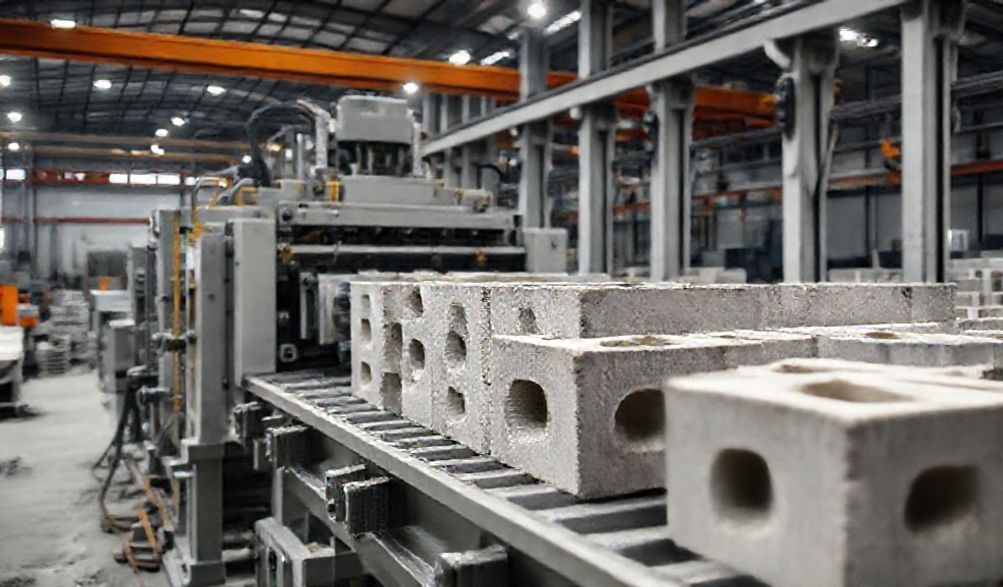
신뢰할 수 있는 중국 블록 제조 기계 소싱의 궁극적인 가이드
세계적인 건설 붐은 둔화될 기미를 보이지 않고 있습니다. 도시 주택에서 핵심 인프라에 이르기까지 내구성 있고 비용 효율적인 건축 자재에 대한 수요는 끝이 없습니다. 이 공급망의 중심에는 중요한 장비인 블록 제조기가 자리 잡고 있습니다. 전 세계의 기업가, 건설 회사 및 정부에게 적합한 기계에 투자하는 것은 건설 분야에서 수익성 있고 지속 가능한 미래를 확보하기 위한 첫걸음입니다.
하지만 전 세계에서 중공업 기계를 조달하는 것은 어려움으로 가득합니다. 수천 마일 떨어진 곳에서 어떻게 품질을 확신할 수 있을까요? 각자 최고의 가격과 성능을 약속하는 공급업체의 바다를 어떻게 헤쳐나갈 수 있을까요? 물류, 관세, 그리고 가장 중요한 사후 지원에 대한 우려는 가장 결단력 있는 구매자조차도 마비시킬 수 있습니다.
중국은 의심의 여지없이 블록 제작 기계의 글로벌 제조 허브입니다. 소규모 수동 프레스부터 대규모 완전 자동화 생산 공장에 이르기까지, 중국 제조업체는 비교할 수 없는 다양한 솔루션을 제공합니다. 그러나 선택의 폭이 넓다는 것은 복잡성도 크다는 의미입니다. 본 가이드는 단순한 공급업체 목록이 아닙니다. 이는 정보에 기반한, 확신에 찬, 성공적인 투자를 결정할 수 있도록 돕는 포괄적이고 전문적인 프레임워크입니다. 우리는 이 과정을 명확히 하고, 성공을 위한 핵심 요소를 강조하며, 블록 제작 기계를 조달하는 데 필요한 지식을 여러분께 제공할 것입니다.중국 블록 제작 기계그것은 앞으로 몇 년 동안 당신의 비즈니스의 믿을 수 있는 초석이 됩니다.
중국이 글로벌 블록 머신 시장을 지배하는 이유
이해하기왜 China leads this industry is key to leveraging its advantages while mitigating the inherent risks of international procurement.
Scale and Manufacturing Expertise
China’s dominance isn’t accidental. It’s the result of decades of development in heavy industrial manufacturing, creating a concentrated ecosystem of expertise. Regions like Fujian, Shandong, and Henan have become specialized clusters for construction machinery. This clustering means unparalleled supply chain efficiency for components like hydraulic systems, vibration motors, and high-grade steel for molds. The sheer scale of production drives standardization, process refinement, and a deep, readily available pool of engineering talent focused on this specific machinery.
Cost-Effectiveness Without Sacrificing Capability
The most apparent advantage is competitive pricing. Economies of scale, efficient supply chains, and a competitive domestic market allow Chinese manufacturers to offer remarkable value. This doesn’t mean you are buying “cheap” in the negative sense. Instead, you are accessing capable engineering and robust manufacturing at a price point that significantly lowers your barrier to entry and accelerates your return on investment (ROI). Whether you’re a small startup or a large corporation, this cost advantage is transformative.
기술 발전과 혁신
The outdated notion of Chinese manufacturers as mere copycats is just that—outdated. Today’s leading suppliers are at the forefront of innovation. They are integrating:
* Smart PLC Control Systems for precise, repeatable operation.
* Energy-Efficient Hydraulics and vibration systems.
* Robotic Palletizing and Stacking for fully automated production lines.
* IoT Connectivity for remote monitoring and predictive maintenance.
Active participation in major international trade shows like bauma CONEXPO and the presence of established export volumes (often accounting for 40-60% of a top factory’s business) are testaments to this technological parity and global acceptance.
Key Types of Block Making Machines from China
Choosing the right type of machine is the first critical decision. Your choice must align with your target market, production volume, and budget.
수동 및 반자동 기계
Ideal for small businesses, community projects, or entrepreneurs testing the market.
* 작전: Requires more manual labor for feeding raw material and removing finished blocks.
* 출력: Lower production (e.g., 1,000 – 4,000 blocks per 8-hour shift).
* 비용: Most affordable entry point, from a few thousand USD.
* 최적 대상: Startups, rural construction, and producing blocks for on-site use in a single project.
완전 자동 블록 제조 공장
The pinnacle of efficiency for large-scale commercial production.
* 특징: Fully integrated systems with automatic batching, mixing, conveying, pressing, curing, and stacking. Controlled by a central PLC.
* 출력: High-volume production (e.g., 10,000 – 100,000+ blocks per day).
* 투자 Significant, often ranging from $50,000 to over $500,000.
* 최적 대상: Established block yards, supplying major construction projects, or municipal infrastructure development.
모바일 블록 머신
Designed for unparalleled versatility and cost-saving.
* 주요 혜택: Can be towed directly to a construction site, producing blocks on-demand using locally sourced materials. This eliminates the high cost of transporting finished blocks over long distances.
* 출력: Variable, but excellent for project-specific supply.
* 최적 대상: Remote infrastructure projects, large housing developments, and disaster relief construction.
Specialized Machines for Diverse Products
Beyond standard blocks, you can specialize. Ensure your supplier offers the specific 콘크리트 블록 제조기 mold and configuration for your product line:
* Hollow Block Machine: For lightweight, insulating load-bearing blocks.
* Paver and Interlocking Brick Machine:조경, 진입로, 보행자 구역용입니다.
* Curbstone and Kerb Machine:도로 가장자리 처리와 조경용입니다.
* Solid Block Machine: For maximum strength and density.
Critical Factors When Choosing Your Supplier
Vetting your supplier is more important than negotiating the final price. A reliable partner is your greatest asset.
Assessing Manufacturer Reputation and History
Do not skip this due diligence. A common oversight is being swayed by a flashy website alone.
* Verify Business Licenses: Ask for their official Chinese business license (营业执照).
* Request Factory Audits: Can they provide recent audit reports from recognized third parties or international buyers?
* Check Years in Operation: Prefer suppliers with a track record of 10+ years; it suggests stability and accumulated experience.
* Ask for a Client Portfolio: Request contact information for past international clients in a region similar to yours. A reputable company will have references.
The Non-Negotiable: Machine Quality and Components
The “devil is in the details” of the components. A low price often reflects subpar parts that will fail.
* 유압 시스템: Insist on known brands (e.g., Rexroth, Kawasaki, Yuken) or high-quality domestic equivalents with clear specifications.
* 진동 모터: The heart of compaction. Brands like Italvibras or Siemens are top-tier, but reliable Chinese brands exist. Ask for model and power details.
* Mold Steel: Must be high-manganese or alloy steel (e.g., #45 steel) with proper heat treatment for longevity. A cheap mold will wear out quickly, ruining block dimensional accuracy.
* Frame & Paint: Look for robust, welded frames and professional anti-corrosion paint treatment, not just a thin spray coat.
Production Capacity and Machine Specifications
Match the machine to your actual needs. Overbuying wastes capital; underbuying stifles growth.
* Output (Blocks/Hour): Be realistic about your market demand. Ask for output data based on a standard block size (e.g., 400x200x200mm hollow block).
* Brick Size Versatility: What is the range of mold sizes the machine can accommodate? How quickly can molds be changed?
* 사이클 타임: The time to produce one pallet of blocks is a key efficiency metric.
After-Sales Service: Installation, Training, and Warranty
This is where reputable suppliers separate themselves from traders.
* 보증: Expect a standard 12-18 month warranty for core parts. The terms must be clear and in writing.
* 기술 지원 Do they provide electrical diagrams, hydraulic schematics, and parts manuals in English (or your language)?
* 훈련 Will they supply detailed video guidance, online training sessions, or even dispatch an engineer for installation and training (though this is an added cost)?
* Spare Parts Policy: What is their process and typical timeline for supplying spare parts to your country?
Navigating the Procurement Process Successfully
With a shortlist of vetted suppliers, you now enter the procurement phase. A structured approach prevents misunderstandings.
Effective Communication and Request for Quotation (RFQ)
Your RFQ should be detailed to get comparable, accurate quotes. Include:
* Required block types, sizes, and target daily output.
* Preferred power configuration (electric, diesel? Voltage/Hertz).
* Request for a list of key component brands.
* Ask for FOB (Free On Board) and CIF (Cost, Insurance, Freight) prices to compare.
* Clarify payment terms (e.g., 30% deposit, 70% before shipment).
* Ask for an estimated production and delivery timeline.
Understanding Incoterms and Logistics (FOB, CIF, etc.)
- FOB (Port of China): You pay for the machine loaded on the ship. You are responsible for and control the main shipping cost, insurance, and customs clearance in your country. Often offers more control and potential cost savings.
- CIF (Port of Your Country): The supplier arranges and pays for main sea freight and insurance to your nearest port. You handle customs clearance and final delivery. It’s simpler but often more expensive as the supplier builds in a buffer.
Payment Methods and Safeguards
- T/T (Bank Transfer): The most common. Use a secure, traceable bank transfer. Never use Western Union or non-traceable methods.
- L/C (Letter of Credit): More secure but complex and costly. Suitable for very large orders.
- Platform Protection: If sourcing via Alibaba, using Trade Assurance provides a layer of payment protection and dispute resolution.
The Importance of Pre-Shipment Inspection
For orders over $20,000, a pre-shipment inspection (PSI) is highly advisable. Hire a third-party inspection company (e.g., SGS, BV, Intertek) to visit the factory, verify the machine is built to spec, and perform a test run under load. The few hundred dollars spent can save you from a catastrophic, unusable delivery.
Maximizing ROI with Your China Block Making Machine
Your relationship with the supplier doesn’t end at delivery. Proper operation and maintenance define your long-term success.
Optimal Raw Material Preparation
The machine can only produce blocks as good as the raw material mix.
* Mix Ratios: Follow the supplier’s guidelines for cement, sand, aggregate, and water. A typical mix might be 1 part cement, 3-6 parts aggregate (sand/stone), with just enough water for proper compaction.
* 재질 품질: Use clean, well-graded aggregates. Impurities can damage the mold and hydraulic system.
* 치유: Implement a proper curing process (steam or water) to achieve final strength.
Routine Maintenance Schedules
Preventative maintenance is non-negotiable. Create a schedule:
* Daily: Check hydraulic oil levels, clean the machine, inspect for loose bolts.
* Weekly: Lubricate all moving parts, check vibration motor mounts.
* Monthly: Inspect hydraulic hoses for wear, check electrical connections, calibrate sensors if needed.
Troubleshooting Common Operational Issues
- Block Breakage: Often caused by incorrect water content (too much or too little), poor mix design, or insufficient vibration time/pressure.
- Poor Compaction/Weak Blocks: Check vibration motor function and pressure settings. Review raw material gradation and cement content.
- Hydraulic Leaks: Inspect seals and hoses. Ensure hydraulic oil is clean and at the correct grade.
Scaling Your Production
Plan for growth from the start. Discuss with your supplier if the machine model is modular—can you later add an automatic mixer, pallet feeder, or stacking system? Choosing a supplier with a full product range makes future expansion smoother.
자주 묻는 질문 (FAQ)
Q1: What is the average price range for a China block making machine?
A: Prices vary dramatically based on type and automation. A small manual machine can start around $3,000 – $7,000. A robust semi-automatic system may range from $15,000 – $50,000. Fully automatic production lines typically begin around $70,000 and can exceed $500,000. Always request a detailed quote based on your specific specifications.
Q2: How long is the typical delivery time from China?
A: For standard models, production may take 15-30 days after deposit. Sea freight can then take 30-45 days to most global ports, depending on the destination. For customized machines, add 2-4 weeks for production. Always factor in a buffer for customs clearance in your country.
Q3: Can Chinese suppliers provide local language manuals and support?
A: Reputable suppliers almost always provide operational and parts manuals in English. Some larger factories can offer support in Spanish, French, Arabic, or Russian. Always confirm language support capabilities during your vetting process.
Q4: Is it safe to pay a large deposit to a new supplier?
A: It carries risk. Mitigate it by: 1) Using secure payment methods (bank T/T, L/C, platform escrow), 2) Starting with a smaller “test” order if possible, 3) Thoroughly verifying the company’s credentials and history, and 4) Insisting on a clear, signed proforma invoice (PI) that details all terms.
Q5: What are the advantages of a fully automatic machine over a semi-automatic one?
A: The key trade-off is capital investment versus labor cost and output. Fully automatic machines offer much higher, consistent output (5-10x more) with minimal labor (1-3 operators). They ensure product uniformity and are essential for large-scale commercial supply. Semi-automatic machines require more labor but have a far lower initial investment, making them ideal for medium-scale or starting businesses.
결론
Sourcing a 중국 블록 제작 기계 is a significant but highly rewarding venture. The journey hinges on understanding China’s manufacturing landscape, precisely defining your needs, and executing a diligent supplier vetting and procurement process. Remember, you are not just buying a machine; you are investing in a long-term partnership and the production capacity that will fuel your growth.
Let this guide be your framework. Move forward with patience and due diligence. Your next steps should be to compile a detailed RFQ, shortlist 3-5 verified suppliers from industrial zones like Fujian or Shandong, and begin requesting factory tour videos, client references, and comprehensive quotations. By prioritizing knowledge and partnership over the lowest initial price, you will secure a machine that delivers quality, reliability, and profitability for the long haul, transforming raw material into the very building blocks of your success.
<