
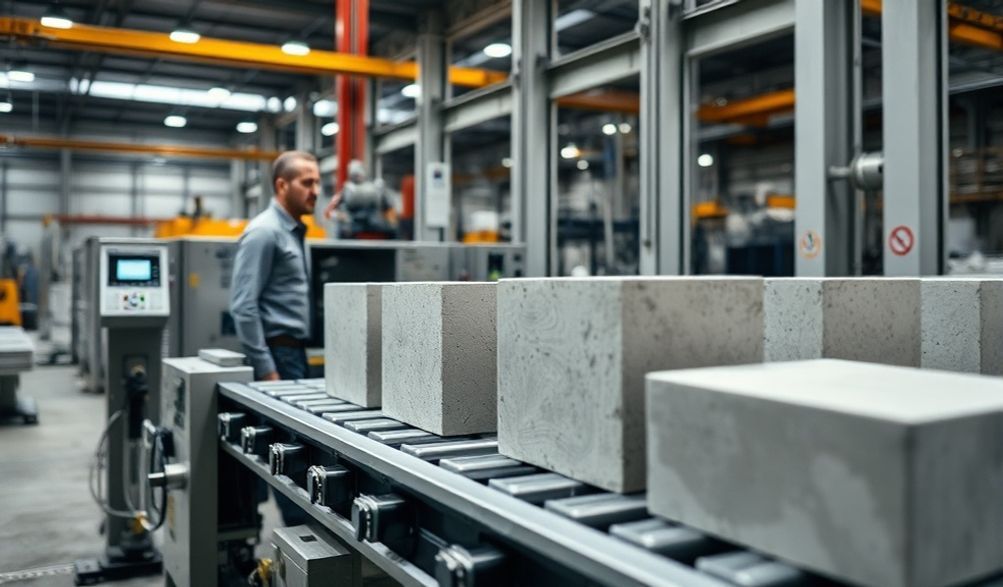
블록 제조기 제조업체에 대한 궁극적인 가이드: 푸다 공장 집중 조명
건설업체, 부동산 개발업자, 그리고 야심 찬 기업가들에게 블록 생산 진출은 상당한 기회를 의미합니다. 그러나 이 길은 종종 결정적인 과제에 막히곤 합니다: 생산적이고 신뢰할 수 있을 뿐만 아니라 진정한 장기적 가치를 제공하는 장비를 조달하는 문제입니다. 시장은 지역 작업장부터 글로벌 산업 거대 기업에 이르기까지 다양한 옵션으로 포화 상태여서, 블록 제조기 제조업체 선택은 어렵고 위험도 높은 결정이 되고 있습니다.
이 가이드는 불필요한 정보를 걷어내고 핵심을 전달하기 위해 만들어졌습니다. 업계 관점에서 서술된 이 글은 여러분이 정보에 기반한 확신 있는 투자 결정을 내릴 수 있도록 필요한 틀과 통찰력을 제공하는 것을 목표로 합니다. 글로벌 제조업 환경을 살펴보고, 평가를 위한 핵심 기준을 세우며, 대표적인 기업 한 곳을 균형 잡히고 깊이 있게 분석해 드리겠습니다.푸다 블록 제작 기계 공장마지막에는 어떤 공급업체에나 적용할 수 있는 명확한 체크리스트를 갖게 되어, 당신의 투자가 단순한 구성 요소가 아닌 성공의 기반을 마련하게 될 것입니다.
블록 제조 기계 제조 환경 이해하기
제조사를 평가하기 전에 기계 자체와 그것이 제작되는 글로벌 허브를 이해하는 것이 중요합니다. 이 지식은 의미 있는 비교의 기초를 형성합니다.
블록 제작 기계의 종류와 그 응용 분야
블록 기계는 만능이 아닙니다. 규모, 예산, 생산량에 따라 각기 다르게 설계됩니다. 적합한 유형을 선택하는 것이 첫 번째 중요한 결정입니다.
-
고정식 vs 이동식 블록 기계
- 고정식 기계 These are high-output, fixed-installation plants. They require a concrete foundation and are typically part of a full production line (with mixers, conveyors, and curing racks). Ideal for large-scale, dedicated block yards and permanent factories.
- 모바일 머신: Also known as egg-layers or mobile block makers, these are smaller units that can be moved around a site. They produce blocks directly on the ground or on pallets. Perfect for on-site production for a specific construction project or for small to medium businesses with limited space.
-
Automatic, Semi-Automatic, and Manual Systems:
- 완전 자동 These lines require minimal human intervention. They feature automated material feeding, molding, curing, and stacking. They offer the highest output (often 10,000+ blocks per 8-hour shift) and consistency but come with a higher initial investment.
- 반자동 A balance between cost and output. The core molding process is mechanized (often with a hydraulic press and vibration), but tasks like feeding raw material or removing finished blocks may be manual. Excellent for medium-scale businesses.
- 매뉴얼: Operated primarily by hand levers or simple mechanics. Lowest output and highest labor requirement, but also the most affordable entry point for very small startups or niche product types.
-
주요 산출물 Modern machines can be fitted with different molds to produce a variety of concrete products:
- Hollow Blocks (various sizes and void percentages)
- 솔리드 블록
- 포장석 및 인터록킹 포장재
- Curbstones & Kerbs
- Grass Grids and Landscape Products
Global Hubs of Manufacturing: Where Quality Meets Innovation
The geographic origin of a machine often correlates with its design philosophy, technological level, and price point.
- 유럽(독일, 이탈리아) Synonymous with premium engineering, cutting-edge automation, and robust durability. Manufacturers here are often leaders in R&D, producing highly efficient, smart machines. The trade-off is a higher purchase price, justified by exceptional longevity and support.
- 중국 The world’s largest manufacturing hub, offering an immense range from basic manual machines to sophisticated fully automatic lines. The key advantage is 경쟁력 있는 가격그리고rapid production capacity. The market is diverse, requiring careful vetting to separate high-quality factories from low-tier assemblers.
- India & Turkey: Strong regional players known for building robust machines well-suited to local market conditions and raw materials. They often offer a good balance of affordability and sturdiness, with growing technological capabilities.
The choice isn’t about which region is “best,” but which offers the optimal balance of technology, total cost of ownership, and accessible after-sales support for your specific location and business plan.
Essential Criteria for Choosing a Block Machine Manufacturer
Moving beyond brochures and websites, you must evaluate manufacturers on concrete, operational factors. Focus on these three pillars.
Assessing Technical Expertise and Machine Quality
A machine is only as good as its core components and construction.
-
핵심 구성 요소: Scrutinize the heart of the machine.
- 유압 시스템: Are pumps, valves, and cylinders from reputable brands (e.g., Bosch Rexroth, Kawasaki)? A robust system ensures consistent pressure and longevity.
- 진동 기술: This is critical for block density and strength. Look for high-frequency, amplitude-adjustable vibration tables driven by quality motors.
- 제어 시스템 Is it a simple relay system or a programmable logic controller (PLC)? PLC-based systems with touchscreen interfaces offer better precision, diagnostics, and automation potential.
-
빌드 품질: Request detailed specifications.
- 강재 등급: What is the grade and thickness of the structural steel and mold frames? Thicker, high-tensile steel resists deformation.
- Welding Standards: Look for evidence of clean, professional welding. Poor welds are potential failure points.
- Durability Testing: Do they provide data on cycle testing or component stress tests?
-
맞춤 설정 기능: Can they modify standard models? This could include adapting to unique local raw materials (e.g., volcanic ash, specific aggregates), producing special block designs, or integrating with your existing equipment.
Evaluating After-Sales Support and Service
This is where many purchases succeed or fail. A machine will eventually need service.
- 설치 및 교육: Does the price include professional installation, commissioning, and on-site operator training? Never underestimate the value of proper setup.
- Spare Parts & Network: How readily available are wear parts (mold liners, vibration motors, seals)? Do they have a local agent or distributor in your country with an inventory? A 6-month wait for a spare part can bankrupt your operation.
- Warranty & Responsiveness: Read the warranty terms carefully. What is covered (parts, labor, shipping)? What is the claimed response time for technical support? Get this in writing.
Analyzing Cost vs. Value (Total Cost of Ownership)
The sticker price is just the beginning. True value is measured over the machine’s lifespan.
- Upfront vs. Operational Cost: A cheaper machine may have higher energy consumption, require more frequent maintenance, and suffer from greater downtime, erasing any initial savings.
- Production Output & ROI: Calculate based on actual output (blocks/hour), not theoretical maximums. A slightly more expensive, faster, and more reliable machine will generate a better return on investment.
- 자격증:찾아보세요CE, ISO, etc. These are not just stickers. They indicate adherence to international safety and quality management standards, which can be crucial for insurance, financing, and exporting your blocks.
Case Study: A Deep Dive into FUDA Block Making Machine Factory
Let’s apply our evaluation framework to a specific manufacturer. FUDA is a well-known Chinese factory, providing a relevant case study for buyers considering this major supply market.
회사 개요 및 시장 위치
- Location & Scale: FUDA is typically presented as a specialized manufacturer located in a major Chinese industrial region. They position themselves as a factory with significant production capacity, focusing on block making machinery for both domestic and international markets.
- 핵심 철학: Their stated focus, like many reputable Chinese manufacturers, is on combining R&D for improved efficiency with strict quality control processes to offer what they term “customer-centric” solutions at competitive price points.
Product Portfolio and Technological Highlights
- Machine Range: FUDA’s portfolio commonly includes:
- 완전 자동 블록 생산 라인: For high-volume output of diverse products.
- Semi-Automatic and Mobile Machines: Catering to small and medium enterprises (SMEs).
- Concrete Roof Tile Machines: Showing diversification within construction machinery.
- Highlighted Features: In their communications, they often emphasize:
- Intelligent PLC Control Systems for ease of operation.
- Energy-Saving Designs in hydraulic and vibration systems.
- Strong Vibration Motors to ensure block density.
- Quick Mold Change Systems to increase production flexibility.
Strengths and Considerations for Buyers
A balanced analysis is key for any manufacturer.
-
Potential Strengths:
- 경쟁력 있는 가격 정책 Likely a primary advantage, offering access to higher levels of automation for a lower capital outlay than European counterparts.
- Product Range Flexibility: Ability to supply everything from a simple machine to a complete plant.
- 적응력: Experience in building machines for a wide array of international markets, potentially including developing regions.
-
Key Considerations & Verification Steps:
- Local Agent Support: This is the paramount question for an international buyer. Does FUDA have a verified, competent, and well-stocked agent or partner in your country or region? The factory’s quality is irrelevant if local support is weak.
- Warranty Enforcement: Clarify exactly how warranty claims are handled internationally. Who pays for shipping defective parts? Who performs the labor?
- Spare Parts Longevity: Will they supply parts for your specific machine model 5 or 10 years from now?
- Verification Advice:
- Request Customer References: Ask for contact information for 2-3 recent customers in a market similar to yours (e.g., similar climate, raw materials). Speak to them directly.
- Visit the Factory: If the order value justifies it, a factory tour is invaluable. You can assess build quality, management, and scale firsthand.
- Review Detailed Specifications: Get full technical datasheets and component brand lists. Compare them side-by-side with other quotes.
Beyond the Purchase: Maximizing Your Block Production Success
Your relationship with the manufacturer continues after the sale. Your operational practices determine the ultimate success of your investment.
Optimal Raw Material Preparation for Quality Blocks
The best machine cannot compensate for poor materials.
- 시멘트: Use fresh, properly stored cement of a consistent grade.
- 집계체 (Sand, gravel, crushed stone) must be clean, hard, and properly graded. Consistent particle size is crucial for mix uniformity and machine performance.
- 물: Use clean, potable water. The water-to-cement ratio is critical for strength; follow mix design guidelines.
- 일관성 The mixed concrete must have a uniform, semi-dry consistency. Too wet, and blocks will slump; too dry, and they won’t compact properly.
Routine Maintenance Checklist for Long Machine Life
Preventative maintenance is non-negotiable.
- Daily: Clean the machine thoroughly, especially the mold and pallets. Check hydraulic oil levels and for leaks. Lubricate all moving points as per the manual.
- Weekly: Inspect mold liners for wear. Tighten all bolts and nuts. Check electrical connections.
- Monthly: Change hydraulic oil filters. Inspect vibration motors and bearings. Perform a full system check.
Troubleshooting Common Block Making Issues
- Poor Surface Finish/Chipped Edges: Often caused by a worn mold, insufficient vibration time, or a concrete mix that is too dry.
- Low Block Density/Strength: Usually due to inadequate vibration pressure or duration, or an incorrect mix design (too much water, poor aggregate grading).
- Blocks Sticking in the Mold: Caused by a dirty or damaged mold, lack of mold release agent, or overly wet concrete.
자주 묻는 질문 (FAQ)
Q1: What is the average lead time for receiving a block making machine from an international manufacturer like FUDA?
A: Lead times vary widely based on machine complexity (standard vs. customized), factory order backlog, and shipping method (sea freight is common for full lines). It can range from 30 days for a standard semi-automatic machine to 90+ days for a customized automatic line. Always get a detailed, written timeline breakdown in your formal quotation, including production, testing, shipping, and estimated customs clearance.
Q2: Can I get a trial or see a machine demonstration before purchasing?
A: Reputable manufacturers often encourage this. Many have showrooms or working production lines at their factory. For international buyers, a factory visit is the most comprehensive option. If travel isn’t possible, insist on detailed, unedited videos of the exact machine model in operation, and request a live video call to see the factory floor.
Q3: How important is local agent support, and what should I expect from them?
A: It is critically important, often the most important factor after machine quality. You should expect the local agent to: hold an inventory of common spare parts, have at least one trained technician available for emergencies, provide first-line technical assistance, and facilitate communication with the factory. Verify their reputation independently.
Q4: What are the key differences between a fully automatic and a semi-automatic block making machine?
A: The main differences are in labor, output, and control. Fully automatic machines require minimal labor (1-2 operators for monitoring), produce very high and consistent output, and are controlled by sophisticated PLC systems. Semi-automatic machines require more manual labor for feeding or handling blocks, have lower output, and involve more manual control, but they cost significantly less upfront.
Q5: Besides the machine price, what other costs should I budget for?
A: Create a comprehensive budget that includes: Shipping & Marine Insurance, Import Duties & Taxes, Foundation & Civil Works for installation, Electrical Setup (possibly requiring a transformer), Initial Stock of Spare Parts & Wear Items, Raw Material Inventory,그리고Costs for Operator Training & Certification.
결론
Choosing a block making machine manufacturer is a strategic decision that hinges on three pillars: Uncompromising Machine Quality, Unmatched After-Sales Support, and Holistic Total Cost of Ownership. As we’ve seen through the case study of FUDA and the broader market, the “best” choice is not universal—it is the one that aligns perfectly with your specific production goals, local operating environment, technical capacity, and financial model.
Let this guide serve as your due diligence framework. Shortlist 2-3 manufacturers from different regions or market positions. Request detailed, component-level proposals from each. Most importantly, speak to their existing customers. There is no substitute for firsthand testimony from someone who has already made the investment.
Arm yourself with knowledge, ask the hard questions, and invest the time upfront. Your reward will be a productive partnership with a manufacturer and a machine that becomes the reliable, profitable engine of your block production business for years to come.
<