
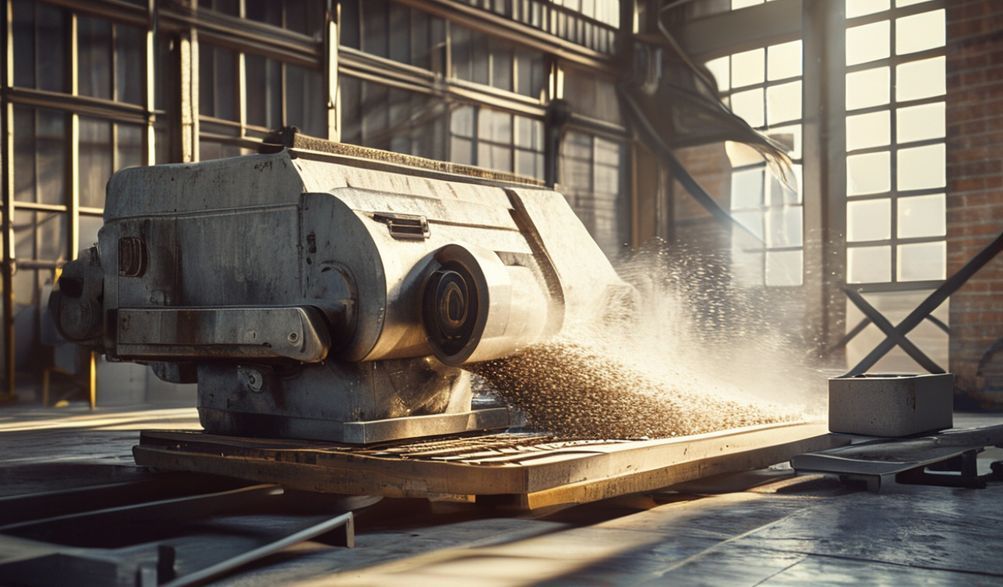
The Ultimate Guide to Cement Brick Moulding Machines | Insights from FUDA Brick Making Factory
Introductio
Did you know that the global construction industry is projected to use over 25 trillion bricks and blocks annually by 2027? At the heart of meeting this staggering demand lies a single, pivotal piece of equipment: the cement brick moulding machine. For contractors, builders, and entrepreneurs, choosing the right machinery isn’t just a purchase—it’s a foundational decision that determines project timelines, product quality, and business profitability.
Hic peritia refert. ApudFUDA Laterariae Figlinae, we have spent years immersed in the design, engineering, and manufacturing of robust brick-making machinery. Our hands-on experience, gained from collaborating with clients on projects from small-scale local builds to large industrial developments, has given us unparalleled insight into what makes a machine reliable, efficient, and a worthwhile investment.
This comprehensive guide is crafted to be your trusted resource. We will move beyond sales pitches to provide a clear, expert overview of cement brick moulding machines. Our goal is to equip you with the knowledge needed to navigate your options confidently. We’ll explore how these machines work, the different types available, their key benefits, and a practical checklist for selection—all informed by the real-world experience of the FUDA lateris conficiendi officina.
What is a Cement Brick Moulding Machine? Core Principles Explained
At its core, a cement brick moulding machine automates and standardizes the process of forming bricks or blocks from a mix of cement, aggregates (like sand or crushed stone), and water. It transforms a wet, loose concrete mix into a dense, precisely shaped building unit ready for curing.
Basic Working Mechanism: From Raw Material to Finished Brick
The process, while varying by machine type, follows a consistent sequence:
1. Alimentatio:Praeparatum mixtum concretum in infundibulum machinae imponitur.
2. Mensura & Translatio: A measured amount of mix is transferred into the mould cavity (the die).
3. Compressio: This is the critical phase. The machine applies immense pressure, often combined with high-frequency vibration, to compress the mix. This removes air pockets and ensures maximum density and strength.
4. Formans: The compacted mix takes the exact shape of the mould—be it a solid block, hollow block, paver, or interlocking brick.
5. Eiectio: The freshly formed, semi-solid brick is gently pushed out of the mould onto a pallet, platform, or conveyor belt for transport to the curing area.
Partes Claves Machinae Normatae
Principales partes cognoscere machinam detegit:
* Saltator:Introitus ad concreti crudi mixturam.
* Forma The heart of the machine. This interchangeable steel component defines the brick’s shape, size, and texture.
* Systema Compactionis: Can be vibrational, hydraulic, or a combination (vibro-compaction). This system provides the force needed for densification.
* Systema Moderandi: Ranges from simple levers on manual machines to programmable logic controllers (PLCs) on automatic plants, governing the cycle.
* Compages & Structura: The heavy-duty steel chassis that provides stability and withstands constant operational stress.
Types of Cement Brick Moulding Machines: Finding the Right Fit
The market offers a spectrum of machines, each suited to specific production scales, budgets, and levels of automation. Based on our experience at FUDA, matching the machine type to your actual needs is the single most important step.
Machinae Manuales Laterum Formandorum
These are the most basic, operator-powered units.
* Idoneum Ad: Very small-scale projects, DIY enthusiasts, or markets with very low labor costs.
* Pros: Extremely low initial investment, high portability, no power requirement.
* Incommodis: Very labor-intensive, low and inconsistent output (typically 300-500 bricks per day), highly dependent on operator skill for quality.
Machinae Semi-Automaticae Lateres Faciendi
This category represents the sweet spot for many small to medium-sized businesses. Key processes like compaction and ejection are powered (usually by an electric motor), but the feeding of raw material and removal of finished bricks is manual.
* Idoneum Ad: Growing block yards, contractors undertaking multiple projects, and entrepreneurs.
* Pros: Excellent balance between cost and output, significantly reduces physical strain, ensures consistent brick quality. Production can range from 1,000 to 5,000 bricks per 8-hour shift, depending on model.
* Incommodis: Requires a steady labor crew for feeding and brick handling.
Planta Latericia Plena Automata
These are integrated production lines designed for large-scale, high-volume manufacturing.
* Idoneum Ad: Major brick suppliers, industrial construction projects, and government housing initiatives.
* Lineamenta: Include automated material handling systems (conveyors, feeders), robotic pallet changers, automatic stackers, and central computerized control. Output can exceed 10,000 bricks per shift with minimal manual intervention.
* Focus: Shifts from simple brick production to overall plant efficiency and uptime.
Stationary vs. Mobile (Egg Laying) Block Machines
This distinction is crucial for your operational layout:
* Machinae Stantes: Produce bricks in a fixed location. Finished bricks are moved away on pallets, often via a conveyor. They are typically higher-capacity and used in centralized block yards.
* Machinae Mobilis "Ova Pariendi" Produce bricks directly on the ground or a concrete slab. The machine moves forward after each cycle, “laying” bricks in rows like a chicken laying eggs. This eliminates the need for pallets and is excellent for on-site production, saving transport costs for the finished product.
Key Advantages of Using a Professional Brick Moulding Machine
Investing in a proper machine from a reputable manufacturer like FUDA delivers transformative benefits that go far beyond mere production.
Unmatched Consistency & Quality in Every Brick
Machines eliminate human variance. Every brick has identical dimensions, density, and surface finish. This consistency is critical for structural integrity, speed of laying, and aesthetic appeal in projects like paving or exposed masonry.
Dramatic Increase in Production Speed and Output
Compare manual output of a few hundred bricks per day to a semi-automatic machine producing several thousand. This scalability allows you to take on larger contracts, meet tight deadlines, and grow your business revenue.
Significant Reduction in Labor Costs and Physical Strain
While some machines require operational labor, they drastically reduce the total workforce needed compared to manual methods. More importantly, they move the role of workers from grueling physical labor to machine operation and supervision, a key consideration for sustainability and worker welfare.
Material Efficiency and Reduced Waste
Precise metering and compaction ensure the optimal amount of raw material is used per brick. This minimizes spillage and waste, directly improving your material cost-efficiency.
Versatility in Brick Design and Size
By simply changing the mould or die, a single machine can produce a variety of products: hollow blocks, solid blocks, pavers, kerbstones, and interlocking bricks for landscaping. This flexibility lets you cater to diverse market demands.
How to Choose the Best Cement Brick Moulding Machine: A Buyer’s Checklist
Making an informed choice requires honest assessment. Use this checklist, informed by our authoritative experience at FUDA, to guide your decision.
Assess Your Production Requirements (Volume, Brick Type)
- What is your current and projected daily/weekly brick need?
- What types of bricks are most in demand in your market (e.g., standard hollow block vs. decorative pavers)?
- Your answers here will immediately point you towards manual, semi-automatic, or automatic categories.
Evaluate Available Space and Power Supply
- Do you have a dedicated shed or open yard? Mobile egg-layers need production floor space.
- What is your power source? Machine specifications will list required voltage (e.g., 380V/3-phase) and power consumption.
Consider the Investment: Budget vs. Long-Term ROI
- Look beyond the sticker price. Calculate the Reditus Collocationis Pecuniae based on:
- Increased production capacity and sales potential.
- Savings on labor costs.
- Reduced material waste.
- A slightly higher initial investment in a durable machine often yields far greater long-term profitability than a cheaper, less reliable option.
The Importance of Machine Durability and After-Sales Support
Hoc non est tractabile. Quaere de:
* Aedificatio: Are critical components like the frame, mould, and vibration table made from high-grade, wear-resistant steel?
* Availability of Spare Parts: Can you easily get replacement parts in 6 months or 3 years?
* Technical Support & Training: Does the manufacturer offer installation guidance, operational training, and troubleshooting support?
* Cautio: What is covered and for how long?
Choosing an established manufacturer like FUDA Laterariae Figlinae is an investment in this ongoing support network, ensuring your machine remains a productive asset for years.
Beyond the Machine: Essential Factors for Successful Brick Production
A machine is a tool. Its output depends on the inputs and processes around it. Our holistic expertise reminds us that success depends on several factors.
Cement Mix Design and Raw Material Quality
The machine cannot compensate for poor materials. Use clean, well-graded aggregates and quality cement. The water-to-cement ratio is critical; too much water weakens the final brick. Consistent mix design is key to consistent brick quality.
Proper Curing Techniques for Maximum Strength
Freshly moulded bricks gain most of their strength during curing. They must be kept moist and at a stable temperature for a period (often 7-28 days). Proper curing racks or chambers are essential, not an afterthought.
Safety Protocols for Machine Operation
Always prioritize safety:
* Ensure all operators read the manual and receive proper training.
* Use lock-out/tag-out procedures during maintenance.
* Wear appropriate personal protective equipment (PPE) like safety glasses, gloves, and steel-toe boots.
* Keep the work area clean and organized.
Why Partner with FUDA Brick Making Factory?
In a market filled with options, our authority and trustworthiness are built on tangible differentiators.
Our Legacy of Engineering and Manufacturing Excellence
We are not just sellers; we are engineers and manufacturers. Every FUDA cement brick moulding machine is built in-house, allowing us to control quality at every stage, from steel sourcing to final testing.
In-House Expertise: From R&D to Technical Support
Our team includes mechanical engineers and technicians who are directly accessible. This means when you have a technical question, you speak to the experts who understand the machine’s design philosophy inside and out.
Robust and Reliable Machine Designs Built to Last
We prioritize durability. Our machines feature reinforced frames, precision-machined moulds, and industrial-grade vibration motors and hydraulics. They are engineered for continuous operation in demanding environments.
Comprehensive Customer Support and Training
We view the sale as the beginning of our partnership. Our support includes detailed documentation, installation supervision (if required), on-site or video operational training, and a responsive channel for technical queries.
Proven Track Record with Client Projects Worldwide
From individual entrepreneurs in Africa to large construction firms in Southeast Asia, FUDA machines are at work daily. This global experience has refined our designs to be versatile, user-friendly, and adaptable to various local conditions and material types.
Frequently Asked Questions (FAQ) About Cement Brick Moulding Machines
Q1: What is the average production output of a semi-automatic machine?
Output varies by model and brick size. A typical FUDA semi-automatic machine can produce between 1,500 to 4,000 standard hollow blocks (e.g., 4x8x16 inches) in an 8-hour shift, depending on crew efficiency and cycle time settings.
Q2: Can one machine produce different sizes and types of bricks/blocks?
Absolutely. This is a key advantage. By changing the mould or die set—a process that can often be done in under an hour—the same machine can produce solid blocks, hollow blocks of different thicknesses, pavers, and more. We offer a wide range of compatible moulds.
Q3: What is the typical lead time for delivery and installation?
For standard models, lead time is typically 15-30 days after order confirmation, depending on production schedule and destination. Delivery includes all necessary documentation. We provide comprehensive installation manuals and can arrange for technician support if needed.
Q4: How important is after-sales service, and what should it include?
It is critically important. Quality after-sales service should include: a clear warranty period, availability of a detailed spare parts catalog, access to technical support (via phone, email, or video), and provision of operation/maintenance manuals. FUDA is committed to providing this full spectrum of support.
Q5: What are the most common maintenance routines for these machines?
Daily and weekly routines are vital for longevity. Key tasks include:
* Daily: Cleaning excess concrete from the mould, frame, and hopper; checking for loose bolts/nuts; lubricating moving parts as per the manual.
* Weekly/Monthly: Inspecting the mould for wear; checking hydraulic oil levels and vibration motor mounts; tightening all major structural connections.
A simple, consistent maintenance routine prevents most major issues.
Conclusio.
Selecting the right cement brick moulding machine is a strategic decision that directly impacts your construction efficiency, product quality, and business growth. From understanding the core mechanics to evaluating your specific needs against the types of machines available, an informed approach is your greatest asset.
As we have outlined, the benefits of partnering with an experienced, manufacturer-focused partner like FUDA Laterariae Figlinae are clear: you gain more than a machine—you gain a reliable asset backed by engineering expertise, durable construction, and a commitment to your long-term success. Our experience is your resource.
Ready to build the foundation of your efficient brick production? Contact the expert team at FUDA Brick Making Factory today for a personalized consultation, discuss your project requirements, and receive a detailed quotation for the machine that fits your vision.
<