
Your Ultimate Guide to Clay Brick Machine Manufacturers & The FUDA Brick Making Factory
Introductio
Bricks are the silent, steadfast backbone of our built world. From ancient hearths to modern skyscrapers, their role is foundational. Yet, behind every consistent, durable brick is a story of precision engineering and manufacturing excellence. In today’s competitive construction market, the quality, efficiency, and cost of your bricks are directly determined by one critical investment: your clay brick making machinery.
With over a decade of experience evaluating production lines and auditing suppliers across the globe, I’ve seen firsthand how the choice of manufacturer can make or break a brick production business. It’s a decision that hinges not just on a machine’s price tag, but on a complex matrix of engineering quality, production capacity, and long-term support.
This guide is designed to demystify that process. We will delve into the core technology of brick manufacturing, establish a clear framework for selecting a partner, and take a detailed look at a prominent name in the industry: the FUDA lateris conficiendi officina. Whether you’re a business owner scaling up, a plant manager modernizing a line, or a procurement officer vetting suppliers, this resource will equip you with the knowledge to make a confident, informed investment in your company’s future.
Intellectus Figlinae Laterculorum Machinalis
Moving from raw clay to a finished, kiln-fired brick is a symphony of mechanical processes. Understanding the instruments in this orchestra is the first step to specifying the right plant for your needs.
Core Components of a Modern Brick Plant
A fully-integrated clay brick production line is more than a single machine; it’s a synchronized system. Each component plays a vital role:
- Crushers & Grinders: These initial machines break down raw clay into a uniform, manageable size, ensuring consistency in the subsequent mixing phase.
- Mixtores. Here, clay is blended with water (and sometimes additives) to achieve the precise plasticity required for extrusion. Modern mixers ensure homogenous moisture content throughout the batch.
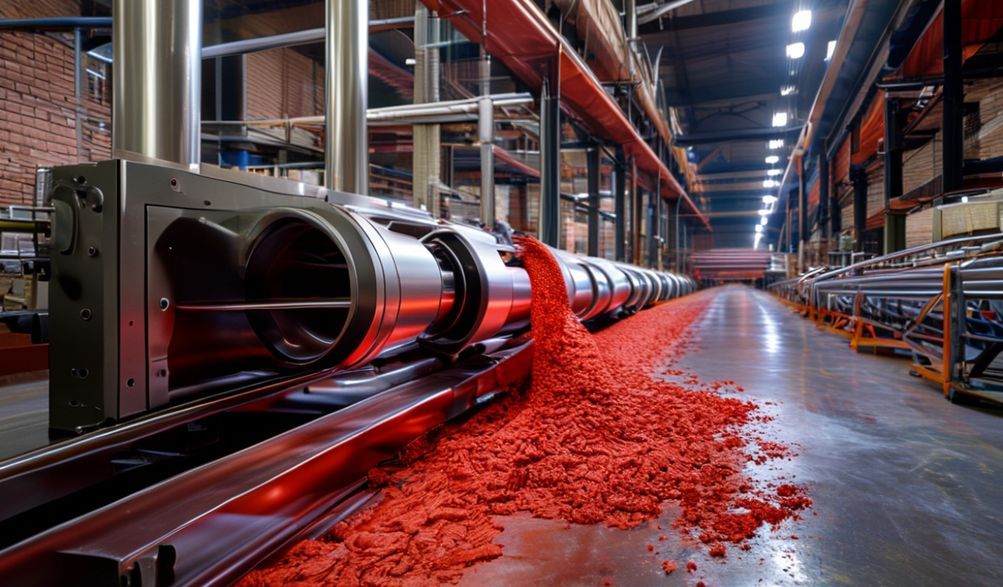
- Extrusores: The heart of the operation. The prepared clay is fed into the extruder, where a powerful auger and vacuum system remove air pockets and compress the material, forcing it through a die to form a continuous column of clay (the “column”) in the desired profile.
- Cutters: The continuous clay column is then cleanly sliced into individual, green bricks. Automatic cutters use wires or blades, synchronized perfectly with the extruder’s output speed.
- Dryers: Green bricks are too moist for firing. Drying chambers, often using controlled heat and humidity, remove moisture gradually to prevent cracking and prepare the bricks for the kiln.
- Kilns: The final transformation. Kilns (like tunnel kilns or Hoffman kilns) subject the dried bricks to intense, controlled heat, sintering the clay particles to achieve permanent strength and durability.
The efficiency of your entire operation depends on how well these components are matched and integrated.
Genera Machinarum Laterum Fingendorum: A Manualibus ad Plene Automata
The level of automation you choose directly correlates with your target output, labor costs, and business scale.
- Machina Manualia: Low-capacity, labor-intensive, and suitable for very small-scale or artisanal production. They offer a low entry cost but are not viable for commercial output.
- Semiautomaticae Machinae: These systems mechanize core processes like mixing and extrusion but may require manual handling for cutting, setting, or unloading. They offer a middle ground in terms of output and investment.
- Machinamenta Plena Automata: The pinnacle of efficiency. These computer-controlled or PLC-managed lines handle the entire process from feeding raw material to stacking fired bricks. They maximize productio effectus, ensure consistent quality, and minimize manual labor, representing the best long-term value for medium to large-scale plants.
Claves Technicae Proprietates ad Perpendendum
When comparing machines, move beyond the brochure and scrutinize these hard metrics:
- Capacitas: Never rely on a vague “high capacity.” Demand a bricks-per-hour figure under standard conditions (e.g., for a standard solid block). Is it 5,000/hour or 25,000/hour?
- Potestatis Consumptio: Energy efficiency is a major operational cost. Compare the total connected load (in kW) of different systems offering similar output.
- Automationis Gradus: What is controlled by the system? Just the extrusion pressure, or also the cutter speed, dryer temperature, and kiln car indexing?
- Pressio Vis In the extruder, this is often generated by a robust Systema hydraulica. Higher pressure (measured in tons or MPa) typically means denser, stronger bricks.
- Customization & Mold Versatility: Can the machine easily switch between producing solid blocks, perforated bricks, or different facing brick profiles? Mold versatility future-proofs your investment.
How to Choose the Right Clay Brick Machine Manufacturer
Selecting a machine is a technical decision; choosing a manufacturer is a strategic partnership. Here’s how to separate market leaders from mere sellers.
Evaluating Manufacturer Expertise and Experience
Longevity in the industry is a powerful trust signal. Look for:
- Industria Tenura: A company with 15+ years of operation has likely navigated multiple market cycles and iteratively improved its designs.
- Operum Fasciculus: Ask for evidence. A reputable manufacturer should readily provide case studies or photos of installed plants, especially those similar to your planned project.
- Technical R&D Capability: Do they have in-house engineering teams? Do they publish technical papers or hold patents? This indicates a commitment to innovation, not just assembly.
Consilium ad Agendum: Always request and actually contact client references. Ask about machine performance, reliability, and the company’s responsiveness to issues.
Assessing Build Quality and Material Standards
The durability of your plant is forged in its component choices. Insist on details:
- Compages & Structura: Is it fabricated from high-grade, reinforced steel plate? This resists the constant vibration and stress of operation.
- Critical Wear Parts: The extruder auger, cutter heads, and die liners should be made from hardened, wear-resistant alloys or coated with specialized materials to extend service life.
- Resistentia Corrosionis: Are electrical panels sealed? Are frames properly painted or powder-coated? This is crucial for longevity, especially in humid climates.
This focus on quality isn’t about luxury; it’s the primary driver of low maintenance costs and high uptime—the bedrock of your return on investment.
The Critical Role of After-Sales Support
The true test of a manufacturer begins after the sale. Comprehensive support is non-negotiable.
- Instalatio et Dedication: Will they send engineers to supervise installation and ensure the plant runs to specification?
- Comprehensiva Operantium Institutio: Your team must be trained not just to run, but to understand and perform basic maintenance on the equipment.
- Partes Subsidiae Praesto: What is the guaranteed lead time for critical spare parts? Is there a local warehouse or a systematic parts numbering system?
- Termini Cautionis: Read the fine print. A strong warranty (e.g., 12-24 months on core components) reflects the manufacturer’s confidence in their product.
Consider after-sales support your primary risk mitigation strategy. It transforms a capital expenditure into a secure, productive asset.
Spotlight on FUDA Brick Making Factory: A Case Study in Reliability
As a case study in the principles outlined above, let’s examine the FUDA brick making factory. While specific, verifiable data should always be confirmed directly with the company, a review of their market positioning and reported offerings provides a useful benchmark.
Company Profile and Industry Legacy
FUDA presents itself as an established player in the brick machinery sector, often highlighting years of specialization in designing and manufacturing complete clay brick production lines. Their core philosophy typically centers on providing “turnkey solutions,” aiming to be a single-point supplier for everything from individual clay processing equipment to the entire plant. This integrated approach can simplify project management for the buyer.
FUDA’s Product Range and Technological Innovations
A review of their offerings usually reveals a comprehensive catalog designed to serve various market segments:
- Extrusores: They typically offer a range of extruders with different capacities and pressure settings, often emphasizing their vacuum chamber design for creating denser bricks.
- Automatic Brick Cutting Systems: A key feature often highlighted is precision, synchronized cutting with minimal clay waste.
- Dryers and Kilns: FUDA frequently promotes tunnel kiln design for continuous, fuel-efficient firing, which is a standard for medium-to-large-scale production.
- Productorum Series: Their machinery is generally capable of producing various end products, from standard solid block machines to those configured for hollow blocks or interlocking pavers.
What Sets FUDA Apart? Quality and Service Analysis
Based on their stated strengths, several factors are commonly emphasized:
- Reported Build Quality: They often stress the use of heavy-duty materials and precision machining in their machine frames and key components, aligning with the industry demand for durability.
- De Efficacia Energetica Cura. In line with modern priorities, their tunnel kilns and dryer designs are frequently marketed for their thermal efficiency, aiming to reduce long-term fuel costs for clients.
- Service Structure: A notable point is their reported commitment to after-sales service, including the provision of installation guidance, training, and a network for spare parts supply. This directly addresses a major pain point for international buyers.
It’s crucial to maintain a balanced perspective. While these are positive indicators, any buyer’s due diligence must include verifying these claims through independent client testimonials, requesting a detailed inspection of materials used, and comparing their specific technical specifications and commercial terms against other shortlisted manufacturers.
Planning Your Brick Production Project
Calculating ROI: Machine Cost vs. Long-Term Value
The cheapest machine is often the most expensive. A proper ROI analysis must include:
- Praemium Praecipuum: Machine cost, shipping, import duties, and installation.
- Sumptus operandi: Energy, labor, maintenance, and raw materials.
- Output Value: The market value of your planned brick production.
- Firmitas & Intermissio: A robust, reliable machine with 95% uptime will outperform a cheaper alternative that frequently breaks down, regardless of the initial price difference.
Site Preparation and Logistics Considerations
Prepare your site to welcome the new plant efficiently:
- Spatium: Ensure adequate floor space for the entire line, plus room for raw material storage, green brick staging, and finished product inventory.
- Power & Utilities: Confirm your electrical supply meets the plant’s voltage and amperage requirements. Plan for water supply for mixing.
- Materiae Rudis Tractatio: Design an efficient flow for clay delivery, storage, and feeding into the crusher/mixer.
- Fundamentum: Provide the manufacturer’s foundation drawings to your civil engineer early. A solid, level foundation is critical.
Navigating Export, Shipping, and Installation
When dealing with international manufacturers:
- Incoterms: Clearly agree on responsibilities (e.g., FOB, CIF, DDP). Who handles shipping, insurance, and customs clearance?
- Documentatio. Ensure you will receive all necessary manuals, electrical diagrams, and customs documentation (commercial invoice, packing list, certificate of origin).
- Technical Commissioning: Factor in the cost and visa process for sending their engineers to your site for installation supervision and commissioning. Their on-site presence is invaluable.
Interrogationes Saepius Petitae (ISP)
Q1: What is the average production capacity of a mid-range automatic clay brick machine?
A: For a fully automatic line focused on standard solid blocks, a realistic mid-range output is typically between 15,000 to 35,000 bricks per 8-hour shift. This varies significantly based on the brick size, mold configuration, and the specific power of the extruder.
Q2: How important is the moisture content of clay for these machines?
A: It is absolutely critical. Optimal moisture (usually between 18-25%) ensures proper plasticity for extrusion. Reputable machines are designed to handle some variance, but consistent clay preparation is key to avoiding defects like cracking or poor extrusion shape.
Q3: Can manufacturers like FUDA customize machines for specific brick sizes or types?
A: Yes, most established manufacturers offer a degree of customization. This is most common in the form of interchangeable molds and dies to produce different brick dimensions and profiles (e.g., hollow, perforated). Major structural modifications are possible but involve higher cost and longer lead times.
Q4: What is the typical lead time for manufacturing and shipping a complete brick plant?
A: For a standard complete plant, expect a lead time of 60 to 120 days from order confirmation to shipment, depending on the complexity and the manufacturer’s order book. Sea freight shipping can then add another 30-60 days, depending on the destination port.
Q5: What are the most common maintenance requirements for a clay brick extruder?
A: Routine maintenance is essential. Key tasks include: daily checking of the vacuum pump oil level and seal integrity; weekly inspection of the auger and liner for wear; regular greasing of all bearings as per the manual; and immediate cleaning of the die and cutter after any production stoppage to prevent clay hardening.
Conclusio.
Choosing a clay brick machine manufacturer is a defining decision that balances intricate technical specifications with the fundamental principles of partnership and trust. It requires looking beyond the initial quotation to evaluate proven engineering quality, a demonstrable track record, and—most importantly—an unwavering commitment to after-sales support.
As an industry expert, my strongest recommendation is to prioritize total cost of ownership over the lowest bid. A reliable machine from a partner you can trust for the next decade is the true foundation for sustainable and profitable growth.
Your Next Step: Conduct thorough due diligence. Request detailed, specification-rich quotations. If feasible, visit the factory facilities of your shortlisted manufacturers, including FUDA, to see the build quality firsthand. Most importantly, speak directly to their existing clients. This firsthand insight is the most valuable research you can do to secure the future of your brick production business.
<