
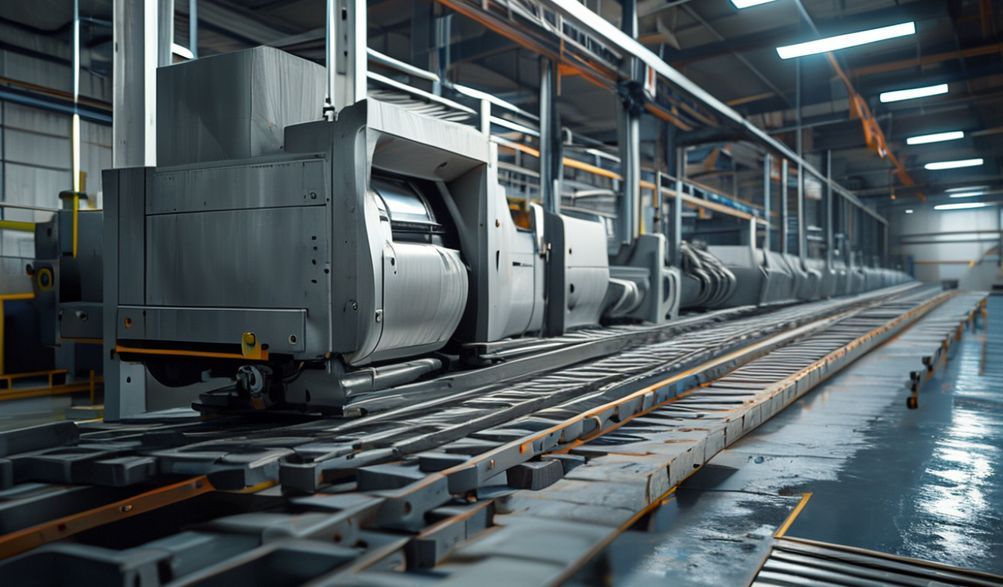
Ultima Tua Ductor ad Machinam Laterariam Sinensem Comparandam: Opifices, Venditiones et Considerationes Claves
Industria constructionis globalis efficentia et parabilitate nititur. In medio innumerabilium operum infrastructurae, a domiciliis aedificandis ad urbana ornamenta, instrumentum criticum iacet: machina laterum faciendorum. Pro negotiis per orbem terrarum quae capacitatem et lucrum augere quaerunt, quaestio non est solumsiin unum investire, sedubiad eam provenire. Magis magisque responsum in Sinas, orbis terrarum potentiam fabricatricem machinarum constructionis, firmiter intendit.
Hic dux tibi est comprehensivus, peritus subsidium. Sive possessor negotii, sive procurator incepti, sive mercator es qui in materiarum aedificiorum sectorem ingrederis, per vastum mercatumSina machina laterum faciendorum venditionis fabricator.Optiones terrendae esse possunt. Propositum nostrum est processum clarificare. Secundum industriae analysin et optimas procurationis praxes, perspicientias praebebimus quas requiris ut emptio fidens et docta fiat. In fine, intelleges quomodo probatos suppeditatores cognoscas, specificationes technicas compares, totumque procurationis processum administres ad machinam obtinendam quae verum valorem operationi tuae praestet.
Cur a Machina Lateraria e Sinis Petenda Sit?
Machinamenta ex Sinis petere consilium est strategicum, quod certis commodis fulcitur. Agitur de accessu ad maturam, extensibilem et novam oecosystemam industrialem, quae ad postulationes globales satisfaciendas comparata est.
Efficacia Sumptuum et Pretium Competitivum
Praecipuum commodum saepe in sumptu consistit. Sinenses fabricatores ex immensis oeconomiae gradibus, ex integris materiarum comparationis retibus, et ex certaminibus laboris mercatis fructum capiunt.
- Hoc in multo inferiore pecunia capitali initiaria convertitur quam ex multis aliis regionibus comparando.
- Non solum machinam emis, sed etiam rationem efficacissimae productionis adsequeris, quae impensas minuit salva functionum fundamentalium integritate.
- Hoc compendium impendii negotiis permittit ut celeriorem reditum in collocatione pecuniae (ROI) consequantur vel ut pecunias conservatas ad alias areas criticas conferant, sicut materiae crudae, mercatura, vel situs explicatio.
Varia Machinarum Technologiarumque Series
Sector fabricandi in Sinis latitudine insigni distinguitur. Non uno aut duobus machinamentorum generibus coartamini.
- A Rudibus ad Provecta:Omnia invenire potes a simplicibus machinis manualibus prementibus, quae parvis vel initiis operationibus aptae sunt, usque ad altissimas lineas productionis plene automaticas, quae minimam hominum interventum requirunt et milia laterum per horam efficiunt.
- Varietas in Forma et Munere:Mercatus praebet plantas stationarias, machinas mobiles ad lateres faciendos (quae saepe "ovaria" vocantur), et exempla semiautomatica quae effectum cum impendio aequant.
- Productorum Diversitas:Opifices machinas producunt quae amplam varietatem productorum concretorum creare possunt: cavos lateres usitatos, solidos lateres, lapides pavimentales, lateres intertextos, lapides marginales, et alia. Hoc permittit ut tuam productorum copiam variare possis ad necessitates mercatus explendas.
Fabricatio Magnitudo et Maturitas Catena Suppeditans
Sinae dominatio in profundis industrialibus fundamentis aedificata est.
- Congeries Industriales:Regiones integrae in machinis aedificiorum specializant, centra perita, certaminis, et innovationis condensata creantia. Haec conglobatio qualitatem provehit et adoptionem technologicam celerem fovet.
- Maturae Subministrationis CatenaeAccessus ad robustam et localem retem suppeditatorum partium (pro hydraulica, motoribus, moderatoriis, et ferro) significat fabricatores partes qualitatis celeriter et magno numero petere posse, tempusque ducendi tum pro productione tum pro futuris subsidiariis partibus minuere.
- Facultas Accommodationis:Magnitudo et peritia permittunt officinis bonae famae ordines ad modum accommodatos pro singulis formis caementorum aut certis postulationibus productionis commode tractare, quod minores sedes fabricandi aegre sustinere possunt.
Quomodo Probabiles Sinenses Opifices Cognoscantur
Cum milibus mercatorum in rete descriptis, socios fide dignos ab indignis secernere negotium tuum gravissimum est. Ratio ordinata confirmandi necessaria est.
Clavis Gradus Fiduciae Verificandi
Diligentia incipit a confirmatione status legalis et operativi societatis.
- Licentia Negotialis Confirmatio: Always request the company’s Chinese business license. You can verify its authenticity using platforms like Tianyancha or the official National Enterprise Credit Information Publicity System. This confirms they are a legitimate legal entity.
- Experience Matters: Look for manufacturers with a proven track record. A company operating for 10+ years has likely navigated market cycles and improved its product. Specific export experience to your region or country is a major plus, as it indicates familiarity with relevant standards and logistics.
- Certificationes Internationales: While not an absolute guarantee, certifications are a strong indicator of quality commitment. Look for:
- CE Signum: Indicates conformity with health, safety, and environmental standards for the European Economic Area.
- ISO 9001: Certifies a quality management system is in place.
- SGS/BV Inspection Reports: Third-party quality inspection reports provide objective evidence of a machine’s performance and build quality.
Evaluating Online Presence and Expertise
A manufacturer’s digital footprint reveals much about their professionalism.
- Professional Website: A well-structured, informative website with detailed product specifications, clear technical data sheets, and high-resolution images/videos suggests investment in their business. Be wary of sites with poor English, vague descriptions, or stock photos only.
- B2B Platform Profiles: Platforms like Alibaba, Made-in-China, and Globalsources are key marketplaces. Scrutinize the supplier’s profile:
- Transaction History & Reviews: Look for consistent sales and read buyer reviews carefully.
- Response Time & Communication: Note how professionally and promptly they answer inquiries.
- Verified Status: “Gold Supplier,” “Trade Assurance,” or “Assessed Supplier” badges indicate the platform has performed some level of vetting.
The Critical Role of Factory Audits and Samples
Seeing is believing. Whenever possible, move beyond digital verification.
- Officinae Recognitio: An on-site visit is ideal. If not feasible, insist on a comprehensive virtual factory tour via video call. You want to see:
- The production workshop’s organization and cleanliness.
- The assembly process and quality control checkpoints.
- The inventory of raw materials and finished machines.
- The testing area where machines are run before shipment.
- Requesting Samples: For the block molds, always request a physical sample block to be shipped to you. This allows you to verify:
- The dimensional accuracy and finish of the block.
- The quality of the concrete mix used in the demo.
- The precision and durability of the mold itself.
Key Technical Specifications to Compare Before You Buy
Once you’ve shortlisted trustworthy manufacturers, a detailed technical comparison is essential to match the machine to your specific needs.
Machine Type and Production Capacity
Your project scale dictates the machine type.
- Machinae Manuales/Semiautomaticae: Lower output (500-2,000 blocks per 8-hour shift), higher labor requirement, but lower cost. Ideal for startups or small, specific projects.
- Planta Stativa Plene Automata: High output (2,000-10,000+ blocks per shift), minimal labor, high consistency. Require significant foundation and space. Ideal for medium to large commercial block yards.
- Mobile Block Machines (“Egg Layers”): Produce blocks directly on the ground, which are then moved after curing. Offer a good balance of output and flexibility, perfect for on-site production for large construction projects.
- Quaestio Clavis: Always ask for the tempus cycli (time to produce one pallet of blocks) and calculate the realistic output per hour/day based on your operational model.
Block Specifications and Mold Customization
The machine is only as good as the molds it uses.
- Standard Range: Confirm the machine can produce the block sizes and types you need (e.g., 4″, 6″, 8″ hollow blocks; various paver thicknesses).
- Qualitas Formae This is a critical wear part. Insist on molds made from high-quality, hardened steel with precise CNC machining. Cheap, soft steel molds will deform quickly, ruining block quality and costing you more in the long run.
- Consuetudo: Need a unique block design? Reputable manufacturers offer custom mold design and fabrication. Understand the process:
- Provide detailed drawings or a sample.
- Expect additional costs and longer lead times (4-8 weeks typically).
- Inquire about the cost and lead time for future re-orders of the same custom mold.
Power Requirements, Automation Level, and After-Sales
Consider the total cost of ownership, not just the purchase price.
- Fons Potestatis: Machines can be electric (clean, quiet, requires stable grid power), diesel (fully mobile, ideal for remote sites), or hybrid. Choose based on your site conditions.
- Automationis Gradus: Automation affects labor costs and consistency. Options range from manual feeding and stacking to fully robotic systems with automatic mixers, pallet feeders, and stackers.
- Post-Venalium Subsidium: This is arguably the most important specification. Clarify:
- Cautio: What is covered (e.g., hydraulic system, controller, frame)? For how long (typically 1-2 years)? What are the terms?
- Partes Suppetiales: Is there a readily available spare parts list? What is the pricing and shipping policy for parts?
- Auxilium Technicum: Do they provide installation supervision or operator training (onsite or remote)? Is there English-language manual and video support? Is there a 24/7 online support contact?
Navigating the Purchase Process: From Inquiry to Delivery
A smooth purchase process hinges on clear communication and understanding international trade mechanics.
Effective Communication and Quotation Analysis
- The RFQ (Request for Quotation): Be specific. Include desired machine model, output, block specifications, power type, and any customization. The clearer you are, the more accurate the quote.
- Decoding the Proforma Invoice (PI): The PI is your formal price quote. Pay close attention to:
- Incoterms: FOB (Liberum in Navi) means you pay for main shipping and insurance. Pretium, Securitas, et Vectura means the supplier arranges and pays for shipping to your port. EXW (Ex Works) means you handle everything from their factory door. FOB is common and offers good buyer control.
- Quid Inclusum Est: Does the price include molds (how many?), a standard set of spare parts, an electric control cabinet, or on-site training? This must be itemized.
Secure Payment Methods and Contract Essentials
Never pay 100% upfront.
- Standard Payment Terms: A common and secure method is T/T (Bank Transfer) with a 30% deposit upon signing the contract, and the 70% balance paid against a copy of the Bill of Lading before shipment. Platforms like Alibaba’s Trade Assurance offer escrow-like protection.
- The Sales Contract: This legally binding document must include:
- Detailed technical specifications as an annex.
- Agreed price, payment terms, and delivery time.
- Warranty terms and after-sales service agreement.
- Liability clauses for delays or non-conforming goods.
Logistics, Shipping, and Customs Clearance
- Choosing a Freight Forwarder: It is highly advisable to hire your own freight forwarder in your country or use one recommended by your business network. They will handle the complex logistics and customs clearance on your behalf.
- Shipping Method: Sea freight (LCL or FCL) is the most economical for heavy machinery. Air freight is extremely costly and only for urgent, small parts.
- Essential Documents: The manufacturer must provide a clean set of export documents, including:
- Commercial Invoice
- Packing List
- Bill of Lading (or Air Waybill)
- Certificate of Origin
- Equipment Manuals
Common Pitfalls and How to Avoid Them
Forewarned is forearmed. Avoid these common mistakes.
Prioritizing Price Over Total Value
The cheapest quote is often the most expensive choice in the long run. A machine that breaks down frequently, produces poor-quality blocks, or has no service support will cripple your operation. Evaluate Total Value: quality + reliability + after-sales support + operational efficiency.
Overlooking After-Sales Service and Parts Supply
A machine is a long-term asset. Before signing, have a clear, written plan for after-sales. Ask: “If a critical hydraulic component fails in 18 months, how do I get a replacement, and how quickly?” Some manufacturers have agents or partners in major regions; this is a significant advantage.
Misunderstanding Machine Capabilities and Site Requirements
A machine won’t perform miracles. Ensure your local raw materials (cement, aggregates, sand) are compatible with the machine’s mixing system. Furthermore, prepare your site as per the manufacturer’s foundation drawings and power requirements ante the machine arrives. Poor site prep is a leading cause of startup delays and issues.
Interrogationes Saepius Petitae (ISP)
Q1: What is the average price range for a block making machine from China?
A: Prices vary dramatically based on specifications. Small manual machines can start around $5,000, semi-automatic models range from $15,000 to $40,000, and large, fully automatic production lines can cost $70,000 to $150,000 or more. You must get specific quotations based on your required output and automation level.
Q2: Can I get a customized machine or mold for a unique block design?
A: Yes, most reputable manufacturers offer customization services for both molds and, to a lesser extent, machine configurations. You will need to provide detailed specifications or drawings, and you should expect additional costs and longer production lead times for custom work.
Q3: How do I handle machine installation and operator training?
A: Many suppliers offer optional on-site installation and training services for an additional fee, covering travel and accommodation. If you opt out, ensure they provide comprehensive English operation manuals, installation drawings, and video guides. Clarify the availability of remote video support during commissioning.
Q4: What is the typical warranty period for these machines?
A: Standard warranty periods typically range from 1 year to 2 years for core components like the hydraulic system, electrical controller, and main frame. However, this is negotiable and must be explicitly defined in your sales contract. Wear parts like molds and mixer blades are usually covered for a shorter period or not at all.
Q5: Are there reliable inspection services I can use before shipment?
A: Absolutely. Hiring a reputable third-party inspection company is a wise investment. Firms like SGS, Bureau Veritas (BV), or Intertek can perform a Pre-Shipment Inspection (PSI). They will visit the factory, check the machine against your order specifications, perform a test run, and verify packaging, providing you with an independent quality report before you release final payment.
Conclusio.
Sourcing a block making machine from China is a significant but manageable endeavor that can yield exceptional value for your business. The journey hinges on a disciplined approach: conducting thorough manufacturer vetting, performing detailed technical comparisons, and meticulously managing the purchase and logistics process. Remember, the goal is not merely to find the lowest-cost supplier, but to identify a reliable manufacturing partner committed to your long-term success.
Invest the time upfront in research and due diligence. Use this guide to create your own procurement checklist. Leverage industry forums and consult with peers who have gone through the process. By doing so, you transform a complex international purchase into a strategic investment that will build the foundation of your profitability for years to come.
Ready to start? Begin by drafting your detailed project requirements and using the verification steps outlined here to create a shortlist of potential partners.
<