
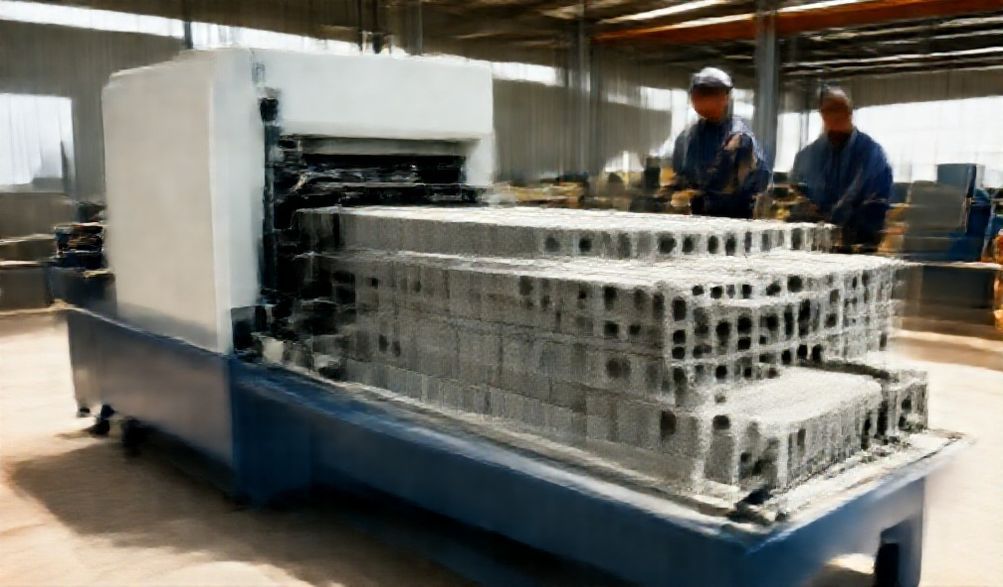
Cement Brick Making Machine Price in South Africa | Expert Guide by FUDA Factory
Introductio
South Africa’s construction landscape is booming, driven by a critical need for affordable housing, infrastructure development, and commercial projects. At the heart of this growth lies a simple, powerful truth: the quality, speed, and cost of construction are directly tied to the equipment used. For entrepreneurs, builders, and developers looking to enter or scale in the brick and block manufacturing sector, the search often begins with one key phrase: “cement brick making machine price South Africa.”
Yet, this search can quickly lead to confusion. Prices online vary wildly, specifications are unclear, and it’s difficult to distinguish between a genuine investment and a costly mistake. The initial price tag is just one piece of the puzzle; understanding total cost of ownership, after-sales support, and machine suitability for local conditions is what separates a successful venture from a stalled project.
Hic peritia refert.FUDA Laterculorum Faciendi Officina is not just a supplier; we are a manufacturer with over 15 years of dedicated experience engineering robust block making machines for the African market. We have witnessed firsthand the unique challenges and opportunities in South Africa, from material variations to power reliability. This guide draws directly from that hands-on engineering expertise and our deep portfolio of successful installations across multiple provinces.
Our goal here is not to list a misleading “cheapest price.” Instead, we provide a transparent, expert breakdown of what influences cement brick making machine prices in South Africa. We’ll equip you with the knowledge to make an informed decision that balances upfront cost with long-term productivity, durability, and return on investment.
Intellectus Machinarum Laterum Cementi: Genera et Usus
Before discussing price, it’s essential to understand what you’re buying. The right machine type for your project is the single biggest factor determining cost and potential.
Manuale contra Semi-Automatica contra Automata Plena Machina
The level of automation is the primary differentiator, directly impacting price, output, and labor requirements.
-
Machina Manualia:
- Descriptio: Operated entirely by hand. The operator fills the mould, compresses the mix (often via a lever), and manually ejects the block.
- Opus & Labor: Ideal for very small-scale production, community projects, or startups with minimal capital. Output is low (typically 500-1,500 blocks per day) and labor-intensive.
- Impensa Consecutio: Lowest initial investment. Best viewed as a tool for specific, low-volume tasks rather than a commercial production solution.
-
Semiautomaticae Machinae:
- Descriptio: The core processes—mixing, vibration, and compression—are powered (electrically or hydraulically). Operators are needed to feed raw material and remove finished blocks, but the heavy lifting is done by the machine.
- Opus & Labor: The sweet spot for most small and medium enterprises (SMEs). They offer a excellent balance of affordability and efficiency, with daily outputs ranging from 3,000 to 15,000 blocks depending on the model. Labor is significantly reduced compared to manual machines.
- Impensa Consecutio: Mid-range pricing. Offers the best value for businesses focused on growth and consistent quality.
-
Machinamenta Plena Automata:
- Descriptio: These are complete production plants. They integrate automated material feeding, mixing, block moulding, curing, and stacking via conveyor systems, often controlled by a Programmable Logic Controller (PLC).
- Opus & Labor: Designed for large-scale industrial production, with outputs exceeding 20,000 blocks per day. They require minimal manual intervention, primarily for monitoring and maintenance.
- Impensa Consecutio: Highest initial investment, but lowest per-unit cost at high volumes. A true capital investment for established businesses or major projects.
Common Machine Models & Their Output
Model numbers often indicate key specifications. Here’s a breakdown of popular models from the FUDA range:
- QMJ4-40: A robust semi-automatic machine. The “4-40” often refers to producing 4 blocks (400x200x200mm standard hollow blocks) per cycle. Can produce thousands of hollow blocks, solid blocks, and pavers per day.
- QCM4-30: A versatile model suitable for producing a wide array of cement products, including interlocking blocks for landscaping and construction.
- QFT8-15 & Larger Systems: These represent higher-capacity stationary machines and fully automatic lines. The “8-15” can indicate output per cycle or a specific model series designed for serious production volumes.
Matching Machine to Project Scale:
* Small Startup / Side Business: A manual or small semi-automatic machine.
* Growing SME / Established Block Yard: A mid-to-large semi-automatic machine is ideal.
* Large Industrial Production / Major Supplier: A fully automatic plant or a high-output stationary machine line.
Key Factors Influencing Cement Brick Making Machine Prices in South Africa
The price variation you see isn’t arbitrary. It’s a reflection of the machine’s capabilities, quality, and the support behind it. Let’s dissect the core factors.
Machinae Fundamenta Praecipua
- Automationis Gradus & Systema Imperii As outlined above, a manual machine costs less than a semi-automatic, which costs less than a fully automatic PLC-controlled plant. The sophistication of the control panel directly impacts price.
- Productio Capacitas (Laterculi/Hora): A machine designed to produce 1,000 blocks per hour will be priced lower than one built for 5,000 blocks per hour. Higher capacity requires more powerful motors, a sturdier frame, and a larger vibration system.
- Potestatis Postulata: Options include electric, diesel, or hybrid. Diesel engines add to the cost but provide crucial independence from grid instability, a valuable feature in many South African contexts.
- Structura et Materia: This is critical. The grade of steel used in the frame and moulds, the quality of the hydraulic cylinders, the brand of the electric motors and vibration motors—all these components dictate durability, maintenance frequency, and ultimately, price. A cheaper machine often uses inferior components that fail under continuous production stress.
Additional Cost Components
The base machine is just the start. Your final quote will include necessary extras.
- Moulds & Customization: The machine comes with a standard mould. Additional moulds for different block types (e.g., interlocking pavers, kerbstones, special hollow block designs) are an added cost. Custom moulds for unique designs will be priced higher.
- Optional Attachments: To create a seamless production line, you may need:
- Pan Mixer or Concrete Mixer: For consistent raw material preparation.
- Fascia Convector: To feed mixed material into the block machine.
- Block Stacker / Pallet Feeder: Automates the removal and stacking of finished blocks, drastically saving labor.
- Spare Parts Kit: A wise initial purchase. A recommended kit of common wear-and-tear parts (springs, seals, filter elements) prevents downtime while you establish your local inventory.
Market & Logistics Factors Specific to South Africa
- Import Duties & Taxes: A key advantage of partnering with FUDA is our established local presence. As a factory with a footprint in the region, we significantly mitigate the complex duties, taxes, and delays associated with importing a single machine from overseas. Our pricing is more transparent and consolidated.
- Inland Transportation & Delivery: The cost to deliver a 5-ton machine from the port or factory to your site in Limpopo versus Gauteng will differ. Reliable suppliers factor this in and provide clear delivery estimates.
- Local After-Sales Support: This is arguably more important than the machine price itself. A supplier with a local technical team, a spare parts warehouse in South Africa, and a proven response protocol adds immense value—value that is reflected in a sustainable business model and fair pricing. The cheapest machine with no local support can become the most expensive paperweight.
Cement Brick Making Machine Price Ranges in South Africa (2026)
Based on current market dynamics, component costs, and the factors above, here are estimated price ranges for the South African market. These are guide prices for standard configurations; final quotes are always customized.
Entry-Level & Manual Machine Prices
- Pretii Spatium: ZAR 25,000 – ZAR 80,000
- Quid Inclusum Est: This covers basic manual block moulds and small, low-output electric or manual machines. Ideal for testing a market, very small-scale projects, or producing specialty blocks in low volume.
Mid-Range Semi-Automatic Machine Prices
- Pretii Spatium: ZAR 120,000 – ZAR 450,000
- Quid Inclusum Est: This is the most active price bracket. It encompasses the popular workhorse models (like enhanced versions of the QMJ4-40) with good production capacity. The range varies based on size, power option (diesel adds cost), and whether a basic mixer or conveyor is included. This is the investment zone for serious SMEs.
High-Capacity Fully Automatic Plant Prices
- Pretii Spatium: ZAR 500,000 – ZAR 2,500,000+
- Quid Inclusum Est: This range covers high-output stationary machines and complete automatic production lines. Price escalates with the degree of automation, number of integrated systems (auto batching, robotic stacking), and total output capacity. These are turnkey solutions for large-scale commercial production.
Monitum Magni Momenti: The prices above are estimated market ranges for planning purposes. A precise, no-obligation quote from FUDA Factory can only be provided after a free consultation where we understand your specific raw materials, desired output, block types, and site conditions.
Why Choose FUDA Block Making Factory? Beyond the Price Tag
When you invest in a FUDA machine, you’re investing in a partnership built for long-term success in South Africa.
Built for Africa: Durability & Adaptability
Our machines are not just exported; they are engineered for African conditions. This means reinforced structures to handle tough, variable raw materials, electrical systems compatible with local voltage fluctuations, and designs that facilitate easier maintenance.
Comprehensive After-Sales Support
Our commitment begins after you sign the order.
* On-Site Installation & Commissioning: Our technicians ensure your machine is perfectly set up and producing quality blocks from day one.
* Hands-On Operator Training: We train your team on operation, routine maintenance, and basic troubleshooting.
* Local Spare Parts & Support: We maintain strategic spare parts inventories to ensure you are not left waiting for critical components.
Proven Track Record in South Africa
Our credibility is demonstrated by our clients. We have successful, operational machines from the Western Cape to Mpumalanga, supplying blocks for housing projects, commercial developments, and municipal infrastructure. (We can showcase specific case studies and testimonials upon request).
Transparent Pricing & Customized Solutions
With FUDA, there are no hidden costs. We provide detailed, line-item quotations. More importantly, we listen. If your budget is tight, we can suggest a scalable configuration. If you need a unique block design, we engineer the mould. We build solutions, not just sell machines.
Maximizing Your Investment: ROI & Cost-Saving Tips
Calculating Your Potential Return on Investment (ROI)
A simple framework to evaluate:
1. Daily Output Value: (Number of blocks per day) x (Selling price per block).
2. Daily Operational Costs: Raw materials (cement, sand, stone) + Labor + Power/Fuel + Maintenance reserve.
3. Daily Gross Profit: Output Value minus Operational Costs.
4. ROI Timeline: Divide the total machine investment cost by your estimated Daily Gross Profit. This gives you the approximate number of production days to recover your investment.
For example, a ZAR 300,000 machine generating ZAR 3,000 daily profit has a 100-day ROI—a compelling business case.
Smart Buying Tips
- Prioritize Total Cost of Ownership: Consider maintenance costs, part availability, and expected machine lifespan, not just the purchase price.
- Never Compromise on After-Sales Service: The supplier’s local support network is your business’s insurance policy. Verify their response time and parts availability.
- Think Scalably: If you plan to grow, invest in a machine that can be upgraded or has a higher capacity than your immediate need. It’s more cost-effective than replacing an entire system in two years.
Interrogationes Saepius Petitae (ISP)
Q1: What is the exact price for a QMJ4-40 machine?
A: While we provide guide ranges, the final price for a QMJ4-40 depends on your chosen configuration: electric or diesel power, the specific moulds required, and any optional attachments like a mixer. The most accurate price comes from a direct consultation. Contact us for a detailed, no-obligation quote tailored to your needs.
Q2: Do you offer financing or payment plans for South African customers?
A: Yes, we understand capital requirements. FUDA works with trusted financial partners to facilitate equipment financing options for qualified buyers. We also offer structured payment plans to help ease your initial investment.
Q3: How long does delivery and installation take within South Africa?
A: For standard machines in stock, delivery to major hubs can typically be arranged within 4-6 weeks of order confirmation. Installation and commissioning by our technicians are scheduled upon delivery. Custom configurations may have longer lead times, which we communicate upfront.
Q4: What warranty do you provide on your machines?
A: We stand behind our build quality. FUDA machines come with a comprehensive 12-month warranty on major components and workmanship, covering defects under normal operation. Extended warranty options are also available.
Q5: Can you provide training on how to operate and maintain the machine?
A: Absolutely. Comprehensive training is a standard part of our service. We provide on-site, hands-on training for your operators upon installation, along with detailed operation manuals and access to our video support library.
Conclusio.
Navigating the “cement brick making machine price South Africa” landscape requires looking beyond the initial number. True value is found in the combination of a fair price, a machine built to last in local conditions, and unwavering after-sales support.
Your choice of supplier will determine your production uptime, product quality, and ultimately, your profitability. By partnering with an established manufacturer like FUDA Laterculorum Faciendi Officina, you secure more than a machine; you gain a reliable partner invested in your success. You receive transparent pricing, engineering expertise, and the peace of mind that comes from local, responsive support.
Ready to move from price comparison to profitable production?
- Primary CTA: Contact FUDA’s expert team today for a free, no-obligation consultation and a detailed quote specific to your business goals and site conditions.
- Secondary CTA: Request our detailed machine specification PDF catalog to compare models and features at your convenience.