
Ultima Ductoria ad Machinas Laterum Coniunctorum: Selectio, Operatio et Commoda
Introductio
Industria aedificatoria globalis ad bivium cardinis pervenit. Materiae aedificatoriae quae non modo validae ac durabiles sed etiam sustinendae et parvi pretii sunt, ingenti in pretio sunt. Modi traditi, qui lateribus coctis et opere tectorio intenso nituntur, saepe his postulationibus hodiernis ob vestigium environmental, sumptus operae altos, et tempora aedificationis tardiora satisfacere vix possunt.
Intra se coniunctum caementicium saxum ingredere—partem aedificationis novam quae rationem aedificandi mutat. In medio autem huius novationis est una et potens technologiae pars:Machina compaginis lateris.
Hic dux tibi certus fons comparatus est. Annorum industriae scientiam, technicas machinationis normas, et practicas, in re ipsa perspectas intellegentias coniungimus. Sive conductor es qui sequentem operam expedire cupis, sive aedificator qui firmiora materiae quaeris, sive negotiator qui lucrosam fabricandi occasionem spectas, propositum nostrum est tibi fidam, efficacem, peritamque informationem praebere cui confidere possis.
Hoc compendiosum ductor per omnia te ducet, ab eo quomodo haec machinamenta novatoria operentur et eorum multiplex commoda, usque ad accuratum emptoris ductorium ad exemplar idoneum eligendum et optimas consuetudines ad prospere operandum.
Quid est Machina Laterum Interclusorum? Cognitio Technologiae
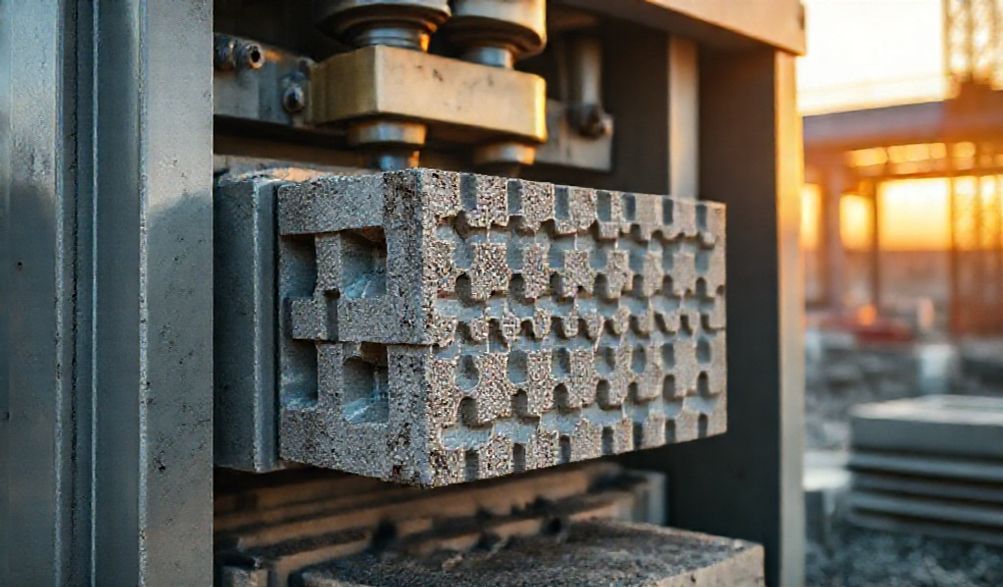
In sua essentia, machina laterum interclusorum est instrumentum proprium ad fabricandos caementicios lateres cum singulari machinatione intercludendi excogitatum. Dissimiliter a communibus laterariis, hae machinae lateres formant cum exactis iugis et canaliculis (systemate linguae et canaliculi) qui eos sinunt sine interstitio coniungi, velut segmenta aenigmatis, absque opus est humido tectorio in commissuris verticalibus.
Definitio et Munus Nuclei
AnMachina compaginis laterisEst machina – quae in dispositionibus manualibus, semiautomaticis, vel plene automaticis praesto est – quae mixturam concreti semisiccam in formas comprimit. Per coniunctionem altae pressionis mechanicae vel hydraulicae et vibrationis, densas et firmas massas creat. Discrimen principale est forma designatio, quae margines massae ita format ut cum massis supra, infra, et iuxta positis inter se coniungantur.
Principium fundamentale est simplex sed validum:compressioIngenti pressione adhibita ad perpensam mixturam harenae, caementi et materiae concretae, machina bullas aeris expellit materiasque inter se colligat. Hic processus massam praestantiae firmissimae creat, absque intenso ignis processu qui lateribus fictilibus necessarius est.
Partes Praecipuae et Quomodo Operantur
Cum varietas implicatur, pleraeque machinae haec necessaria membra communicant.
- Saltator:Camera ubi mixtura cruda caementi oneratur.
- Molda aut MorereCor machinae. Hoc est exemplar ferri accuratum, quod formam, magnitudinem, et nexum mutuum lateris definit. Exemplaria saepe commutabilia sunt.
- Systema Vibratorium:Plerumque motor electricus vibrationis in mensa formae vel capite collocatur. Haec vibratio altae frequentiae efficit ut mixtura in omnem angulum formae influat et compactionis processum incipiat.
- Systema CompressionisHoc potest esse vectis mechanicus (manuarius), aries hydraulicus (semiautomaticus/plene automaticus), vel mixtura. Ultimam et decisivam pressionem adhibet ad formandum massam.
- Systema Eiectionis:Comprimatus, caementum perfectum e forma in palam vel humum elevatur vel expellitur.
- Tabula Moderatoria: On automated models, this allows the operator to set parameters for the production cycle.
The basic operational cycle is a continuous loop: Feed > Compact > Vibrate > Eject.
Genera Caudicum Productorum
The versatility of these machines is a major advantage. By simply changing the mold, a single machine can produce a variety of blocks for different purposes:
- Normales Intercludentes Lateres: The workhorse for walls.
- Corner Blocks: For clean, finished wall ends.
- Half Blocks: For staggered patterns and completing courses.
- “L”-Shaped Blocks: For pillar integration and specific structural needs.
- Paving Stones/Interlocking Pavers:Aditus, semitae, et porticus.
These blocks can be laid in various aesthetically pleasing patterns, such as the classic stretcher bond or the highly stable herringbone pattern for paving.
Key Benefits of Using an Interlock Block Machine
Adopting interlock block technology isn’t just about making blocks; it’s about adopting a smarter, more efficient construction methodology.
Cost and Time Efficiency
- Dramatically Faster Construction: The interlocking design eliminates the time-consuming process of laying mortar for vertical joints. Blocks simply lock together, allowing masons to build walls up to three times faster.
- Sumptus Notabiliter Imminutus: On-site production cuts out middlemen, transportation costs, and brick wastage. Labor costs plummet due to the simplified laying technique.
- Minima Perdita: Since blocks are made to order on-site and are dry-stacked, there’s virtually no material spoilage from broken bricks or leftover mortar.
Superior Structural and Functional Advantages
- Alta Resistensia Compressiva: The compression manufacturing process results in blocks that often exceed the strength of traditional fired clay bricks, leading to more durable structures.
- Excellent Insulation: The density of the blocks provides superior thermal mass, keeping interiors cooler in summer and warmer in winter, and offers better sound insulation.
- Inherent Flexibility & Seismic Resistance: The interlocking joints allow for slight movement and flexibility. This makes structures more resilient to settling and, crucially, provides better performance in earthquake-prone areas compared to rigid, mortar-bound walls.
Beneficia Circumiectorum et Sustentabilitatis
- Use of Local & Recycled Materials: Machines can often utilize locally available soil, sand, and industrial by-products like fly ash or quarry dust, reducing the need for virgin materials.
- Low Carbon Footprint: No firing process means no fossil fuel consumption and significantly lower CO2 emissions compared to kiln-fired bricks.
- Permeable Solutions: For paving applications, specific blocks can be designed to allow water to drain through, reducing runoff and replenishing groundwater—a key feature for sustainable landscaping.
How to Choose the Right Interlock Block Machine: A Buyer’s Guide
Selecting the perfect machine is critical to your project’s or business’s success. Your choice should be a balance between current needs, future aspirations, and budget.
Assessing Your Needs: Project Scale & Output
- For Small DIY/Landscaping Projects: A manual or hand-operated press is sufficient. It’s low-cost, portable, and perfect for producing a few hundred blocks for a garden wall or patio. Output is low (40-100 blocks per day), and it requires more physical effort.
- For Medium-Scale Housing/Commercial Projects: A semi-automatic electric or diesel model is ideal. It mechanizes the vibration and compression, requiring the operator only to feed mix and remove blocks. Output can range from 300 to 1,500 blocks per 8-hour shift, perfect for building several houses or a small commercial complex.
- For Large-Scale Production/Business Ventures: A fully automatic stationary plant is necessary. These systems feature automatic mixing, conveying, block molding, and stacking. With minimal human intervention, they can produce thousands of blocks per day, offering the highest return on investment for a dedicated manufacturing business.
Critical Technical Specifications to Compare
Don’t just buy based on price. Scrutinize these specs:
- Productio Capacitas: Never rely on “theoretical” maximums. Ask for realistic, sustained output (blocks per hour) based on a standard block size.
- Block Size & Shape Versatility: Can the machine accept different molds? What is the cost of additional molds? Versatility future-proofs your investment.
- Fons Potestatis: Electric models are cleaner and quieter for indoor/urban use. Diesel offers complete independence for remote sites with no grid power.
- Automationis Gradus: This directly correlates with output, consistency, and labor cost. Be honest about your access to skilled labor.
- Pressure & Vibration System: This is the engine of quality. Higher vibration frequency (in Hz) and greater compaction pressure (in tons or MPa) directly translate to denser, stronger blocks. This is a key area where you should not compromise.
Supplier Evaluation and Quality Checks
The machine is a long-term asset. Your relationship with the supplier is crucial.
- Reputation & Support: Choose a manufacturer with a proven track record. What is their warranty period? Do they offer installation supervision and training? Is there a reliable supply chain for spare parts?
- Certifications & Compliance: Request documentation showing the machine and the blocks it produces meet relevant national or international standards (e.g., ASTM, IS, BS).
- Due Diligence: Always ask for customer references. If possible, visit an existing installation to see the machine running and speak to the owner about their experience.
Operating Your Interlock Block Machine: Best Practices
Owning the machine is half the battle. Operating it correctly is what ensures profitability and quality.
Raw Material Preparation: The Ideal Mix Design
The quality of the block is 50% machine and 50% mix. A standard, strong mix ratio is:
* 1 part Portland cement
* 6 parts clean, sharp sand (or a blend of sand and fine aggregate)
* Just enough water to achieve a “semi-dry” consistency.
The “semi-dry” test: Grab a handful of mix and squeeze it. It should form a firm ball that holds its shape without crumbling or dripping water. The correct moisture content is critical for easy ejection and immediate stackability.
Step-by-Step Production Process
- Miscens: Use a pan mixer or rotary drum mixer to achieve a completely uniform, consistent blend of all raw materials.
- Alimentatio: Load the mixed material into the machine’s hopper. Keep it consistently full to ensure even block density.
- Fingere: Initiate the machine cycle. The mix is fed into the mold, vibrated intensely, and then compressed under high pressure.
- Ejectio et Sanatio: The green (fresh) block is ejected onto a flat, stable pallet or curing area. It is strong enough to be handled immediately.
Consilium Peritum: Consistency in every step—mix time, moisture content, hopper level, compression time—is the secret to producing uniform, high-quality blocks batch after batch.
Curing, Storage, and Quality Control
- Sanatio: Proper curing is non-negotiable for achieving full strength. Keep the blocks moist for at least 7-14 days. This can be done by sprinkling them with water 2-3 times a day and covering them with plastic sheeting to retain moisture.
- Storage: Stack cured blocks on a level, dry surface. Use wooden battens between layers to ensure stability and prevent cracking.
- Qualitatis Moderatio: Perform simple drop tests (a cured block should not break when dropped from waist height) and measure dimensions regularly. For professional projects, invest in having samples tested for compressive strength at a local lab.
Maximizing ROI: Business Potential and Applications
For the entrepreneur, an interlock block machine is more than a tool; it’s the foundation of a viable business.
Starting an Interlock Block Manufacturing Business
- Business Model: You sell high-demand construction materials directly to a ready market.
- Investitio Initialis: Primary costs include the machine, a small shed or open yard, a mixer, pallets, and raw material inventory. A semi-automatic setup can be launched with a surprisingly modest capital outlay.
- Market & Clients: Your clients are everywhere: individual homeowners, local contractors, real estate developers, and government housing or infrastructure projects. Marketing your blocks as “eco-friendly” and “cost-saving” is a powerful strategy.
Diverse Construction Applications
The blocks you produce have a wide range of uses, ensuring constant demand:
* Habitacula Domestica: For both load-bearing and non-load bearing walls in single and multi-story homes.
* Aedificia Mercatoria et Industrialia: Warehouses, factories, and office complexes benefit from the fast construction speed.
* Civil Structures: Ideal for retaining walls, boundary walls, compound walls, and landscaping features.
* Hardscaping: A major market exists for interlocking pavers for driveways, pedestrian walkways, parking lots, and public plazas.
Frequently Asked Questions (FAQ)
Q1: What is the typical cost range for an interlock block machine?
A: Prices vary dramatically based on capacity and automation. Manual presses can start as low as \$1,000 – \$3,000. Robust semi-automatic models typically range from \$8,000 to \$25,000. Large, fully automatic production lines can cost from \$50,000 to over \$200,000.
Q2: Can I use ordinary soil in an interlock block machine?
A: While some machines are designed as “soil block presses,” for structural concrete blocks, ordinary soil is usually not sufficient alone. It is often mixed with sand, a stabilizer (like cement or lime), and sometimes gravel to achieve the necessary strength and durability. A simple soil test is highly recommended.
Q3: How strong are interlocking blocks compared to traditional bricks?
A: Properly produced interlocking concrete blocks often have a compressive strength ranging from 7 MPa to over 20 MPa. This generally surpasses the strength of traditional clay bricks, which typically fall between 3.5 MPa and 14 MPa, making them an excellent choice for durable construction.
Q4: Do I need special skills to operate the machine?
A: For manual machines, basic mechanical aptitude is enough. For semi-automatic and automatic models, while the operation is straightforward, proper training is essential for safety, maintenance, and optimizing block quality. Any reputable supplier should provide comprehensive training.
Q5: What maintenance does the machine require?
A: Regular maintenance is simple but vital:
* Clean the mold, hopper, and all surfaces thoroughly after each production run.
* Check and tighten all bolts and nuts weekly.
* Lubricate all moving parts (pivots, guide rods) as per the manufacturer’s manual.
* Inspect the mold for wear or damage periodically.
Conclusion
The interlock block machine represents a significant leap forward in construction technology. It empowers individuals and businesses to build durable, affordable, and environmentally responsible structures on their own terms. From drastically reducing project timelines and costs to opening doors for sustainable entrepreneurship, the potential is immense.
This guide has armed you with the expert knowledge needed to navigate this field. We’ve emphasized the importance of choosing a quality machine from a reputable supplier, mastering the production process, and understanding the vast market potential.
Your next step is to take this information and act. Assess your specific project or business goals, consult with multiple machine suppliers with your new-found knowledge, and consider starting with a manageable model to gain hands-on experience. The future of efficient building is interlocked, and it begins with the decision to explore this powerful technology.
Have questions or personal experiences with interlock block machines? Share them in the comments below—let’s continue the conversation.
<