
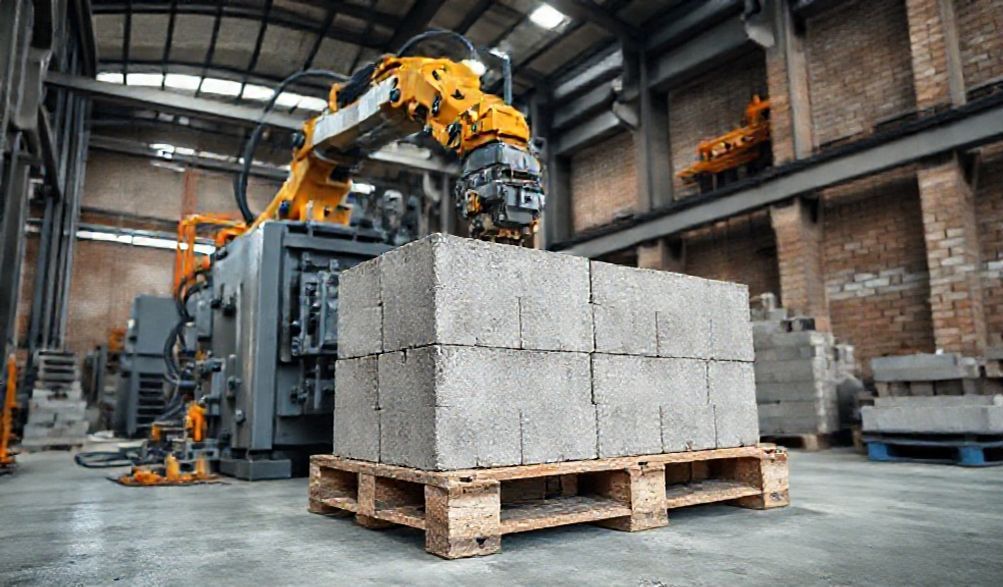
The Ultimate Guide to Commercial Brick Making Machines: Types, Costs & How to Choose
From the humble suburban home to soaring urban skyscrapers, bricks remain a fundamental building block of our world. This enduring demand creates a massive, global market for brick production. For businesses looking to capitalize on this demand, the difference between a profitable venture and a struggling operation often comes down to one critical investment: the commercial brick making machine.
Navigating the purchase of this core industrial equipment can be daunting. Between significant upfront costs, a maze of technical specifications, and the high-stakes risk of choosing a machine mismatched to your needs, the wrong decision can impact your business for years. The solution lies in moving beyond basic equipment to a true commercial-grade system—a decision that unlocks scalability, unwavering product consistency, and long-term profitability.
This definitive guide is crafted to cut through the complexity. Built on industry analysis, technical specifications, and operational insights, it is designed to transform you from a curious buyer into an informed decision-maker. We will dissect the types of commercial brick making machines, provide a transparent analysis of costs, deliver a practical framework for selection, and answer your most pressing questions to equip you for a successful, confident investment.
Understanding Commercial Brick Making Machines
Before diving into specifications, it’s crucial to understand what sets commercial equipment apart from smaller-scale alternatives.
What is a Commercial Brick Making Machine?
A commercial brick making machine is not simply a larger version of a manual press. It is a high-capacity, durable, industrial system engineered for continuous, profitable production. Designed to operate for multiple shifts, these machines prioritize output, consistency, and reliability to meet market demands and deliver a strong return on investment.
At its core, a commercial system integrates several key components into a coordinated process:
* Miscellator: Uniformly blends raw materials (cement, sand, aggregate, etc.).
* Systema Convectorium: Automates the movement of raw mix to the mold chamber.
* Molda aut Morere The heart of the machine, defining the brick’s shape and size (often interchangeable).
* Systema Compactionis: Applies immense pressure via hydraulic rams or high-frequency vibration to form dense, strong bricks.
* Tabula Moderatoria: The brain of the operation, allowing for precise control over pressure, cycle time, and, in automatic models, the entire production sequence.
Key Benefits of Investing in Commercial-Grade Equipment
Why make the leap to commercial machinery? The advantages directly impact your bottom line and competitive edge.
- High Production Output & Efficiency: Commercial machines are measured in output per hour, not per day. Capacities can range from 1,000 to over 20,000 bricks per 8-hour shift, enabling you to fulfill large orders and scale your business.
- Superior Product Constantia et Qualitas: Automated processes eliminate human error. Every brick has identical dimensions, finish, and, critically, vim pressura (measured in MPa), ensuring they meet or exceed building standards and satisfy discerning clients.
- Long-Term Cost Reduction: While the initial investment is higher, automation drastically reduces labor costs per brick. The increased speed and material efficiency lower your overall cost of production, boosting profit margins.
- Operational Versatility: Most commercial machines can produce various brick types—solid, hollow, paving, interlocking—by simply changing the mold. This allows you to adapt to market trends and customer requests without new capital expenditure.
- Durability & Lower Maintenance: Constructed from heavy-duty steel and industrial-grade components, these machines are built for 24/7 operation. This ruggedness translates to fewer breakdowns, less downtime, and a longer operational lifespan.
Types of Commercial Brick Making Machines
The “right” machine depends on your production goals, raw materials, and budget. They are typically categorized in three ways.
Modo Operationis
- Machinae Laterarias Plenarie Automatae: These are complete, integrated production lines. From raw material feeding to brick stacking and palletizing, every step is automated via programmable logic controllers (PLCs) and often robotics. They require minimal human intervention, offer the highest output and consistency, and are the standard for large-scale factories. Labor is focused on supervision and maintenance.
- Machinae Semi-Automaticae Lateres Faciendi: This popular middle-ground automates the core compaction and ejection process but requires manual feeding of raw material or manual removal of finished bricks. They offer a significant productivity boost over manual methods at a lower capital cost than fully automatic systems, making them ideal for medium-scale businesses and startups planning to grow.
- Manual Brick Making Machines (Contextual): Mentioned for contrast, these are hand-operated or simple mechanical presses. While they have a very low entry cost, their output is limited, quality can vary, and they are labor-intensive. They are not considered “commercial” for the purposes of high-volume, profitable production.
By Production Process
- Machinae Pressurae Hydraulicae: These use immense, controlled hydraulic pressure (often hundreds of tons) to compress material in a static mold. They excel at producing extremely dense and strong bricks, such as Lateres ex cinere volatico and high-strength concrete blocks. The process is known for its quiet operation and precision.
- Vibration Press Machines: Here, a combination of high-frequency vibration and applied pressure compacts the material. This method is exceptionally effective for producing interlocking paving bricks and hollow blocks, as it ensures a tight, uniform compaction that allows for precise interlocking shapes.
- Extrusion Machines: Primarily used for clay brick production, this process involves forcing a continuous column of wet clay through a shaped die. The extruded column is then cut into individual bricks by wires. It’s a continuous process ideal for high-volume clay brick production.
By Raw Material
- Concrete (Cement) Brick Making Machines: The most common type, designed to process a mix of cement, sand, and aggregates. Highly versatile for producing a wide array of solid and hollow blocks.
- Machinae Laterum Fictilium Faciendorum: Typically extrusion-based, these handle natural clay. They may require additional drying and firing kilns, making the overall plant setup more complex.
- Machinae ad Lateres ex Cineribus Volaticis Faciendos: Often hydraulic, these utilize fly ash—a waste product from coal plants—as a primary raw material. They produce strong, eco-friendly bricks and are popular in regions promoting sustainable construction.
- Machinae Laterculorum Coniungendorum Fabricandorum: These are specialized vibration press machines designed to produce bricks with precise ridges and grooves. They enable dry-stacking construction (using little to no mortar), which speeds up building time and reduces material costs.
Critical Factors for Choosing Your Machine
Selecting a machine is a strategic decision. Use this framework to align your choice with your business objectives.
Tuas Exigentias Productionis Perpendens
- Desired Output Capacity: Don’t just consider today’s needs. Calculate your required bricks per shift, then add a 20-30% buffer for future growth. A machine operating at 80% capacity is more sustainable than one constantly running at 100%.
- Brick Type & Specifications: List the exact products you intend to sell: dimensions (e.g., 4x8x16 inches), shape (solid, hollow, paver), and the minimum compressive strength (e.g., 15 MPa) required by your local building codes.
- Materiae Rudis Copia Your local material supply dictates the machine type. Do you have reliable access to quality cement, sand, and aggregate? Or is fly ash or clay more abundant and cost-effective? Test your materials with potential machines if possible.
Technical & Operational Considerations
- Fons Potestatis: Most commercial machines require a robust Triumphalis electrica copia. In areas with unreliable electricity, diesel-powered or hybrid options are critical but have higher fuel costs.
- Automationis Gradus: Balance the higher capital cost of full automation against the long-term savings in labor wages, consistency, and output. Also, consider the technical skill level of your available workforce.
- Spatium & Dispositio: You need space for more than just the machine. Factor in areas for raw material storage, the production floor, a curing area (where bricks gain strength), and finished goods storage. A good supplier can help you design an efficient layout.
- Post-Venalium Subsidium: This is non-negotiable. Ensure your supplier provides comprehensive installation, on-site operator training, a clear warranty, and—most importantly—ready availability of spare parts. A machine down for lack of a $100 part loses thousands in production.
Analysis Summae Possessionis
Look beyond the sticker price to understand the true financial commitment.
- Pretium Emptionis Initiale: Includes the machine cost, shipping, insurance, and any import duties or taxes.
- Installation & Commissioning Costs: Covers foundation work, electrical hookup, and the technician’s time to set up and calibrate the machine.
- Sumptus operandi: The ongoing expenses: energy consumption, labor wages, and the cost of raw materials per batch.
- Sustentatio & Partes Subsidiae Budget for routine maintenance (oil, filters) and an annual allowance for wear parts (mold liners, hydraulic seals).
- Return on Investment (ROI) Framework: Calculate your payback period.
- Estimate annual production volume.
- Determine your net profit per brick (sale price minus total cost per brick).
- Calculate annual profit (Volume x Profit per Brick).
- Divide the Total Initial Investment by the Annual Profit to find your payback period in years. A typical target for commercial equipment is 1-3 years.
Navigating the Market: Supplier Selection & Best Practices
Your relationship with the manufacturer is as important as the machine itself.
How to Vet Manufacturers & Suppliers
- Check Experience & Reputation: Look for companies with a decade or more in business. Request and actually contact client references, especially those in a similar region or business scale. Ask for case studies or videos of their machines in operation.
- Evaluate Technical Expertise: Can their engineers discuss your specific raw material mix? Will they provide detailed foundation drawings and electrical schematics? A good supplier acts as a consultant.
- Request a Live Demonstration or Visit Existing Installations: If feasible, visit their factory or a client’s site. Seeing the machine run, hearing it operate, and speaking to a current user provides invaluable insight.
- Review Warranty & Service Agreements: Scrutinize what is covered (parts only vs. parts and labor), for how long, and the guaranteed response time for technical support.
Essential Questions to Ask Before Buying
Go into discussions armed with this checklist:
* “What is the certified output capacity (bricks/hour) using a standard mix?”
* “Can you provide a list of recommended spare parts for the first year and their costs?”
* “What is the lead time for critical components like the main hydraulic cylinder or control panel?”
* “Do you provide on-site installation and training, and is it included in the price?”
* “Can we test a sample of our local raw materials with your machine?”
Avoiding Common Pitfalls
- Warning: Choosing Based on Price Alone. The cheapest machine often has the highest long-term cost through downtime, poor output, and lack of support.
- Warning: Overlooking Local Technical Support. A renowned international brand is useless if there’s no local technician for urgent repairs.
- Warning: Underestimating Power and Space Needs. Failing to secure adequate 3-phase power or enough curing space can halt your project before it starts.
- Warning: Not Testing Your Local Raw Materials. Material composition varies widely. A machine calibrated for one type of sand may perform poorly with another.
Interrogationes Saepius Petitae (ISP)
Q1: What is the average price range for a commercial brick making machine?
A: Prices vary dramatically based on capacity and automation. A semi-automatic machine can start around $20,000 – $50,000. A medium-capacity fully automatic line may range from $70,000 – $150,000. Large, fully integrated plants can exceed $200,000. Always request a detailed, itemized quote.
Q2: How much land and what kind of power supply is needed to operate one?
A: A small commercial plant needs at least 5,000 – 10,000 square feet for the machine, curing, and storage. Power typically requires a stable 380V-440V, 3-phase electrical connection, with amperage depending on the machine’s size (often 50-150 Amp). A professional site audit is recommended.
Q3: Can one machine produce different types and sizes of bricks?
A: Yes, this is a key advantage. By purchasing interchangeable molds, you can produce various bricks. The changeover process can take from 30 minutes to a few hours, depending on the machine’s design.
Q4: What is the typical lead time from order to installation?
A: For standard models, expect 30 to 90 days. This includes manufacturing, sea freight, and customs clearance. Customized solutions or complex automation will take longer. Always confirm timelines in your contract.
Q5: What are the most important maintenance routines?
A:
* Daily: Clean the machine thoroughly to prevent material buildup, especially on molds and conveyors.
* Weekly: Check and tighten all bolts and fittings; inspect hydraulic hoses for wear.
* Monthly: Check hydraulic oil levels and quality; lubricate all moving parts as per the manual.
* Annually: Schedule a comprehensive inspection by a qualified technician.
Conclusio.
Choosing the right commercial brick making machine is a pivotal strategic decision that hinges on a clear understanding of your output goals, raw materials, and a rigorous analysis of total cost and return on investment. It’s a commitment that goes beyond the machinery itself to encompass the partnership with your supplier.
Our final, strongest recommendation is to prioritize supplier reputation and after-sales support with the same weight you give to technical specifications. A reliable, expert partner is your greatest asset for ensuring uptime, productivity, and long-term profitability. This guide has been crafted to build your expertise, demystify the process, and empower you to make a trustworthy, evidence-based decision that will lay the foundation for your business’s success for years to come.
Ready to take the next step? [Download our comprehensive buyer’s checklist] to compare specifications, costs, and vet suppliers systematically.
Have specific questions about your project? [Contact our industry experts] for a free, no-obligation consultation to discuss your unique needs.
<