
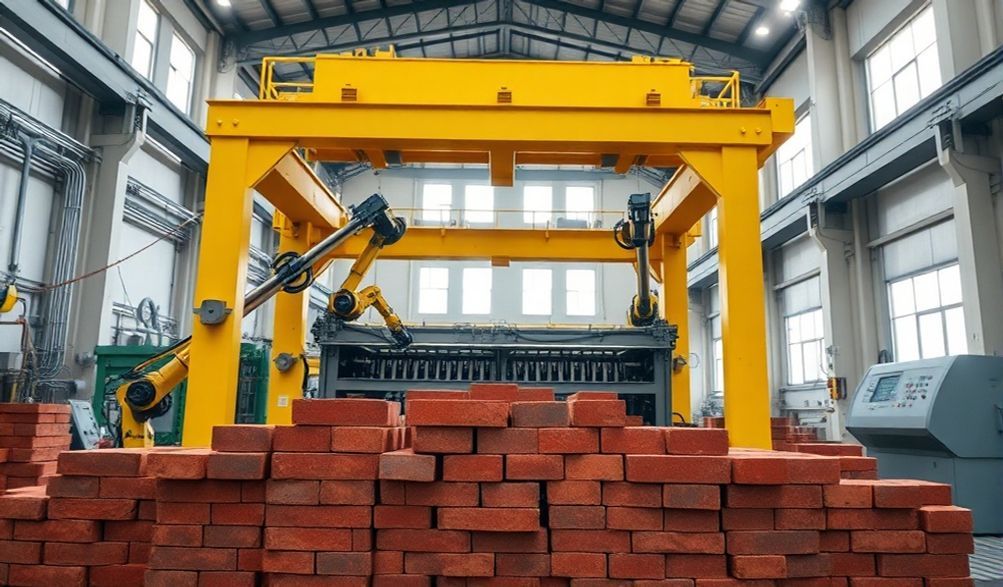
The Ultimate Guide to Brick Machines: Inside the FUDA Brick Making Factory
Introductio
The global construction industry is in a constant state of growth, demanding sustainable, durable, and high-quality building materials. At the foundation of this demand—quite literally—lies the humble brick. However, the method of its creation has evolved dramatically. Today, automated brick production is not just a luxury; it’s a necessity for meeting scale, consistency, and environmental standards. This is where the engineering prowess of specialized manufacturers becomes critical.
Enter FUDA, an established and expert name in the global brick making machinery landscape. With years of dedicated experience and a reach that extends across continents, FUDA has built its reputation on a steadfast commitment to innovation, robust engineering, and unwavering quality. They are not just sellers of equipment; they are architects of production lines.
This guide serves as your comprehensive resource. Whether you’re an entrepreneur eyeing a lucrative venture, a construction firm looking to vertically integrate, or an engineer specifying equipment, we will navigate the intricate world of brick machines together. We’ll demystify the different types of machinery, take a virtual tour inside the processes of the FUDA brick making factory, and arm you with the practical, experience-based insights needed to make a confident investment. The information herein is synthesized from deep industry knowledge, technical manufacturing principles, and operational best practices, designed to educate and inform your decision-making journey.
Intellectus Machinarum Laterum Fingendorum: Genera Technologiaeque
Navigating the market for brick machines requires a fundamental understanding of the available options. The right choice hinges on your project scale, budget, and automation goals. Let’s break down the core categories and the technologies that power them.
Core Types of Brick Machines
The spectrum of brick machines ranges from simple, human-powered units to fully automated production behemoths.
-
Manuales & Semi-Automatariae Machinae:Hae sunt primae portae in structura lateritia.
- Operatio: Manual machines require significant physical labor for mixing, feeding, and compaction. Semi-automatic models incorporate basic mechanical assistance, like a lever-operated press or a simple conveyor.
- Optimum Pro: Small-scale projects, community builds, startups with limited capital, or producing specialty, low-volume bricks.
- Output & Cost: Output is low (a few hundred to a few thousand bricks per day), but the initial investment and operational complexity are minimal.
-
Machinae Laterarias Plenarie Automatae: This is the domain of industrial-scale production and represents the core product line of manufacturers like FUDA.
- Operatio: These are integrated systems. Raw material is automatically batched, mixed, conveyed, precisely compacted under high pressure, ejected, and stacked—all with minimal human intervention, guided by Programmable Logic Controller (PLC) systems.
- Optimum Pro: Large-scale commercial brick yards, major construction companies, and businesses focused on high-volume output for consistent supply.
- Output & Cost: Output can soar to tens of thousands of bricks per shift. The investment is significant but justified by unparalleled efficiency, consistency, and lower per-unit labor cost.
-
Machinae Laterculorum Mobilium: A versatile solution that brings production to the project.
- Operatio: Often mounted on a trailer, these self-contained units can produce bricks directly on a construction site.
- Optimum Pro: Remote projects, large infrastructure works (like dams or highways), or situations where transporting finished bricks over long distances is prohibitively expensive.
- Praecipuum Beneficium: Dramatically reduces logistics costs and carbon footprint associated with transportation.
Key Technologies in Modern Brick Machines
Efficacia et qualitas machinae latericiae a technologiis fundamentalibus definiuntur.
-
Vibration and Compression Systems: This is the heart of brick formation. High-frequency vibration consolidates the raw material mix, removing air pockets. Subsequent hydraulic compression applies immense, calibrated pressure. The synergy of these forces determines the final brick’s density, structural strength, and surface finish. A superior machine offers adjustable and stable compression.
-
Automated Feeding and Stacking: True automation is achieved here. Precision feeders deliver a consistent volume of material to the mold every cycle. Robotic arms or layered stacking systems then carefully organize the green (unfired) bricks onto pallets or carts for curing. This eliminates slow, error-prone manual handling and drastically boosts output.
-
PLC Control Panels: Consider this the machine’s brain. The PLC is an industrial computer that automates the entire production sequence. It ensures every brick is made with identical pressure and cycle time. Operators can input recipes for different brick types, monitor production data, and diagnose issues from a user-friendly touchscreen interface.
Inside the FUDA Brick Making Factory: A Model of Efficiency
Choosing a machine is also about choosing the manufacturer. The factory’s processes are a direct reflection of the quality and reliability you can expect. Let’s step inside the FUDA brick making factory to understand what sets an expert manufacturer apart.
The Manufacturing Process: From Steel to Machine
FUDA’s production is a meticulous, stage-gated process where quality is engineered at every step:
- Designum et Machinatio It starts with CAD models and engineering calculations, ensuring structural integrity and performance metrics are met before any metal is cut.
- Material Selection & Machining: High-grade steel plates, profiles, and certified components (like hydraulic cylinders and motors) are sourced. Computer Numerical Control (CNC) machines then precision-cut and drill parts for perfect fitment.
- Assembly & Welding: Skilled welders, often using submerged arc welding for superior strength, assemble the main frame and components. This creates the machine’s rugged skeleton.
- Systems Integration: The hydraulic system, electrical panels, conveyors, and the PLC are installed and integrated. This is where the machine comes to life.
- Painting & Finishing: After sandblasting for cleanliness, multiple coats of anti-corrosion paint are applied, ensuring longevity even in harsh industrial environments.
- Portae Moderaminis Qualitatis Crucially, at each of these stages, quality inspectors verify dimensions, weld integrity, and component alignment against strict specifications.
Research, Development, and Innovation at FUDA
A static manufacturer falls behind. FUDA’s commitment to R&D ensures their machines evolve:
- Efficiency Focus: Engineers continuously work on optimizing hydraulic circuits and motor configurations to reduce energy consumption per thousand bricks.
- Materiae Accommodabilitas: R&D tests machines with diverse raw material mixes—from traditional clay and shale to modern fly ash, cement-stabilized soil, and construction waste. This ensures clients can use locally available, often more sustainable, materials.
- Consuetudo: The factory isn’t just about catalog models. They regularly engineer custom solutions, such as unique mold shapes for specialized blocks or modified hoppers for specific raw material characteristics.
Quality Assurance and Testing Protocols
The final, non-negotiable step before any machine leaves the FUDA factory is rigorous testing.
- Probatio Acceptationis Officinae (FAT): This is a comprehensive performance trial, often witnessed by the client (in person or via video link).
- The Test Run: The machine is run for an extended period under full load, using standard raw materials. Inspectors measure:
- Outputus Ratio: Does it meet the promised bricks-per-hour count?
- Brick Quality: Samples are tested for dimensions, weight, and immediate crushing strength.
- System Stability: Hydraulic pressure, vibration stability, and electrical system performance are monitored for any anomalies.
- This process is a critical trust signal. It ensures you receive a machine that is proven to work, not just one that is assembled.
How to Choose the Right Brick Machine for Your Project
Armed with technical knowledge, the next step is introspection. Aligning the machine’s capabilities with your specific needs is the key to a successful investment.
Tuas Necessitates Productionis Perpendens
Incipe respondendo his quaestionibus fundamentalibus.
- Daily Output: What is your target? (e.g., 10,000, 50,000, or 200,000 bricks/day?)
- Lateris Genus: Will you produce solid bricks, hollow blocks, paving slabs, or interlocking blocks? Each may require different machine pressures and mold systems.
- Materiae Crudae What is your primary raw material? (Clay, fly ash, concrete mix?) Its properties influence machine choice.
- Summa What is your total investment cap? Remember to budget for auxiliary equipment (mixer, forklift, pallets).
- Spatium: Do you have adequate space for the machine, raw material storage, a curing area, and finished product yard?
Key Specifications to Compare
When evaluating models, compare these hard numbers:
- Productio Capacitas: Always look at “bricks per 8-hour shift” under standard conditions. Be wary of theoretical maximums.
- Potestatis Postulata: What is the total connected load (in kW or HP)? Can your facility’s power supply support it?
- Operating Labor: How many people are needed to run the machine effectively? A more automated machine may have a higher price but a lower long-term labor cost.
- Vestigium: Check the machine’s length, width, and height. Will it fit in your designated shed or plant layout?
The Total Cost of Ownership
The purchase price is just the first cost. A wise buyer considers the total cost of ownership (TCO):
- Instalatio et Dedication: Does the quote include supervisor dispatch for installation?
- Exercitatio. Is comprehensive operator and maintenance training provided?
- Sustentatio & Partes Subsidiae What is the expected annual maintenance cost? How available and affordable are critical spare parts (like hydraulic seals, mold liners)?
- ROI Timeline: Calculate your return on investment based on production output, local brick market price, and your operational costs. A reliable, efficient machine from a factory like FUDA may have a higher upfront cost but delivers greater value over time through minimal downtime, higher yield, and dependable support.
Maximizing Your Investment: Operation and Maintenance
A brick machine is a long-term asset. Its productivity and lifespan are directly tied to how well it is operated and maintained.
Best Practices for Machine Operation
- Raw Material Prep is Key: Ensure your raw material mix is consistent. The particle size and moisture content must be within the machine’s specified range. Inconsistent material is the leading cause of block defects and machine jams.
- Exercitatio Operatoris: Never let an untrained person operate the machine. A good operator understands not just the controls, but also how to spot early signs of trouble (unusual noises, pressure drops).
- Routine Checks: Implement a pre-start checklist: lubricant levels, hydraulic leaks, loose bolts, and cleanliness of sensors.
Essential Maintenance Schedule
Adhere to a strict schedule as outlined in the manufacturer’s manual:
- Daily: Clean the machine thoroughly, especially the mold area and feed hopper. Check hydraulic oil levels and for any visible leaks.
- Weekly: Grease all lubrication points. Inspect wear parts like mold liners and conveyor belts for early signs of damage.
- Monthly: Check and tighten all structural bolts and electrical connections. Change hydraulic oil and filters at the intervals specified (often every 500-1000 hours).
Consilium Peritum: Always use genuine or manufacturer-approved spare parts. Non-standard parts can cause improper fit, accelerated wear, and even void warranties.
Sourcing Reliable Support and Spare Parts
This is where your choice of manufacturer pays off. A factory like FUDA typically provides:
* Detailed Technical Manuals: For operation, maintenance, and troubleshooting.
* Remote Support: Ability to troubleshoot via video call, and receive technical diagrams electronically.
* Subsidia Partium Supplendarum A reliable pipeline for genuine parts, ensuring you are not stranded waiting for a critical component that halts your entire production.
Frequently Asked Questions (FAQ) About Brick Machines and FUDA
Q1: What is the average production capacity of a fully automatic FUDA brick machine?
A: Capacity varies widely by model. A standard fully automatic block making machine from FUDA can produce from 15,000 to over 60,000 standard blocks per 8-hour shift. The exact number depends on the block size, mold configuration (single or multi-cavity), and the specific raw material’s curing time.
Q2: Can FUDA machines produce different types of bricks?
A: Absolutely. The core machine provides the pressure and automation. By changing the mold, you can produce a vast range of products: solid bricks, hollow blocks in various thicknesses, paving stones, interlocking blocks, and even curb stones. The mold change process is designed to be as straightforward as possible.
Q3: What raw materials can be used?
A: FUDA machines are highly adaptable. They can process fly ash, cement, sand, crushed stone/aggregate, clay, and even certain types of industrial waste (like slag). The machine’s vibration frequency, compression pressure, and sometimes the mixing system are adjusted to suit the material’s properties.
Q4: Does the FUDA factory provide installation and training?
A: Yes, comprehensive support is standard. A typical package includes detailed installation manuals, remote guidance, and the option for a factory engineer to supervise installation and conduct on-site training for your operators and maintenance team. This ensures your crew can run the machine safely and efficiently from day one.
Q5: How do I handle after-sales service and technical issues?
A: FUDA establishes a clear support structure. This includes a Tempus cautionis (typically 12 months for core parts), lifetime technical support via email/phone/video call, and the provision of exploded-view diagrams and maintenance videos. For spare parts, they assist with logistics to get critical components to you as quickly as possible.
Q6: What is the lead time for a machine order?
A: For standard models, the lead time is generally between 30 to 45 days after order confirmation and deposit. For highly customized machines or during peak production periods, this may extend to 60 days. A reliable factory will provide a clear production and shipping schedule upfront.
Conclusio.
Selecting a brick making machine is a significant decision that impacts the efficiency, quality, and profitability of your operation for years to come. It requires a careful balance of understanding your own production needs and choosing a machine—and a manufacturer—engineered for reliability.
Throughout this guide, we’ve highlighted the hallmarks of a reputable partner: expert manufacturing processes, relentless quality control, and a commitment to comprehensive after-sales support. FUDA embodies this approach, positioning itself not just as a supplier, but as a long-term partner in your productivity.
Your Next Step:
* For the Serious Buyer: Contact the FUDA sales team with your detailed project specifications and raw material analysis for a customized quotation and factory layout plan.
* For the Detailed Researcher: Download FUDA’s comprehensive brick machine specification catalog to compare technical data across their model range.
* For the Visual Verifier: Request a live video tour of the FUDA factory floor to see their machines in action and witness their quality control processes firsthand.
In an era where building sustainably and efficiently is paramount, the right brick making machine is more than equipment—it’s the foundation of progress.
<