
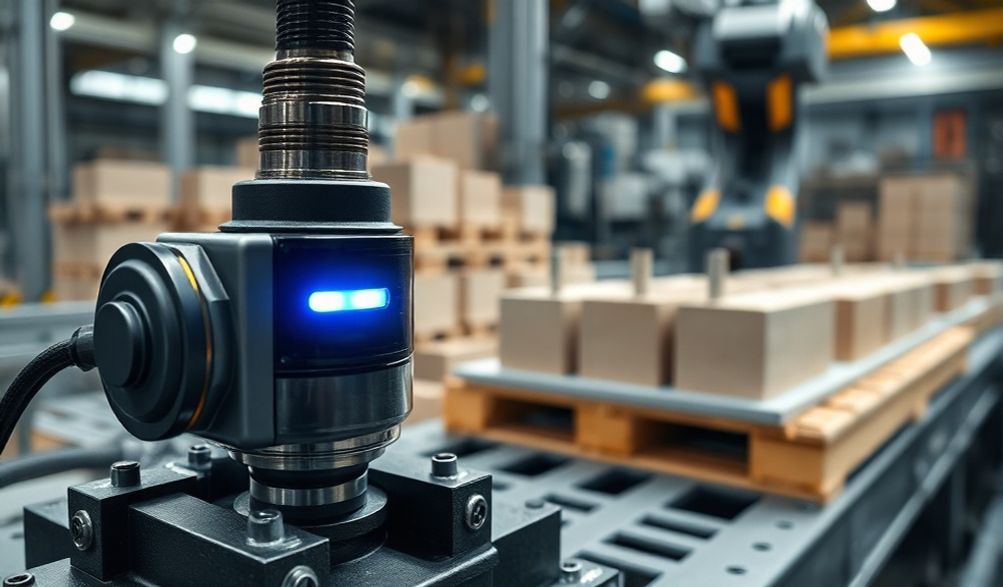
Saxum Machinale Coniunctio: Plenus Dux ad Salutem, Efficientiam et Automatizationem
Introductio
Imaginare: media in re magni momenti iacet. Regularis pulsus laterculi pressoris est velut cor tuae officinae. Subito, paletta male collocata obstructionem facit. Pressus consistit. Convectarium materiam rudem effundit. Operarius, festinans impedimentum tollere, praesidium praeterit, gravi periculo se committens. Horae intermissionis, materia perdita, et metus sensibilis salutis sequuntur. Nunc, quid si dicatur unum systema intelligens totam hanc seriem eventuum prohibire potuisse?
Hoc est promissumSaxum Callidum Machina InterclusioLonge plus quam simplex porta securitatis, ratio moderaminis electronica et programmaturae integrata est quae velut centralis intelligentia pro tota linea laterum fingendorum agit. Haec mixtorem, conveyor, pressam, et structorem ordinat, regit, ac efficaciter operatur, e machinis singulis in cohaerentem et intelligentem unitatem transformans.
In hoc pleno ductu, hanc criticam technologiam enodabimus. Ultra elementa procedemus ut explicemusquidhaec systema vere sunt,curnecessaria sunt ad fabricam hodiernam et competitivam,quomodoFunditus efficiunt ut productivitas plantae, qualitas producti, et operativa perspicientia innoventur. Principia ex arte automationis industrialis, optimis consiliis mechanicae dispositionis, et experientia reali in area plantae contexens, hic ductor intendit tibi praebere scientiam fidelem et actionabilem ad decisiones informatas pro operatione tua capiendas.
Quid est Systema Interclusum Callidum in Lateris Fabricatione?
In medulla sua, systema interclusum callidum est rete sensorum, moderatorum, et actorum quod tutam et logicam operationum seriem imponit. Id efficit ut Machina B incipere non possit antequam Machina A suum munus perfecerit, et ut nullum tegumentum tutelare aperiri possit dum periculosum mechanismus in motu est.
Ultra Portam Securitatis Fundamentalem
Traditio, securitas innitebatur custodibus mechanicis et vigilantia operatorum. Ianua simplex cum commutatione limitis fortasse impedit ne prelum circumagatur si ostium apertum sit. Hoc autem est ratio binaria et simplex.
A Sapiens Interclusio SystemaEvolutio est. "Systema nervosum centrale" lineae productionis tuae est. Non solum an ianua clausa sit verum etiam exactam formae positionem, pressionem in cylindro hydraulico, celeritatem transportitoris, praesentiamque palleti simul observat. Decisiones intricatas in millisecundis facit ut fluxum optimet et securitatem praestet.
Systematis Partes Fundamentales
Haec intellegentia tribus inter se connexis columnis innititur:
-
Sensores et Instrumenta InputHi sunt "oculi et aures" systematis.
- Sensores Proximitatis:Palletem vel formam praesentiam/absentiam detegere.
- Rotarii Encodores:Positionem axis rotantis exacte metiri (ut in mixtore vel actuario vectore).
- Transductores PressuraePressura hydraulica vel pneumatica in torculari observa.
- Systemata Visionis:Cameras quae laterum ordinem confirmare aut vitia detegere possunt.
- Cortinae Luminis Securitatis:Fac murum invisibilem; si violatum fuerit, machina desinit.
-
Logica Moderatrix (PLC/Computatrum Industriale):Hic est "cerebrum." Programmatilis Logicae Moderator (PLC) vel computatrum industriale constanter legit initus ab omnibus sensoriis, hanc datam contra suam logicam programmatam (ordinem operationum) tractat, et mandata exitus mittit.
-
Actuatores et Instrumenta Egressus:Hi sunt "musculi" qui mandata exsequuntur.
- Valvae Solenoidales:Modera fluxum aeris vel fluidi hydraulici ad cylindros.
- Motores Actuatores & Servo Moderatores:Incipe, desine, et velocitatem motorum modera.
- Interfacies Hominis et Machinae (HMI)Tabula tactilis ubi operarii seriem observant, admonitiones vident, et parametros (cum gradibus adeundi congruentibus) accommodant.
Quomodo Operatur: Gradatim per Cyclus
Seguamur ergo simplicem et intelligentem cyclum pro uno latere.
1. PLC sensorem "mixtor vacuus" verificat. Postquam patet, mixtorem exonerare et materialem rudem convehere incipit.
Sensor opticus "formae plenae" in pressa confirmat praecisam materiae quantitatem adesse. Convector sistitur.
Systema comprobat pressum clausum esse custodem securitatis.etnullam pars operatoris per velum luminis deprehenditur. tum demum signum mittit ad valvam solenoidalem pressurae excitandam.
4. During pressing, a pressure transducer ensures the correct tonnage is achieved and held for the set time.
5. After pressing, an encoder confirms the ejection plate is fully retracted. A proximity sensor then checks that the pallet on the transfer car is perfectly in position.
6. Once all these conditions are “TRUE,” the PLC commands the ejector to push the green brick onto the pallet, and the cycle repeats.
This seamless, sensor-verified handoff between each stage is the essence of smart interlocking.
Key Benefits of Implementing a Smart Interlock System
Investing in a smart interlock system is not merely a safety compliance cost; it’s a strategic driver for operational excellence with measurable returns.
Uncompromising Operator & Machine Safety
This is the primary and most critical benefit. The system enforces safety procedurally.
* It physically prevents access to dangerous areas (like the press or shear point) during an active machine cycle.
* It incorporates safety-rated functions like two-hand control (requiring both hands to be on safe buttons to cycle) and anti-tie-down protection to prevent bypassing.
* It provides a documented, electronic framework that helps ensure compliance with stringent international safety standards like ISO 13849 (Safety of Machinery) and ANSI B11 series, reducing liability and protecting your workforce.
Dramatic Boost in Production Efficiency
Efficiency is where the smart system pays for itself.
* Eliminates “Wait States”: Perfect synchronization means the conveyor starts the moment the mixer is ready, and the press cycles the instant the mold is full. No more manual timing or hesitation.
* Minimizes Jams and Downtime: By verifying conditions at every step, it prevents the misalignment and misfeeds that cause major stoppages.
* Enables Faster Cycle Times: With reliable, automated checks, machines can often run at their optimal speed with confidence, as the system guarantees safety isn’t compromised for speed.
Superior Qualitas Producti et Constantia
A smart system is a relentless quality inspector.
* It ensures precise material volume in every mold, eliminating under-filled or over-filled bricks.
* It guarantees consistent pressing time and pressure, the two most critical factors for brick strength and dimensional stability.
* This rigorous process control drastically reduces waste from cracked, chipped, or malformed bricks, directly improving your yield and material cost.
Enhanced Operational Intelligence & Data
This transforms your plant from a black box into a data-driven operation.
* It automatically calculates Overall Equipment Effectiveness (OEE), giving you a true measure of availability, performance, and quality.
* It logs detailed fault codes and event histories. Instead of “the press stopped,” you see “Fault #47: Pallet Presence Sensor 2 Not Detected at Cycle Start.” This enables predictive maintenance and slashes mean-time-to-repair (MTTR).
* It provides real-time dashboards for plant managers, showing production rates, downtime reasons, and shift summaries at a glance.
Critical Features to Look for in a Smart Interlock System
Not all interlock systems are created equal. When evaluating a system for your brick plant, prioritize these features.
Robust and Redundant Sensor Technology
The system is only as reliable as its sensors.
* Fail-Safe Design: Sensors should be designed to default to a “safe state” (e.g., signal a fault) if they fail or lose power.
* Redundancy: For critical safety functions, look for systems that use two independent sensors (e.g., both a position switch et a pressure check to confirm a cylinder is retracted). This is a core principle of safety-rated systems (Category 3/4, PL d/e per ISO 13849).
Programmable Logic Controller (PLC) Flexibility
The PLC should be a partner, not a constraint.
* It must allow for easy customization of logic for different brick types, sizes, and production “recipes.”
* It should offer straightforward troubleshooting tools, like forcing inputs/outputs (in maintenance mode) and detailed diagnostic buffers.
* Open communication protocols (e.g., Ethernet/IP, Profinet) are essential for seamless integration with weigh scales, material handling systems, or plant-wide SCADA systems.
User-Friendly Human-Machine Interface (HMI)
The HMI is the window into the system for your team.
* It should provide a clear, visual mimic diagram of the entire production line, with color-coded statuses (green for running, red for fault).
* Alarm messages must be intuitive and actionable (e.g., “Mixer Exit Chute Blocked – Inspect and Clear”), not just a numeric code.
* Secure, multi-level login is mandatory to prevent unauthorized parameter changes (Operator, Technician, Manager levels).
Connectivity & Industry 4.0 Readiness
Future-proof your investment.
* The system should support modern Industrial IoT (IIoT) protocols like OPC UA or MQTT for secure data exchange.
* Remote monitoring capabilities (with robust cybersecurity measures) allow managers or support engineers to view line status and assist with diagnostics from off-site, a powerful feature for multi-plant operations or getting expert support.
Integration and Maintenance Best Practices
Successful implementation hinges on careful planning and disciplined upkeep.
Planning for Successful Integration
- Involve Specialists Early: Engage automation engineers or controls specialists during the machine design or purchasing phase. Their input on sensor placement and control architecture is invaluable.
- Conduct a Formal Risk Assessment: Before installation, perform a thorough risk assessment (as required by standards) to identify all necessary hazard points and interlock requirements. Don’t just automate an existing, potentially unsafe process—design a safer one.
Routine Maintenance Checklist
A smart system requires smart maintenance.
* Daily:
* Visual inspection of all sensors for physical damage, dirt, or misalignment.
* Check that safety guards are undamaged and close properly.
* Weekly:
* Perform a functional test of all emergency stop buttons and safety gate interlocks.
* Check pneumatic/hydraulic lines for leaks near sensors and actuators.
* Monthly:
* Verify calibration of critical analog sensors (e.g., pressure transducers).
* Clean optical sensor lenses and check alignment of proximity sensors.
* Review fault logs with maintenance staff to identify recurring issues.
Troubleshooting Common Interlock Faults
When a machine won’t cycle, the interlock system provides the clues.
* Scenario: “Press Will Not Start Cycle.”
1. Step 1: Go to the HMI. What is the active alarm or status message?
2. Step 2: Check the PLC Program. In maintenance mode, view the logic rung that enables the press. Which input condition is not being met? (e.g., “Pallet In Position – FALSE”).
3. Step 3: Inspect the Physical Hardware. Locate that specific sensor. Is it dirty, misaligned, or damaged? Is its indicator light active when a pallet is present?
4. Step 4: Check Wiring. Inspect the sensor’s cable and connection for damage.
* Golden Rule: Always follow formal Lockout/Tagout (LOTO) procedures before conducting any physical inspection or repair. Never bypass an interlock to “keep the line running.”
Interrogationes Saepius Petitae (ISP)
Q1: Is a smart interlock system only for large, new brick plants?
A: Absolutely not. While they are standard in new, high-end machinery, modular and scalable systems are widely available for retrofitting older machines. For small-to-medium operations, the return on investment from reduced waste, lower downtime, and improved safety can be remarkably fast, making it a viable and strategic upgrade.
Q2: How does this differ from a simple emergency stop button?
A: An e-stop is a critical, but reactive, last-resort safety device—it stops everything when a problem has already occurred. A smart interlock system is proactive and preventative. It is designed to prevent the unsafe condition from arising in the first place by controlling the machine’s normal operation sequence.
Q3: Can the system be overridden for maintenance?
A: Yes, but this must be done under a strictly controlled procedure. This typically involves a secure keyswitch that places the system in a safeguarded “maintenance mode,” combined with a physical lockout/tagout (LOTO) by the technician. All such overrides should be logged by the system. Safety during maintenance is a top priority.
Q4: What is the typical return on investment (ROI) period?
A: ROI varies based on plant size, current efficiency levels, and material costs. However, many plants report a payback period of 12 to 24 months. This is achieved through quantifiable gains: higher throughput, lower scrap rates, reduced energy consumption, and the avoided costs of accidents and unplanned downtime.
Q5: How do we ensure the system remains trustworthy over time?
A: Trust is built on consistent practice. This requires a commitment to regular preventive maintenance (as outlined above), sourcing high-quality, reliable components, keeping PLC and HMI software/firmware updated, and, crucially, ensuring that all operational and maintenance staff are thoroughly trained on how the system works and why it is essential.
Conclusio.
TheSmart Brick Machine Interlock System represents a fundamental shift in brick manufacturing. It is no longer an optional accessory or a mere safety checkbox. It is a foundational component for any operation that aims to be competitive, safe, and sustainable in the modern industrial landscape. It transforms your brick-making machine from a powerful but dumb press into an intelligent, connected, and supremely reliable asset.
By seamlessly weaving together safety, efficiency, quality, and data, this technology delivers a compelling value proposition that touches every aspect of your business. To move forward, we recommend two actionable steps:
- For plant owners and managers: Consult with a certified automation engineer or a trusted integrator to conduct a professional interlock and safety audit of your current production line. This will identify gaps and provide a clear roadmap for improvement.
- When sourcing new equipment or upgrades: Prioritize suppliers and manufacturers who demonstrate deep, proven expertise in both the mechanical art of brick making et the science of industrial control systems. Your machine’s intelligence is as important as its strength.
Embrace this intelligence, and build a stronger, safer, and more profitable future for your plant.
<