
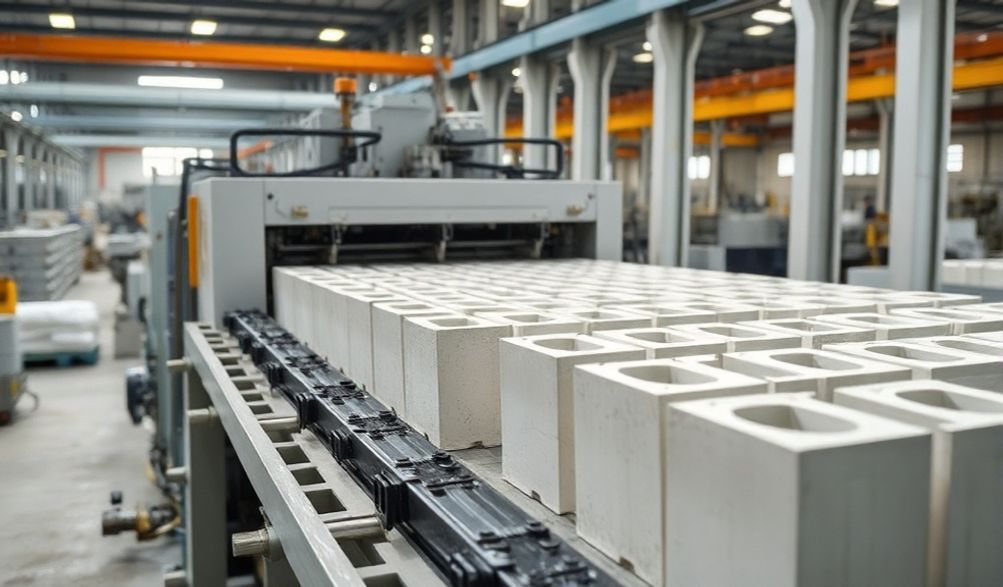
Your Ultimate Guide to Choosing a Reliable China Block Bricks Making Machine Manufacturer
Introductio
The global construction industry is in a perpetual state of growth, driving an insatiable demand for high-quality, affordable building materials. At the heart of this supply chain is the humble brick and block—fundamental components for everything from residential homes to massive infrastructure projects. Meeting this demand efficiently and sustainably hinges on one critical piece of equipment: the block bricks making machine.
Today, China stands as the undisputed global manufacturing hub for this essential machinery. Renowned for its unparalleled scale, rapid technological adoption, and significant cost advantages, China offers a vast landscape of suppliers. For entrepreneurs, construction companies, and investors worldwide, this presents a tremendous opportunity. However, it also introduces a significant challenge: how do you navigate a sea of manufacturers to find a partner that is reliable, technically proficient, and capable of supporting your business for years to come?
The pitfalls are real—encountering inconsistent quality, navigating opaque communication, facing exorbitant shipping and customs hurdles, or being left without critical after-sales support. A poor procurement decision can lead to costly downtime, substandard products, and project failures.
This guide is designed to be your definitive resource. We will leverage industry expertise and procurement best practices to demystify the process. Our goal is to empower you with the knowledge to identify, evaluate, and ultimately partner with a trustworthy China block bricks making machine manufacturer. We’ll move beyond just price to focus on total lifecycle value, ensuring your investment builds a foundation for long-term success.
Cur machinae ad creandos fontes e Sinis?
Sourcing from China is not merely a cost-saving tactic; it’s a strategic decision backed by tangible advantages that have solidified the country’s position as the world’s workshop.
Magnitudo et Peritia Fabricandi
China’s manufacturing ecosystem is second to none. Entire industrial clusters are dedicated to machinery production, creating an efficient, integrated supply chain. This concentration means manufacturers have immediate access to raw materials, skilled labor, and component suppliers. The result is an unmatched ability to produce heavy machinery at high volumes with remarkable consistency, reducing lead times and ensuring steady supply.
Certamen Pretii et Valor
The most apparent advantage is cost. Economies of scale, efficient supply chains, and material sourcing translate into highly competitive pricing. However, the true benefit is the propositio valoris. For a comparable investment, you can often access more advanced features, higher levels of automation, or greater production capacity from a Chinese manufacturer than from suppliers in other regions. It’s about maximizing your return on investment.
Technologiae Adoptio et Innovatio
Gone are the days when Chinese manufacturing was synonymous with imitation. Leading manufacturers now invest heavily in R&D. You’ll find state-of-the-art factories utilizing:
* PLC (Programmable Logic Controller) Systems for precise, automated operation.
* Systemata hydraulica from reputable international brands for durability.
* Advanced vibration technology for optimal block density and strength.
* IoT-ready interfaces for potential production monitoring.
This focus on innovation means you are sourcing modern, efficient, and productive machinery.
Variae Opum Copiae ad Omnem Usum
Whether you’re starting a small brickyard or supplying a national construction project, China has a machine for you. The product range is exhaustive:
* Per Operationem: Fully automatic, semi-automatic, and manual machines.
* By Product: Concrete hollow block machines, solid brick machines, paver machines, interlocking brick machines, and clay brick machines.
* Per Mobilitatem: Large stationary plants and mobile brick makers for on-site production.
This diversity allows you to find a perfectly tailored solution for your specific market, raw materials, and business scale.
Key Factors When Evaluating a Manufacturer
With hundreds of options, a systematic evaluation is crucial. Look beyond flashy websites and focus on these core pillars of a reputable partner.
Peritia et Experientia Fabricandi
Longevity is a key indicator of stability and accumulated knowledge.
* Prioritize manufacturers with a proven track record of 10+ years. This suggests they have navigated market cycles, iteratively improved their products, and built a foundation for ongoing support.
* Inquire about their in-house engineering and R&D team. A company that designs and develops its own machines has deeper technical mastery than a simple trading company or assembler. This expertise is vital for troubleshooting and customization.
Quality Control and Certifications
Certifications are your first line of defense. They are non-negotiable trust signals.
* Mandatory Certifications:QuaereISO 9001et Ratio Administrandi QualitatisCE Signatio (indicating conformity with EU health, safety, and environmental standards). These require audited processes.
* Factory QC Processes: A reliable manufacturer will have rigorous, documented checks at every stage:
* Material Inspection: Verification of steel plates, hydraulic pipes, and electrical components.
* In Processus Inspectiones: Precision in welding, machining, and assembly.
* Probationis Testatio: Every machine should undergo a trial run before shipment, producing sample blocks to verify function and output quality.
* Partes Fundamentales: Ask about the brands used for critical parts like hydraulic systems, motors, PLCs, and bearings. The use of recognized international or top-tier Chinese brands is a positive indicator of quality and longevity.
Product Portfolio and Technical Specifications
Dig deep into the technical details. A clear, detailed specification sheet is a sign of professionalism.
* Key Specs to Analyze:
* Productio Exitus: Measured in blocks per shift or hour. Is it realistic for your needs?
* Pressio (Tonnagium): Higher pressure generally produces denser, stronger blocks.
* Potestatis Postulata: Ensure your facility can supply the necessary voltage and phase.
* Automationis Gradus: How much manual intervention is required for feeding, stacking, and palletizing?
* Materia Prima Flexibilitas: Discuss your local raw materials (e.g., cement, sand, aggregate, fly ash, clay). A good manufacturer can advise on the optimal mix design and, if necessary, adjust machine parameters to suit it.
After-Sales Service and Support
This is where many suppliers fall short, and it is the single most critical factor for your long-term operational success. Comprehensive support is a hallmark of a trustworthy partner.
* Documentatio. Expect detailed installation manuals, electrical wiring diagrams, and parts catalogs. Video guides are a major plus.
* Auxilium Technicum: Is there a dedicated, English-speaking support team available via WhatsApp, email, or video call for remote troubleshooting?
* Cautio: Standard terms are typically 12-24 months for key components. Understand exactly what is covered.
* Partes Suppetiales: Confirm the availability of a spare parts inventory and request a price list. A reliable partner commits to supplying parts for the entire operational life of the machine.
* Engineer Dispatch: While incurring extra cost, the option to have a factory engineer assist with installation and training on-site provides invaluable peace of mind.
The Procurement Process: From Inquiry to Delivery
A smooth procurement journey relies on clear communication and methodical steps.
Initial Communication and Needs Assessment
Start with a well-prepared Request for Quotation (RFQ). This should include:
* Your target block types, sizes, and desired output capacity.
* Details of your available raw materials.
* Your local power supply (voltage, phase, frequency).
* Your preferred level of automation.
* An approximate budget range.
Clear information prevents misunderstandings and yields more accurate quotations.
Factory Audit and Due Diligence
Never skip due diligence. Forge trust by verifying the manufacturer’s claims.
* Virtual Factory Tour: Request a live video tour of the production workshop, not just a promotional video. This is now a standard and expected practice.
* Verify Business Licenses: Ask for a copy of their business registration.
* Request References: Ask for contact information for 2-3 previous international clients in a region similar to yours. Follow up with them.
* Review Case Studies: Ask for photos or videos of their machines in operation at client sites.
Understanding Quotations and Negotiations
A professional quotation will be clear and detailed.
* Price Terms: Understand the incoterms.
* EXW (Ex Operis): Price at the factory gate. You handle all shipping, insurance, and customs.
* FOB (Liberum In Tabula): Price includes delivery to and loading on the ship at the Chinese port. You handle sea freight and destination costs.
* CIF (Pretium, Securitas, et Vectura): Price includes delivery to a port near you. You handle customs clearance and inland transport.
* Inclusions: The quote should itemize the machine, standard spare parts, tools, and documentation. Clarify what is non included.
Production, Inspection, and Shipping
- Pre-Shipment Inspection: This is critical. Either plan to visit the factory yourself before shipment or hire a reputable third-party inspection company to verify the machine’s quality, completeness, and test performance. This step can save immense future cost and hassle.
- Shipping: For heavy machinery, sea freight (LCL or FCL) is standard. Your manufacturer or a recommended freight forwarder can handle booking and documentation. Ensure proper wooden crating and waterproofing for the ocean journey.
Common Machine Types and Their Applications
Understanding the primary machine categories will help you align your choice with your business model.
Machinae Automatae ad Lateres Faciendos
- Applicatio. The workhorse for large-scale, commercial block production plants.
- Lineamenta: Fully automated from material feeding to block stacking and palletizing. High output (e.g., 10,000+ blocks per 8-hour shift). Often part of a complete production line with mixers and conveyors.
- Optimum Pro: Entrepreneurs aiming to supply the wider construction market with hollow blocks, solid blocks, and pavers.
Machinae Laterarias Mobiles
- Applicatio. On-site production for specific projects like housing developments, road construction, or remote locations.
- Lineamenta: Mounted on a trailer for easy transport. Produces blocks directly where they are needed, drastically reducing material transport costs.
- Optimum Pro: Construction contractors, NGOs, and smaller enterprises focused on project-based work.
Machinae Laterum Intertextorum
- Applicatio. Producing sustainable building blocks that lock together without mortar.
- Lineamenta: Creates bricks with a unique lug-and-groove design. Often uses soil or laterite mixed with a small amount of cement, promoting eco-friendly construction.
- Optimum Pro: Projects emphasizing cost-efficiency, speed of construction, and environmental sustainability.
Machinae Laterum Fictilium Faciendarum
- Applicatio. Modernizing traditional clay brick production.
- Lineamenta: Extrudes and cuts clay into precise brick shapes. Modern versions are more energy-efficient and productive than traditional kiln methods.
- Optimum Pro: Markets with a strong demand for traditional clay bricks or abundant clay resources.
Interrogationes Saepius Petitae (ISP)
What is the average lead time for production and delivery from China?
Typically, production takes 20-45 days after order confirmation and deposit payment. Sea shipping then adds 30-60 days, depending on the destination port. Always confirm exact timelines with your manufacturer, as they can vary based on machine complexity and season.
Can the machines be customized for my specific block design or raw materials?
Yes, reputable manufacturers often offer customization. The most common customization is for molds, which can be fabricated to produce your unique block design, size, or pattern. Machine parameters can also be adjusted to better suit specific raw material mixes. Discuss all customization needs and associated costs during the initial inquiry.
How do I handle machine installation and operator training?
Most suppliers provide comprehensive installation manuals, wiring diagrams, and video guides. Many offer remote video support to guide your technicians through commissioning and initial production. For formal training, you can arrange for your staff to visit the supplier’s factory in China, or you can contract for their engineers to visit your site (this involves additional costs for travel, accommodation, and service fees).
What is the typical warranty, and how are spare parts handled?
Standard warranties range from 1 to 2 years for key components like the hydraulic system, mainframe, and electrical controls. A trustworthy manufacturer will provide a spare parts list with prices and maintain an inventory for quick dispatch. They should commit to supporting the machine with parts availability throughout its operational lifespan.
Are there reliable payment methods that protect both buyer and supplier?
Yes, established methods balance risk:
* T/T (Bank Transfer): The most common. A 30% deposit to start production, with the 70% balance paid before shipment after approval of inspection photos/videos.
* Letter of Credit (L/C): More secure for larger orders. A bank guarantees payment upon presentation of shipping documents. It is more complex and involves bank fees.
Always ensure payments are made to the company’s verified bank account, not personal accounts.
Conclusio.
Choosing the right China block bricks making machine manufacturer is a strategic decision that will define the productivity and profitability of your venture for years to come. Success lies in diligent research, focusing relentlessly on a manufacturer’s demonstrated experientia, technical peritia, auctoritas (through certifications and reputation), and fides (evidenced by transparent processes and robust after-sales support).
We recommend prioritizing total lifecycle value over the lowest initial price. A slightly higher investment in a quality machine from a supportive partner will pay dividends through reduced downtime, lower maintenance costs, and consistent, high-quality output.
Your Next Step: Begin your search by shortlisting manufacturers who openly share their factory processes, provide verifiable client testimonials, and have clear, detailed service policies. Prepare your project specifics and request comprehensive quotations from at least three potential partners. With the insights from this guide, you are now equipped to ask the right questions and find the ideal partner to build the foundation of your block-making business.
<