1. Introductio
In an age of industrialized construction, the Manual Mud Brick Making Machine stands as a testament to the enduring power of vernacular architecture and appropriate technology. For distributors and procurement specialists operating at the intersection of sustainability, cultural preservation, and grassroots economic development, this equipment category represents a unique and profound opportunity. It is not merely a tool for producing a building component; it is an enabler of autonomy, a catalyst for community resilience, and a bridge to low-embodied-energy construction. Unlike machines designed for cement-stabilized or fired blocks, mud brick (or adobe) technology relies on the innate cohesion of clayey soil and the power of sun-drying. This article provides B2B stakeholders with a comprehensive analysis of this niche yet vital market. We will explore the distinct philosophy behind mud brick construction, identify the diverse and motivated end-user segments, detail the critical technical processes that determine success, and outline strategic models for building a meaningful and profitable distribution network around this ancient craft made efficient.
2. Defining the Machine and Its Core Philosophy
2.1. Distinction from Stabilized Earth and Fired Clay Technologies
It is crucial to differentiate this technology from similar-seeming equipment. A manual mud brick machine is engineered for unfired, unstabilized earth. While it may share a mechanical resemblance with presses for Compressed Stabilized Earth Blocks (CSEBs), its purpose and outcome are fundamentally different.
- No Cement/Lime Stabilizer: The brick gains strength solely from the natural binding properties of clay and the mechanical compaction of the mold.
- No Thermal Processing: Bricks are cured by atmospheric drying, not kiln-firing. The machine’s role is to form consistent, dense blocks ready for this natural process.
- Material Sensitivity: The machine’s success is entirely dependent on using a soil mix with the correct clay-to-sand ratio, making material science the primary skill, not machine operation.
2.2. The Primacy of Material and Process
The machine itself is a simple facilitator. The true “technology” lies in the holistic process:
- Right Soil: Identifying and sourcing soil with typically 15-30% clay content for optimal cohesion without excessive shrinkage.
- Right Consistency: Achieving the perfect moisture content—a “plastic” state that holds under compression but is not wet.
- Right Compaction: Using the machine to uniformly compress the mix, eliminating air pockets and increasing density.
- Right Curing: Slow, even drying to prevent cracking.
2.3. A Tool for Cultural Continuity and Bio-Climatic Building
This technology is deeply connected to place and performance.
- Cultural Continuity: It modernizes traditional adobe-making, preserving indigenous building knowledge while improving efficiency and block uniformity.
- Bio-Climatic Excellence: Mud bricks offer exceptional thermal mass, naturally regulating indoor temperatures by absorbing heat during the day and releasing it at night, reducing mechanical cooling/heating needs.
- Ultimate Circularity: At end-of-life, the bricks can simply return to the earth or be re-wetted and reused, creating virtually zero construction waste.
3. Market Dynamics and Archetypal End-User Profiles
3.1. The Self-Builder and Communal Housing Initiatives
This is the most widespread application, particularly in arid and semi-arid regions.
- Profilium Individuals, families, or community groups building affordable, owner-constructed homes. Often supported by NGOs or government self-help housing schemes.
- Driver: Extreme cost sensitivity, desire for sovereignty over the building process, and the availability of on-site soil.
- Propositum Valor The machine transforms an exhausting, inconsistent manual process (hand-forming) into a manageable, productive one, enabling people to build their own dignified shelter.
3.2. The Eco-Conscious Builder and Natural Architecture Movement
A growing market in developed economies.
- Profilium Specialist architects, natural builders, and environmentally motivated homeowners seeking sustainable, healthy, and aesthetically unique materials.
- Driver: Demand for low-carbon-footprint buildings, non-toxic materials, and connection to natural aesthetics. Part of the “natural building” movement encompassing straw bale, cob, and timber framing.
- Propositum Valor Provides the ability to produce custom, site-specific bricks for high-design eco-homes, retreat centers, and artistic structures.
3.3. The Educational and Cultural Heritage Sector
- Profilium Universities (architecture, engineering, anthropology departments), museums, and heritage restoration organizations.
- Driver: Need for hands-on educational tools and for producing historically accurate bricks for the restoration of old adobe structures.
- Propositum Valor Serves as a practical teaching tool for sustainable design and traditional techniques, and as a specialized device for conservation work.
4. Technical Operation and the Artisan Production Cycle
4.1. Machine Typology: From Simple Molds to Lever-Assisted Presses
- Standard Rectangular Molds: Simple, open-topped wooden or steel boxes. The mix is tamped in by hand. Lowest cost, highest labor intensity.
- “CINVA-Ram” Style Lever Press: The iconic design. A metal mold box is filled, then a lever-operated ram compresses the soil with significant force. Produces a denser, stronger, and more consistent brick than hand-tamping.
- Multi-Cavity Manual Presses: Industrialized versions of the lever press, allowing 2-4 bricks per cycle. Designed for higher-volume community or small commercial production.
4.2. The Sacred Triad: Soil Selection, Moisture Management, and Mixing
This is where 90% of success or failure is determined.
- Terrae Probatio: Simple field tests (ribbon test, jar sedimentation test) are essential to determine clay/sand/silt ratios.
- Amendment: Often, sand or straw is added to clay-heavy soil to reduce shrinkage cracks. Straw also provides tensile strength.
- Humiditas Contentus: The mix must be at the “optimum moisture content” for compaction—damp enough to bind, dry enough not to deform. It is judged by feel: a ball should hold its shape without muddying the hands.
- Miscens: Requires thorough, homogeneous blending, often done by foot (treading) or with a simple paddle mixer.
4.3. The Molding, Curing, and Protection Protocol
- Preparing the Mold: Dusted with a dry sand or ash to prevent sticking.
- Filling and Compaction: Mix is placed in layers and compacted firmly. Excess is scraped off cleanly.
- Eiectio: The green brick is carefully extruded onto a drying pallet.
- Initial Curing: Bricks dry in their molds for 24-48 hours before being stood on edge.
- Full Drying: Protected from rain and direct sun (under a shaded, airy shelter) for 3-6 weeks until fully dry.
- Wall Protection: Finished walls require a sacrificial render (mud or lime plaster) and a cap (wide eaves) to protect from rainwater erosion.
5. Commercial and Strategic Pathways for Distribution
5.1. The Low-Finance, High-Knowledge Business Model
The end-user business case is unique:
- Ultra-Low Capex: Machine cost is minimal.
- Negligible Operating Cost: Primary inputs are soil, water, and sometimes straw—often free.
- Revenue/Value: For self-builders, revenue is replaced by sweat equity—the immense value of a constructed home at material cost. For commercial producers, bricks are sold at a significant margin over virtually zero input cost.
- Key Asset: The distributor’s knowledge becomes the primary product.
5.2. Curating a Value-Added Ecosystem for Distributors
Profitability comes from bundling and expertise:
- The “Starter Kit”: Machine, soil testing tools (sieves, jars), mixing tarp, instructional DVD/booklet.
- Workshops and Training: Charging for hands-on, multi-day workshops covering soil science, mixing, molding, and wall-building basics.
- Ancillary Tools: Selling related tools: plaster trowels, mixing hoes, moisture meters, and render sprayers.
- Consultancy Services: Offering site assessments, soil analysis, and custom design advice for larger projects.
5.3. Risk Mitigation: Educating Against Common Failures
The distributor’s role is to preempt failure:
- Risk: Using wrong soil leading to cracked bricks.
- Mitigation: Include soil testing as mandatory first step in training.
- Risk: Improper drying causing structural weakness.
- Mitigation: Emphasize curing protocols and shelter construction.
- Risk: Erosion of finished walls from rain.
- Mitigation: Educate on the non-negotiable need for protective plasters and roof overhangs.
6. Conclusion
The manual mud brick making machine represents a profound convergence of simplicity, sustainability, and human agency. For the discerning B2B stakeholder, it offers entry into a market driven not by fleeting trends, but by timeless human needs for affordable shelter, environmental harmony, and cultural expression. Success in this field requires a paradigm shift from selling equipment to transmitting knowledge and enabling a process. The distributor becomes a custodian of a building tradition, empowering individuals and communities to create durable, beautiful, and deeply sustainable structures from the very earth beneath their feet. In a world grappling with climate change and housing insecurity, this technology is not a step backward, but a critically relevant step toward a resilient future. Building a business around it is both a commercial opportunity and a contribution to a more sustainable built environment.
7. Frequently Asked Questions (FAQ)
Q1: Are mud bricks strong enough for modern, code-compliant housing?
A: Yes, when designed and built correctly. Well-made adobe has a typical compressive strength of 1-2 MPa, which is sufficient for single and two-story load-bearing walls, a fact reflected in building codes in seismic zones like New Mexico, USA. The keys are: high-quality material, proper compaction, complete curing, and appropriate architectural design (thick walls, small window openings, reinforced bond beams, and adequate foundation). The machine ensures the first two; education must cover the latter.
Q2: How does this technology perform in wet or cold climates?
A: It requires careful adaptation but is viable. In wet climates, protection is paramount: larger roof overhangs, raised stone foundations to prevent rising damp, and breathable, rain-resistant plasters (like lime-based renders). In cold climates, the excellent thermal mass helps retain heat, but walls must be insulated on the exterior to prevent heat loss. The principle remains: keep the structural earth block dry and protected. It is less suited to areas with persistent driving rain without meticulous design.
Q3: What is the typical output, and how many people are needed to run a small operation?
A: Output is highly variable. A team of 4-5 people working with one lever press can be organized into a efficient workflow: two on material preparation (digging, sieving, mixing), one feeding the press, one operating the press, and one managing brick stacking and curing. Such a team could produce 300-500 high-quality bricks per day. The process is labor-intensive but socially engaging and low-stress.
Q4: As a distributor, how do we handle the fact that the primary raw material (soil) is free? Doesn’t that undercut the value of the machine?
A: On the contrary, it enhances it. The machine’s value is that it unlocks the potential of that free resource. Without it, turning soil into a reliable, consistent building unit is prohibitively slow and difficult. Frame the machine as the key that transforms a common resource into a capital asset (a home or a business). Its value is in the transformation, not the raw material. The business case is about empowering people to create immense value (shelter) from a valueless substrate.
Q5: Is there a market for higher-end, more engineered versions of these machines?
A: Absolutely. Beyond basic lever presses, there is demand for:
- Machines with adjustable mold sizes for custom brick dimensions.
- Presses with higher mechanical advantage for less physical effort.
- Stainless steel or anodized components for the educational/natural building market where aesthetics and corrosion resistance matter.
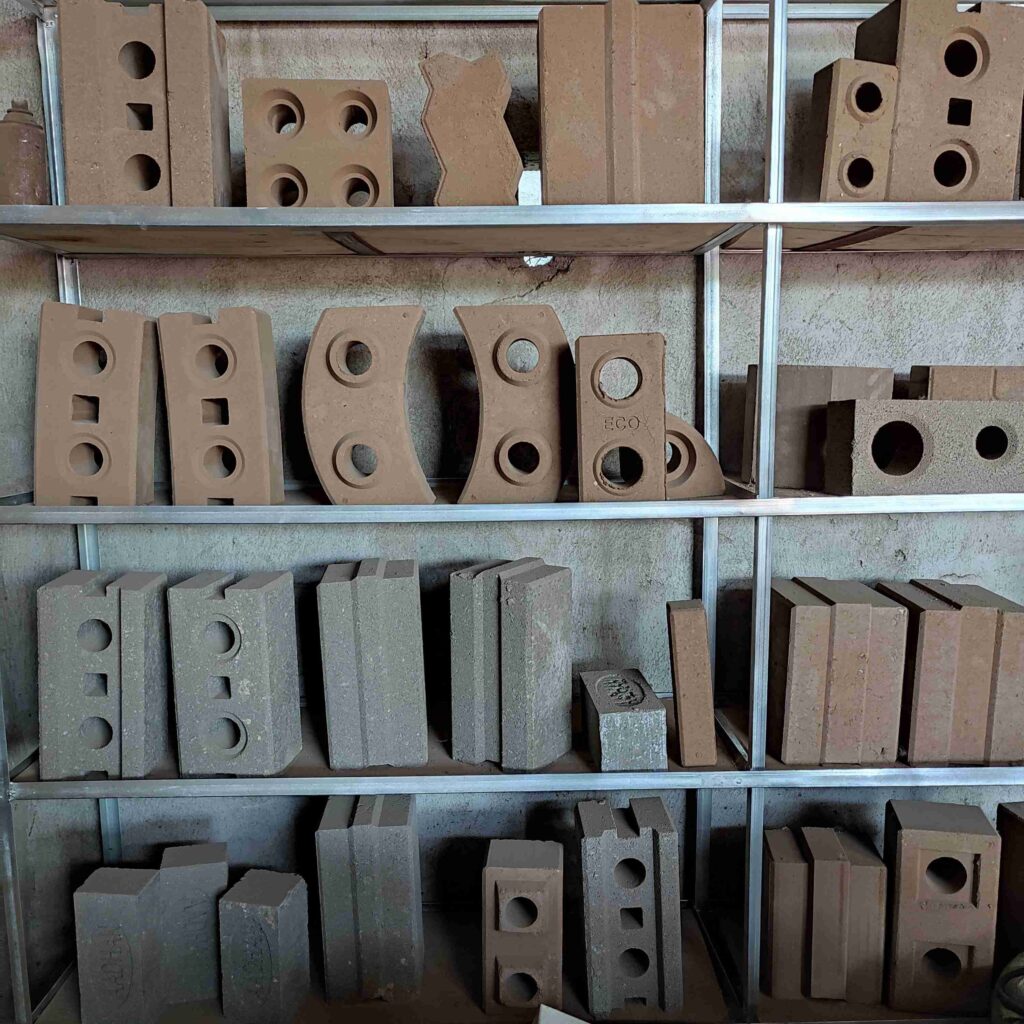
- Kits for producing specialized shapes like curved bricks for arches or domes.
This “professional artisan” segment seeks refined tools for serious building projects and is willing to invest in durability and precision.