
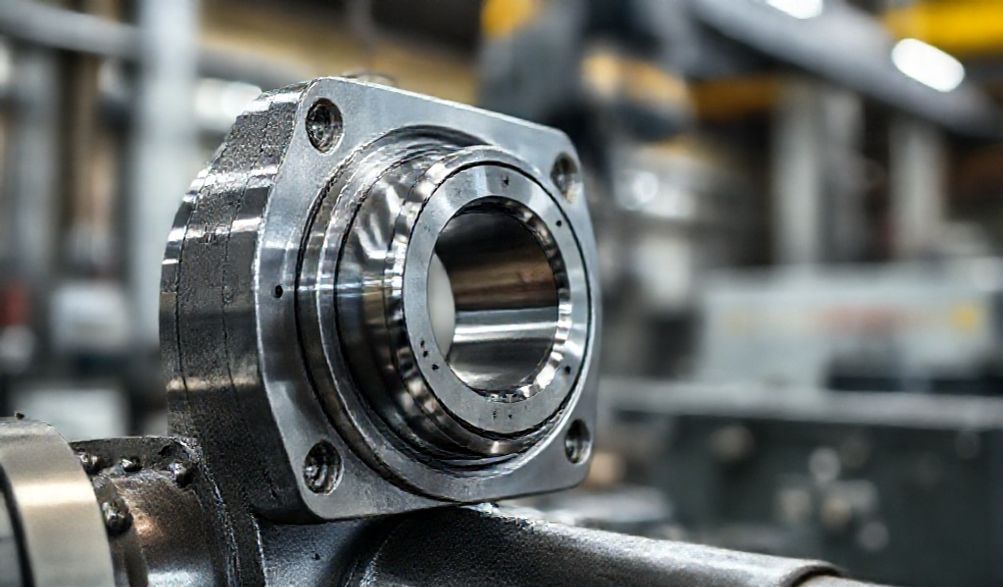
The Essential Guide to 20mm Pillow Block Bearings for Laser Cutting Machines | Sourced from Expert Manufacturers
Introductio
In the world of industrial manufacturing, the spotlight often shines on the machines themselves—the powerful laser cutters shaping metal with pinpoint accuracy or the robust brick-making machines producing countless units per hour. Yet, the relentless productivity of these workhorses hinges on a symphony of small, precision components. One failed part can bring the entire operation to a grinding halt.
So, what’s the small part that ensures the smooth, accurate, and long-lasting operation of your laser cutting machine or brick making equipment? Often, the answer lies in the humble pillow block bearing. Specifically, the 20mm pillow block bearing serves as a cornerstone of linear and rotational motion systems, a silent guardian of performance.
This guide provides a comprehensive overview of the 20mm pillow block bearing, from its technical anatomy to practical selection and maintenance. We draw upon insights relevant to sourcing from specialized manufacturers, including expert Chinese factories like Fuda, to empower buyers, maintenance engineers, and procurement managers. Our goal is to equip you with the expert knowledge needed to make informed decisions, ensuring machine reliability, minimizing costly downtime, and maximizing productivity. Understanding the critical role of components like a china 20mm pillow block bearing for laser cutting machine is the first step toward safeguarding your investment.
What is a 20mm Pillow Block Bearing and Why is it Critical for Your Machinery?
A pillow block bearing, at its core, is a mounted bearing unit. It’s designed to provide secure support and smooth rotation for a shaft, handling loads while reducing friction. The “20mm” specifies the inner diameter, or bore size, of the bearing—the precise hole through which your 20mm shaft will pass.
Anatomy of a Pillow Block Bearing: Housing, Bearing Insert, and Seals
Understanding its construction reveals why it’s so effective:
- The Housing: This is the outer casing, typically made from cast iron for superior strength and vibration damping in heavy-duty applications, or pressed steel for cost-effective, lighter-duty scenarios. It features mounting holes (often slotted for adjustment) for easy bolting onto your machine frame.
- The Bearing Insert: This is the heart of the unit—a precision deep groove ball bearing (usually) that is pressed into the housing. It features inner and outer rings with hardened steel balls to facilitate smooth rotation. The 20mm bore is machined to extremely tight tolerances for a perfect fit on the shaft.
- The Seals: This critical component protects the bearing’s interior from contaminants like dust, metal chips, and moisture. Seals can be:
- Rubber Contact Seals: Offer excellent protection but create slight friction.
- Metal Shields: Provide less friction but are non-contact, offering moderate protection.
- Labyrinth Seals: Used in very harsh environments to create a tortuous path for contaminants.
Core Function in Laser Cutting Machines & Brick Making Equipment
The application dictates the performance demands:
-
For Laser Cutting Machines: Precision is paramount. These bearings are commonly used in the gantry system that moves the laser head along the X and Y axes.
- Munus They support the drive shafts or lead screws, ensuring buttery-smooth, vibration-free linear motion.
- Cur Qua Res Pertineat: Any play, vibration, or roughness in the bearing translates directly into inaccuracy in the laser’s path. This results in poor edge quality, dimensional errors, and increased scrap material. The right bearing ensures repeatable, precise cuts.
-
For Brick Making Machines (like those from FUDA): Durability under extreme conditions is key.
- Munus They are found in high-load applications such as conveyor systems moving heavy pallets of bricks, in the vibration units that compact concrete in molds, or in drive systems for material handling.
- Cur Qua Res Pertineat: These environments are dusty, involve significant shock loads, and demand continuous operation. A bearing failure here doesn’t just affect quality—it can stop the entire production line, leading to massive output losses.
Consequences of Bearing Failure: Downtime, Cost, and Quality Issues
Ignoring this critical component is a costly gamble. Failure leads to a cascade of problems:
- Increased Scrap & Rework: In laser cutting, inaccuracies ruin expensive material. In brick making, misalignment can cause malformed products.
- Unplanned Machine Stoppages: A seized bearing halts production instantly. Emergency repairs are always more expensive and disruptive than planned maintenance.
- Collateral Damage: A failing bearing can score a shaft, damage mating components, or cause motor overload, multiplying repair costs.
- Pericula Securitatis: Catastrophic bearing failure can lead to unexpected machine movement or ejection of parts.
Key Specifications and Selection Criteria for Industrial Applications
Choosing the right 20mm pillow block bearing is not about grabbing the cheapest option. It’s about matching specifications to your machine’s demands.
Understanding Load Ratings: Radial vs. Axial Load Capacity
Bearings are rated for the forces they can handle. Understanding these is non-negotiable.
- Radial Load: This is a force applied perpendicular to the shaft (like the weight of a gantry arm pushing down on the bearing). This is the primary load in most linear motion applications.
- Axial (Thrust) Load: This is a force applied parallel to the shaft, pushing it lengthwise through the bearing.
- Dynamic (C) and Static (C0) Load Ratings: The dynamic load rating is the load a bearing can withstand for one million revolutions. The static rating is the maximum load it can handle without permanent deformation while stationary. Always ensure your application’s loads are well within these ratings.
Material Matters: Housing and Bearing
- Housing Material:
- Cast Iron: The gold standard for industrial use. Excellent for damping vibration, resisting deformation under heavy loads, and longevity. Ideal for brick making machines and high-precision laser cutters.
- Pressed Steel: Lighter and more economical. Suitable for applications with moderate loads and where cost is a primary concern.
- Bearing Insert Material:
- Chrome Steel (GCr15/52100): The most common and cost-effective material, offering excellent hardness and wear resistance for most factory environments.
- Stainless Steel (440C): Essential for applications where corrosion is a concern, such as in environments with water-based coolants, high humidity, or wash-down requirements.
Sealing and Lubrication: Ensuring Longevity in Harsh Conditions
This is where the battle against downtime is won or lost.
- Seal Selection:
- Standard Rubber Seals (RS): Good for most indoor industrial settings.
- Triple-Lip Contact Seals (2RS): Provide superior protection against fine dust (e.g., concrete powder in a brick yard) and are often recommended for harsh environments.
- Unctio.
- Most pillow block bearings come pre-lubricated with high-quality grease (like lithium complex).
- Check if the unit has a grease nipple (zerk fitting) for re-lubrication. This is a vital feature for extending bearing life in continuous-operation machinery.
- The correct grease type (speed, temperature, and load-rated) is crucial. Your manufacturer should provide this specification.
Sourcing from Expert Manufacturers: The FUDA Factory and Industry Standards
When your production line depends on a component, the source matters as much as the specs. This is where the principles of Experientia, Peritia, Auctoritas, et Fiducia (E-P-A-F) become your sourcing checklist.
What to Look for in a Reliable Bearing Manufacturer
- Experientia: How long has the factory been specializing in industrial power transmission components? A manufacturer with a decade+ of history, like many in China’s specialized industrial hubs, has navigated countless application challenges.
- Peritia Do they have in-house engineering and R&D? Can they provide custom solutions (e.g., special seals, coatings, or housings)? Expert manufacturers don’t just sell parts; they solve problems.
- Auctoritas: Do they adhere to international quality standards like ISO 9001? Are their bearings manufactured to ABMA/ANSI dimensional standards? Compliance is a baseline indicator of professional production.
- Fides: This is demonstrated through action:
- Qualitatis Moderatio: Rigorous processes including material certification, hardness testing, dimensional accuracy checks, and rotation noise/vibration analysis.
- Perspicuitas: Willingness to provide factory audit reports, sample products, and clear technical data sheets.
- Post-Venalium Subsidium: Clear warranty policies and accessible technical support.
The Advantage of Sourcing from Specialized Chinese Industrial Hubs
China has developed unparalleled ecosystems for manufacturing specific components. Regions specializing in bearings offer:
- Catēnae Supplendae Plēnae Easy access to high-quality raw materials (steel, seals) and advanced machining services.
- Technical Concentration: A deep pool of skilled engineers and technicians focused on continuous improvement in bearing technology.
- Propositum Valor The ability to produce bearings that meet or exceed international quality standards at a competitive price point, but only if you vet suppliers properly. The lowest price often signals corner-cutting.
Beyond the Product: Technical Support and Supply Chain Reliability
Your relationship with a supplier like Fuda or a similar expert factory should be a partnership.
- Documentatio Technica: Reliable suppliers provide detailed CAD drawings, 3D models, installation manuals, and load rating charts.
- Supply Chain Stability: They should guarantee consistent quality across production batches and have robust logistics to ensure you get the parts you need, when you need them, for your maintenance schedules.
- Problem-Solving Partnership: A good manufacturer will work with you to diagnose application issues and recommend the optimal bearing solution, not just process an order.
Installation, Maintenance, and Troubleshooting Best Practices
A perfect bearing can fail quickly if installed or maintained incorrectly. Follow these guidelines to ensure maximum service life.
Step-by-Step Installation Guide for Optimal Performance
- Inspect & Clean: Before installation, inspect the bearing and shaft for damage. Clean the shaft thoroughly of any dirt or burrs.
- Alignment is Critical: Use a dial indicator to ensure the mounting surfaces for multiple bearing blocks are perfectly aligned. Misalignment is a leading cause of premature failure.
- Secure the Housing: Bolt the pillow block housing to the machine frame. If slots are provided, tighten just enough to hold position for final alignment.
- Mount the Shaft: Slide the shaft through the bearing bore. Do non hammer directly on the bearing. Use a soft mallet or a press fit tool.
- Final Torque: Once the shaft is seated and aligned, apply the manufacturer’s specified torque to the housing bolts and any locking collars or set screws.
Routine Maintenance Schedule
Incorporate these checks into your preventive maintenance program:
- Daily/Weekly (Operators): Visual check for obvious damage, leaks, or contamination. Listen for unusual grinding or screeching noises during operation.
- Monthly (Technicians): Feel the housing for excessive heat (a sign of overload or lubrication failure). Check for any looseness or play in the shaft.
- Quarterly/Annually (Based on Hours): Re-lubricate bearings equipped with grease fittings. Purge old grease completely by adding new grease until it emerges clean from the seal lips. Never over-grease.
Common Issues and Diagnostic Tips
| Symptom | Possible Cause | Action |
| ———————— | —————————————————————————— | —————————————————————————————————- |
| Excessive Noise/Vibration | Misalignment, contamination inside bearing, lack of lubrication, damaged balls/races. | Check alignment, inspect seals, re-lubricate. If persists, replace bearing. |
| Overheating | Overload, incorrect lubrication (too much, too little, wrong type), high speed, seized bearing. | Verify load calculations, check lubrication type/quantity, ensure proper cooling airflow. |
| Premature Wear | Incorrect bearing type for load, harsh environment overwhelming seals, corrosive fluids, false brinelling from vibration while stationary. | Re-evaluate bearing selection (load capacity, seal type). Improve environmental protection if possible. |
Interrogationes Saepius Petitae (ISP)
Q1: Can the same 20mm pillow block bearing be used for both a laser cutter and a brick making machine?
A: While the bore size (20mm) is the same, the specific model likely should not be. A brick machine typically demands a bearing with a higher radial load rating (often with a cast iron housing) and much more robust sealing (e.g., triple-lip seals) to combat abrasive dust. Always consult your machine manual and discuss the exact application with your supplier.
Q2: How do I verify the quality of bearings from a new supplier like FUDA or others?
A: Start by requesting material certifications and sample units. Physically inspect the sample: the machining should be smooth, the rotation should be smooth and quiet (no grinding feel), and there should be no axial or radial play. If possible, request a third-party inspection report or factory audit summary.
Q3: What is the typical operational lifespan of a quality 20mm pillow block bearing in continuous use?
A: There is no single answer. Lifespan is calculated based on load, speed, and operating conditions. Manufacturers provide an L10 life rating, which is the number of hours at which 90% of a batch of bearings will still be operating. Under ideal conditions with proper maintenance, high-quality bearings can last for tens of thousands of hours. In harsh, high-load environments, life will be shorter, highlighting the need for correct selection and proactive maintenance.
Q4: Are there interchangeable brands for these bearings?
A: Many metric series pillow block bearings (like those conforming to ISO standards) are dimensionally interchangeable. This means a housing from one brand might fit a bearing insert from another. However, this is risky. Always cross-reference the exact load ratings, internal clearance, seal type, and lubrication. Assuming direct interchangeability can lead to machine failure.
Conclusio.
The20mm pillow block bearing is far more than a simple mechanical part; it is a precision component that safeguards the performance, accuracy, and uptime of high-value industrial equipment. From the intricate dance of a laser cutter’s gantry to the punishing loads of a brick-making conveyor, its role is indispensable.
Successful sourcing, therefore, transcends finding the lowest price. It is about partnering with a manufacturer whose operations are built on Experience, Expertise, Authoritativeness, and Trustworthiness. These attributes translate directly into product reliability, consistent quality, and the technical support needed to keep your machines running.
When evaluating your next bearing purchase or planning a maintenance cycle, use the knowledge in this guide. Prioritize technical specifications, material quality, and supplier credibility. For components that form the backbone of your production, informed decisions are the most cost-effective strategy in the long run. Investing in the right bearing is an investment in uninterrupted productivity and the competitive edge of your business.
<