
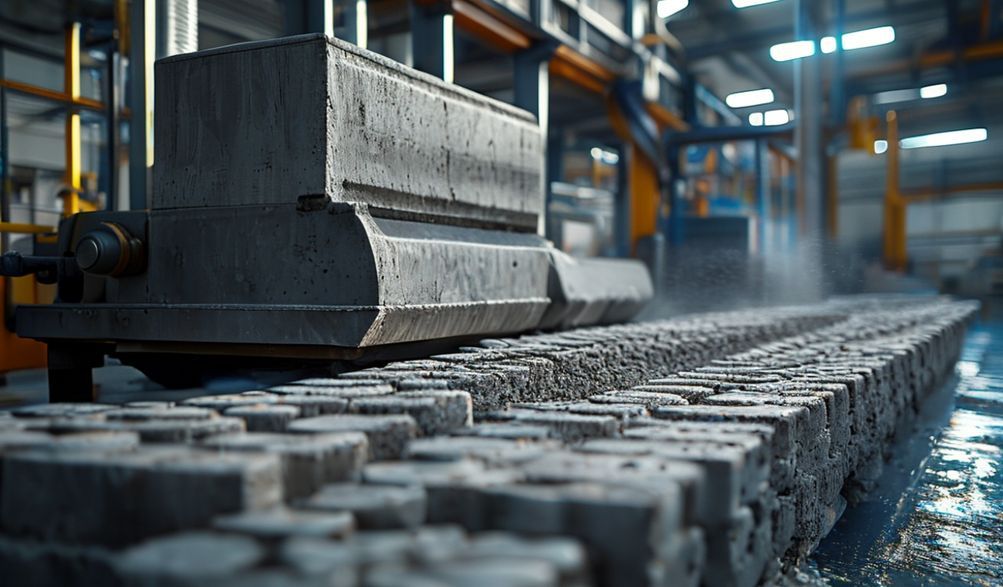
Ultima Dux ad Cementi Cavum Truncum Faciendi Machinas | Perspectivae ab Expertis FUDA Fabrica
Introductio
Industria aedificatoria globalis in assidua cursu est—contra tempus, sumptus, et impactum environmentalem. In medio huius provocationis iacet quaestio materiae aedificandae quae est parvi pretii, durabilis, et sustentabilis. Lateres cavae ex caemento facti fundamentale solutio exstiterunt, praebentes praestantem rationem firmitatis ad pondus, insulationem thermalem, et efficacitatem sumptuum. Attamen modus productionis est qui discernit opus lucrosum et qualitate ductum ab eo quod laborat.
Per decennia, fiducia in labore manuali ad inconstantes structuras, exiguam productionem et insustentabiles corporis exigentias operariis ducebat. Hodie, aedificator modernus vel negotiator aliud discrimen adit: per mercatum machinarum implicatum navigans, ubi electio instrumentorum impropriorum investitura calamitosa esse potest. Hic experientia alta et practica inaestimabilis fit.
FUDA Block Making Fabricam Ingredere. Non solum instrumentorum venditores sumus; sed etiam industriae auctores, decenniis experientiae manualis tam in fabricando quam in operando praediti.Machinae ad cementi cavos lateres faciendosMachinae nostrae taciti socii in operibus constructionis per orbem terrarum sunt, a domiciliis localibus ad infrastructuram magni momenti. Processum ipsum viximus, a tabula graphica ad officinam productionis.
Hoc plenum ductorium FUDAe singulari peritia utitur. Propositum nostrum est mundum machinarum cavorum laterum illustrare, scientiam praebens ut varios genera, praecipuas notas, et critica eligendi iudicia intellegas. In fine, instructus eris ad consilium certum ac scienter capiendum quod cum propositis negotii tui congruat, collocationem tuam inMachina ad lateres cavos cementi faciendoset fidelis et lucrum.
Quid est Machina ad Cavos Lateres Cementicios Faciendos?
Machina ad cavos cementi lateres faciendos est instrumentum industriale proprium, quod productionem cavorum laterum concretorum automatizat et normat. Materias primas—praecipue cementum, congeries (ut harenam et glareas), et aquam—in exacte formatos, firmos aedificii lapides per processum moderatum convertit.
Munus Praecipuum et Mechanica Fundamentalis
Operatio, quamquam machinatione subtilis, sequitur seriem logicam:
- Miscens:Materiae crudae in mixtorio coniunguntur ut concretum mixtum homogeneum semiaridum creetur. Constantia magni momenti est—si nimis umidum est, laterculus formam suam non tenebit; si nimis aridum est, non apte compingetur.
- Fingere:Massa in formam infunditur. Haec forma figuram, magnitudinem, et cavitates distinctas definit, quae pondus minuunt et insulationem augent.
- Coarctatio:Hoc est cor processus. Machina ingentem pressionem adhibet (per vibrationem, vectes hydraulicos, vel utrumque) ut mixturam intra formam comprimat. Haec compactio cavitates aeris tollit, densitatem praestat, et ad obtinendam vim compressionis requisitam critica est.
- Ejectio et Sanatio:Novus "viridis" caementicius massa e forma in palettam vel pavimentum eicitur. Tum in curationis tempus intrat, ubi per dies vires acquirit, saepe per vaporis curationem ad celeriores effectus.
Machinae primarium munus est efficere.praecisio, robur, et uniformitasin mensura quae manu fieri non potest.
Commoda Specialis Machinae Usus (contra Manuum Operam)
- Incrementum Exponens in Proventu:Machinae centenas aut milia caementorum per vicem efficiunt, paucis tantum per manum.
- Incomparabilis Constantia: Every block has identical dimensions, weight, and density, leading to faster, cleaner construction with less mortar waste.
- Maior Vis Compressiva: Controlled, high-pressure compaction creates structurally superior blocks that meet or exceed building codes.
- Laboris Sumptus Vehementer Imminutus Automates the most labor-intensive tasks, allowing a small team to manage high-volume production.
- Materiae Usus Optimatus: Precise batching and mixing minimize raw material waste, improving your bottom line.
- Operarii Securitas Amplificata Reduces the risk of repetitive strain injuries associated with manual block molding.
Types of Cement Hollow Block Machines: A FUDA Factory Breakdown
Choosing the right type of machine is your first and most critical decision. At FUDA, we categorize machines based on automation level, which directly correlates with output, investment, and operational complexity.
Manual / Hand-Operated Block Making Machines
- Idoneum Ad: True startups, very small-scale projects, community self-build initiatives, or businesses with extremely tight initial capital.
- Sententia FUDA: We often recommend these as an entry point for entrepreneurs testing the market. They are low-cost, portable, and require no electricity. However, we are transparent about their limitations: output is low, physical labor is still high, and achieving consistent quality depends heavily on the operator’s skill. They are a tool for production, but not for significant scaling.
Machinae Semi-Automaticae ad Lateres Faciendos
- Idoneum Ad: Small to medium-sized businesses (SMEs) ready to scale, regional block supply yards, and contractors supplying their own projects.
- Claves Notae: These machines often feature a mechanical or hydraulic system for compaction and block ejection. Some automation is introduced, such as a conveyor for feeding mix or a system for moving pallets. Operation typically involves an attendant to feed material and initiate cycles.
- Expertise Display: This category represents the sweet spot for growing businesses. It offers a dramatic leap in productivity and quality over manual machines without the capital outlay and infrastructure demands of a fully automatic line. The ROI is clear and achievable. FUDA has helped countless SMEs graduate to this level and build thriving enterprises.
Machinae Plenae Automatae ad Lateres Faciendos
- Idoneum Ad: Large-scale commercial block plants, industrial production for city-wide or export supply, and government infrastructure projects.
- Claves Notae: These are complete production lines. They integrate computerized control panels, automatic batching and mixing systems, robotic mold changers, and automated stackers/palletizers. The entire process, from raw material to stacked blocks ready for curing, is seamless.
- Authority & Trust: Based on FUDA’s experience supplying these systems, the decision here is strategic. The initial investment is substantial and requires proper factory space and power infrastructure. However, for the right operation, the long-term value is unmatched: minimal labor costs, breathtaking output (thousands of blocks per hour), and pin-point consistency. We work with clients to conduct thorough ROI analyses, ensuring this leap is data-driven.
Key Features to Consider When Choosing Your Machine
Beyond the automation type, drill down into these essential specifications. This is where FUDA’s guidance ensures your machine fits your needs perfectly.
Productio Capacitas (Cubi Per Horam/Diurnum)
Don’t just look at a peak “per hour” rating. Consider realistic 8-hour or 24-hour shift outputs. Match this with:
* Your current order book.
* Your growth projections for the next 3-5 years.
* FUDA Advice: It’s often wiser to invest in a machine with 20-30% more capacity than you currently need, to accommodate growth without immediate reinvestment.
Magnitudo Caudicis et Versatilitas Formae
Standard hollow block sizes (e.g., 4″, 6″, 8″) are a given. The real value lies in versatility.
* Formae Mutabiles: Can the machine easily produce solid blocks, paving stones, curb stones, or designer landscape blocks with a simple mold change? This allows you to diversify your product line and capture new markets.
* Qualitas Formae FUDA uses high-hardness, precision-machined steel molds to ensure block accuracy and long service life.
Power Source and Operational Requirements
- Electricus: Most common for semi and fully automatic machines. Clean, efficient, but requires a stable grid connection.
- Diesel: Essential for sites with unreliable or no electricity. Offers mobility but has higher fuel costs and maintenance.
- Hybrida: Some FUDA models offer flexibility, a major advantage for operations in developing regions or remote sites.
Automation Level and Control Systems
This ties back to machine type but focus on the operator interface.
* A well-designed Programmabilis Logicae Moderator (PLC) system in automatic machines makes operation intuitive, monitors performance, and simplifies troubleshooting.
* For semi-automatic machines, look for robust, user-friendly mechanical controls.
Build Quality and Durability (The FUDA Standard)
This is the most critical differentiator between a short-term asset and a long-term workhorse.
* Compages & Structura: We use reinforced, high-grade steel plate and profiles to withstand years of vibration and high-pressure stress.
* Systema Hydraulicorum: The heart of the machine. FUDA employs reliable, brand-name pumps, valves, and cylinders, ensuring smooth operation and consistent pressure.
* Systema Vibratorium: High-frequency, durable vibration motors are key to proper compaction. Ours are mounted on isolated platforms for efficiency and longevity.
* Our Process: Every FUDA machine is a product of rigorous in-house quality control—from sourcing materials to final assembly and testing. We build machines to last in real-world conditions.
Why Source from a Reputable Factory Like FUDA?
In a market flooded with options, the manufacturer’s reputation is your primary shield against risk.
In-House Engineering and R&D Expertise
FUDA maintains a full team of mechanical, electrical, and civil engineers. We don’t just assemble parts; we design, iterate, and innovate. Our R&D focuses on improving energy efficiency, ease of maintenance, and adapting to new materials and block designs.
Comprehensive Quality Control from Foundry to Assembly
Trust is built on consistency. Our multi-stage QC process includes:
1. Incoming inspection of all raw materials and components.
2. In-process checks during machining and fabrication.
3. Final performance testing under simulated production conditions before dispatch.
Real-World Testing and Performance Data
Nostriexperientia is tangible. We don’t just provide theoretical specs. We share performance data from our own testing and, with client permission, case studies showing machines operating in environments similar to yours. You see proof, not just promises.
After-Sales Support: Installation, Training, and Spare Parts
This is where many suppliers fail, and where FUDA excels. Our partnership begins at delivery.
* Instalatio et Dedication: We guide you through setup, either remotely or with on-site technicians.
* Exercitatio Universalis: We train your operators on safe, efficient machine use and your maintenance staff on routine servicing and diagnostics.
* Genuine Spare Parts Guarantee: A reliable, long-term supply of original parts is critical for minimizing downtime. FUDA maintains a vast inventory and offers clear parts manuals.
FAQ: Your Cement Hollow Block Machine Questions Answered by FUDA Experts
Q1: What is the average cost range for a cement hollow block making machine?
A: Prices vary dramatically with type and capacity. Manual machines start from a few thousand dollars. Semi-automatic machines range from $15,000 to $50,000+. Fully automatic production lines begin around $70,000 and can exceed $200,000. FUDA provides transparent quotations based on your specific configuration.
Q2: How much space is needed to install and operate a semi-automatic machine?
A: A typical semi-automatic station, including space for raw materials, the machine, and block curing, requires a minimum covered area of about 200-300 square meters. We provide detailed layout plans with every proposal.
Q3: What is the typical lead time from order to delivery for a FUDA machine?
A: For standard models, lead time is typically 20-30 days after order confirmation. For fully customized or large automatic lines, it can be 45-60 days. We maintain clear communication throughout the manufacturing process.
Q4: Can your machines use alternative materials like fly ash or crushed aggregate?
A: Absolutely. Our machines are designed to work with various mix designs. Using industrial by-products like fly ash can reduce costs and create more eco-friendly blocks. We can advise on optimal mix ratios for your local materials.
Q5: What kind of training do you provide for machine operators and maintenance staff?
A: We provide detailed operation manuals, instructional videos, and live video conference training. For larger machines, on-site training is often included. We cover daily operation, safety protocols, routine maintenance, and basic troubleshooting.
Q6: How do I calculate the potential ROI for a block making machine investment?
A: The basic formula considers: (Revenue from blocks sold) – (Cost of raw materials + labor + power + maintenance). Key variables are your local block selling price, production capacity, and operational days. FUDA’s consultants can help you build a realistic financial model based on your market.
Conclusio.
Selecting the right cement hollow block making machine is a strategic decision that hinges on understanding your production needs, growth ambitions, and operational context. From the affordability of a manual starter machine to the powerhouse efficiency of a fully automatic line, the correct choice lays the foundation for a profitable and sustainable business.
Throughout this guide, one theme remains clear: partnering with an experienced, reputable manufacturer is not an added cost—it is essential risk mitigation. FUDA Block Making Factory brings decades of hands-on expertise, rigorous engineering standards, and an unwavering commitment to after-sales support to the table. We ensure you receive more than just a machine; you gain a reliable partner in your construction or manufacturing venture.
Ready to turn your block production goals into reality? Contact FUDA’s engineering team today for a free, no-obligation consultation. Let us analyze your needs and provide a personalized machine recommendation.
Want to dive deeper first? Request our detailed specification sheets and project case studies to see FUDA machines in action around the world.
<